Havelock’s claim to fame are its mussels, of the molluscular kind.

So we ventured to its most famed eatery, the Mussel Pot.

And partook in some molluscular gastronomy. And lovely mussels they were too – so fresh and succulent.
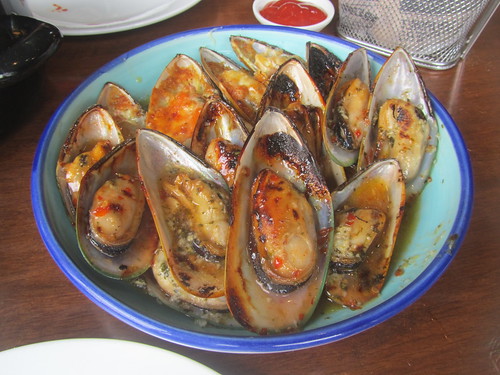

Havelock’s claim to fame are its mussels, of the molluscular kind.
So we ventured to its most famed eatery, the Mussel Pot.
And partook in some molluscular gastronomy. And lovely mussels they were too – so fresh and succulent.
The drive from Picton to Havelock via Queen Charlotte Drive isn’t for the faint hearted. It takes in a very narrow and twisty road (a Kiwi special, you might say) that passes by many a picturesque viewpoint and down into quiet little bays.
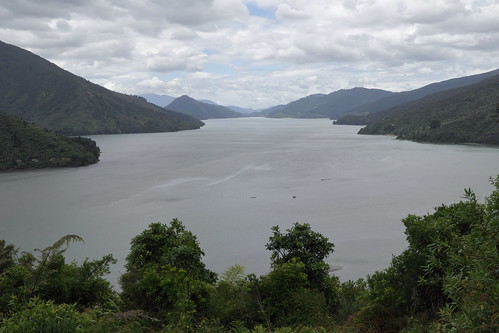
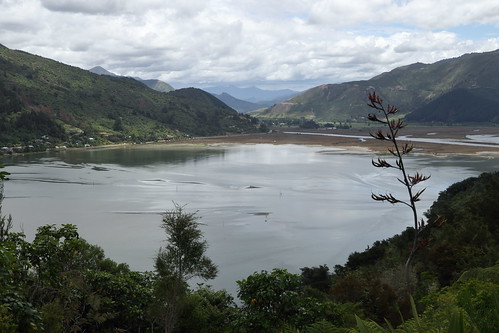
We also stopped to take a stroll in the Kiwi bush.

Eventually, we emerged from the bush to face the next sizeable town in the region, Havelock.
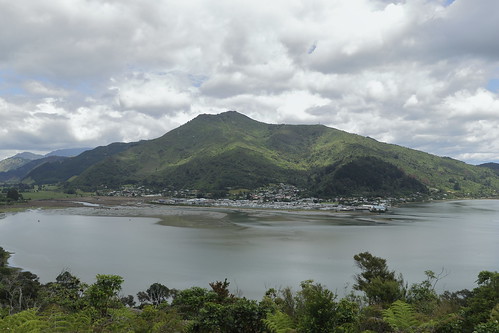
Much of the shopping area looked as if it was built in the 1960’s and not too interesting to look at, but just outside there were a few more vintage-y buildings.


It was much nicer closer to the water at the Memorial Park.

Everyone was enjoying the sunshine.
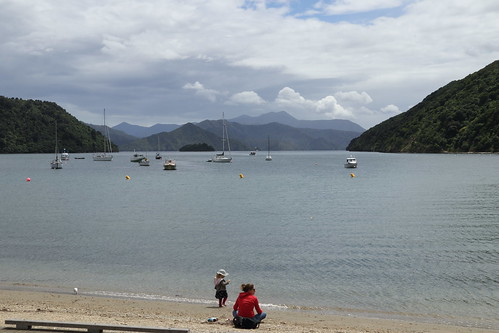
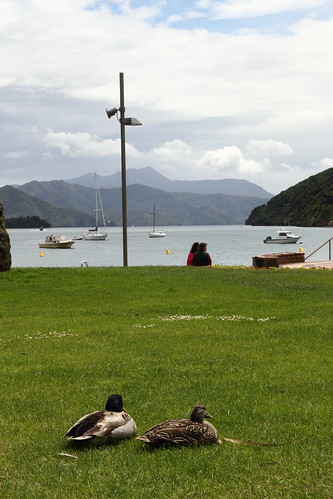
Next, we visited the town of Picton. It is located deep in the Marlborough Sounds and has a deep harbour.
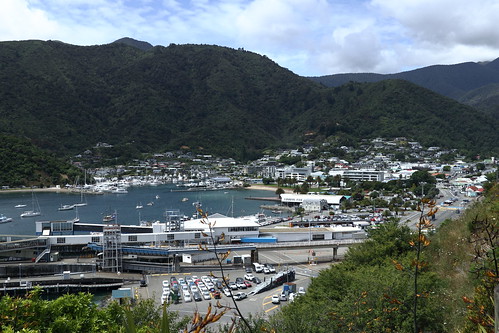
Because of its sheltered harbour and close proximity to the capital Wellington (just 65km to the north-east, across the Cook Strait), it is a busier town than most. It is the shipping, rail and road gateway to the South Island. In fact, here comes the Inter-Island ferry now.

It fits cars as well as people, but just a warning that people with less than cast-iron stomachs should be wary about getting on-board. Like the Spirit of Tasmania ferry between Melbourne and Devonport, crossing the Cook Strait is a rough business. But luckily for those crossing from Wellington to Picton (or vice-versa) the rough bit is only 45 minutes long. That’s 45 minutes too long for me but others might think otherwise.
Let’s take a walk through the vines.

It’s only early summer so the grapes are just starting to fruit. They won’t be ready until Easter time.

There aren’t many predators around so the rabbits still run free.

And Mother Duck can still rear her ducklings.

The hydrangeas are blooming nicely.

There might be a storm overnight, but in New Zealand the weather doesn’t usually hang around too long.

Time to head inside for the night.
Being recreational wine enthusiasts, our next destination was the wine mecca of Marlborough, a region located at the north-east end of the South Island.
We stayed in a delightful holiday cottage called Andahlane Cottage.

It’s set in the vineyards just out of the small town of Renwick.
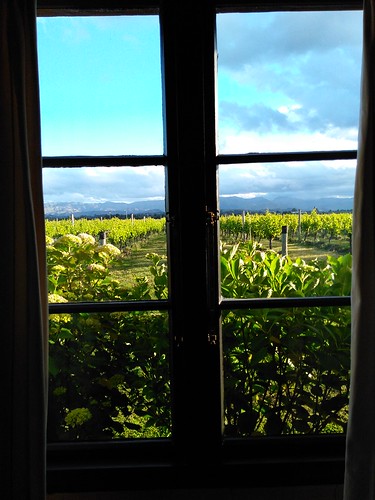
Marlborough is a bit like the Hunter Valley on steroids. The vineyards cover an area 5 times the size of the Hunter Valley, hence there are dozens of cellar doors to potentially visit. The wines can also be over-the-top (I think almost everyone has tasted a fruit-bowl-like Marlborough Sauvignon Blanc sometime in their life) but we were interested in tasting the wines of the smaller, artisanal producers.
But that’s for another day.

After lunch, we drove around to Point Kean, to the south side of town. The weather was perfect for early December (i.e. Early summer).
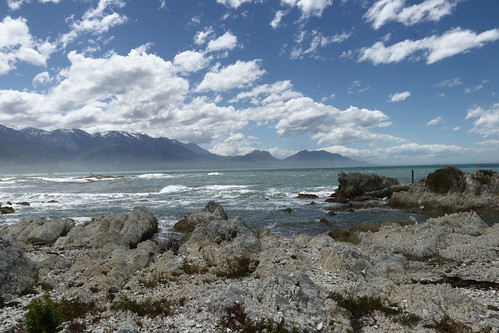
Around the point, we passed a remnant of an old homestead. I’m guessing the sea level has risen quite a bit since it was first built.
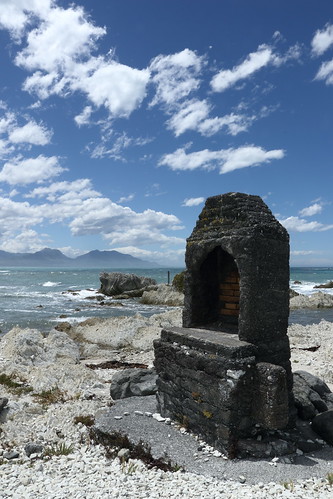
And it we didn’t have to go far to see our first seal. These are all New Zealand fur seals, and can be found on rocky shores throughout mainland New Zealand, the Chatham Islands, and the sub-Antarctic islands, as well as parts of Australia.

These seals were pretty used to humans, and other animals too, it seems.

Kaikoura was a town that was clearly still recovering from its recent disaster. But Kiwis do have lots of experience with natural disasters, so they seem to just get on with it so that things can get back to ‘normal’.
This area has been cleaned up and demountables and other quick building solutions were brought in to act as shops.

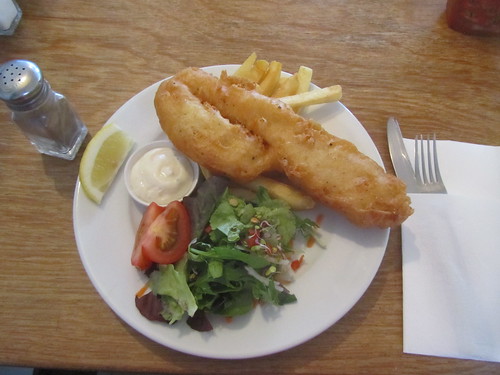
We certainly found good fish and chips there for lunch.
In December 2018, we travelled for 2 weeks around the top of the South Island of New Zealand. Never posted from that time, so here is the start of it (this series will definitely go on for sometime).
To start off with, we drove north of Christchurch. We’ll revisit the city at the end of the journey, but the drive up was quite spectacular.

However, there were plenty of reminders of the massive earthquake barely 13 months before. This part of the coastline was very hard-hit, and they were still fixing up major parts of the highway (the main thoroughfare in these parts).

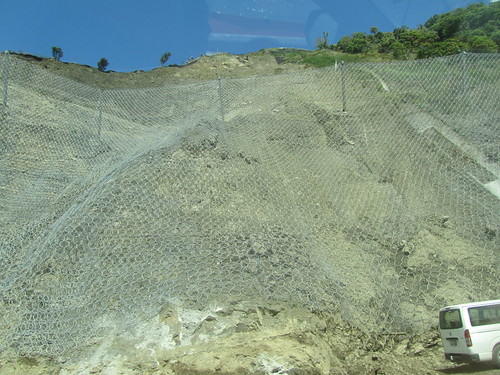
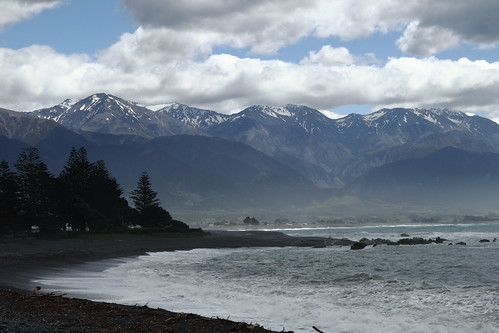
The very slow journey was worth the drive to reach these views.

Like most large galleries, MONA was a mixture of permanent collection and temporary exhibits.
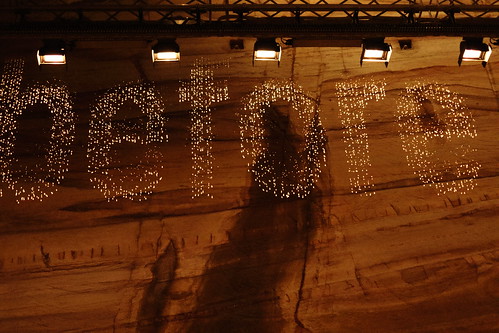
Some of the permanent collection exhibits are fascinating, like the waterfall of words they call bit.fall.

It’s a bit of a maze inside because there are no signage on the walls or set ways to view the works (you are provided with an ipod and headphones to navigate by), but for me that’s what makes it so much fun. You really don’t know what you might see next. It could be an Egyptian mummy, or a weird video installation or an artwork based on a bodily function.
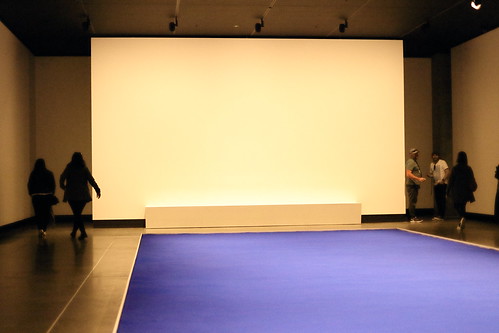
The exhibition at the time was called Zero, and it’s a modern art movement from Germany in the late 1950’s. It’s appropriately minimalist, like this blue ‘pool’ by French artist Yves Klein.
Needless to say, if you don’t enjoy being challenged and completely confused then it’s not the place to be. But if you do enjoy a bit of an adventure (artwise or not) it is worthwhile visiting.
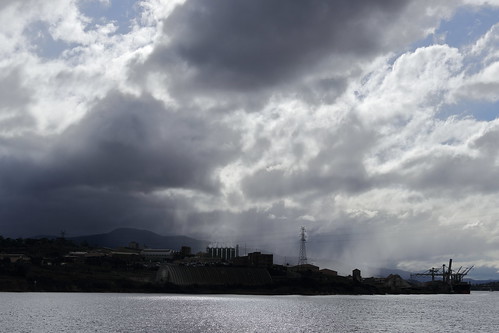
After the visit, we cruised back up the Derwent just as the heavens were opening up. There goes Mount Wellington, for another day at least.
 Static and Silence