All posts by Sandra Graham

I am an artist and blogger living in Sydney, Australia. I am interested in Australian landscapes and lost suburbia, capturing them in photographs, paintings, prints and mixed media. @s_graham_art

The Paleo Lab – Part 2

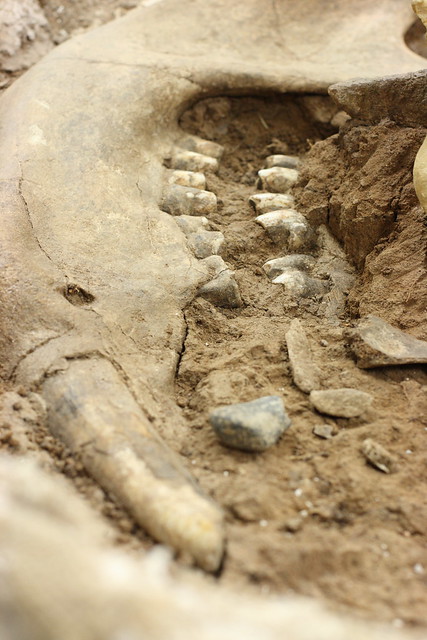
The paleontology lab processes fossils large, like this diprotodon skull that’s almost a metre in length…
Riversleigh Notes visit to the paleo lab

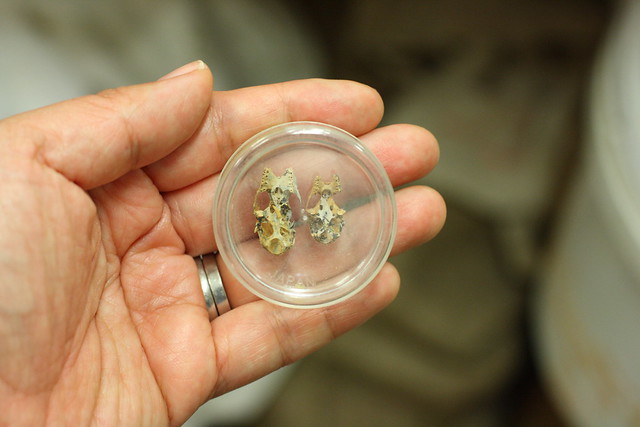
To microscopic fossils from small marsupials or bats – these are micro-bat skulls.
Riversleigh Notes visit to the paleo lab

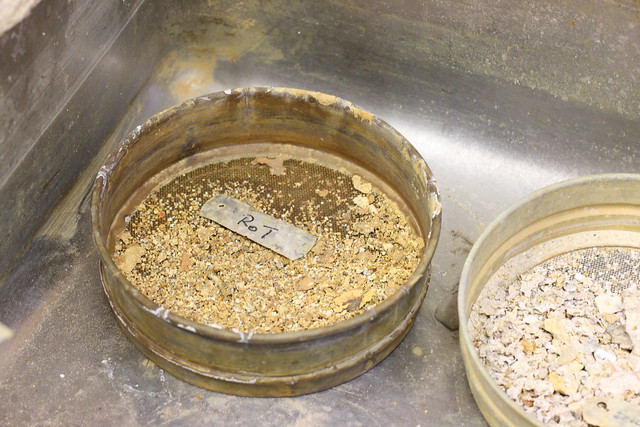
Everything needs to be sieved…

Riversleigh Notes visit to the paleo lab

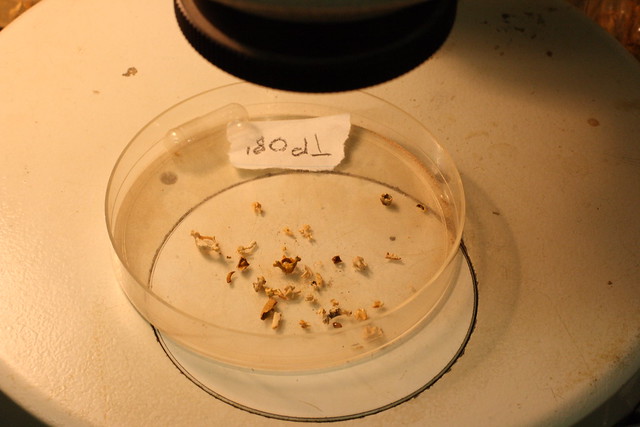
Sorted (sometimes via microscope, as with these tiny teeth and jaws)…
Riversleigh Notes visit to the paleo lab

And then classified. This generally involves comparing the fossils to known species. Teeth are the most useful fossils for classification as they are unique for every species.

This is the lower jaw of a small marsupial species, similar to a kangaroo.

Riversleigh Notes visit to the paleo lab

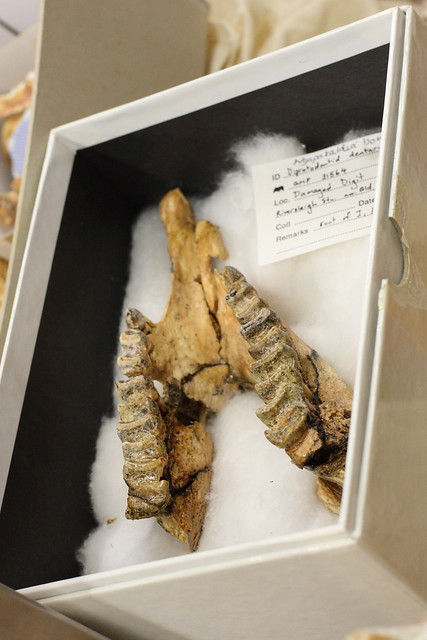
And this is another diprotodon jaw, but for a much smaller species as it fits in a 10 x 10cm box.
Riversleigh Notes visit to the paleo lab

These fossils may then be formally described as part of university research. The best go to university or museum collections. It’s this kind of research that helps paint a picture of what ancient Australia was like thousands and millions of years ago.
The Paleo Lab – Part 1

It’s been over 4 years since I made the field trip to the fossil sites of Riversleigh in North West Queensland. Back then, I helped the research team search for potential fossils in the limestone. The more bone-rich chunks of limestone were then bagged and sent to the University of New South Wales for further analysis.

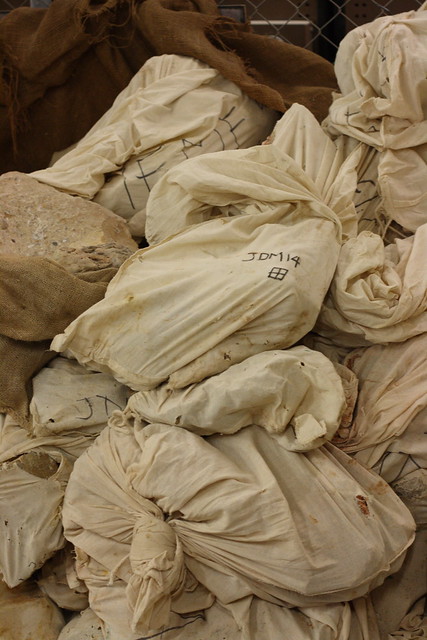
It’s only last September that I had the opportunity to visit the paleontology labs at the university. And here are some of those bags of limestone!

Riversleigh Notes visit to the paleo lab

And the limestone chunks themselves – with the bone chunks marked out.

Riversleigh Notes visit to the paleo lab

Some of the fossil chunks can get quite large. All of this excess rock and dirt needs to be dissolved or washed away to reveal the fossils themselves.

Riversleigh Notes visit to the paleo lab

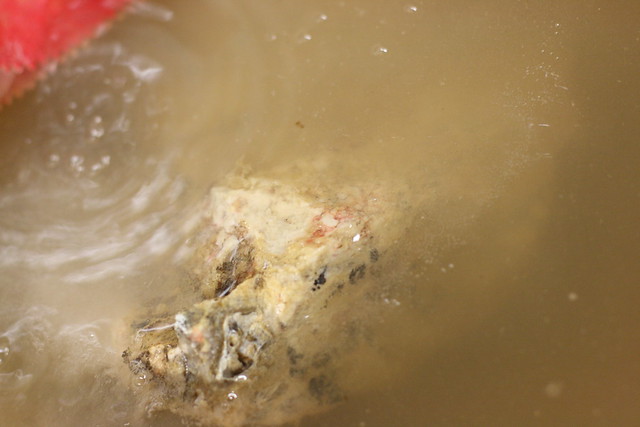
To extract the fossils the rock chunks are immersed in a weak acid solution, similar in strength to vinegar. When limestone is placed in acid, the limestone dissolves, releasing carbon dioxide – that’s what’s bubbling away there.

Riversleigh Notes visit to the paleo lab

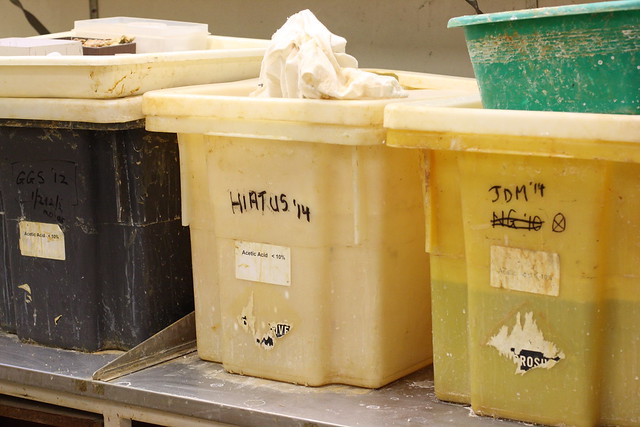
Here’s what happens after a soak or two. Obviously, this is a process that needs to be repeated many times until the fossils are released, hence there were many, many tubs all over the lab.
Riversleigh Notes visit to the paleo lab

Safari Time – Part 6

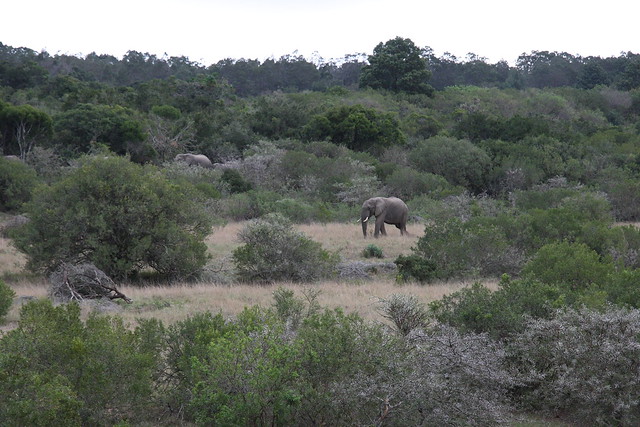
To cap off our safari experience, we had a few encounters with those magnificent animals, the African Elephant.

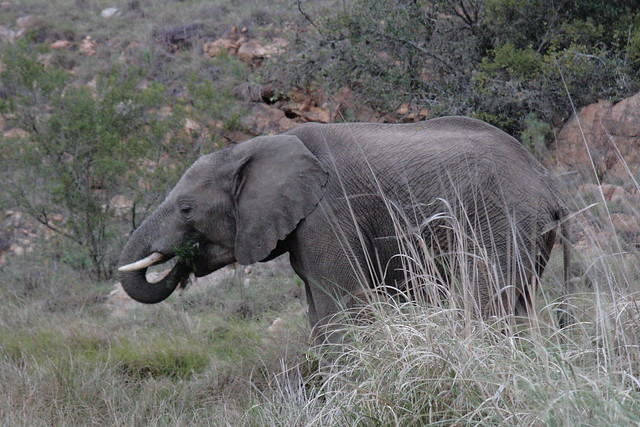
We saw them roam the reserve, sometimes from afar.

Safari time

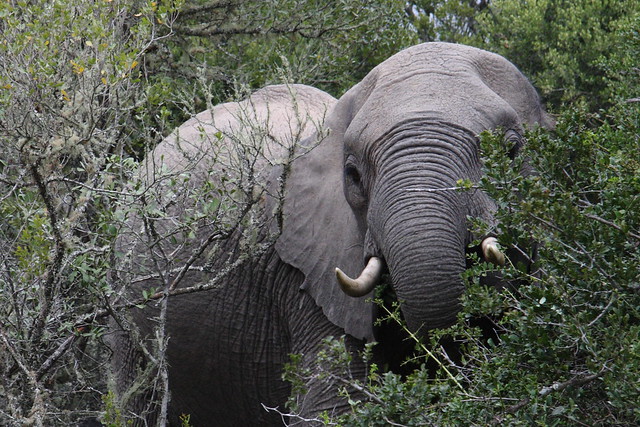
And at other times, at rather close range.

Safari time

It’s one thing to see them at a zoo, but another to see them freely roam. I felt very small indeed.

Safari time

And as a grand finale, just before night-fall, we saw a whole herd on the move. My, weren’t they fast!

Safari time

And that ends our South African journey. It’s been great to get a taster, but now it’s time to explore closer to home.

Safari Time – Part 5

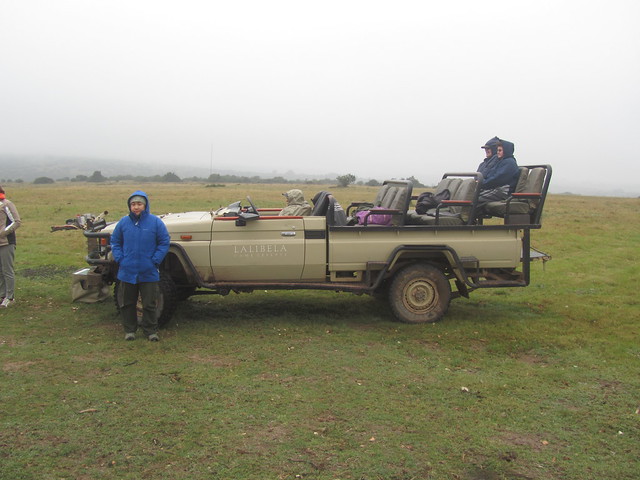
We were lucky with the weather on our first game drive, but unfortunately that luck wasn’t to hold. The rest of our game drives were cloudy, cold, even rainy affairs.

Lalibela Game Reserve

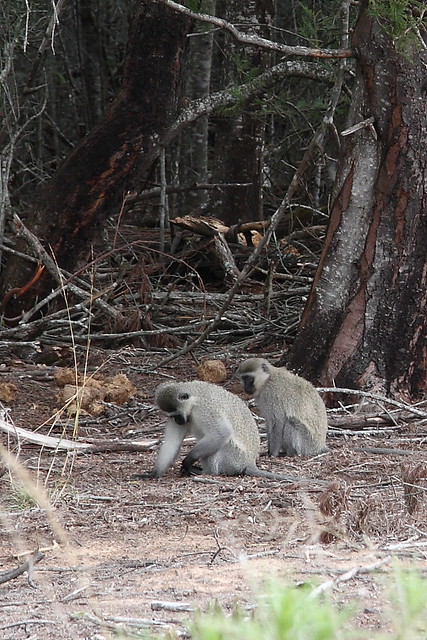
We did however see some wildlife, like these Vervet Monkeys seeking shelter in the forest.

Safari time

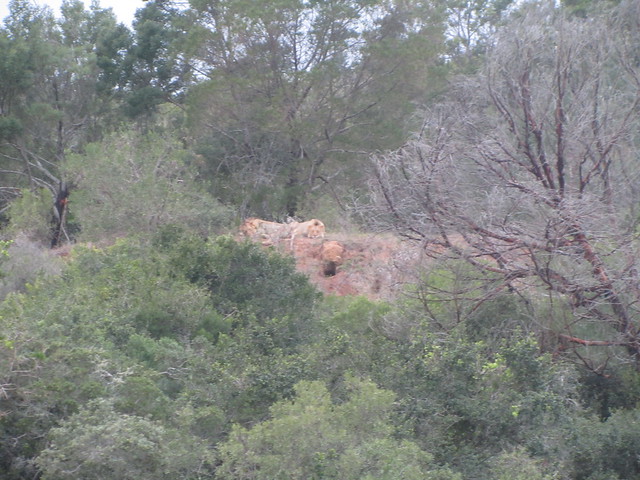
Or a pair of teenage lions having a snooze in a secluded spot.

Safari time

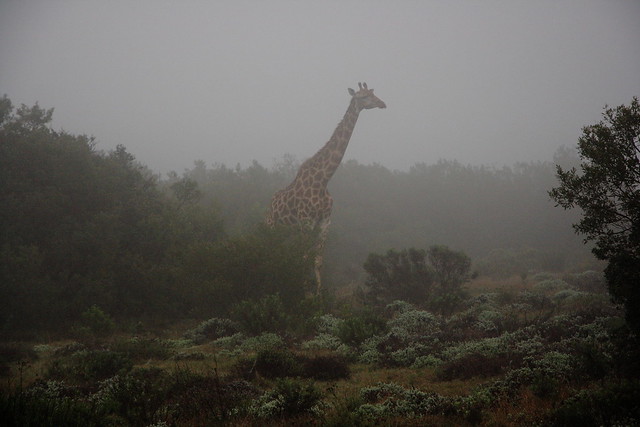
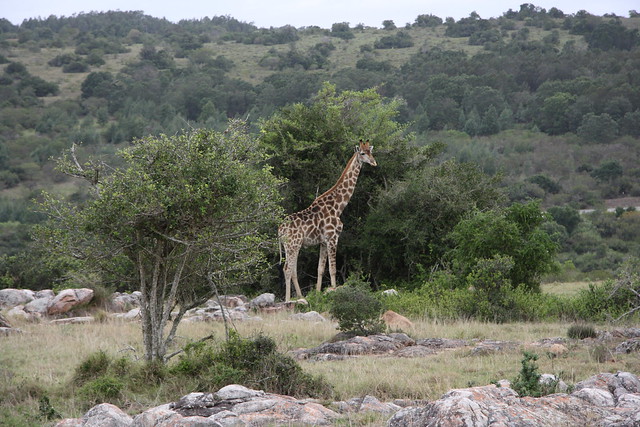
Some times, the scenes we encountered were entirely unexpected. Like a lone giraffe, wandering in the mist.

Safari time

Safari Time – Part 3

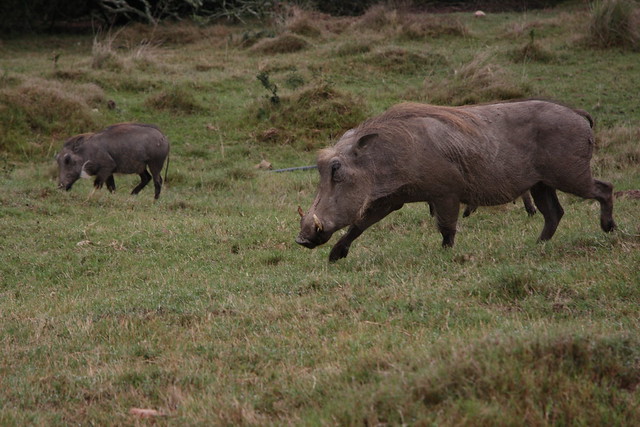
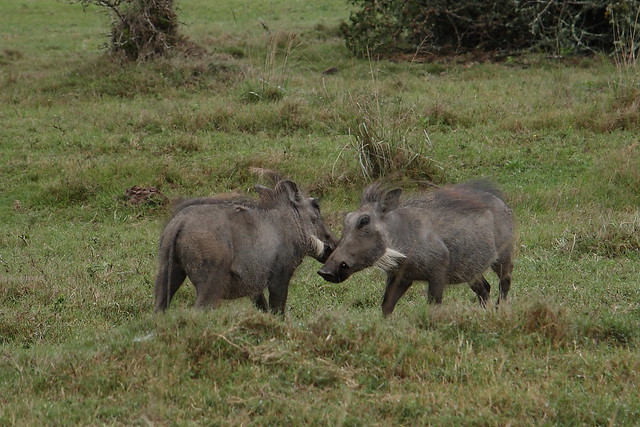
We continued on our safari and found a few more typically African mammals. We start with a very ugly one, the warthog!

Safari time

With their tusks, mullet and facial hair, could they actually be trend-setters for the 21st Century? These little ones were playing/fighting, and I found them almost cute.

Safari time

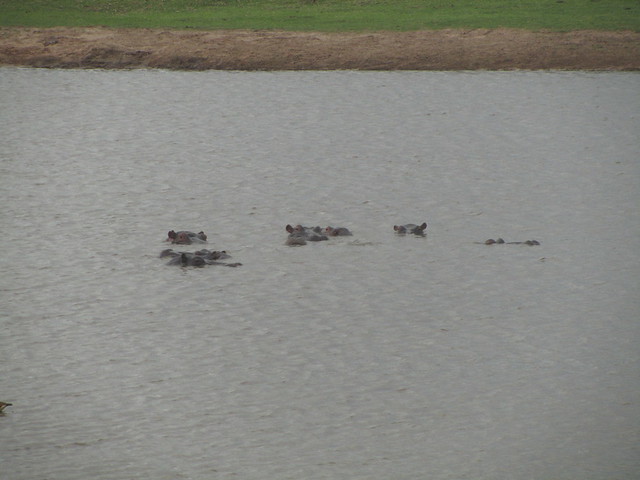
At the waterhole, we were closely watched by a herd of hippos. It’s rather startling to think that behind each pair of eyes was a 1,500kg animal.

Safari time

And moving on to bovines, we encountered a pair of Cape Buffalos grazing. We kept well away from those horns!

Safari time

Safari Time – Part 2

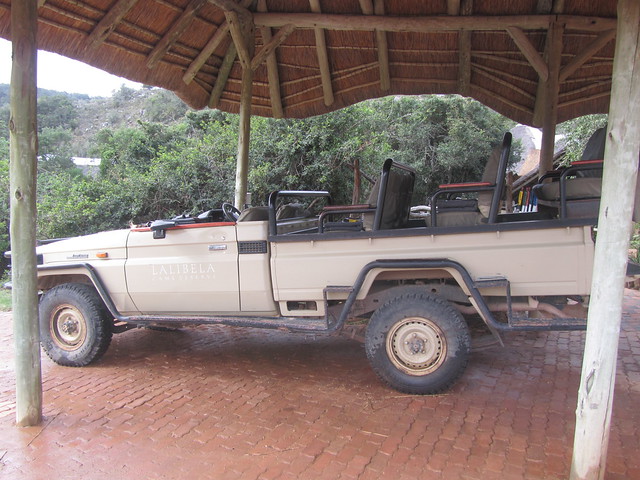
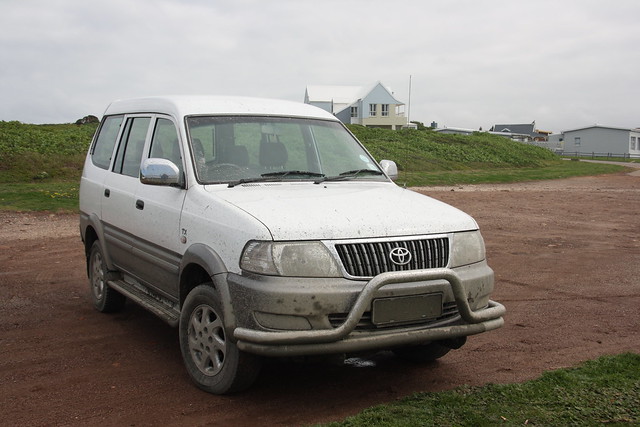
It’s safari time! Let’s jump into the convertible Land Cruiser and see what we can find.

Lalibela Game Reserve

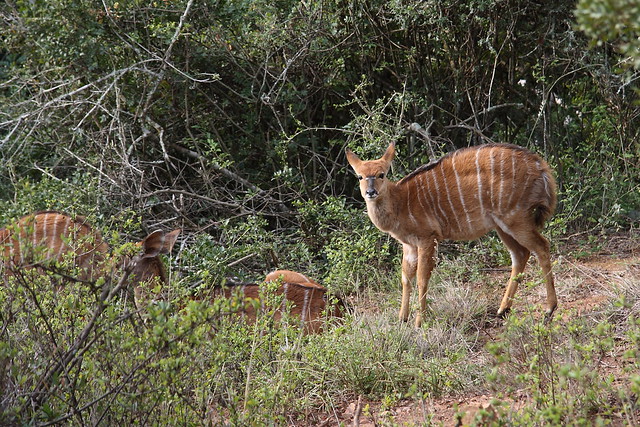
Close to the camp, we found more female Nyalas.

Lalibela Game Reserve

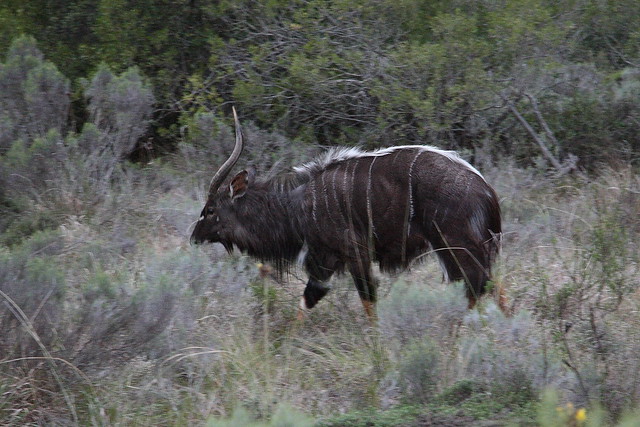
And not too far away was a male Nyala. He looks very different from the females.

Lalibela Game Reserve

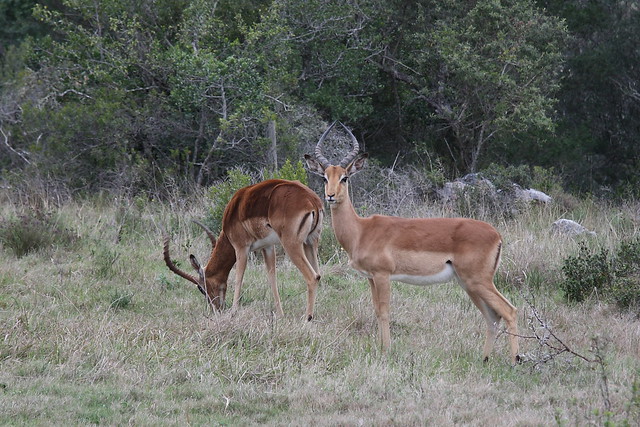
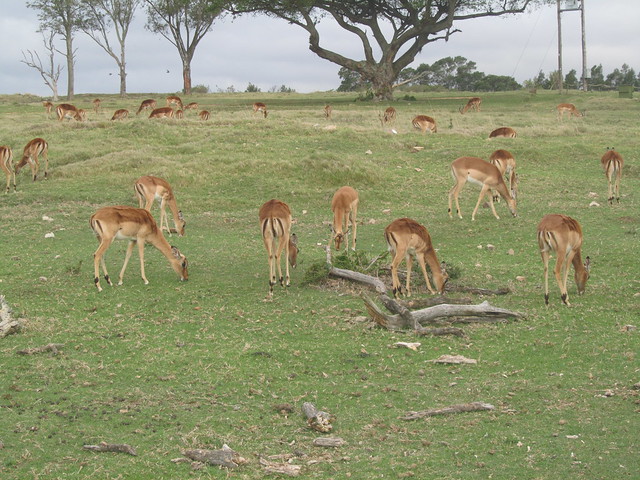
Africa of course is full of different antelope species. A species we saw a lot of in the reserve was the impala. You can recognise them by the M-shaped marking on their bottom! We saw some males.

Lalibela Game Reserve

And lots and lots of females.

Lalibela Game Reserve

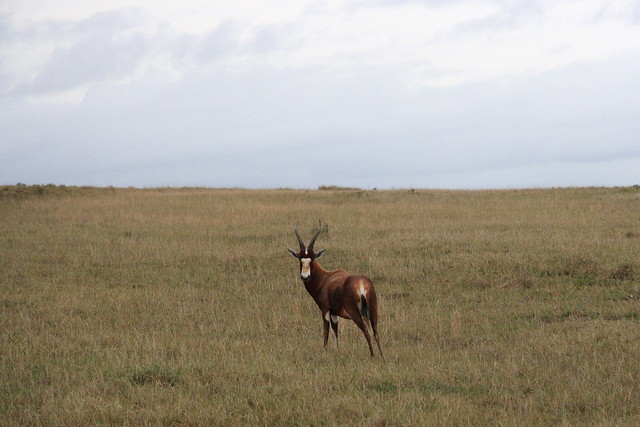
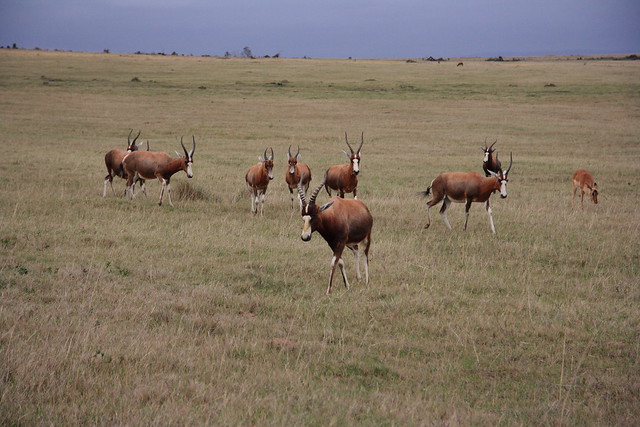
Another common species was the blesbok – they have distinctive white faces and white bottoms. Our ranger reckons that means ‘eat me’ to predators.

Lalibela Game Reserve

These guys get very territorial, and this herd’s territory is the reserve airstrip!

Lalibela Game Reserve

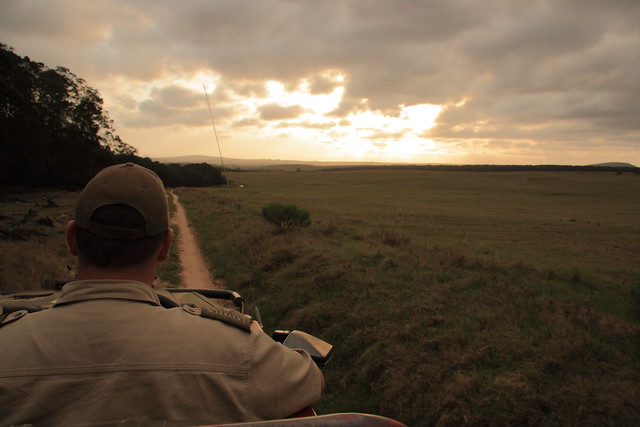
At a game reserve, your waking hours are structured around your dawn and dusk game drives, each being 3 hours in length. That’s 6 hours a day to find animals! Our first dusk drive was a good one, and we got a lovely view of the sunset.

Lalibela Game Reserve

Safari Time – Part 1

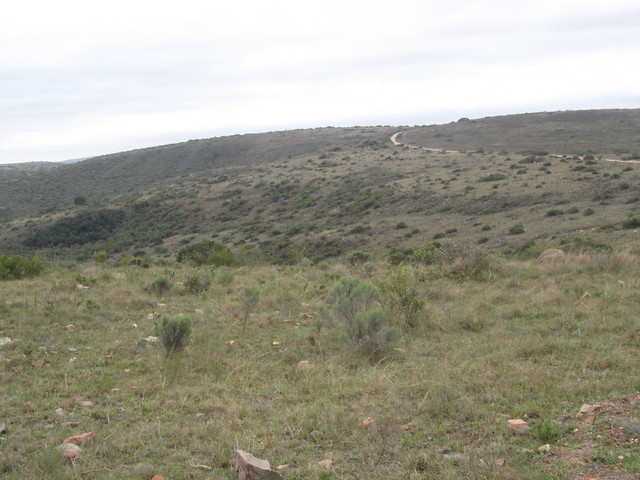
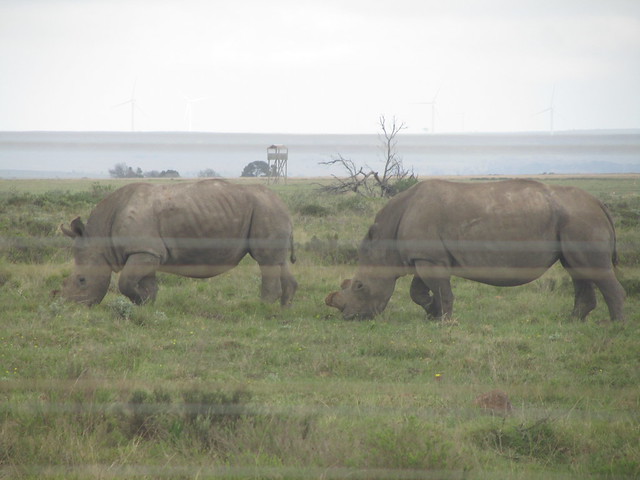
The rhinos in the last post was a bit of taster for our safari experience at Lalibela Game Reserve, about 90km to the east of Port Elizabeth. The reserve was located on 7500 hectares of Eastern Cape bushveld that was former farmland, and now stocked with African wildlife.

Lalibela Game Reserve

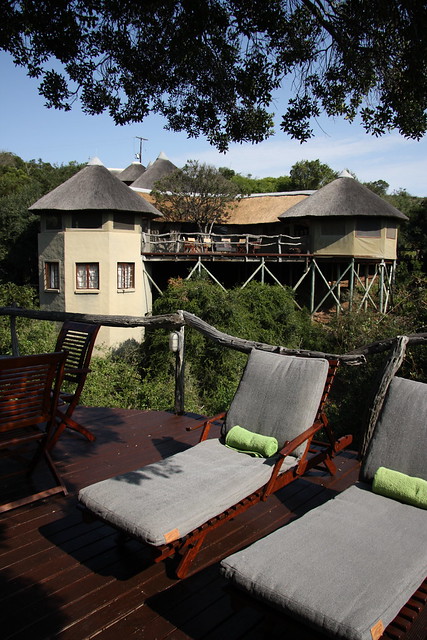
But first, we head to our lodge, Tree Tops.

Lalibela Game Reserve

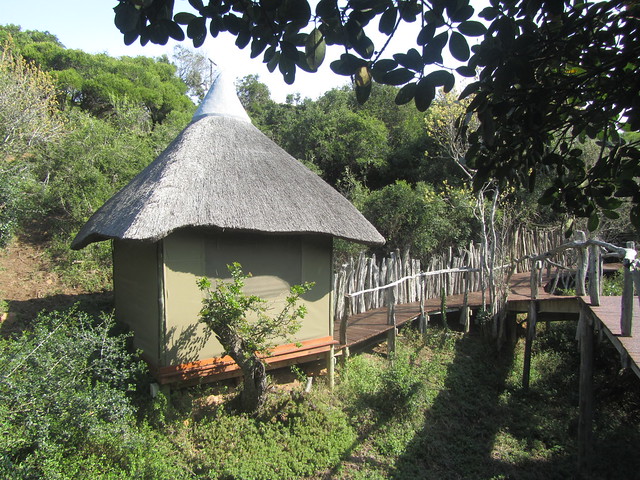
Accommodation was in some great glamping tents – ensuite, reverse cycle air-con and electric blankets to keep out the early Spring chill.

Lalibela Game Reserve

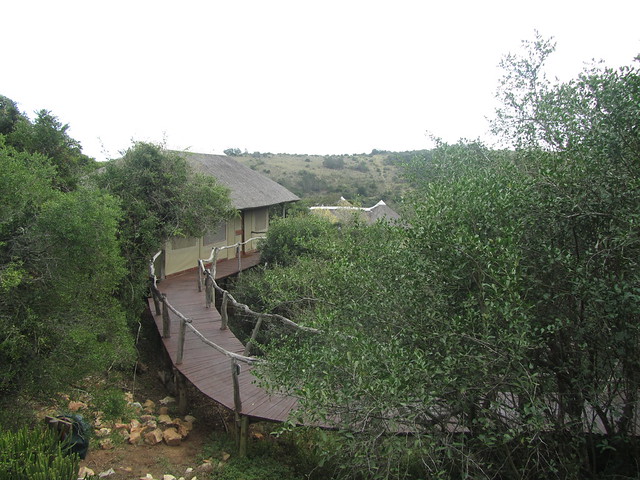
The boardwalk ensures that erosion of the hillside was kept to a minimum.

Lalibela Game Reserve

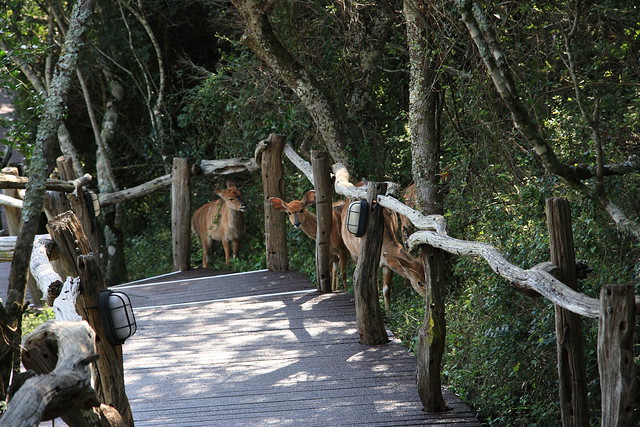
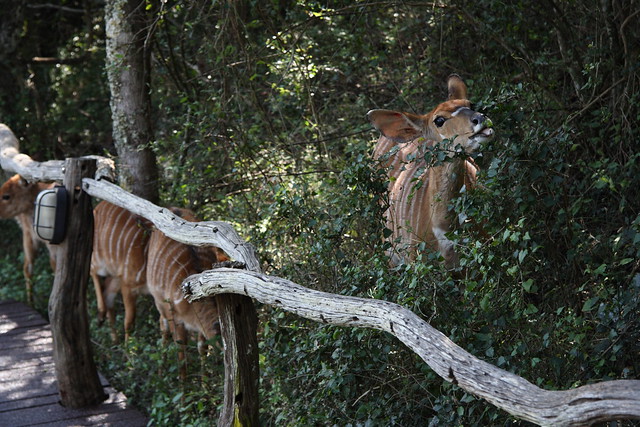
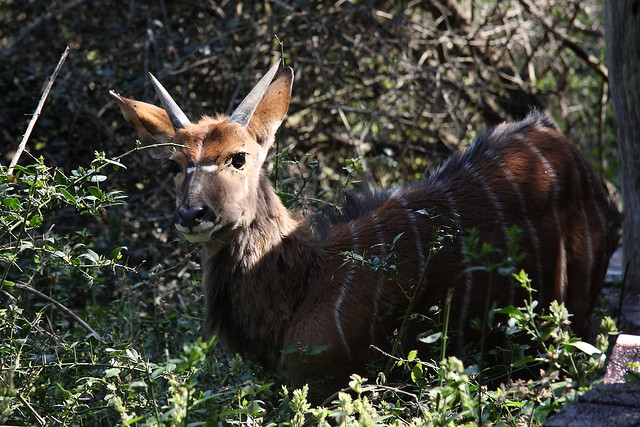
There weren’t any fences so elephants have been known to walk through the camp. There weren’t any elephant neighbours during our stay, but we saw these lovely ladies as we walked down to lunch. They’re a type of local antelope called nyala.

Lalibela Game Reserve

Lalibela Game Reserve

Later, we saw a young buck, who was completely comfortable with our presence.

Lalibela Game Reserve

Eastern Cape Drive – Part 3

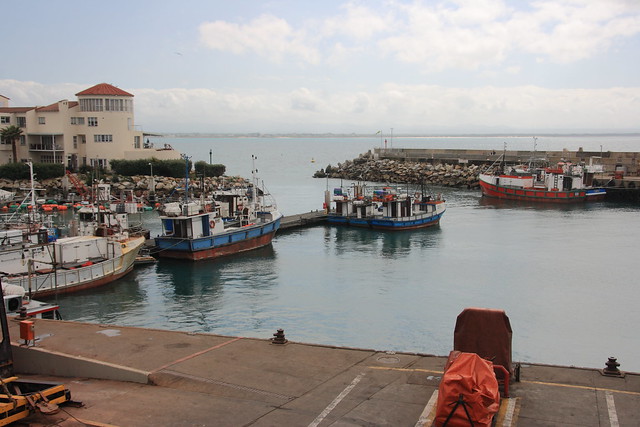
At Cape St Francis, there is a small port with a fleet of trawlers. These boats fish for squid, which this stretch of coast is famous for, and other lovely eating fish that lives in the Southern Indian Ocean.

Around Jeffreys Bay

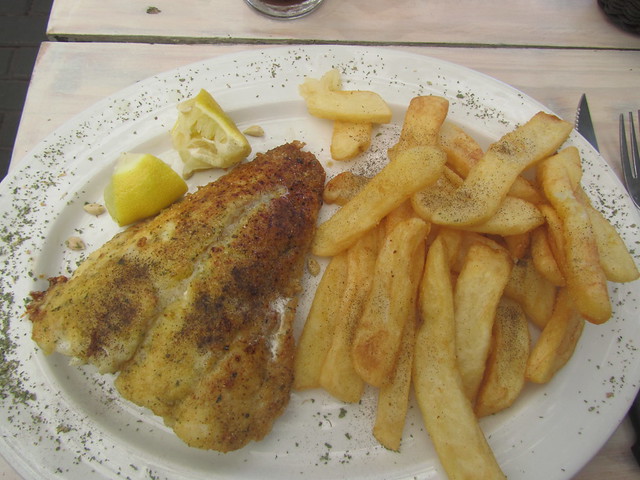
Predictably, we had to sample their catch, so at lunch time, we headed for the local restaurant at Jeffreys Bay, which was packed at Sunday lunch.

Around Jeffreys Bay

Their fish (a local variety of snapper) was succulent and very fresh. And like most things in South Africa, prices were very reasonable. This was about AUD $10!

Around Jeffreys Bay