Painting projects explored not just technique but art movements too. Everyday objects were a good vehicle for this.
Traditional.
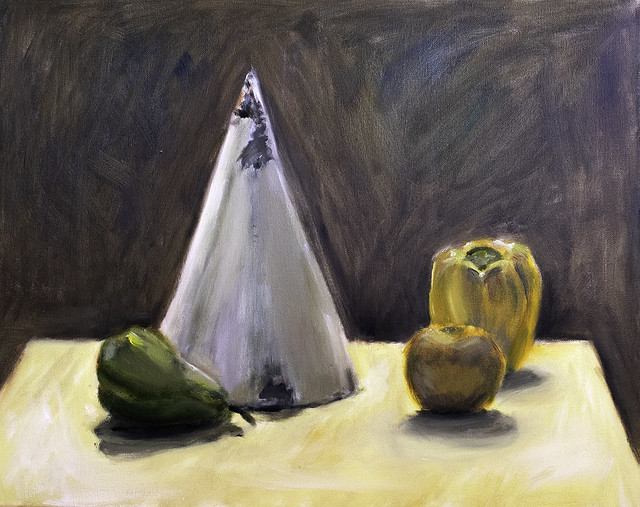
Modern.
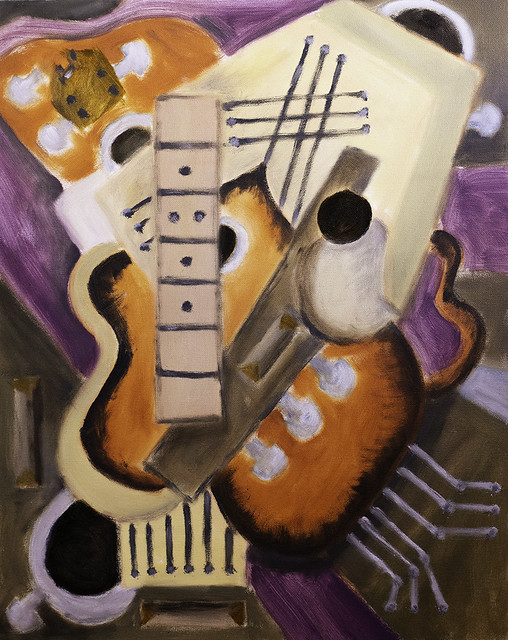
I must say that although I enjoyed painting in both styles, I found painting in the Cubist style very freeing.

Painting projects explored not just technique but art movements too. Everyday objects were a good vehicle for this.
Traditional.
Modern.
I must say that although I enjoyed painting in both styles, I found painting in the Cubist style very freeing.
Built environments can also be depicted in paint.
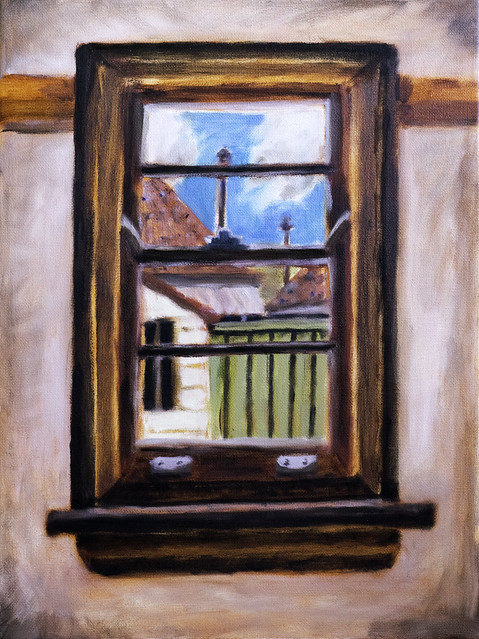
These works are in oil, and depict my home.
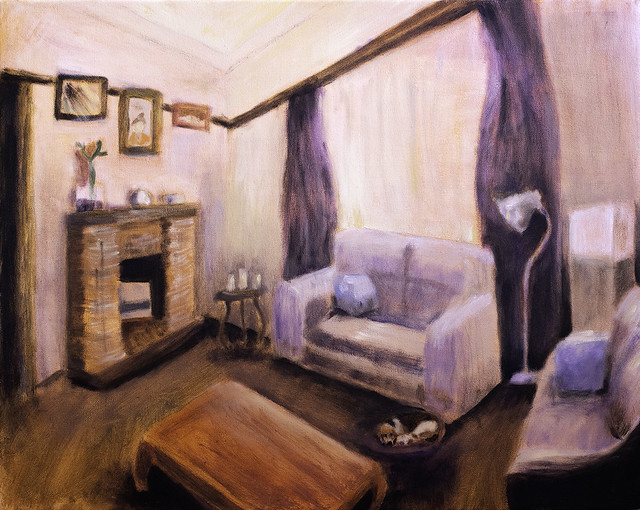
There is a warmth and coziness about these scenes that is very different from the starkness of charcoal.
Despite the fun I had at the museum, my favourite locations in the field are inevitably scenic ones. This time it’s a seascape.
Malabar Headland has recently been made into a national park. It makes the walk between South Maroubra and Malabar accessible whenever the rifle range on the same location isn’t in use.
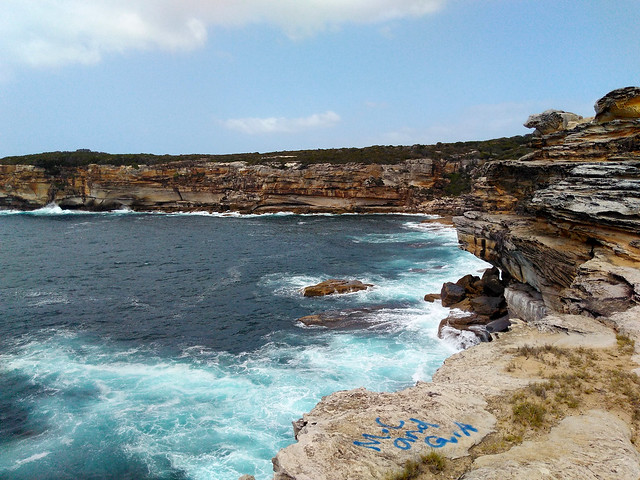
My friends and I visited on a very sunny and still day – though the seas were still a bit rough due to Cyclone Gita all the way in New Zealand.
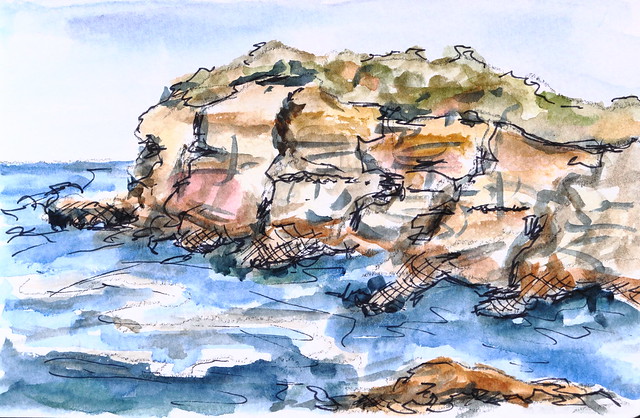
The sandstone cliffs are similar to what you might find in Royal National Park, but more accessible, especially if you live in or are visiting the Eastern Suburbs. I made the most of the intricate folds and honeycomb erosion by sketching in ink.
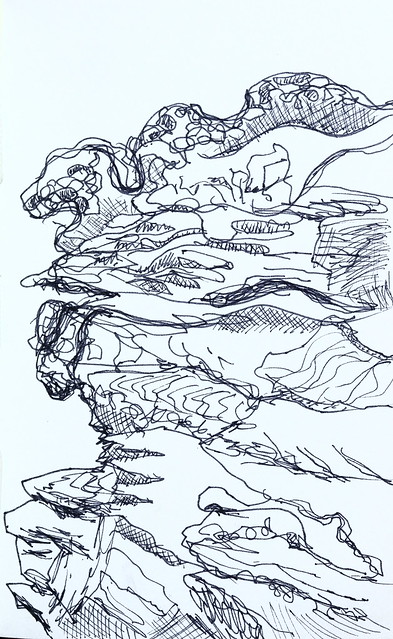
Art in the field doesn’t always have to be out of doors – it can also take place in indoor locations.
A few weeks ago, a few friends and I went sketching in the Australian Museum. Although I had visited a few times, I had never sketched there before. It’s actually a great place to draw in, being full of different objects – natural and man-made.
An intricate wood carving from the Congo, in the Long Gallery.

A very elaborate head-dress from New Guinea, in the Long Gallery.
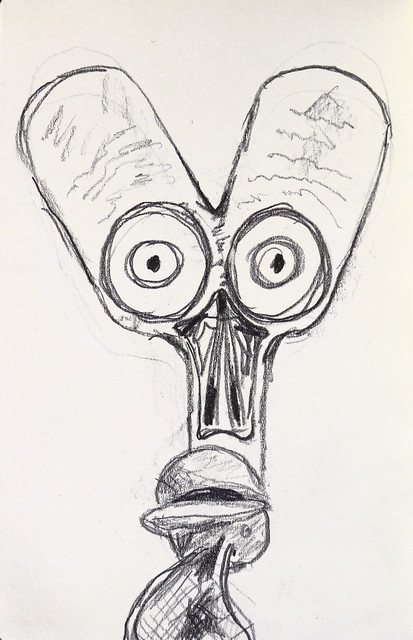
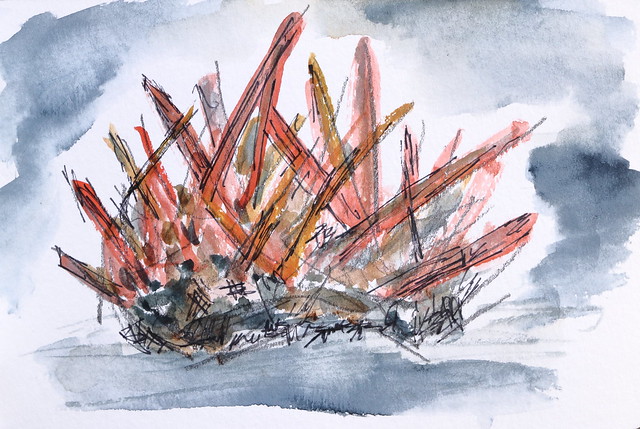
Crocoite from the Albert Chapman mineral gallery.
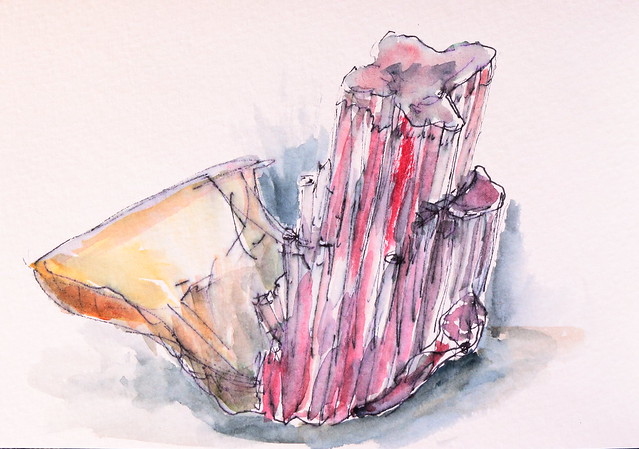
Tourmaline from the Albert Chapman mineral gallery.
Creativity doesn’t need to be confined to just the home, school or studio. Photographing and sketching in the field provides stimulus and is great practice. It’s really true that the more you do it, the easier it becomes.
One place that’s inspired is my old haunt of Oatley Park, by the Georges River. I might not have been a frequent visitor in recent years, but I made up for it in the last few months: shooting photographs at the castle.
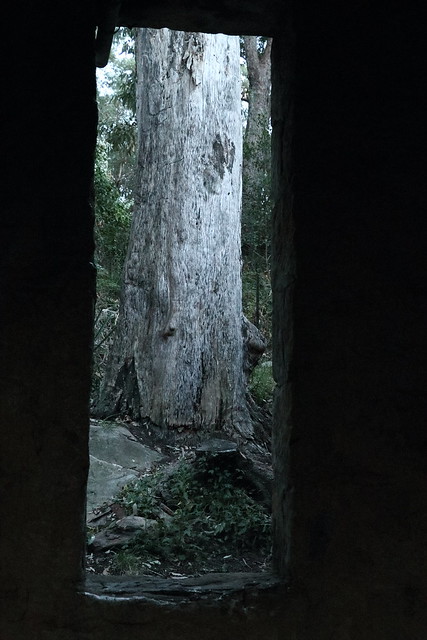
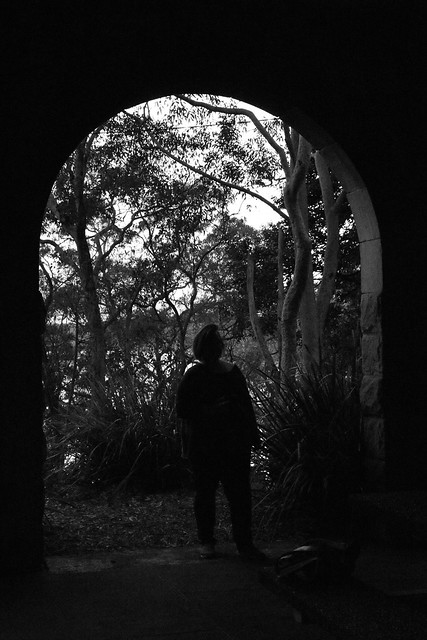
And sketching by the baths.
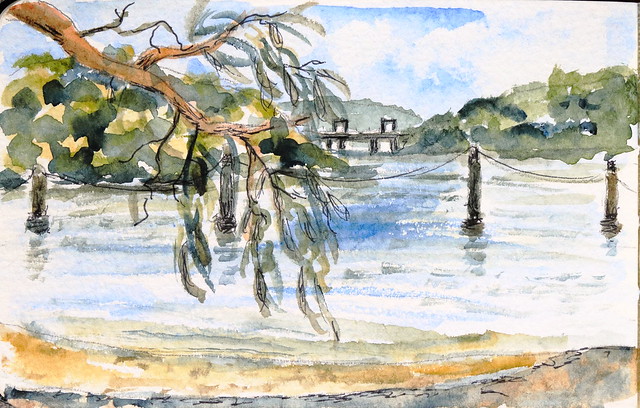

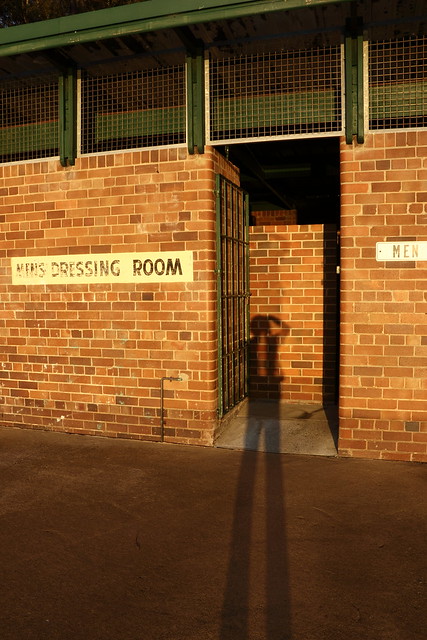
Mornings are my usual time there. It’s when the light is golden as the baths are illuminated. If you wake up early enough, you might even see the sun rise.

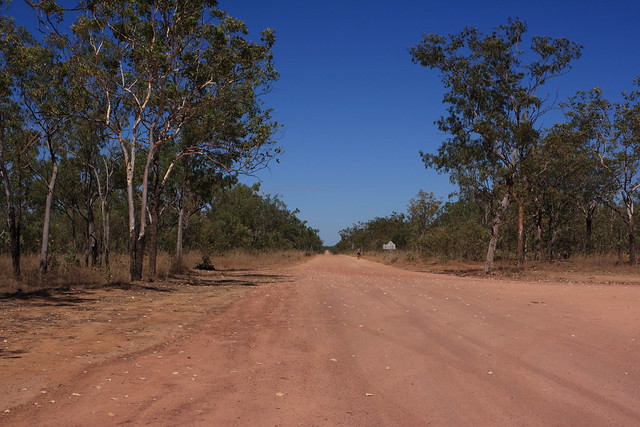
We turned off the Gibb River Road on to Kalumburu Road northwards, and that was when the fun started. My goodness, weren’t we bumped around in the bus! The road was very straight for the most part, but the corrugations on the road were jarring and constant.
Plus, there were quite a few water crossings.
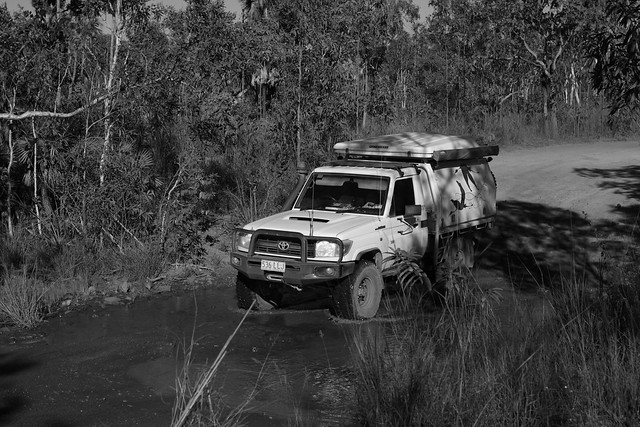
No big vans up there!
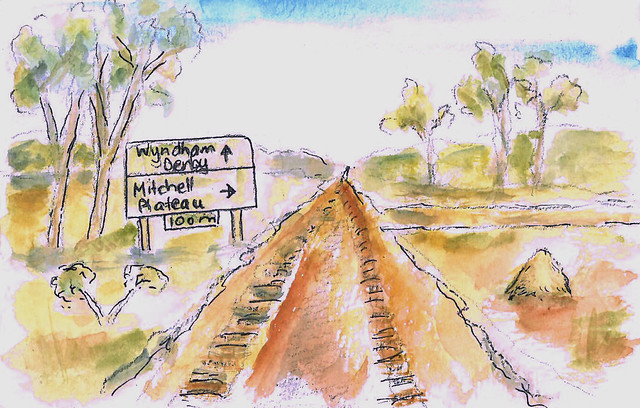
Eventually we reached the turn-off to Mitchell Plateau. Our campsite for the night thankfully isn’t far away now. This road to nowhere was my picture of the day.
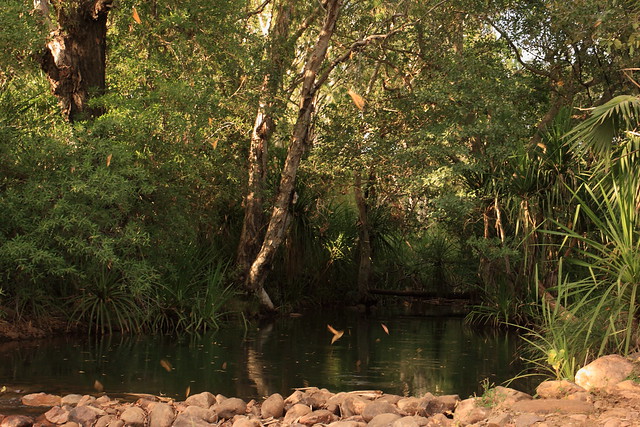
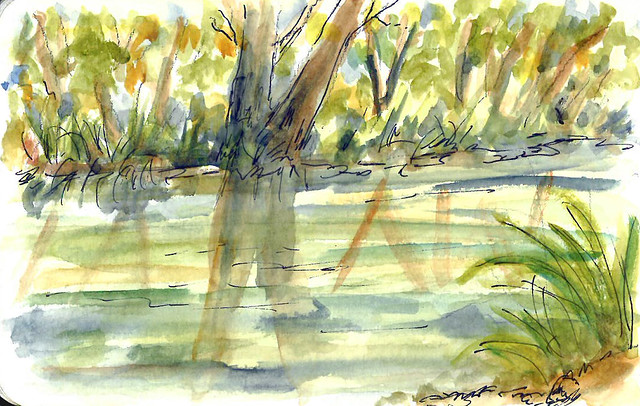
At El Questro we camped by the Pentacost River. It was a little oasis, and the first thing in the morning was the best time to capture this tranquil setting.
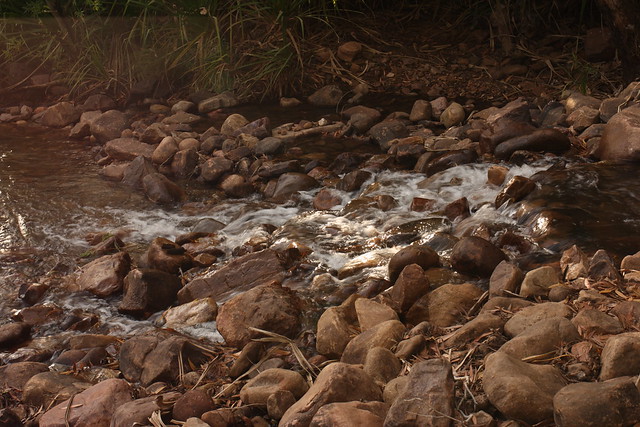
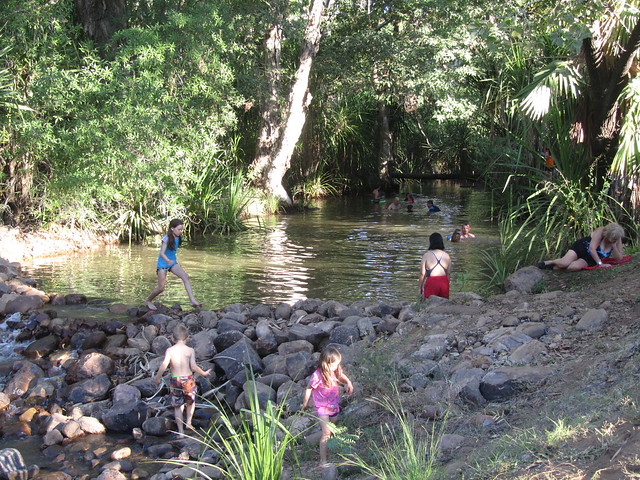
However tranquility was no more by mid-afternoon. As the temperature climbed past 30C, everyone was interested in a freshwater dip.
The tranquility of the morning was my picture of the day.
The Gibb River Road is an old stock route, but these days it’s a highway of sorts. Despite it being only 50% or so sealed, road trains, tour buses, and hundreds of four-wheel drive vehicles with camper trailers run along its length every day in the Dry. You get a good idea of how busy it can get at Pentacost River crossing.
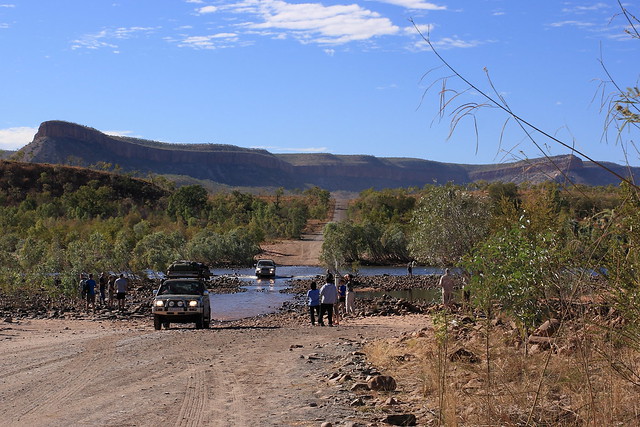
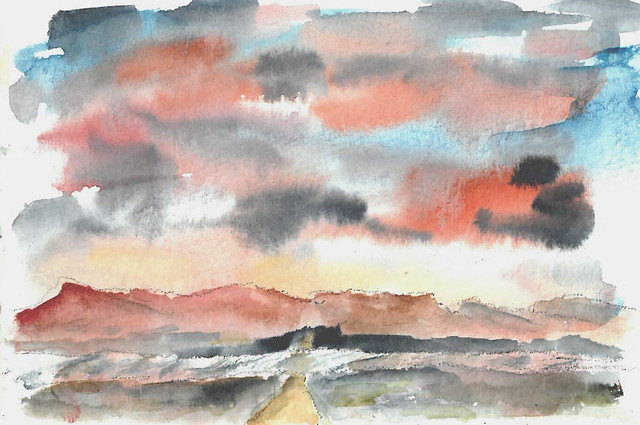
It’s a pretty enough place, with the Cockburns in the background, but it is sure busy! Nevertheless, it inspired me to paint a few works. The first is the crossing with a sunset sky (yes, Kimberley sunsets are that colour) which I did on tour.
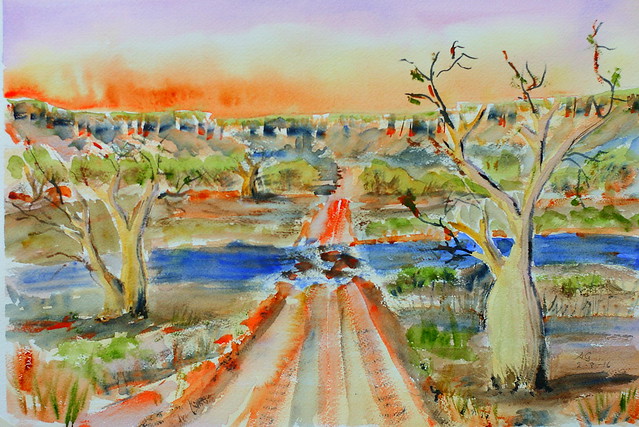
The second is a larger painting that I did once at home. I could help but put a few boabs in for good measure.
At twilight, we took a little walk beyond the tents and Grey Nomad caravans. The land was still, and the sky vast.
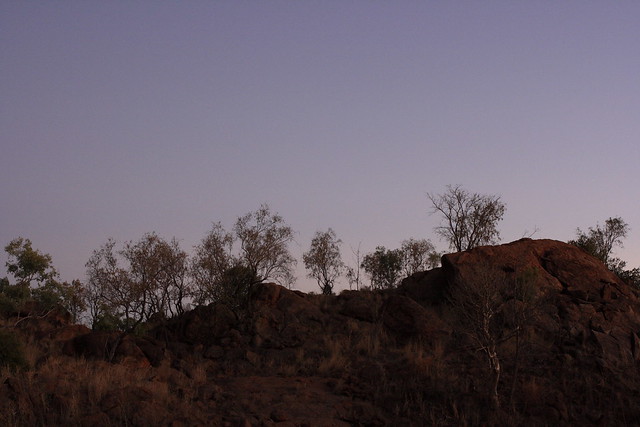
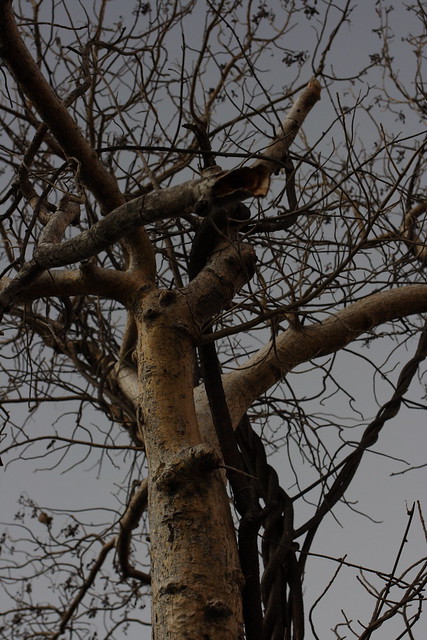
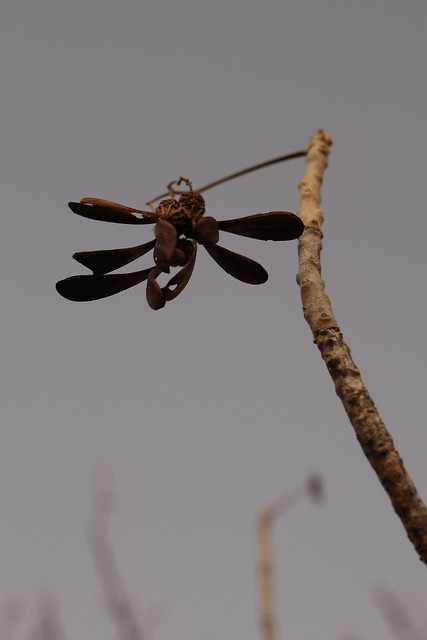
The trees and shrubs came to life. This leafless acacia tree seemed to reach out at me, like a creature from the deep.
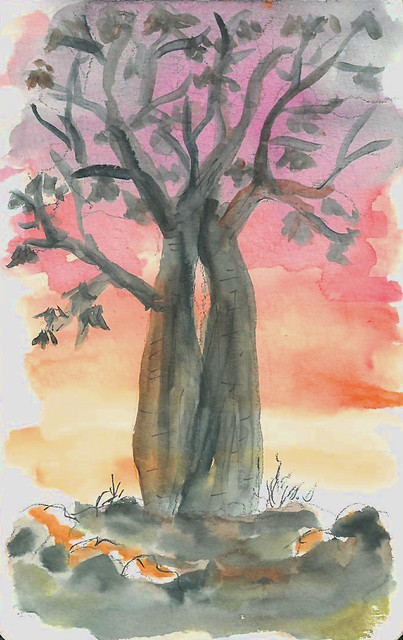
Then the colours kick in. This pair of boabs made a perfect silhouette to the sunset.
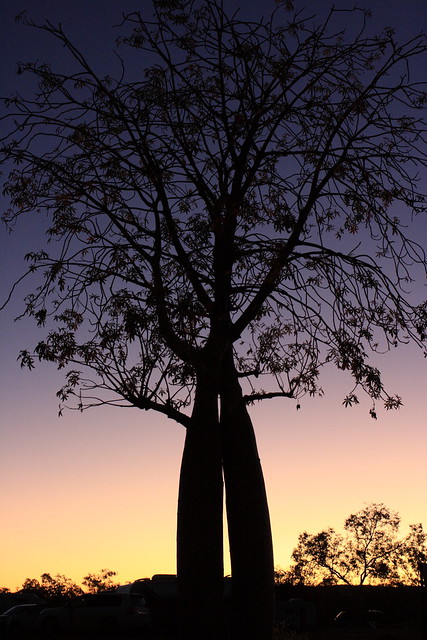
It was so pretty that I had to capture it on paper, too.
We did some exploring on the surface of the clay pan…

Before settling down to study the clay pan itself.
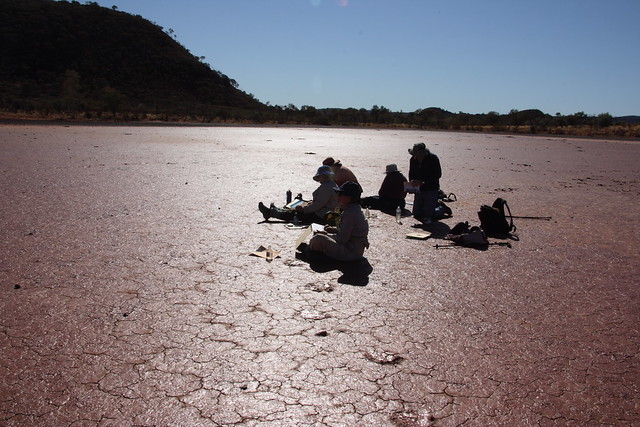
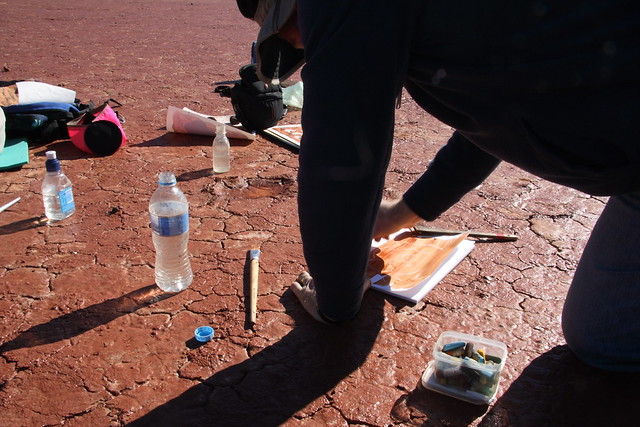
What can a group of artists do on a clay pan? Use the clay as a medium, of course. The clay could be diluted in a bit of water, and used as paint. A great substitute for burnt sienna.
 Static and Silence