Back to Running Waters – Part 1

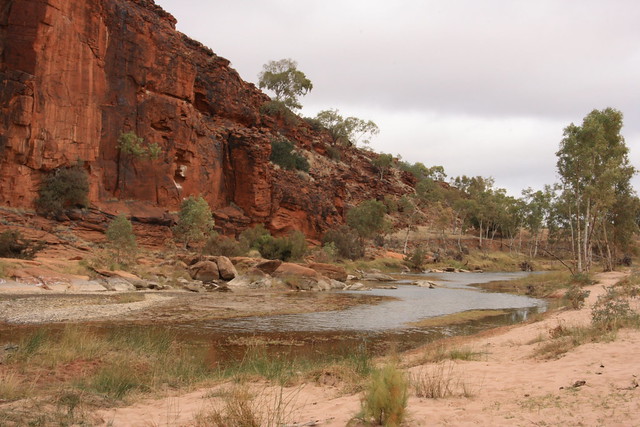
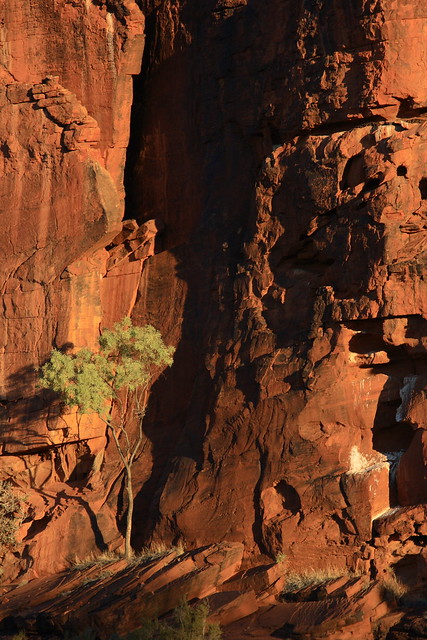
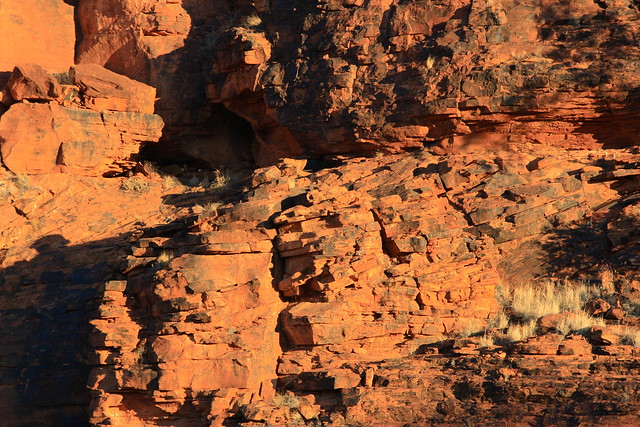
A walk down-stream produces a different view of the rock.

Back to Running Waters

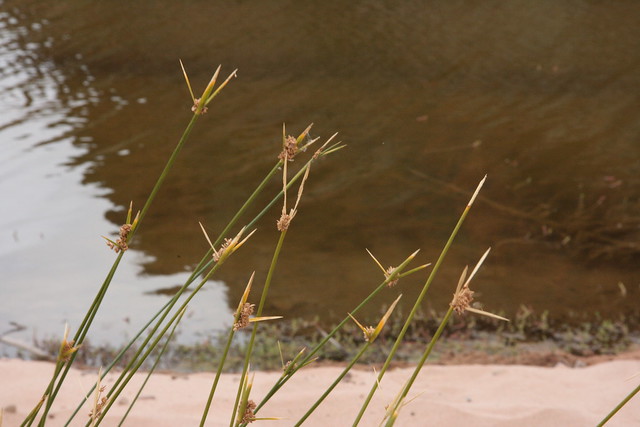
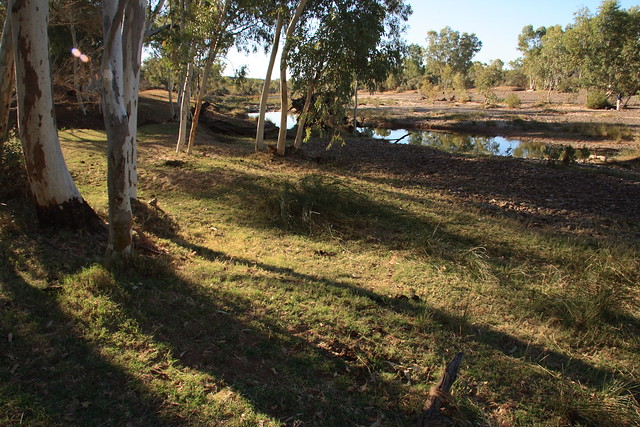
By the water-side were a few reeds, and they have to be spiky as most plants in Central Australia are.

Back to Running Waters

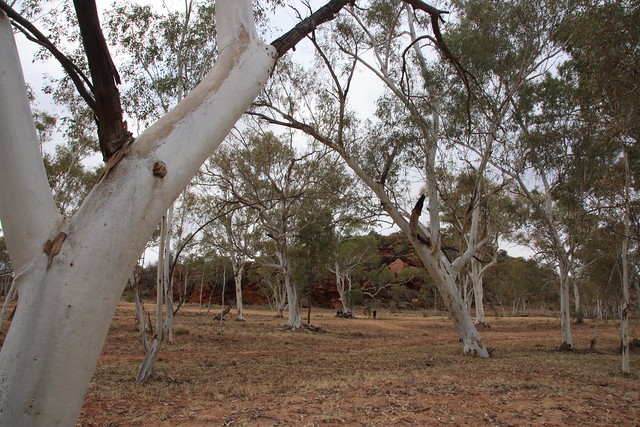
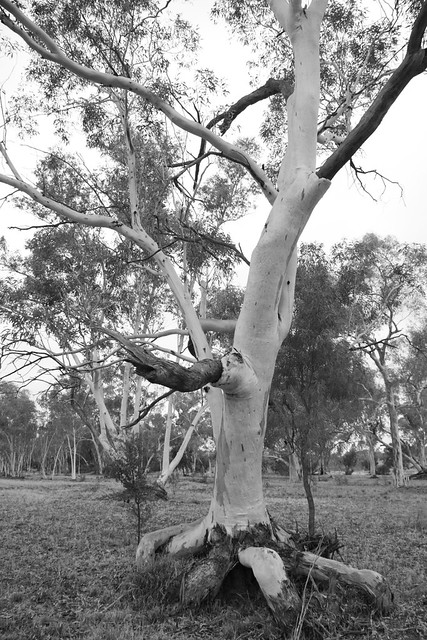
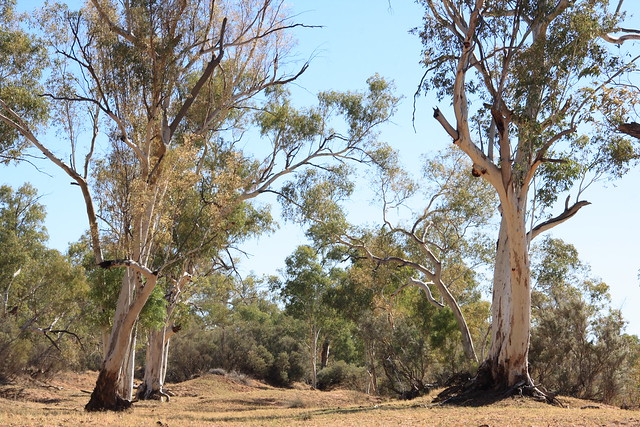
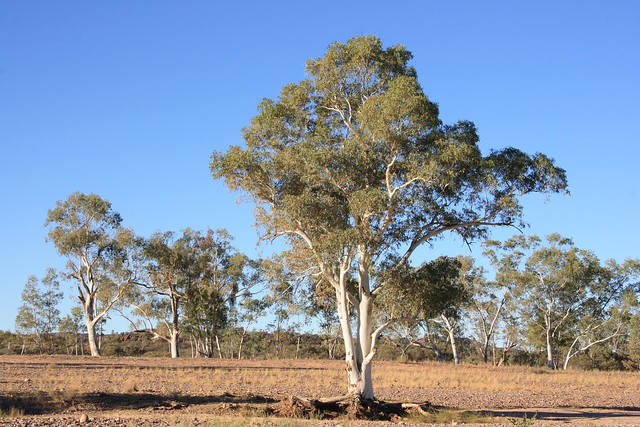
Not far away was a very impressive strand of river red gums. See how they tower.

Back to Running Waters

These trees have stood the test of time, through drought and floods – because there is occasionally water on the mighty Finke River.

Back to Running Waters

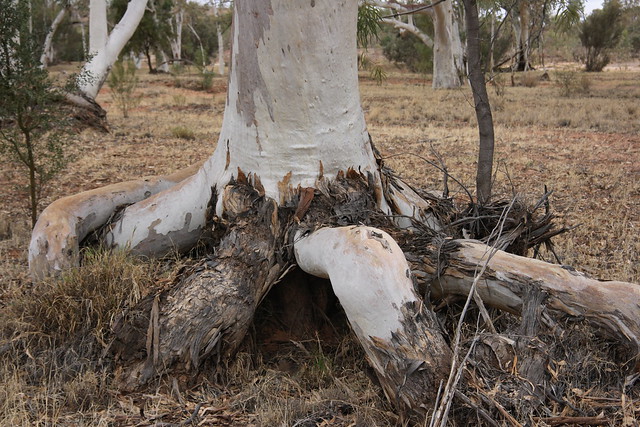
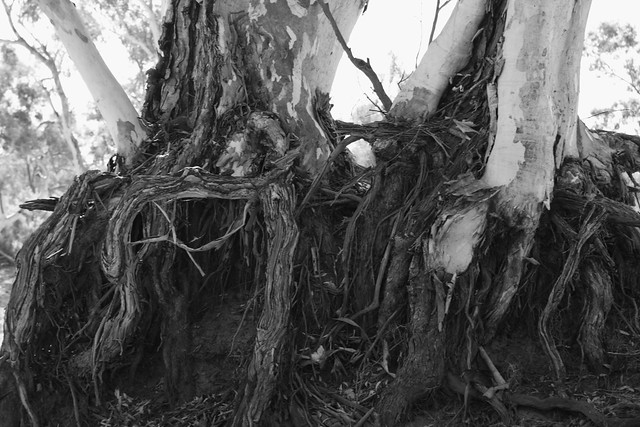
No wonder they’re so anchored to the earth.

Back to Running Waters

Walk to Clay Pan – Part 1

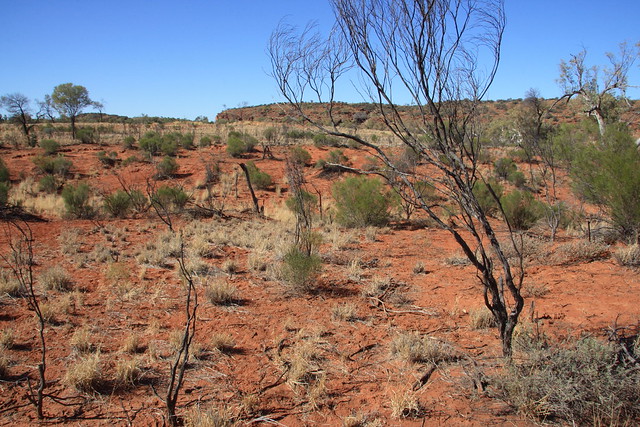
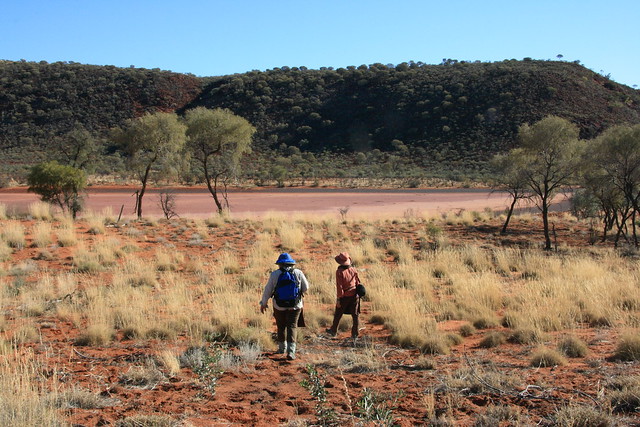
We took a walk one morning across the red sand dunes, through mallee and mulga scrubs.

Walk to clay pan

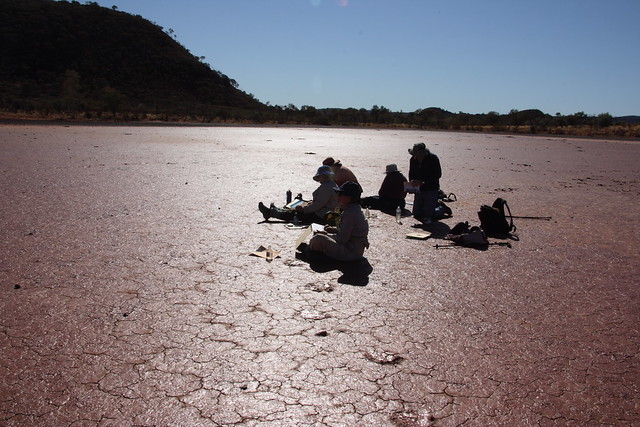
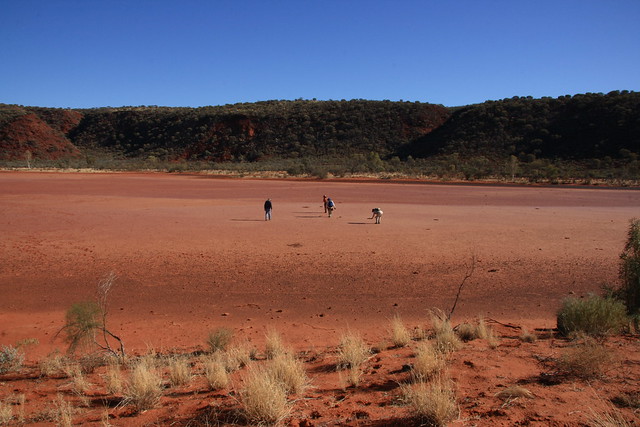
Our destination was the clay pan.

Walk to clay pan

It’s a one km square clay bed. Perhaps it had been a freshwater lake at one time?

Walk to clay pan

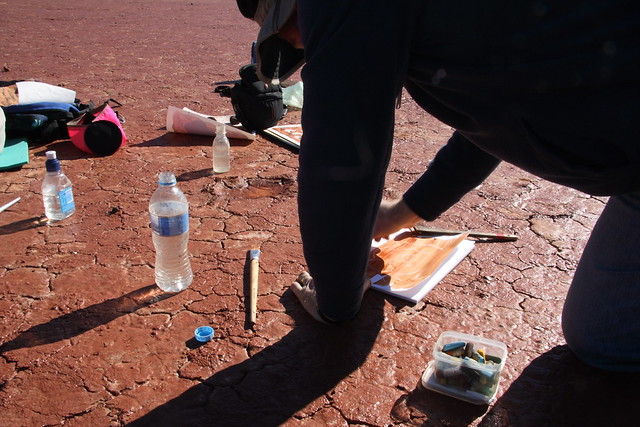
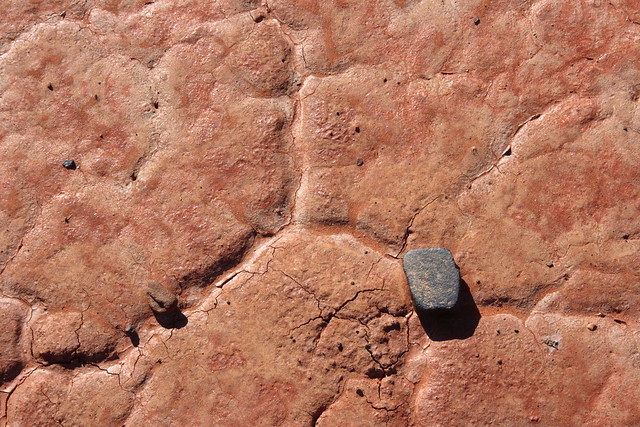
Whatever it had been, its surface was now dry and hard.

Walk to clay pan

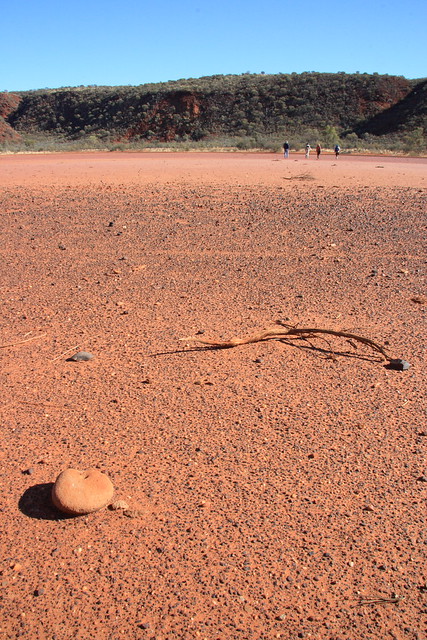
Parts of the surface was clear, with only cracks and the odd hard, black stone.

Walk to clay pan

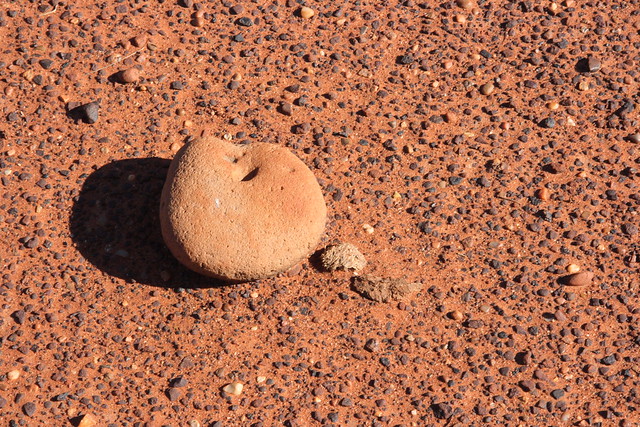
Other parts had pebbles on top and embedded into the surface.

Walk to clay pan

It was beautiful, and intriguing place.

Running Waters – Part 6

Let’s have a further look at the landscape beyond the camp.

Big river gums loom over the Finke River.

Running Waters

What’s fascinating about these trees were their roots. These were nowhere near the soil, but somehow the tree survives.

Running Waters

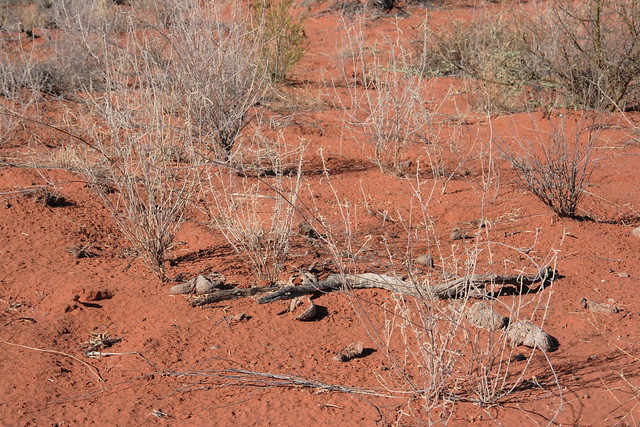
Away from the river bed the soil quickly turns to red, red sand.

Running Waters

There was of course the dreaded spiky spinifex (which plagued me up in Queensland), although not as numerous as I thought. This area hasn’t had any rain in the past few months (unlike other areas of Central Australia) and so the livestock have grazed much of the vegetation down.

Running Waters

Running Waters – Part 5

After my post about swag camping, I was asked whether I had concerns about snakes. We asked our hosts that question very early on, and the answer was that in mid-winter, when nightly temperatures fell to freezing, snakes (or indeed most other critters) weren’t active at all. During the day, we’d fold up the swag to ensure that we had no surprises come nightfall.

We did however have other nightly visitors. We certainly heard plenty of dingoes, although we didn’t often see them in the camp. When they came (and they did explore since I saw their paw prints about camp), they came in stealth. I can report that the dingoes did not steal anything from camp (much less babies).

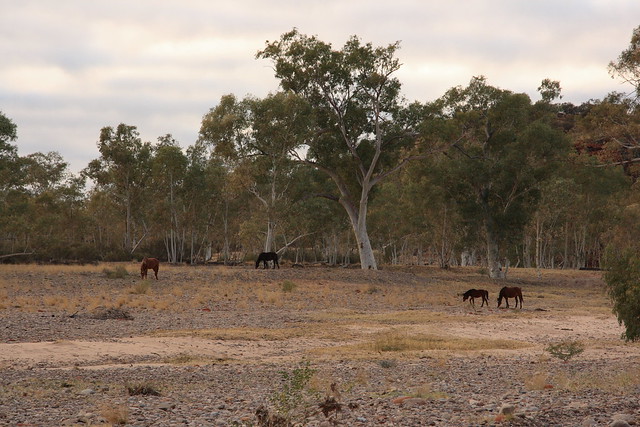
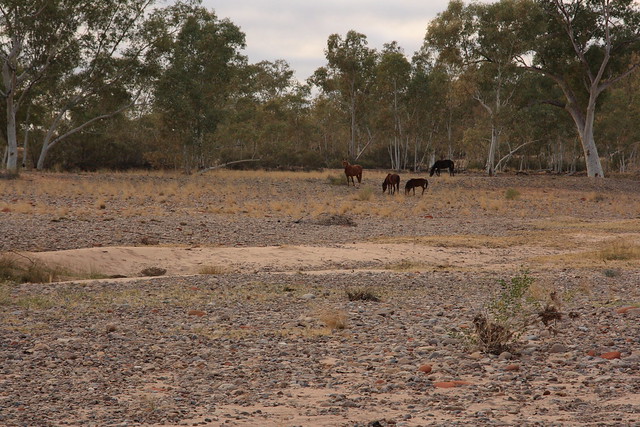
It was the domestic animals that provided much of the midnight entertainment. Being on a pastoral property, there were cattle roaming about at will. One bull was so curious that he visited us on most of the nights and refused to go! Other visitors were the brumbies (a.k.a. wild horses), who were less confident, but no less curious. We got a good glimpse of them early one morning.

Running Waters

Running Waters

Running Waters – Part 4

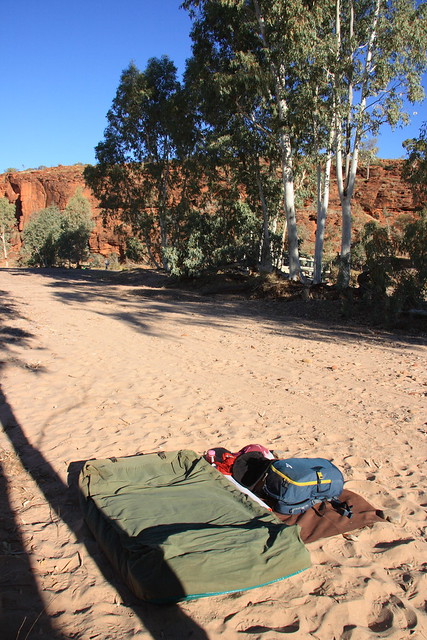
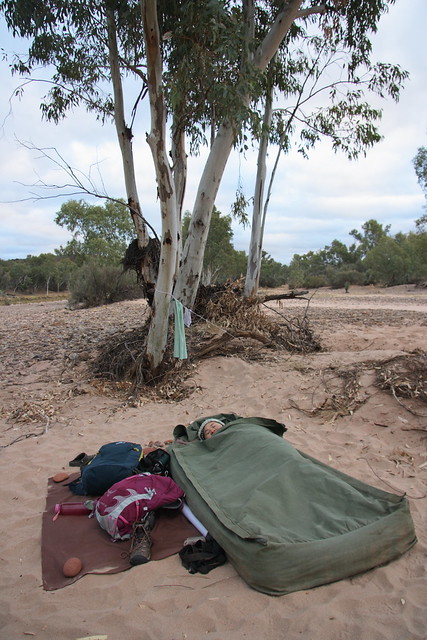
We slept in swags all week at Running Waters. Yes, I was tent-less. Swag camping is a common thing in Central Australia where rain isn’t usually a problem much of the time. Here’s what my swag set up looked like.

Swag camping

The swags were made of canvas, are king single sized, and inside was a full bed set-up – pillow, mattress, sheets, blankets, even a doona. So yes, it was rather cosy in there, and with a hot water bottle, I was very snug.

Swag camping

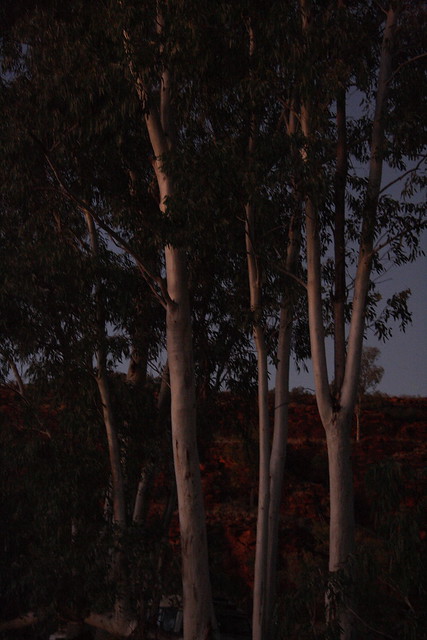
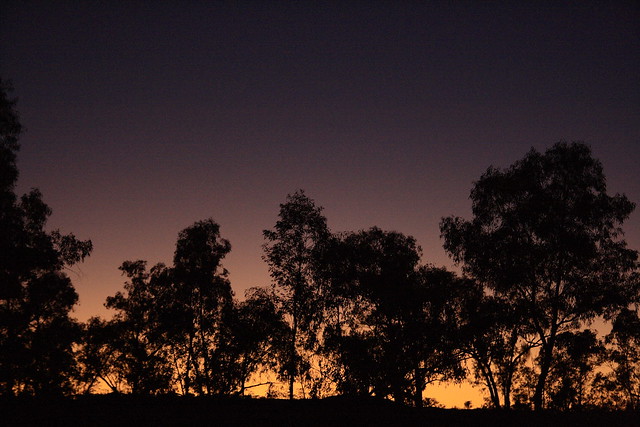
The advantage of being in a swag is that you have the moon and stars for company every night. I found waking up with the galaxy above me very soothing. And of course I’m there to witness the beautiful sunrises every morning.

Early Morning

Early Morning

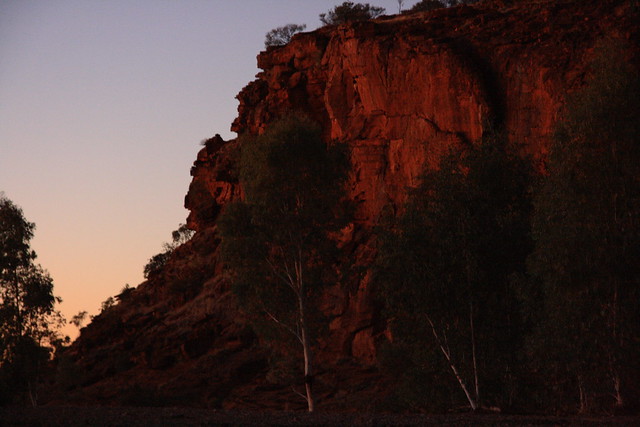
I saw the colours change minute by minute in not just the sky, but the trees and cliff too. It was magic every morning.

Early Morning

Early Morning

Running Waters – Part 3

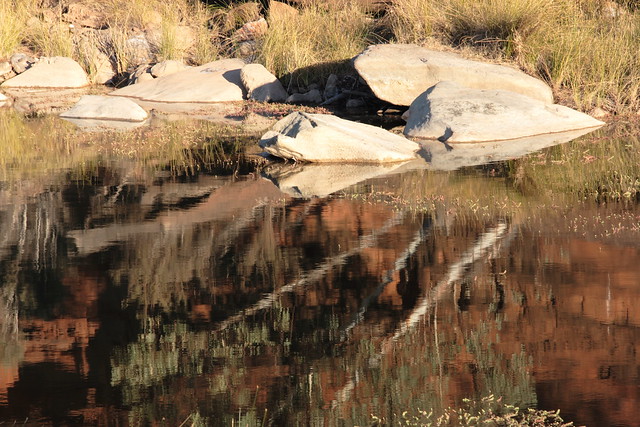
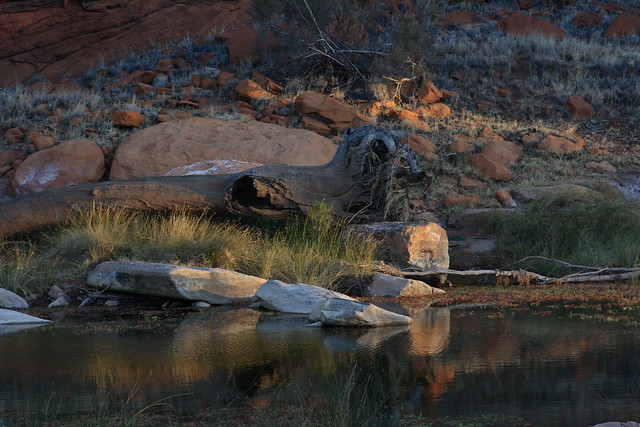
A series of water holes separate the camp site from the cliff face. It was our source of fresh water, and made for a freezing refreshing dip in the afternoon. By the water were boulders of various kinds, pebbles, sand, grasses, and logs from past storms.

Running Waters

Running Waters

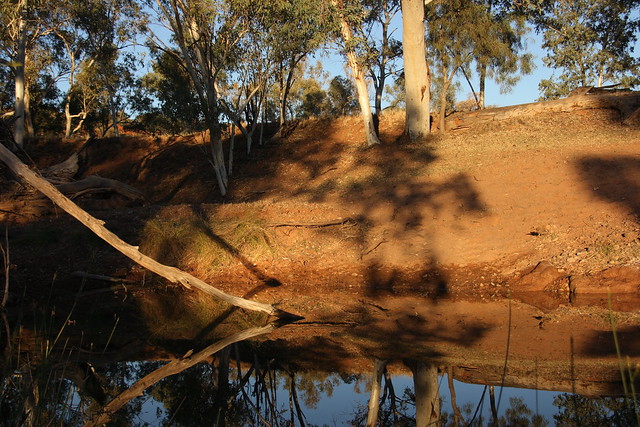
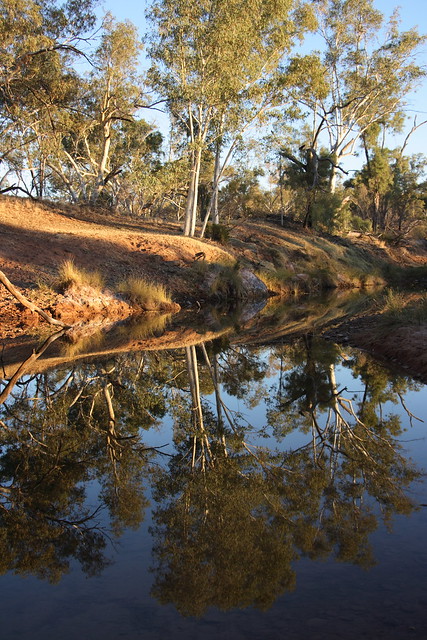
The reflections on the water were delightful, particularly those of the trees.

Early Morning

They were particularly beautiful in the early morning when all was calm.

Early Morning

Early Morning

Running Waters – Part 2

The trees at Running Waters were eucalypts of course, but very different ones to the ones found in the east. On the sand flats are the river red gums – red because of the colour of its sap. Here is a magnificent specimen.

Running Waters

They tended to grow in strands so there was plenty of shade by the water hole.

Running Waters

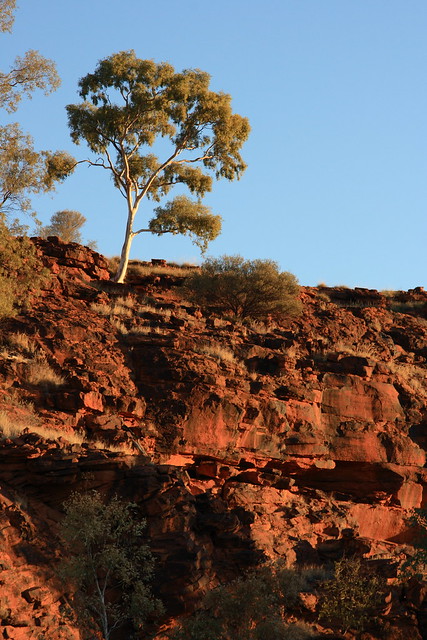
On the rocky escarpment were the ghost gums. They grew more singularly.

Running Waters

Sometimes they grew in the most unlikely places, like half-way up the cliff-face.

Running Waters

Running Waters – Part 1

Our destination, and home for the week, was Running Waters. It’s a series of permanent waterholes on the ancient Finke River. It’s at the edge of the large Henbury pastoral station, almost on the boundary with Finke Gorge National Park. I had visited Palm Valley last time, but this was something very different.

Running Waters

The rocks of the escarpment were a highlight. Because we were camped beside it for a week, we saw all manner of light play upon it. This was later in the afternoon on our first evening.

Running Waters

Into the Bush

The next day I started my camp experience. I was picked up by Deb and Charlie, who ran Larpinta Creative Camps, and after a quick run-around to collect the other participants (there were only 5 of us), we headed down the Stuart Highway. It was 130km of bitumen highway, then 50km of all-weather unsealed road, then 50km of 4WD track.
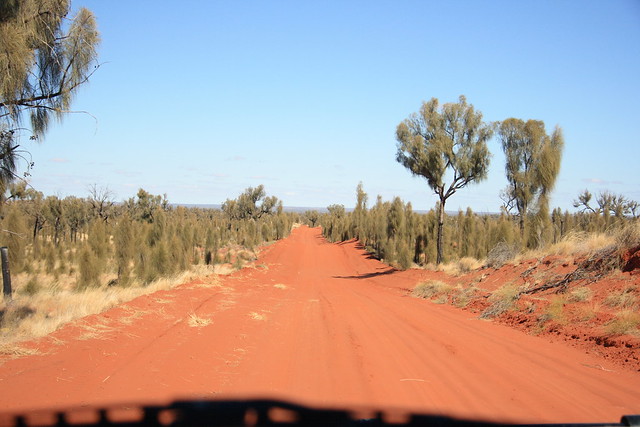
On the way to Running Waters

We stopped for lunch in desert oak country, and the sand here was bright, bright red.
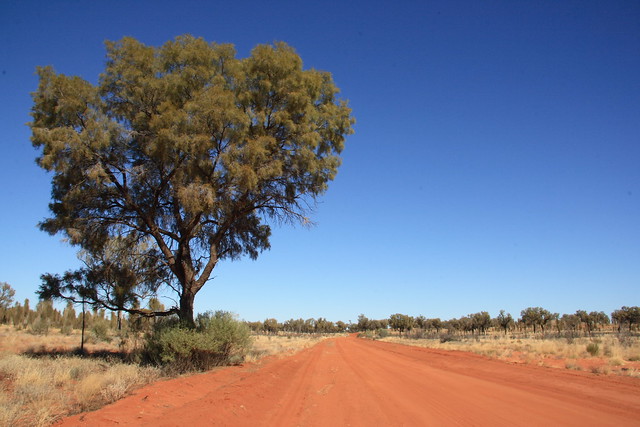
On the way to Running Waters

Desert oaks are interesting trees as the juvenile (the punked up version on the left) looks nothing like the mature (the big tree on the right). It’s lean in its youth as it needs all its energy to shoot roots far downwards into the water table.

On the way to Running Waters

There was the letting down of tyres, since the going was going to get tougher.
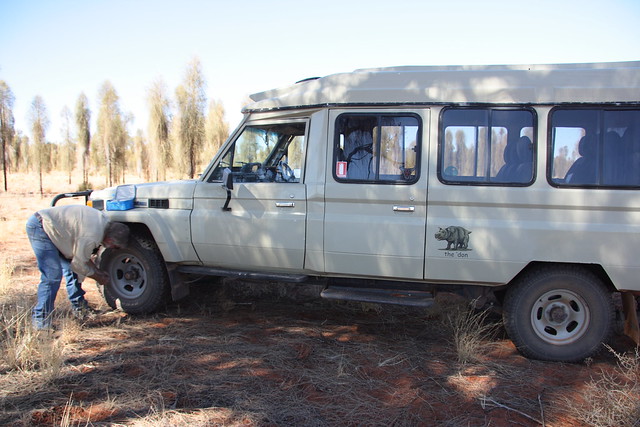
On the way to Running Waters

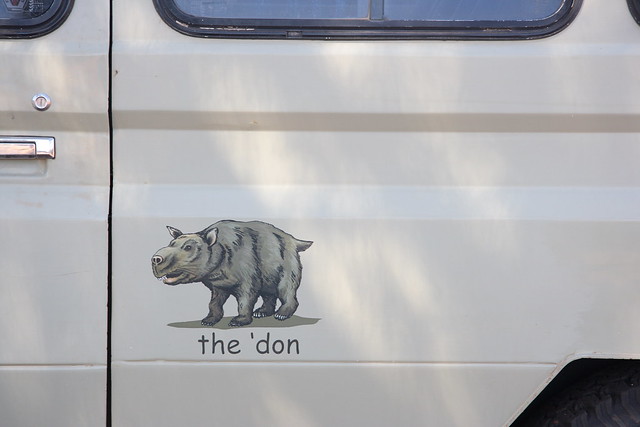
I was impressed that the vehicle was named after one of my favourite mega-fauna, the diprotodon.
On the way to Running Waters

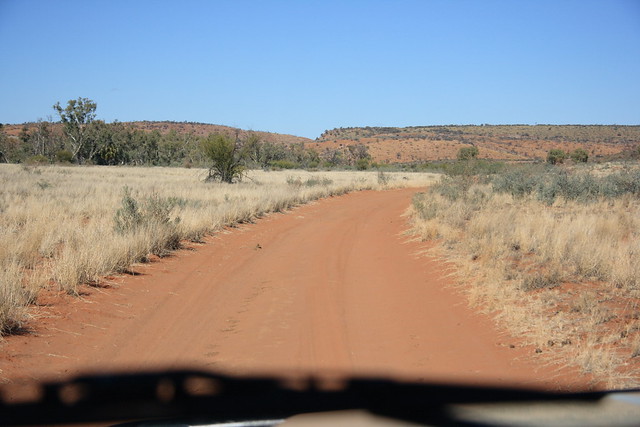
After lunch the road became a track.

On the way to Running Waters

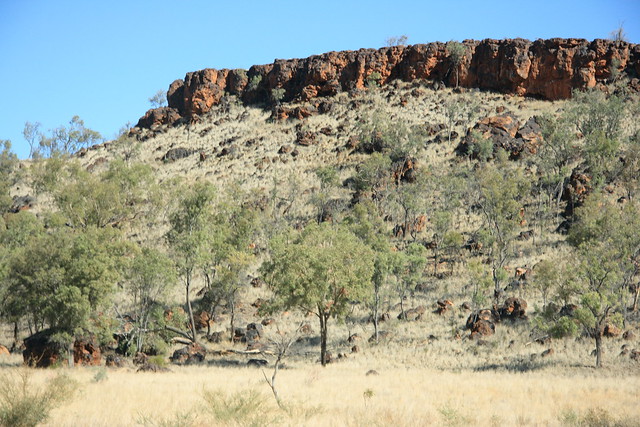
Soon the escarpments appeared. We were almost at Running Waters.
On the way to Running Waters