Category Archives: Holiday

On My Way Home – Canola Trail

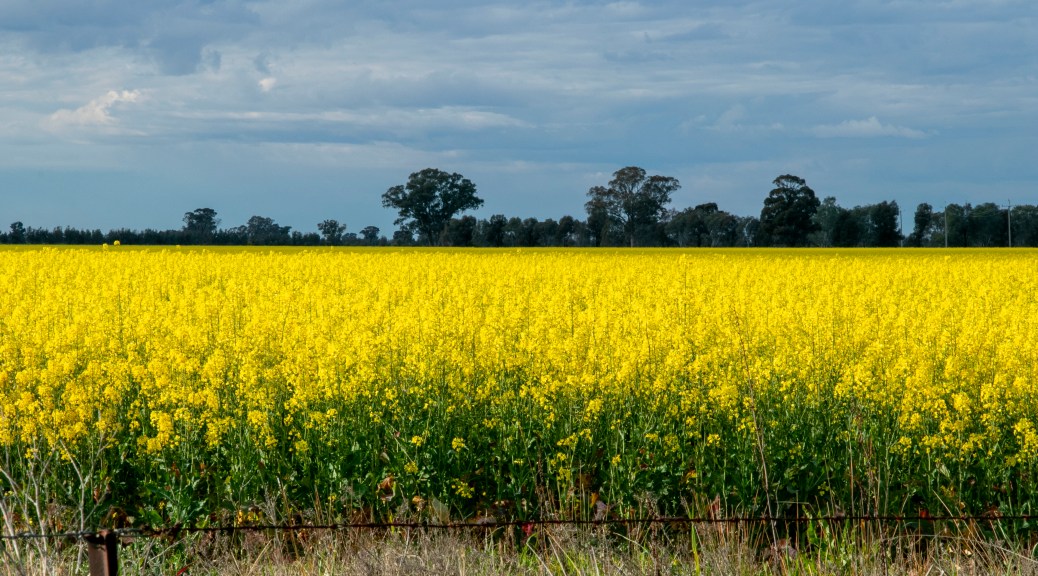
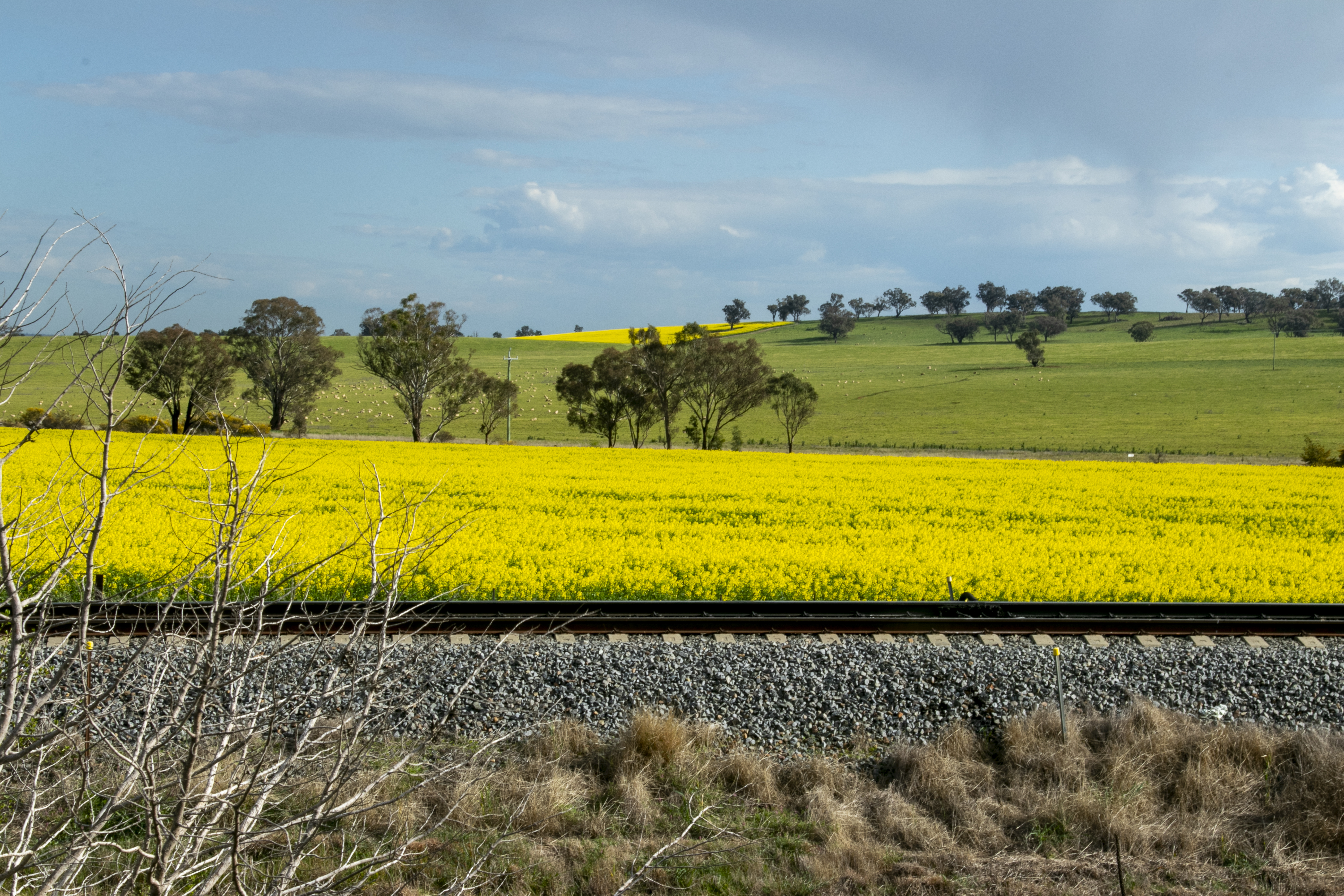
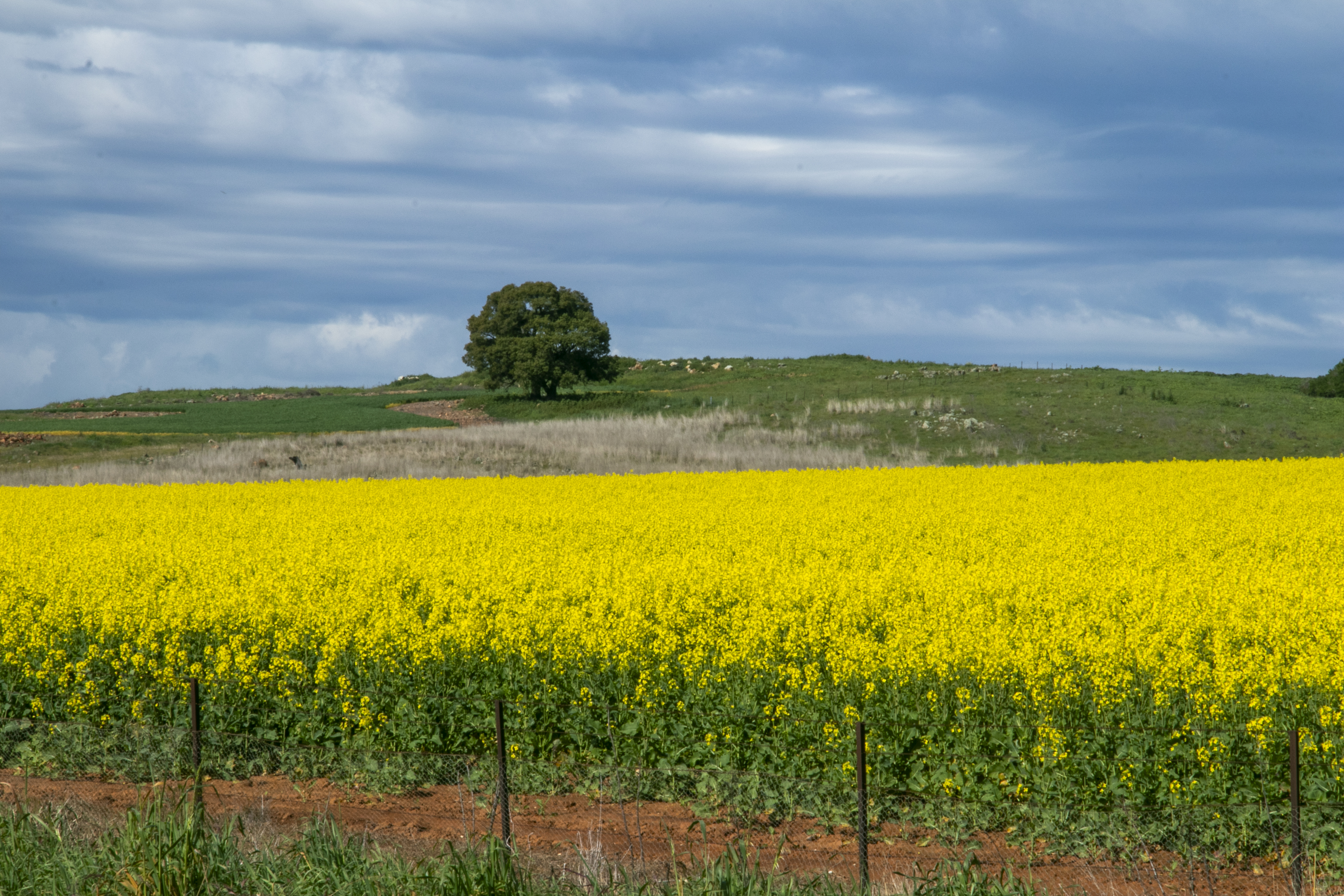
Our last stretch towards home on our Winter 2023 adventure involved driving down the stretch from Narrandera to the Hume Highway. This involved driving on the many quiet country roads that made up the Canola Trail. This is a triangle between the towns of Temora, Coolamon and Junee where the crop canola is grown (to be made into oil).

Canola Way

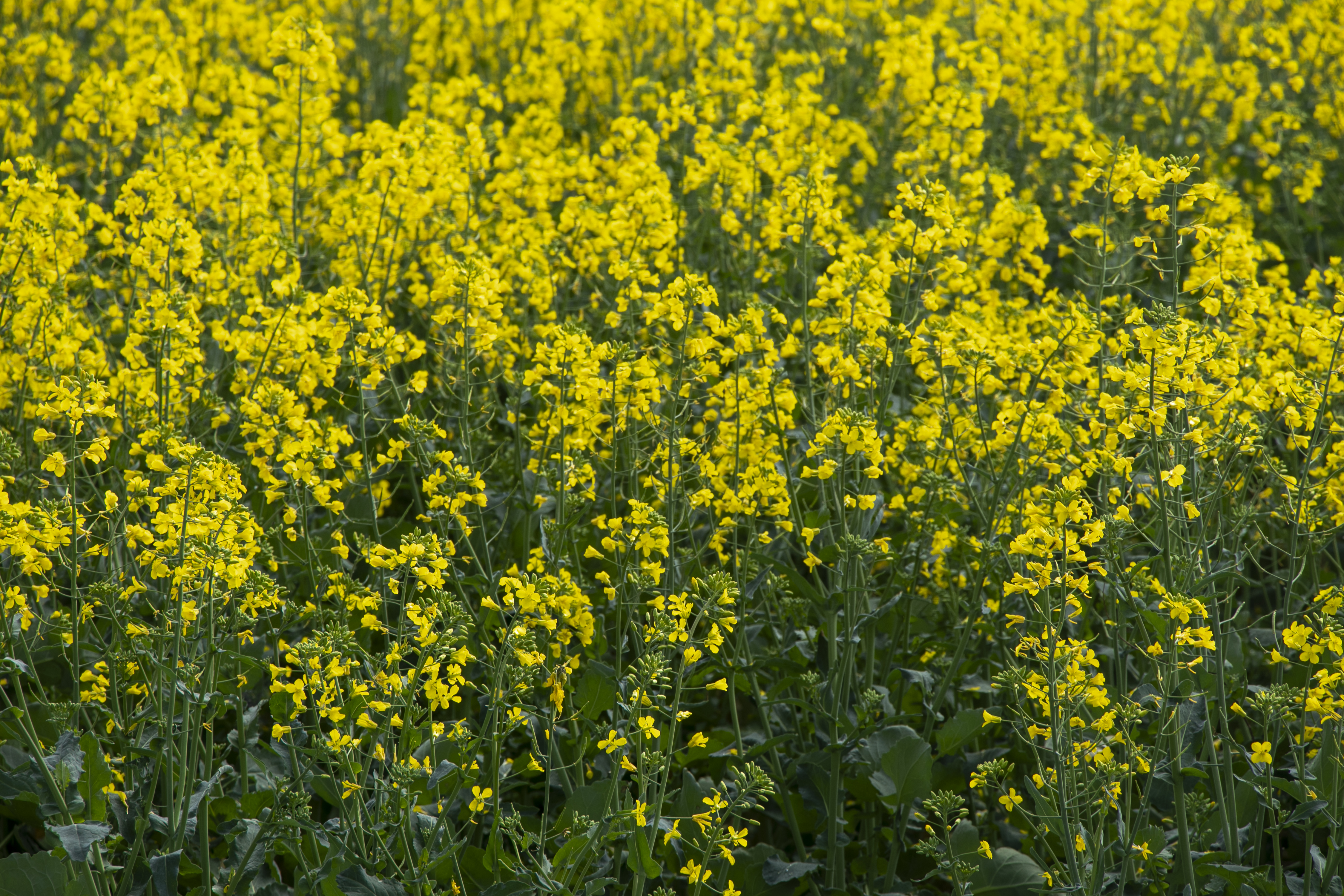
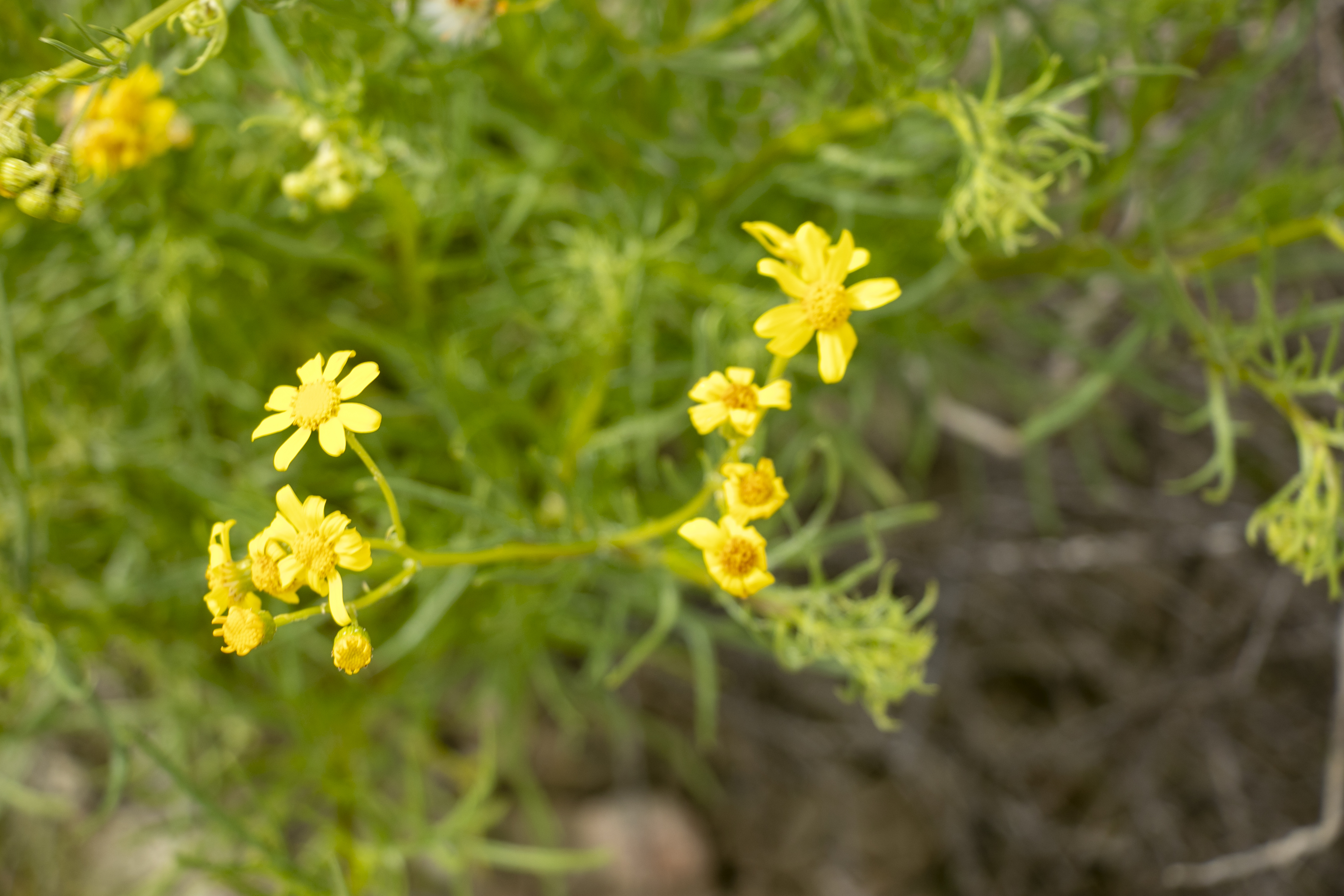
The crop blooms at the end of winter, and fields suddenly go from lush green to fluoro yellow! Who knew that your humble deep fry oil had such picturesque beginnings?

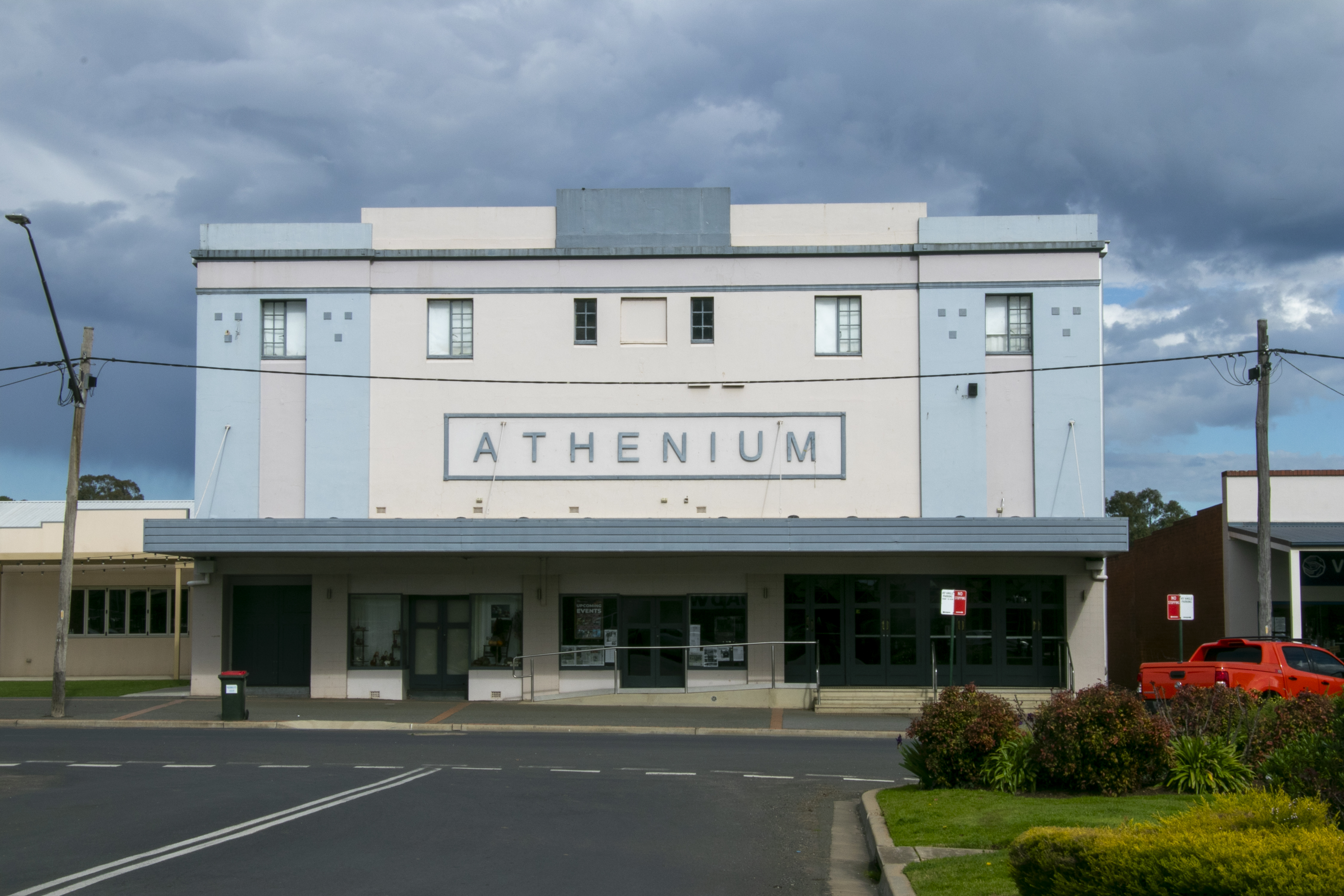
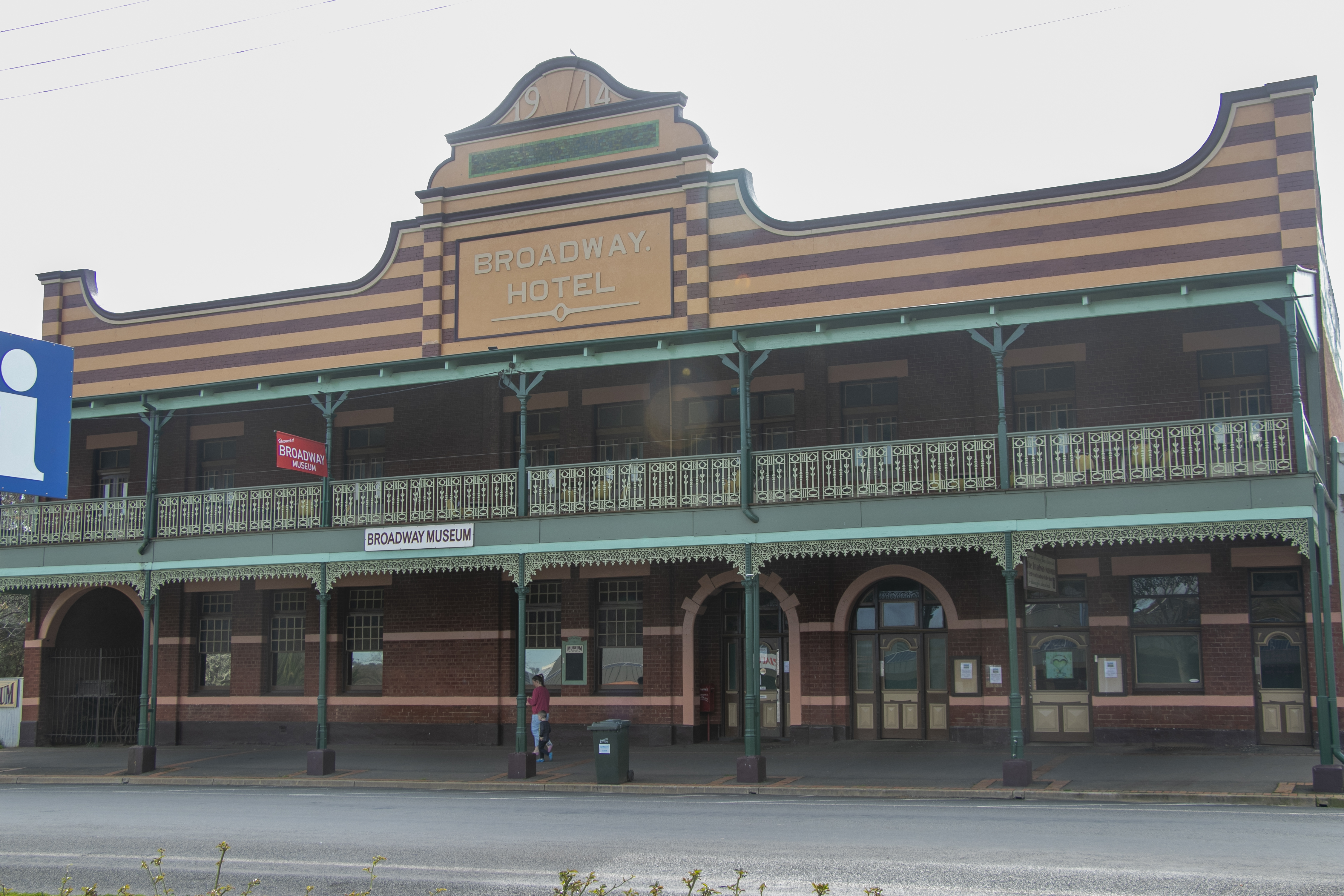
At the end of the trail was the cute little town of Junee. It had an assortment of well-kept historical buildings from various eras. It is also just off the Hume Highway, meaning, the next stop was definitely home.
And that’s the end of our Winter 2023 journey out west. If you’re new to the blog, check out my previous posts about this journey out west. I have more adventures to post about, so stay tuned. Hint, we’re not heading west this time!

On My Way Home – Narrandera

The last pit stop we made on our way back to Sydney on our Winter 2023 trip was at the small, Riverina town of Narrandera. It’s 550km from Sydney and 440km from Mungo (i.e. Almost right in the middle). It’s got a population of some 4,000 people, and seems to like its sport a lot, having numerous and well-kept facilities for a town its size.

Narrandera

But the life-blood of the town and the region is the mighty Murrumbidgee River that runs through the town and irrigates the fields for miles around.

Narrandera

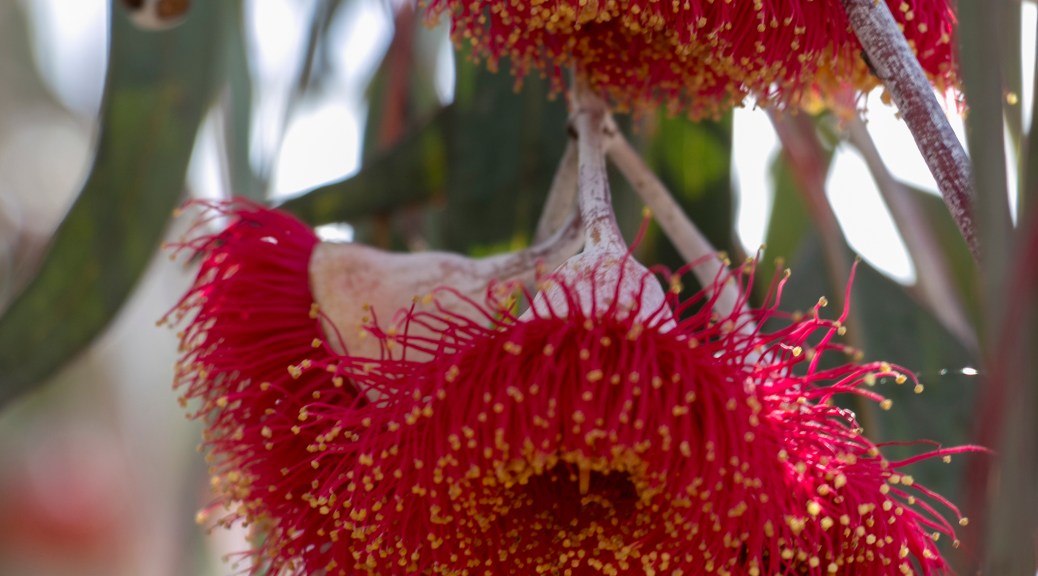
Being that we visited in ‘Sprinter’, we saw some wonderful flowering gums in bloom.

Narrandera

On My Way Home – The Plains

My goodness, 2025 has just flown by. So, it’s all good time to try and finish posting about the winter 2023 journey, documenting our way home to Sydney from Mungo, in the south-western corner of NSW.

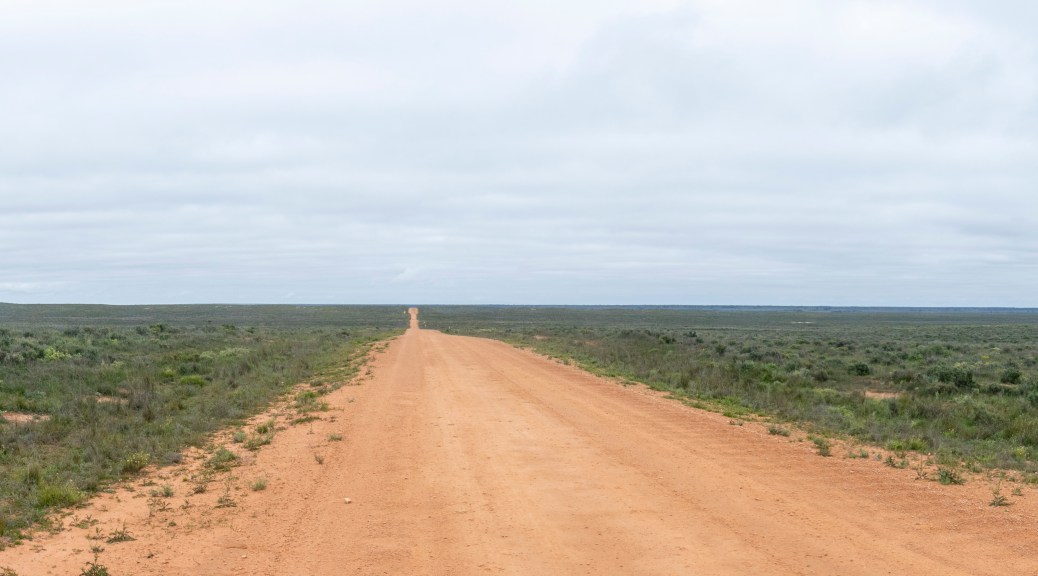
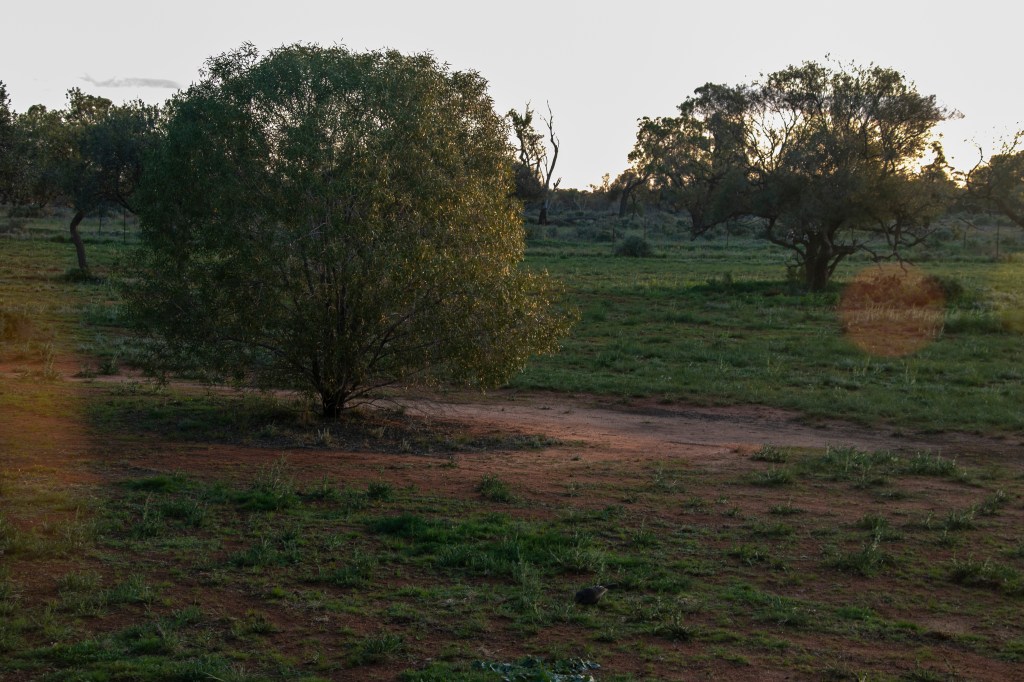
First, we had to escape the ‘Plains’. It took us much of the morning to get to nearest town, of Balranald, through mostly unsealed roads. But, on the other hand, there’s something mesmerising in seeing such flatness, laid out until infinity.

Mungo National Park – Part 5

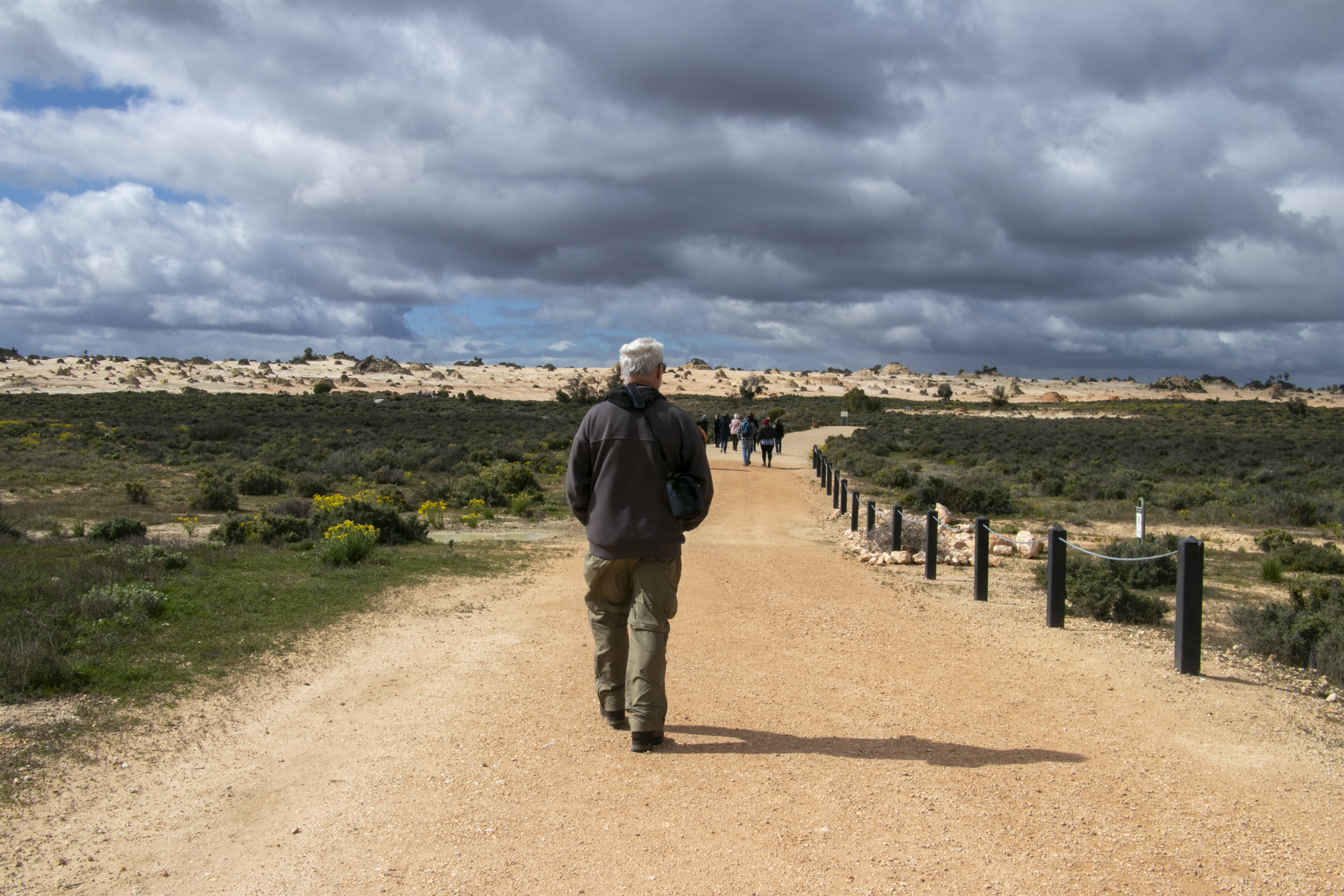
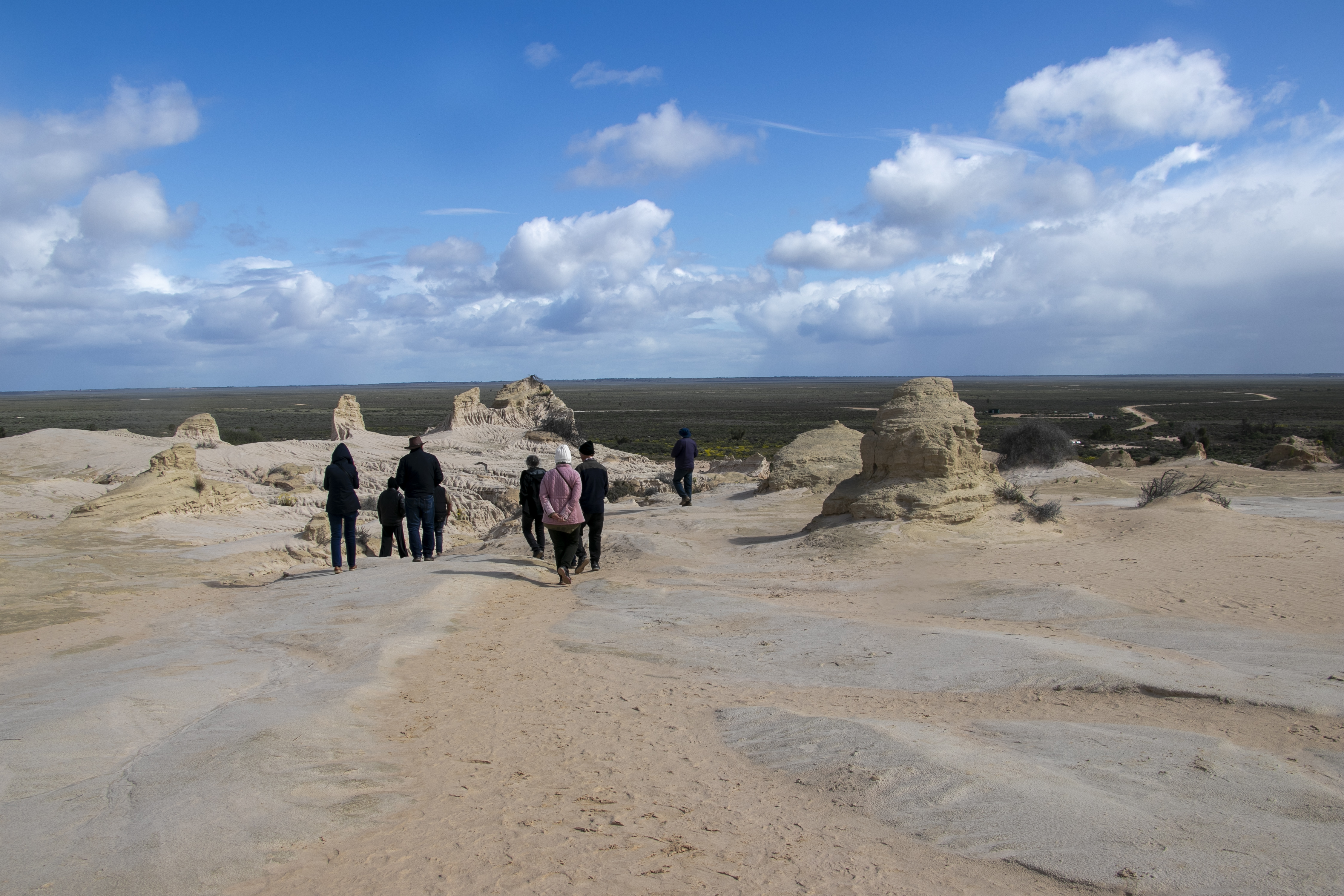
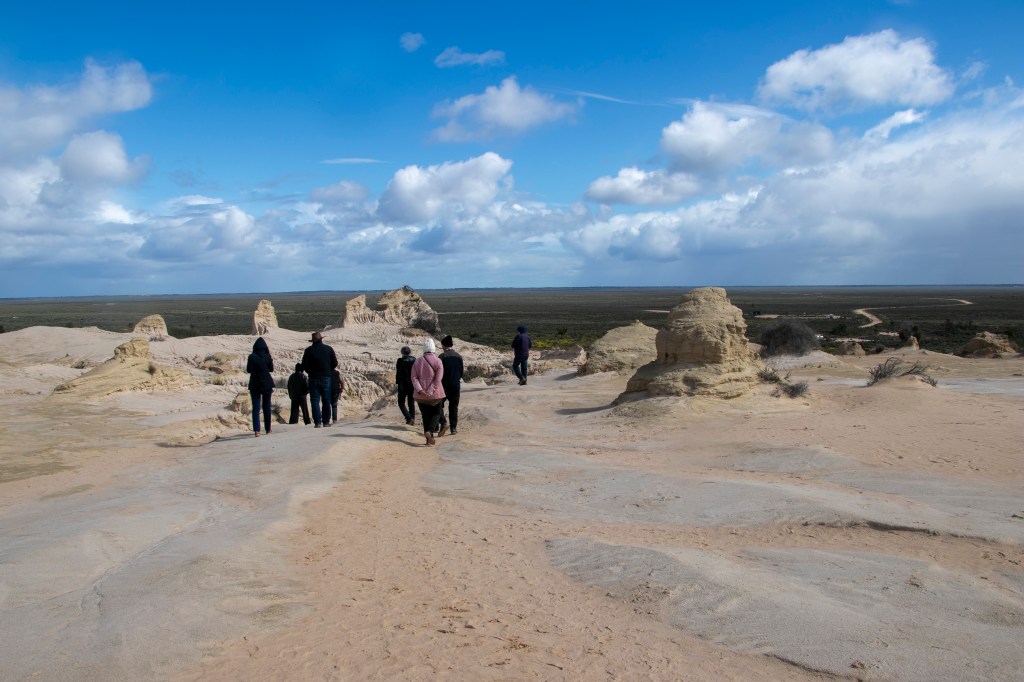
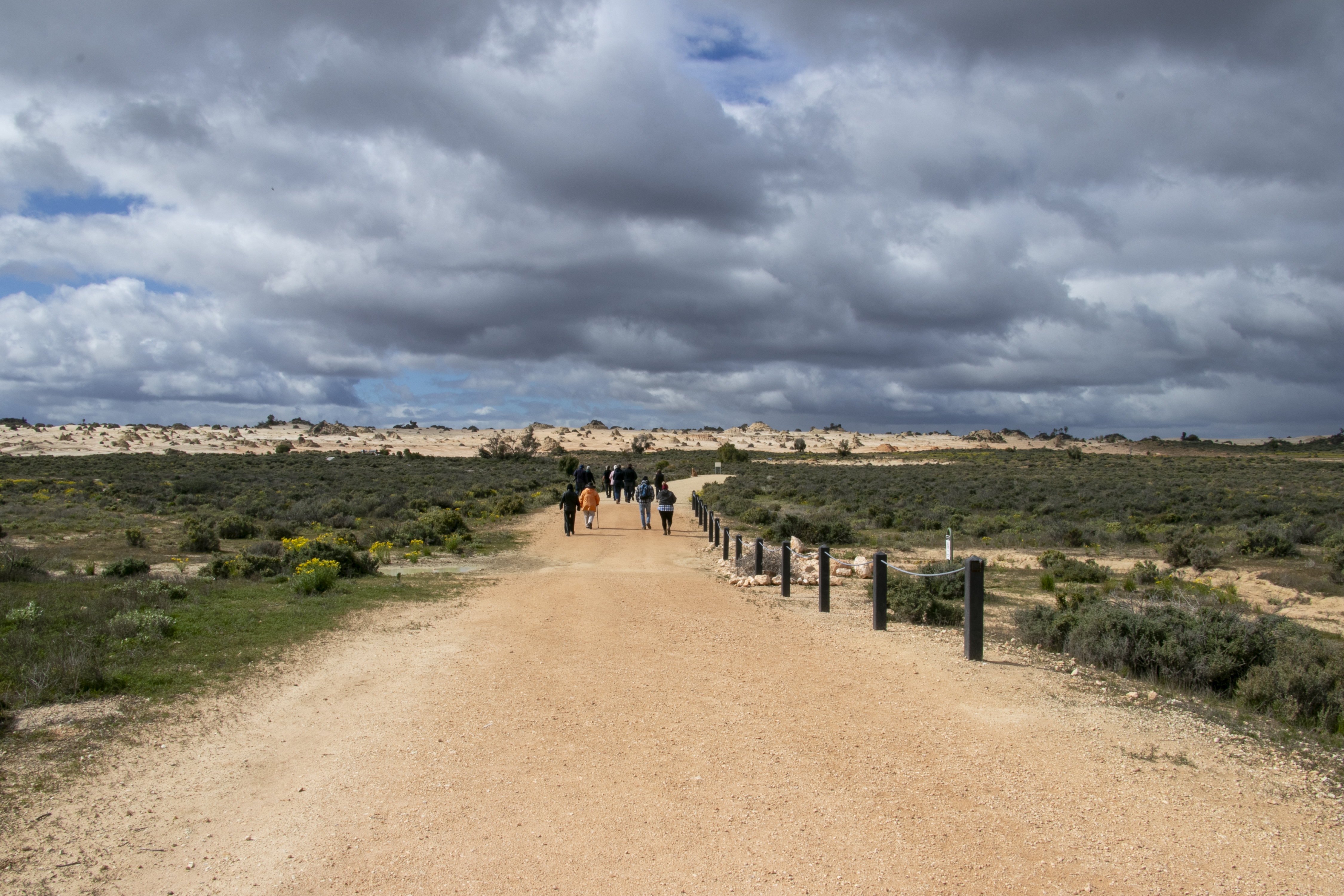
It’s been awhile between posts (life got in the way) but I do have a few more things to say about Mungo National Park. Today, we’ll take a walk among the dunes that is the ‘Wall of China’. This was part of a guided tour – you are not allowed to walk among the dunes on your own as the environment is very fragile.

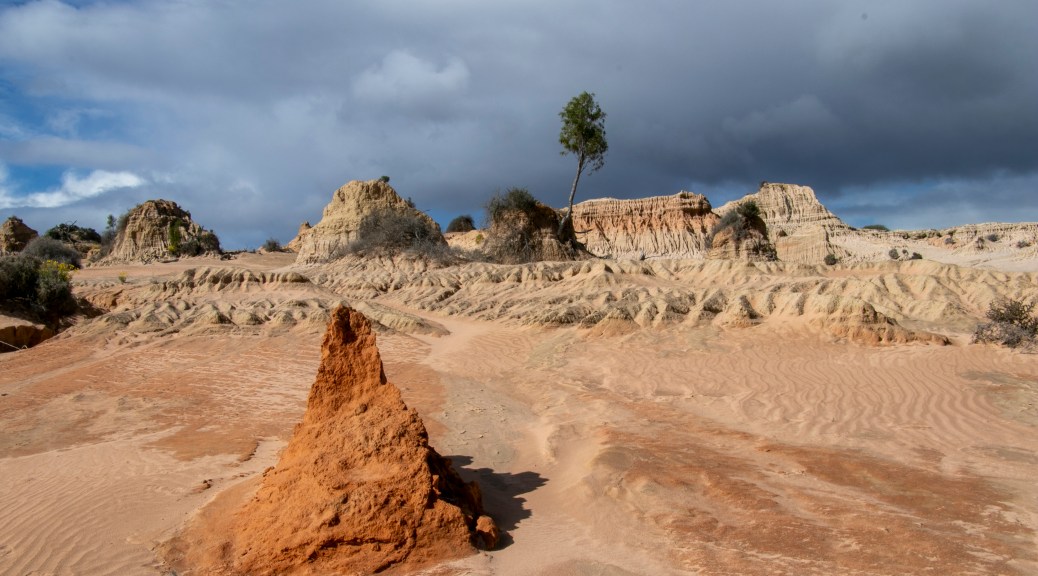
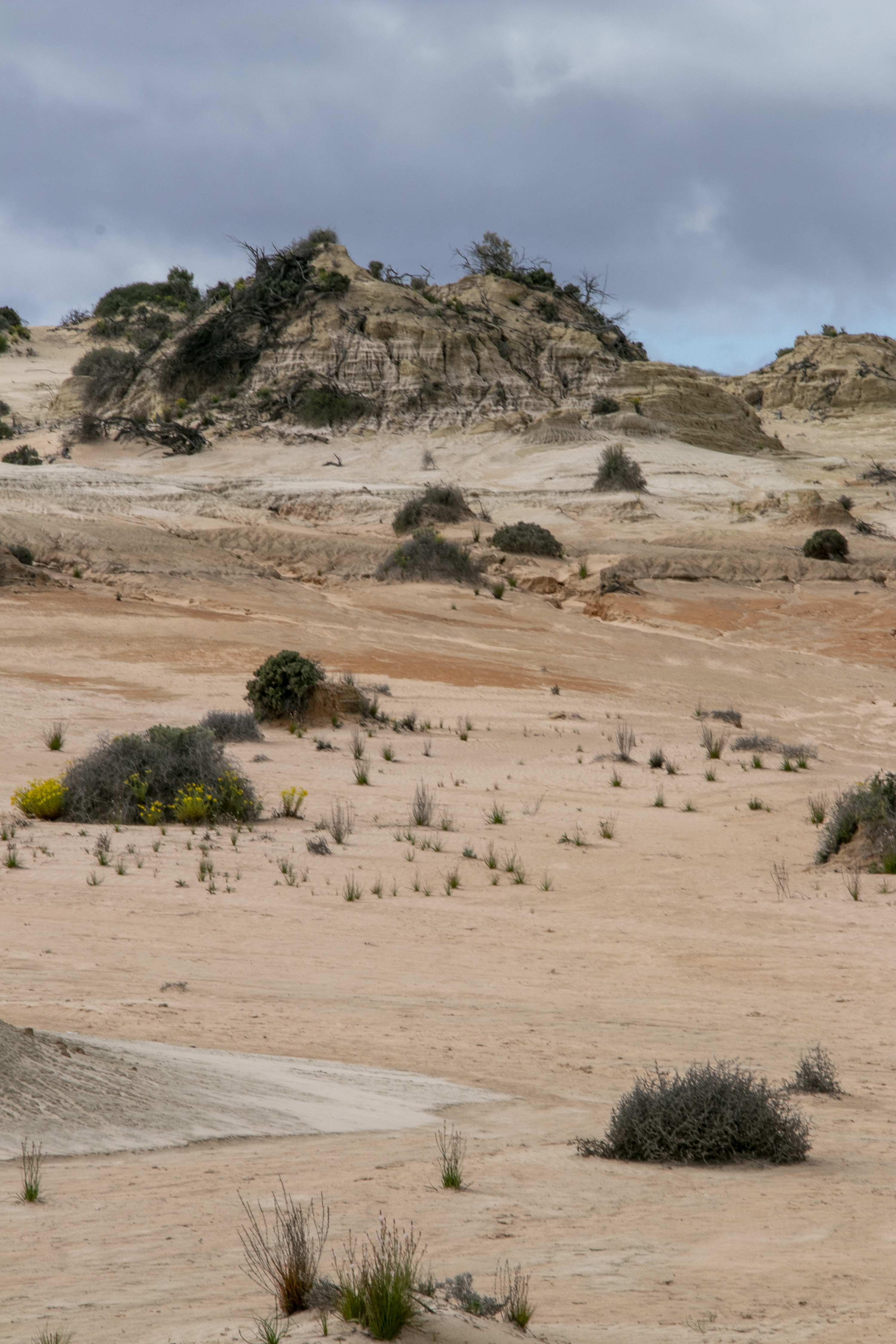
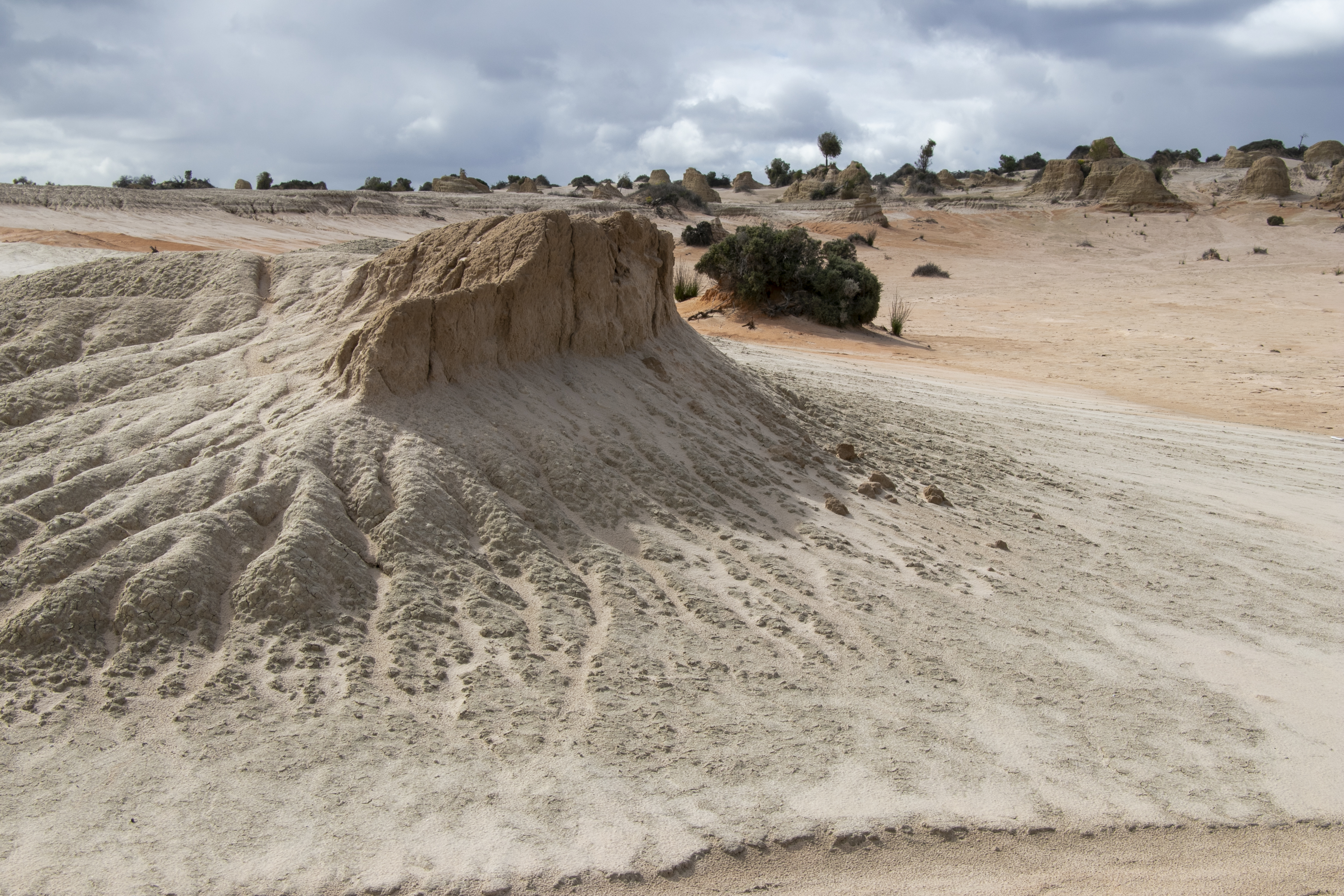
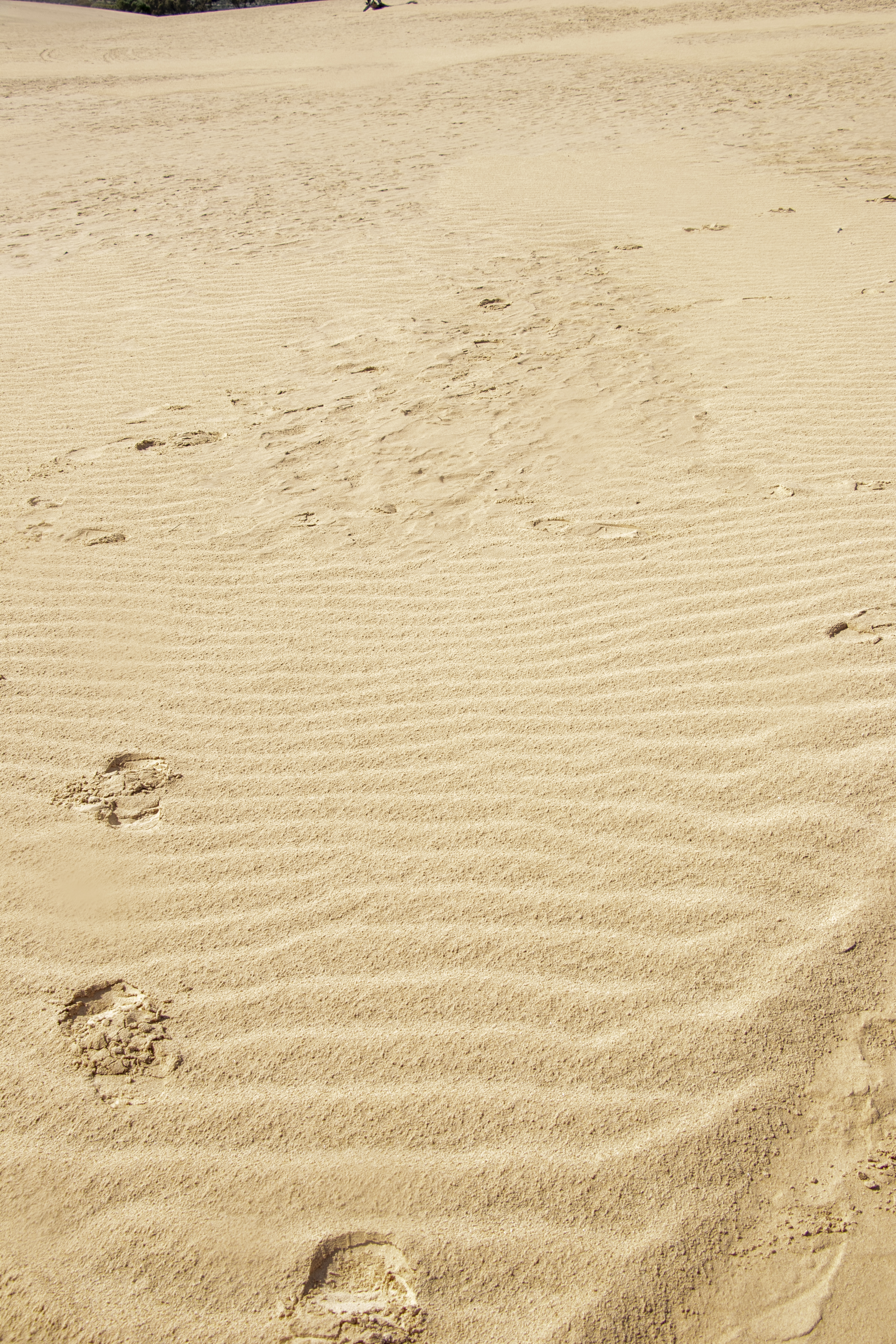
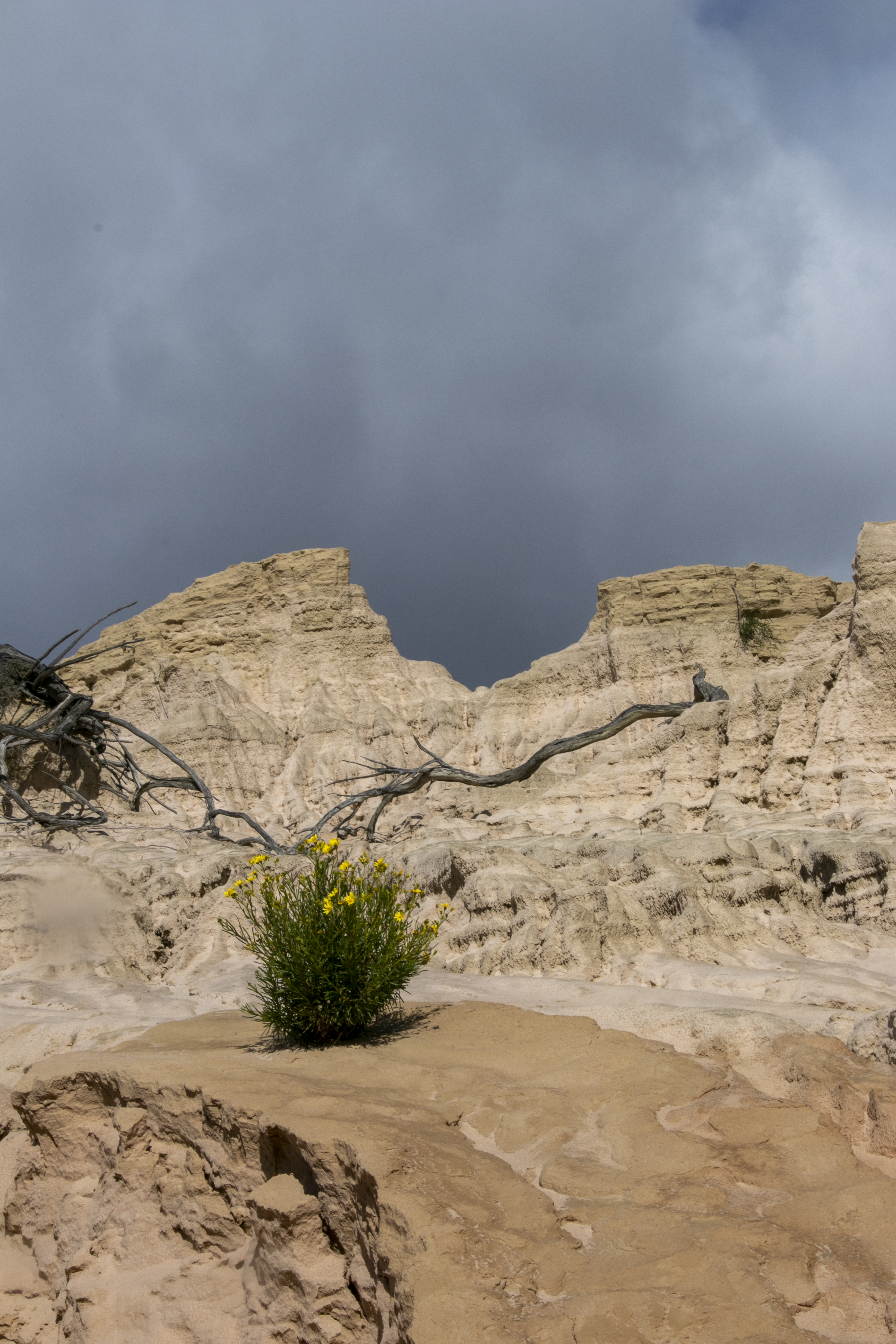
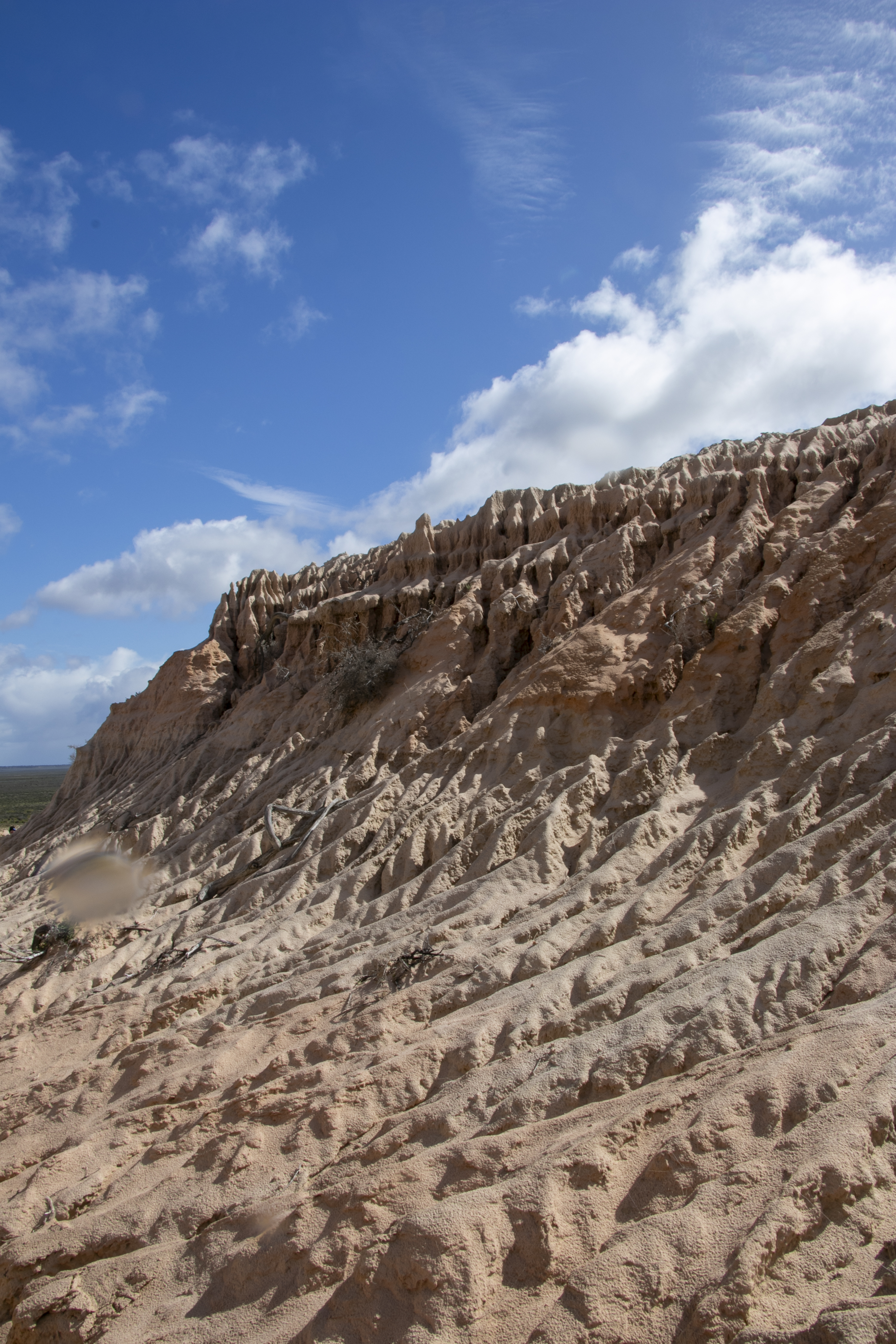
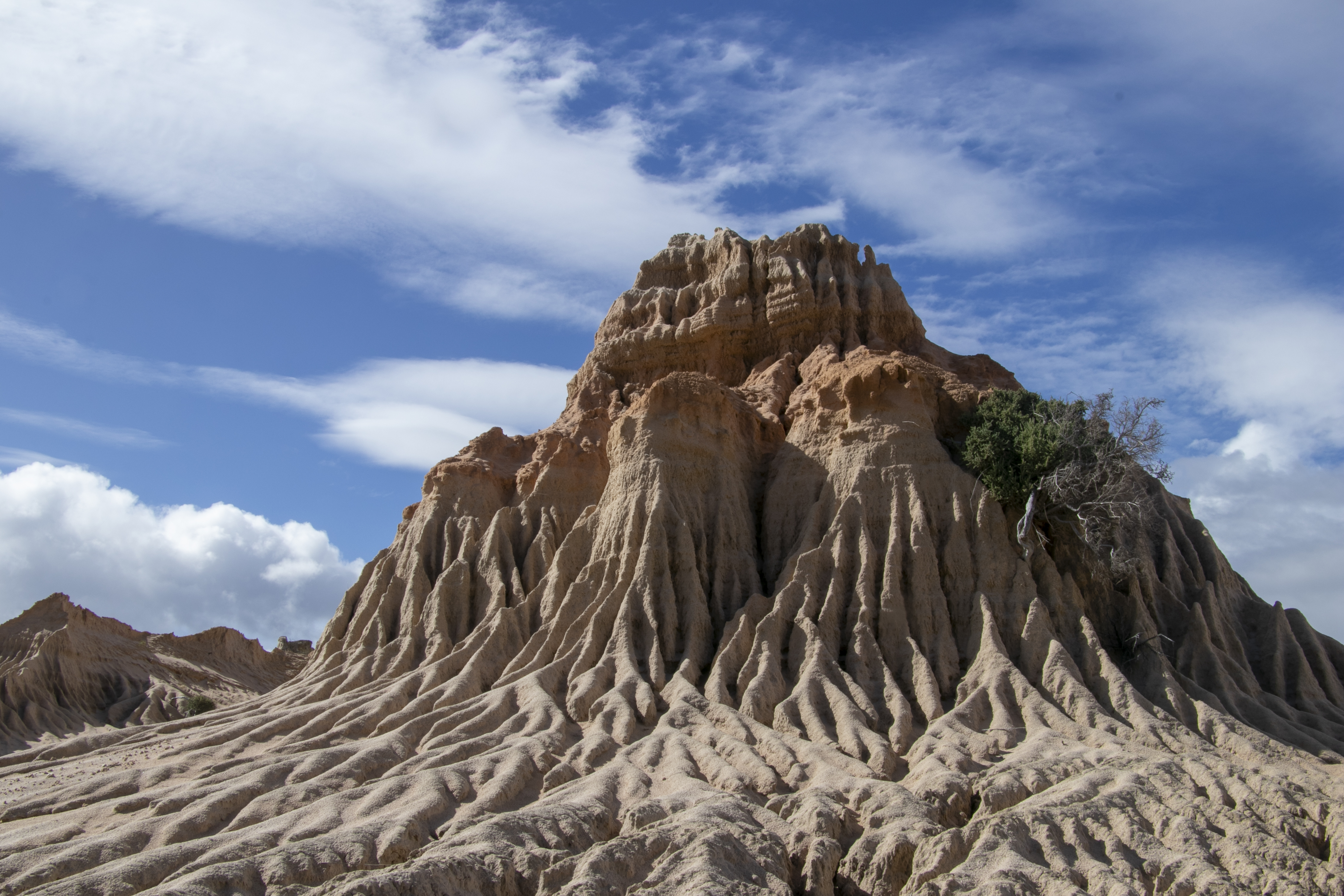
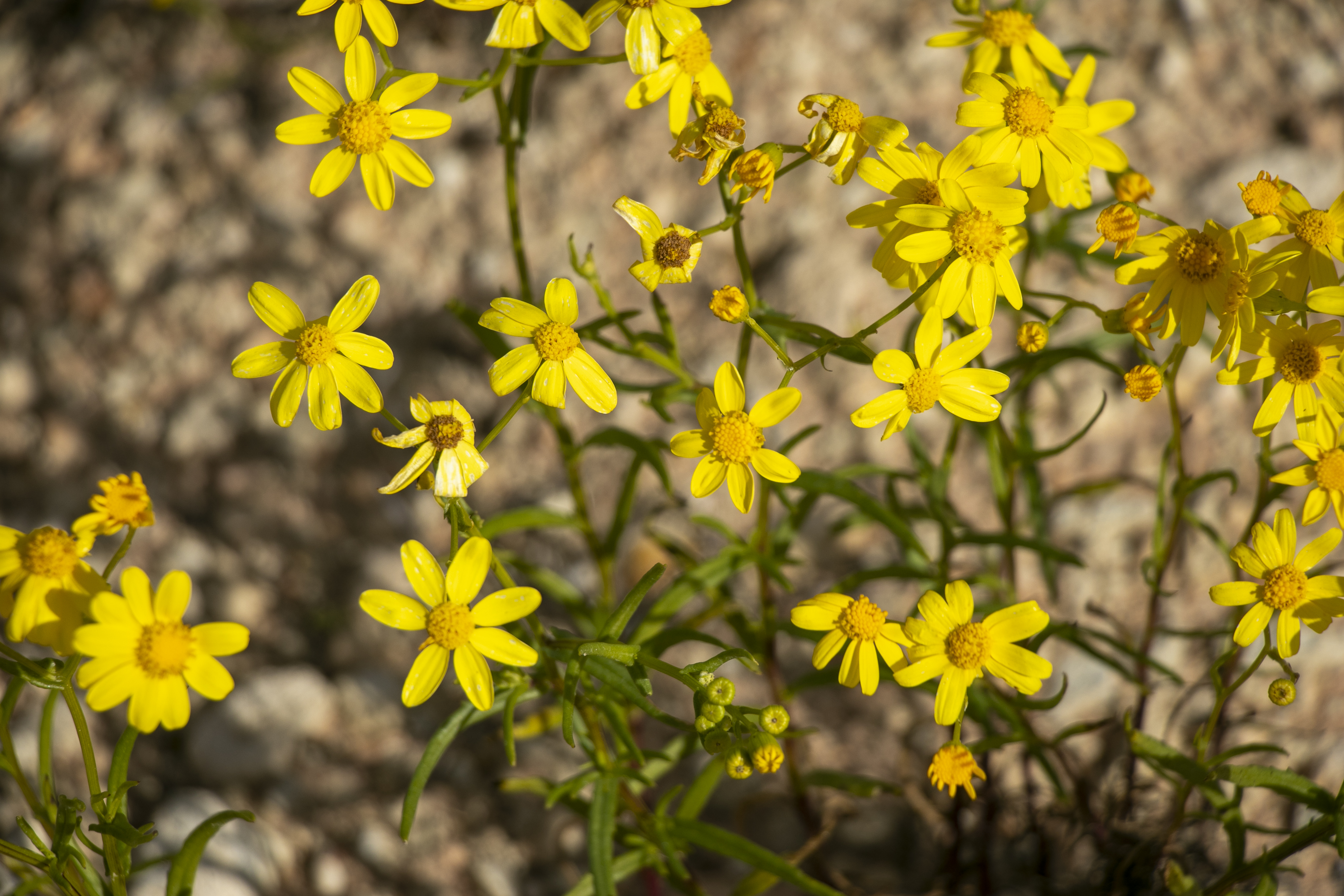
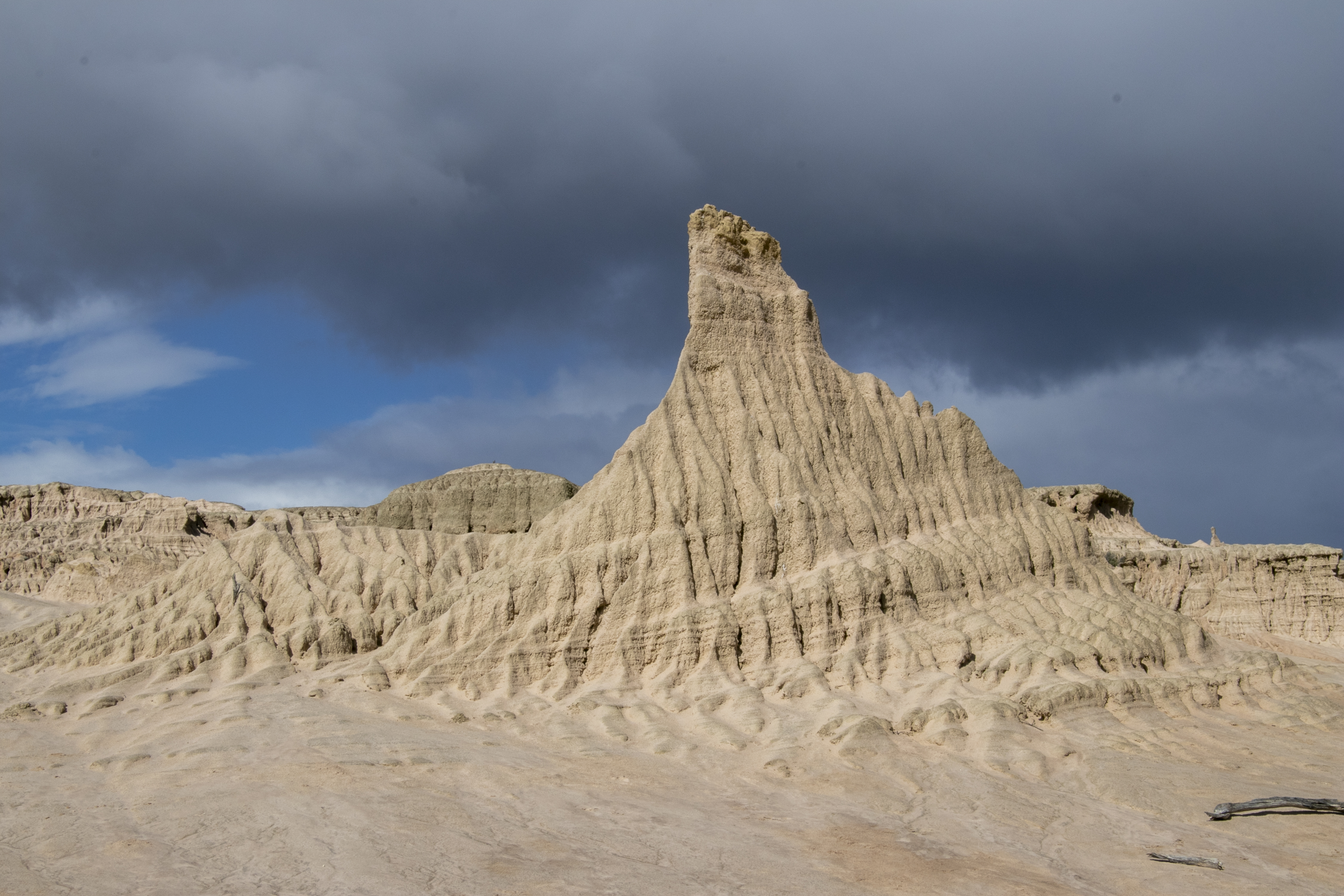
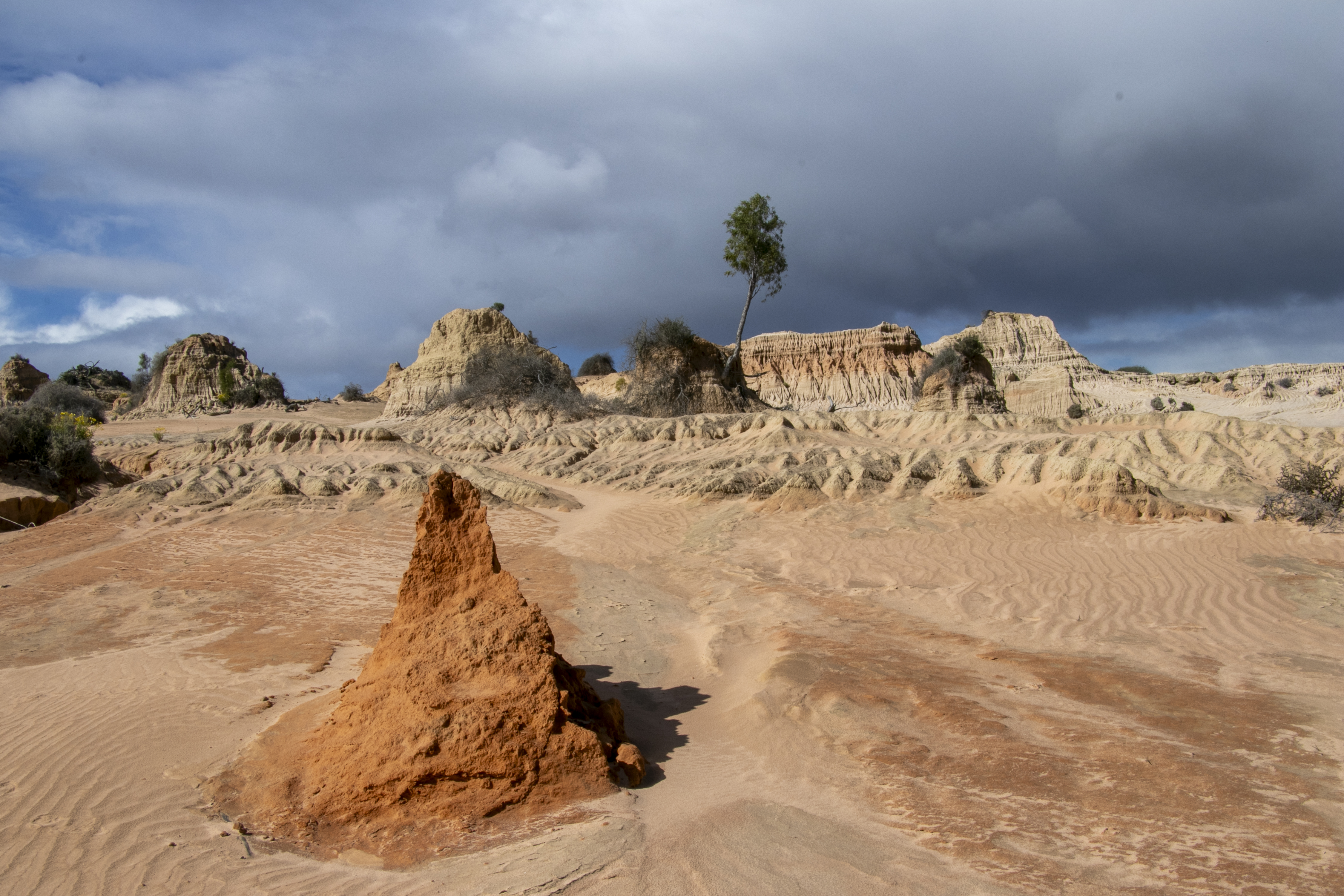
We first walk along the flat lake bed before ascending into the dunes. Surprisingly, we see some very hardy flowers growing there. The dunes comprise of different layers – the top is a very soft white sand, the layers underneath are ochre in colour. The elements have also create lots of interesting formations.

Interestingly, the top sand layer is constantly being eroded by the wind, hence ‘tidbits’ of the long buried past are constantly being revealed. We saw little fragments of bone and other things peeping up as we walked along. This was how Mungo Man and Woman were discovered. It was an interesting walk and I found it interesting as history, geology and palaeontology all came together here.

Mungo National Park – Part 4

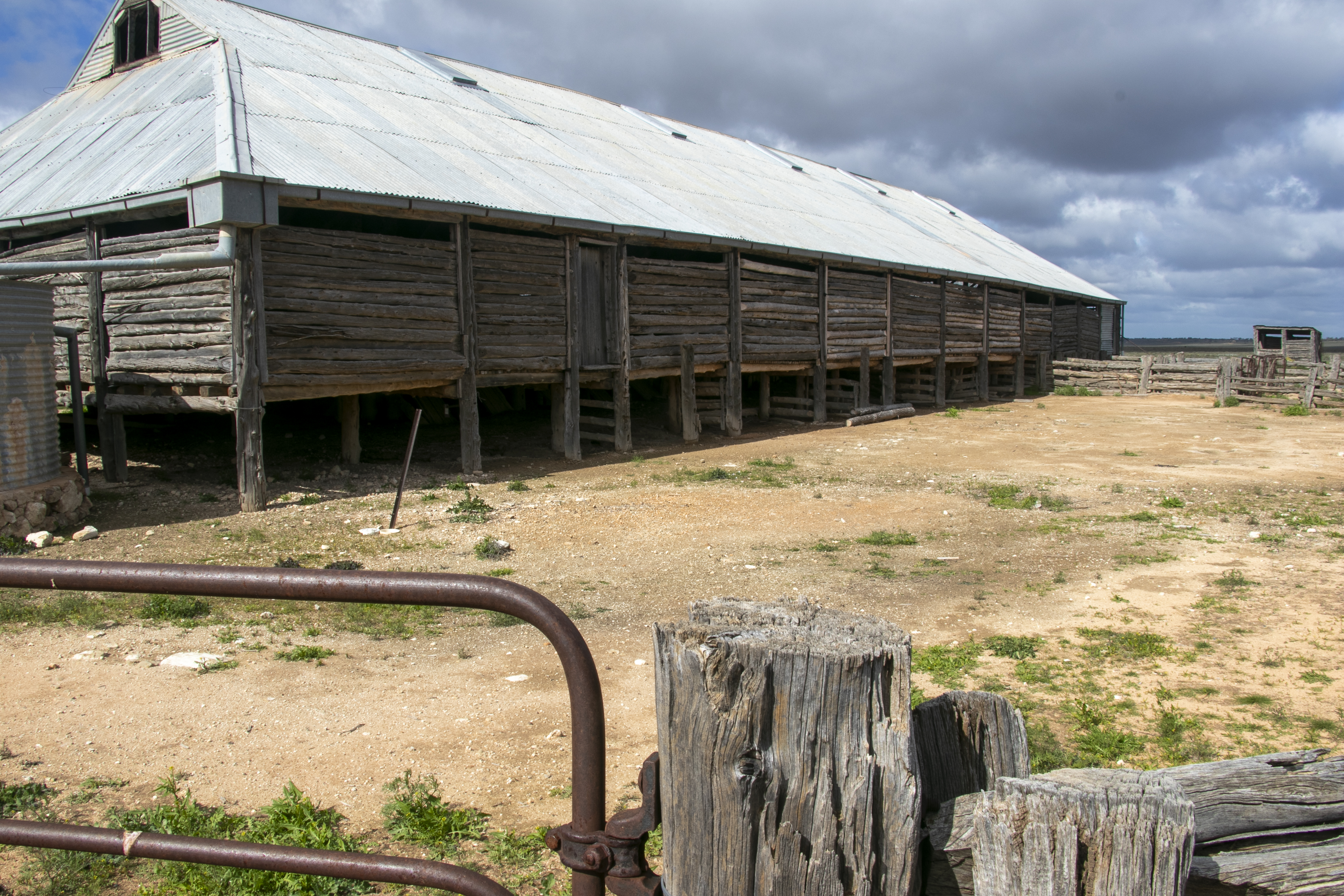
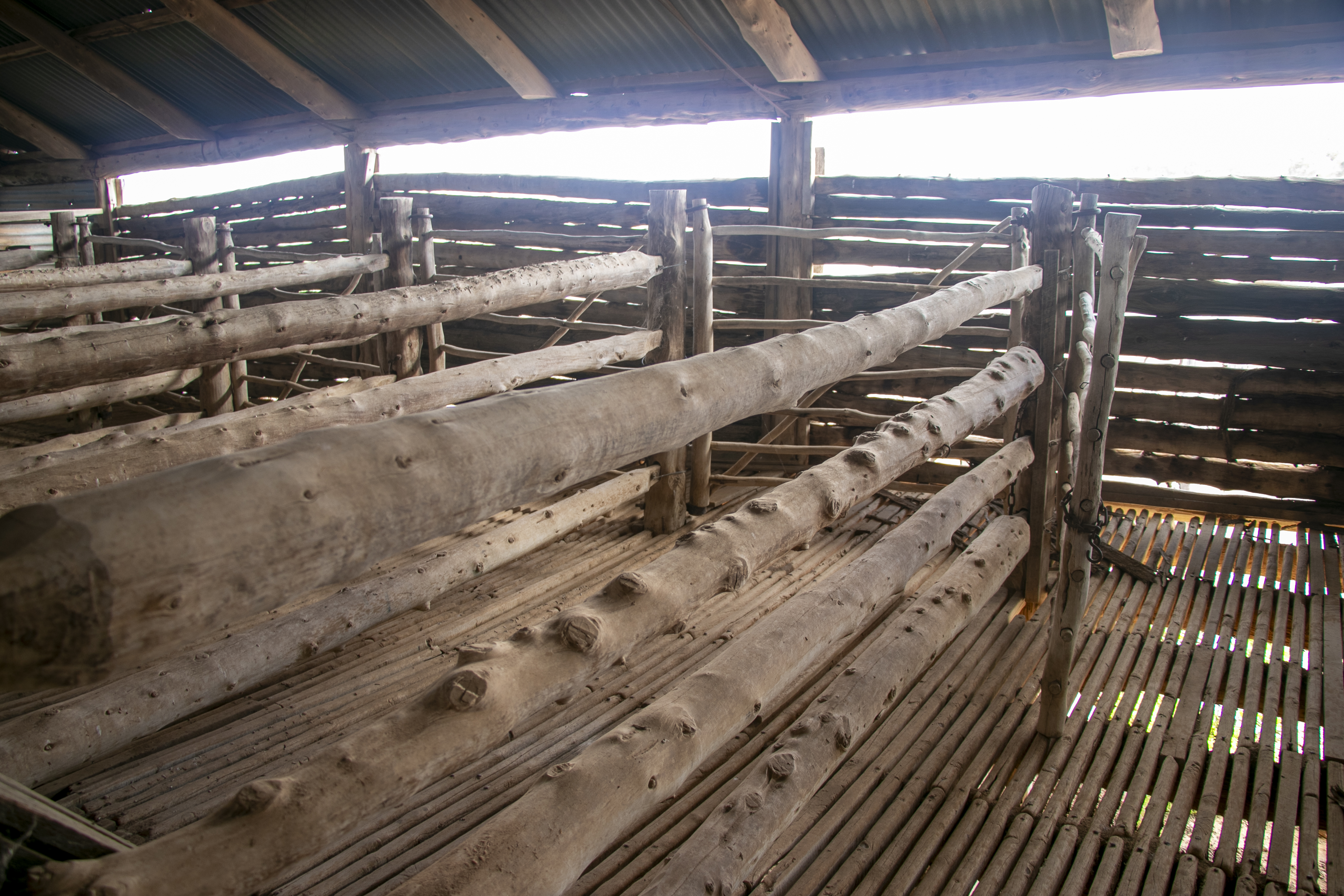
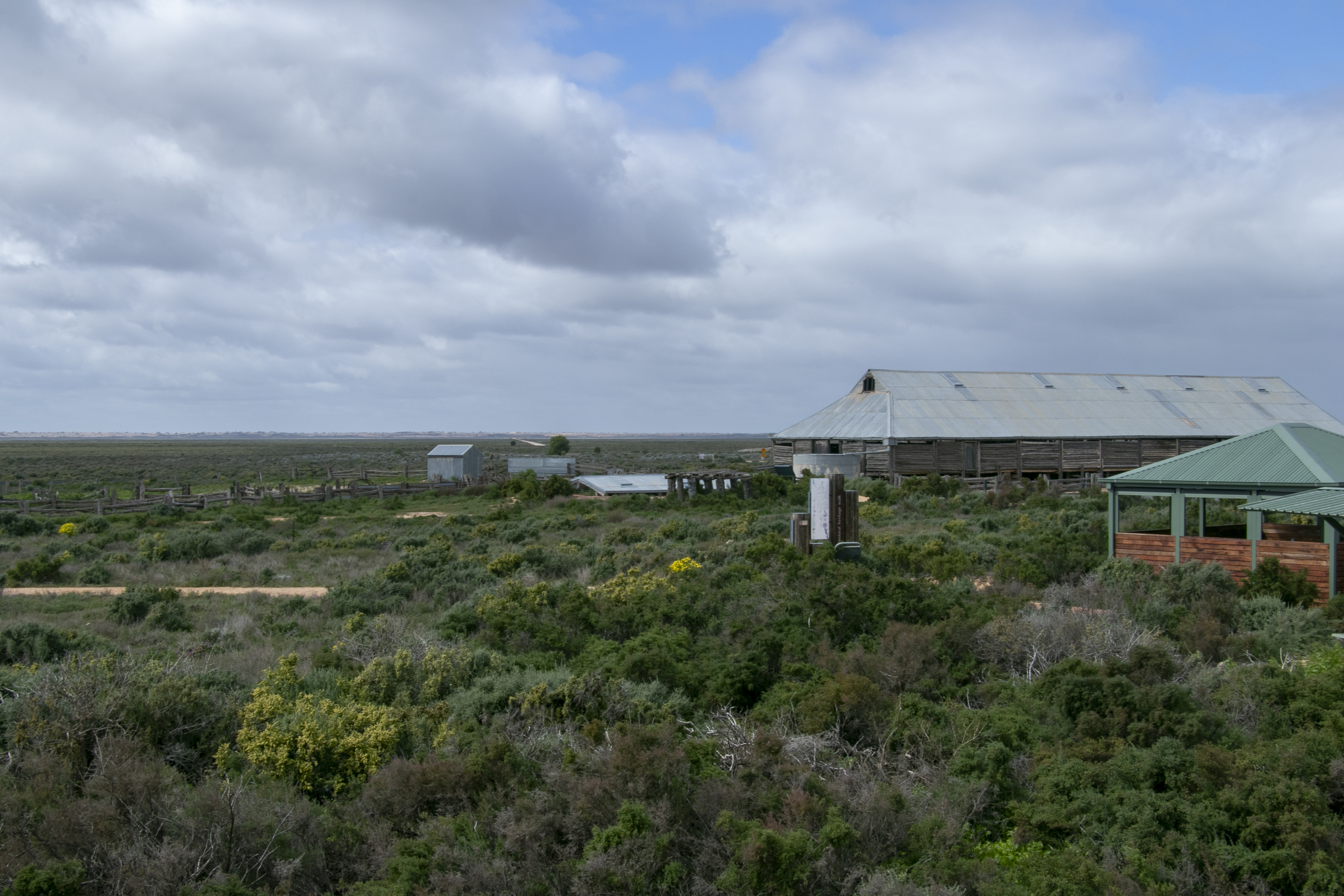
Next to the visitor’s centre at Lake Mungo National Park is the old wool shed. It was built in 1869 from local wood and was part of Gol Gol sheep station. The station had indigenous as well as Chinese labourers, many who came to Australia during the gold rush that had taken place across NSW and Victoria. By 1869, the gold fever had abated, so these former miners sought other work, frequently on pastoral properties across the country.

When these Chinese workers looked across the dry lake bed at the sand dunes on the other side, many were reminded of their homeland, and the wall that ran across it. Hence, the dune formations were called the ‘Wall of China’.

Next, we’ll take a walk amongst those dunes.

Mungo National Park – Part 3

The highlight of our stay was our tour of Mungo National Park, a short drive away from Mungo Lodge. The Mungo National Park lands sits on the junction of three nations – the Ngiyampaa, the Paakantji, and the Mutthi Mutthi.

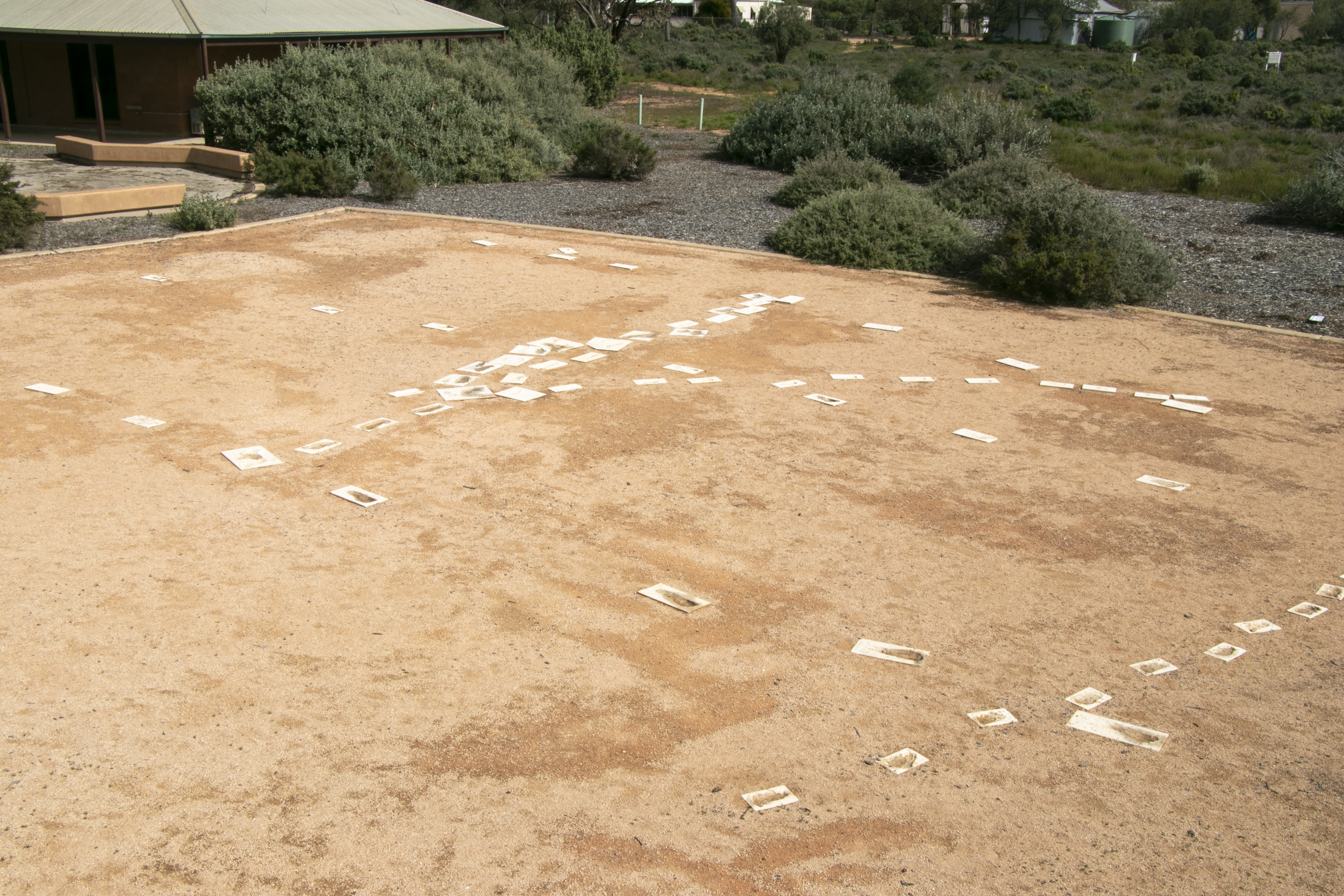
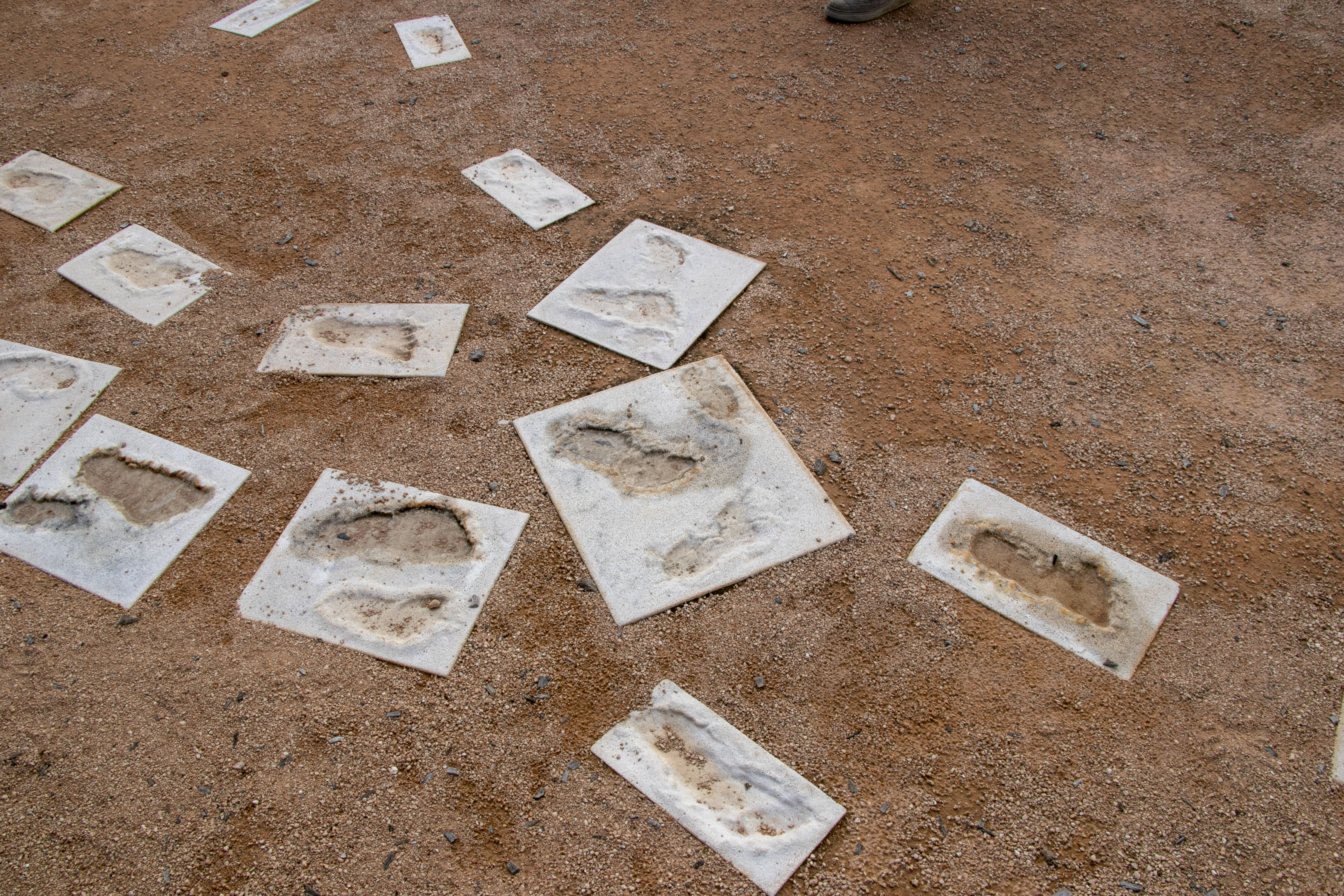
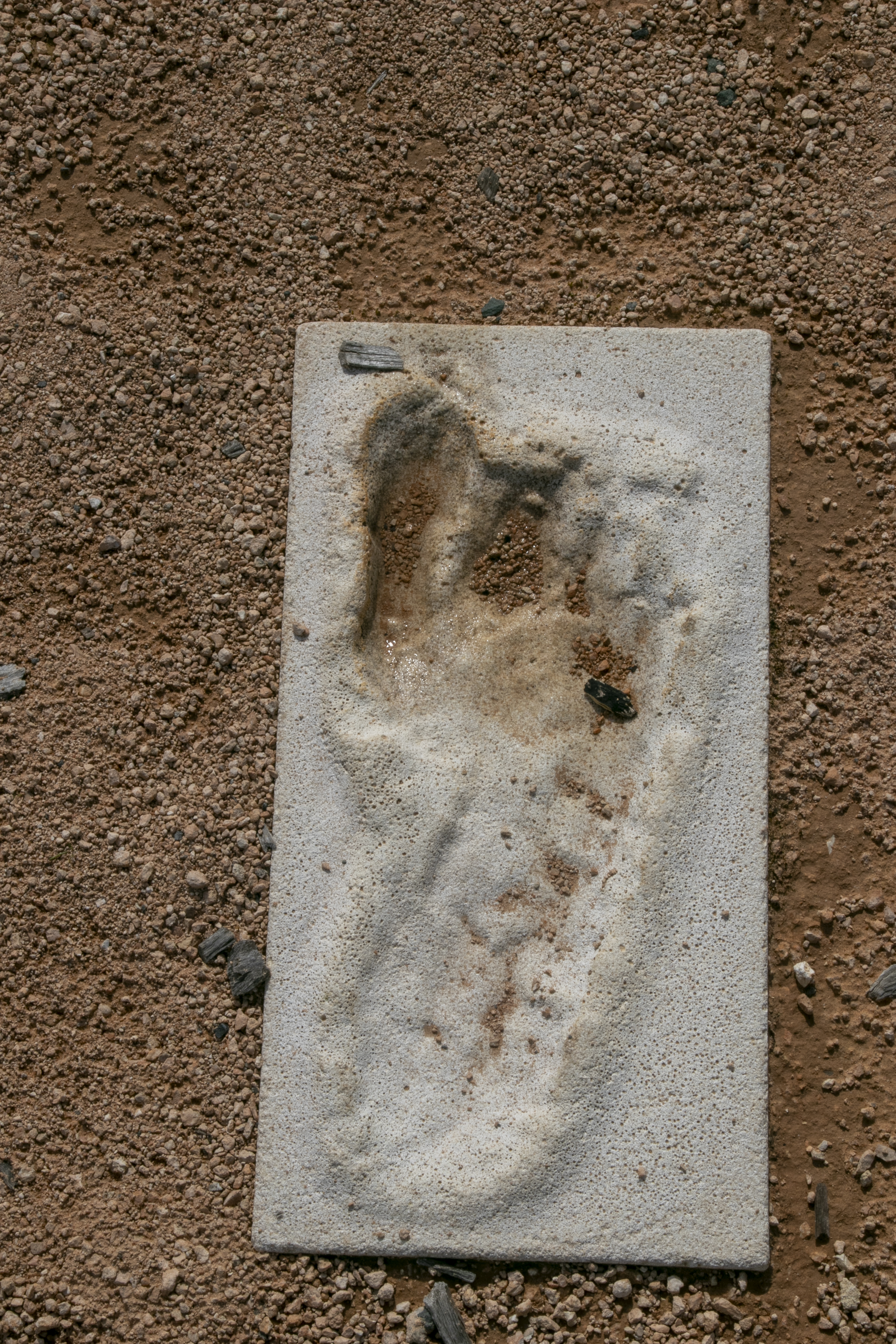
It is the home of Mungo Man and Mungo Lady, human remains found in the area from the 1960’s and dated to be 42,000 years old. Footprints on the old muddy lakebed were also found, and dated to a similar period. Replicas of these footprints can be found outside of the visitor’s centre.

Back then, the area was a series of lakes fed by the Lachlan River. The climate was colder and snowfalls were more extensive on the Alps leading to more water flowing downstream. After the last ice-age, the climate became drier and warmer, and with a change in the course of the Lachlan River, the lakes were no longer fed. With erosion, the lake bed is now a flat sandy surface.

The area has a fascinating ancient history that really belies its seemingly unremarkable appearance.

More on the tour in the following post.

Mungo National Park – Part 2

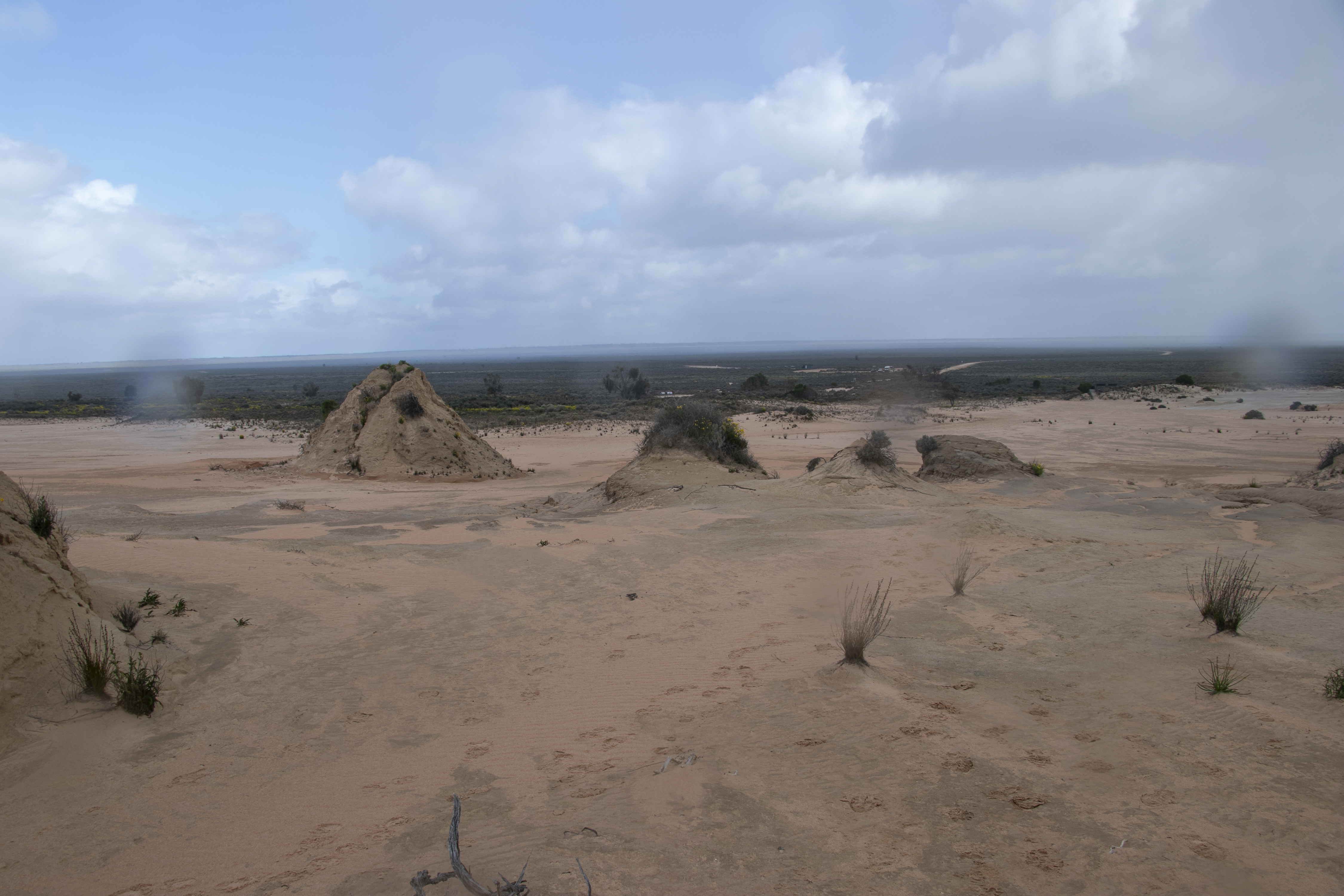
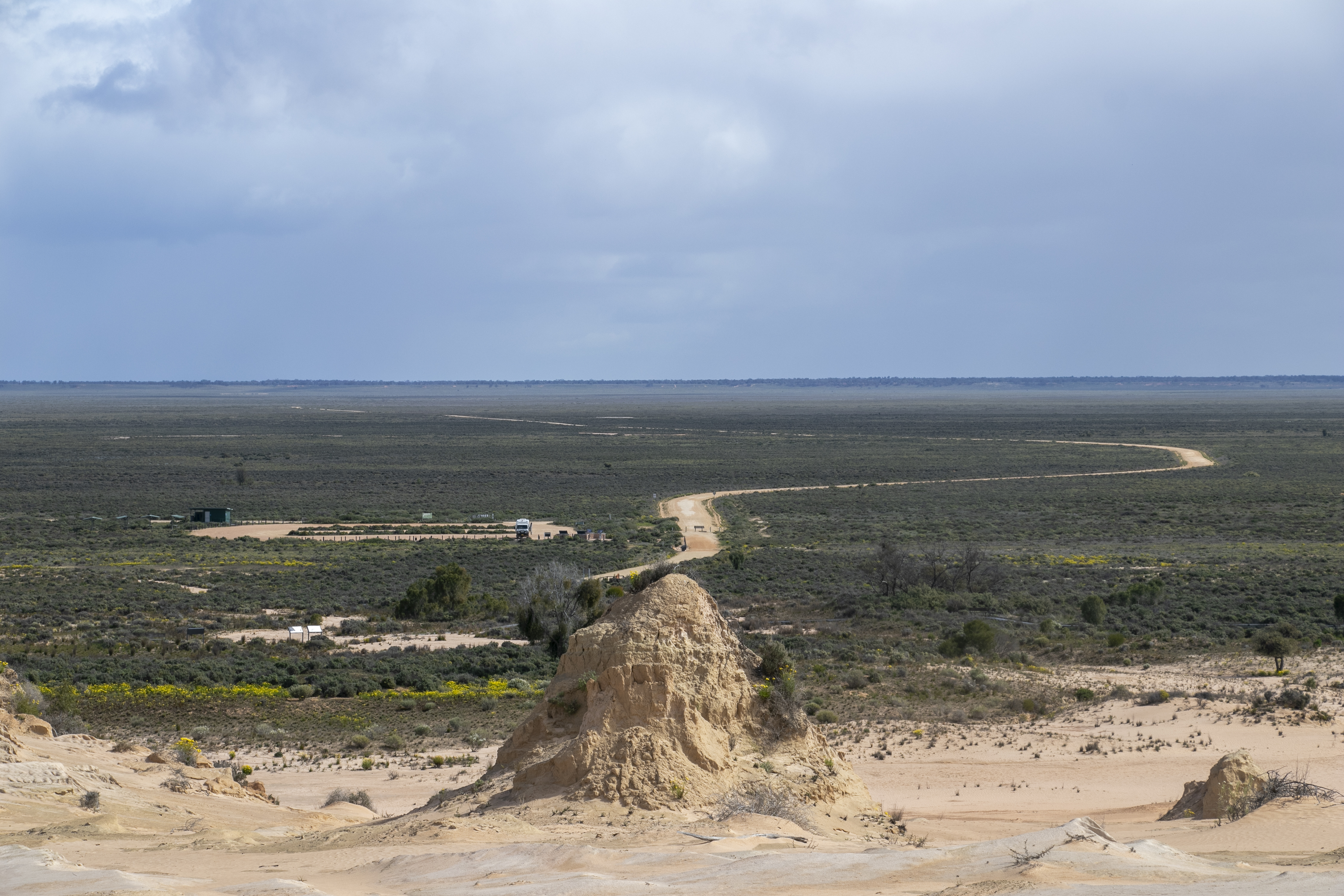
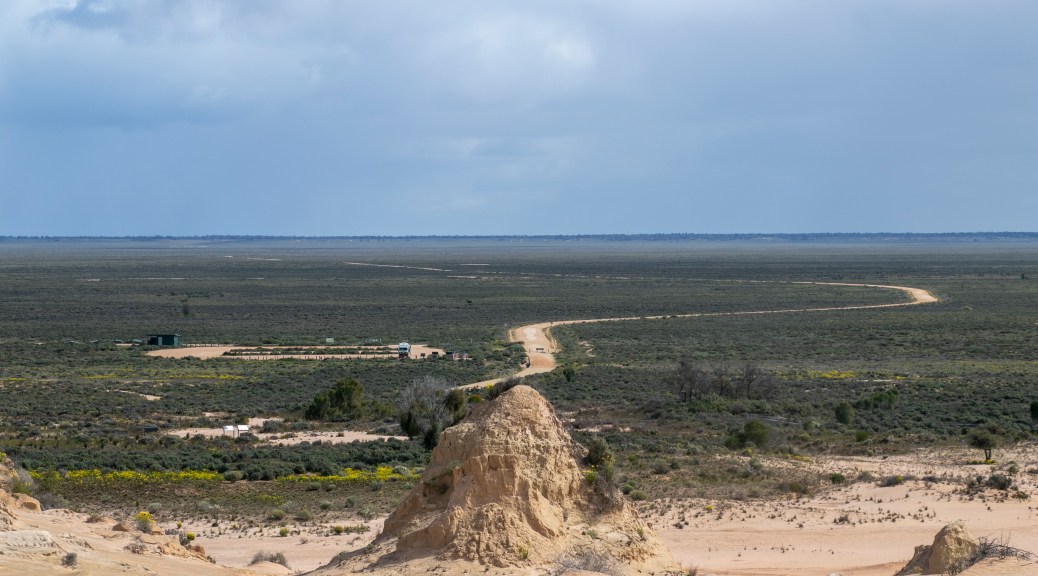
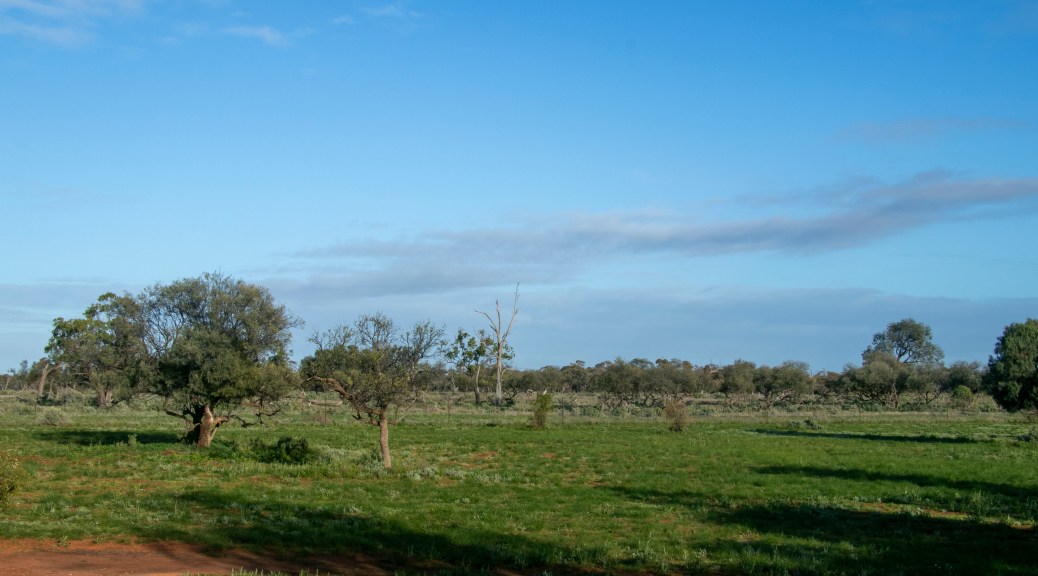
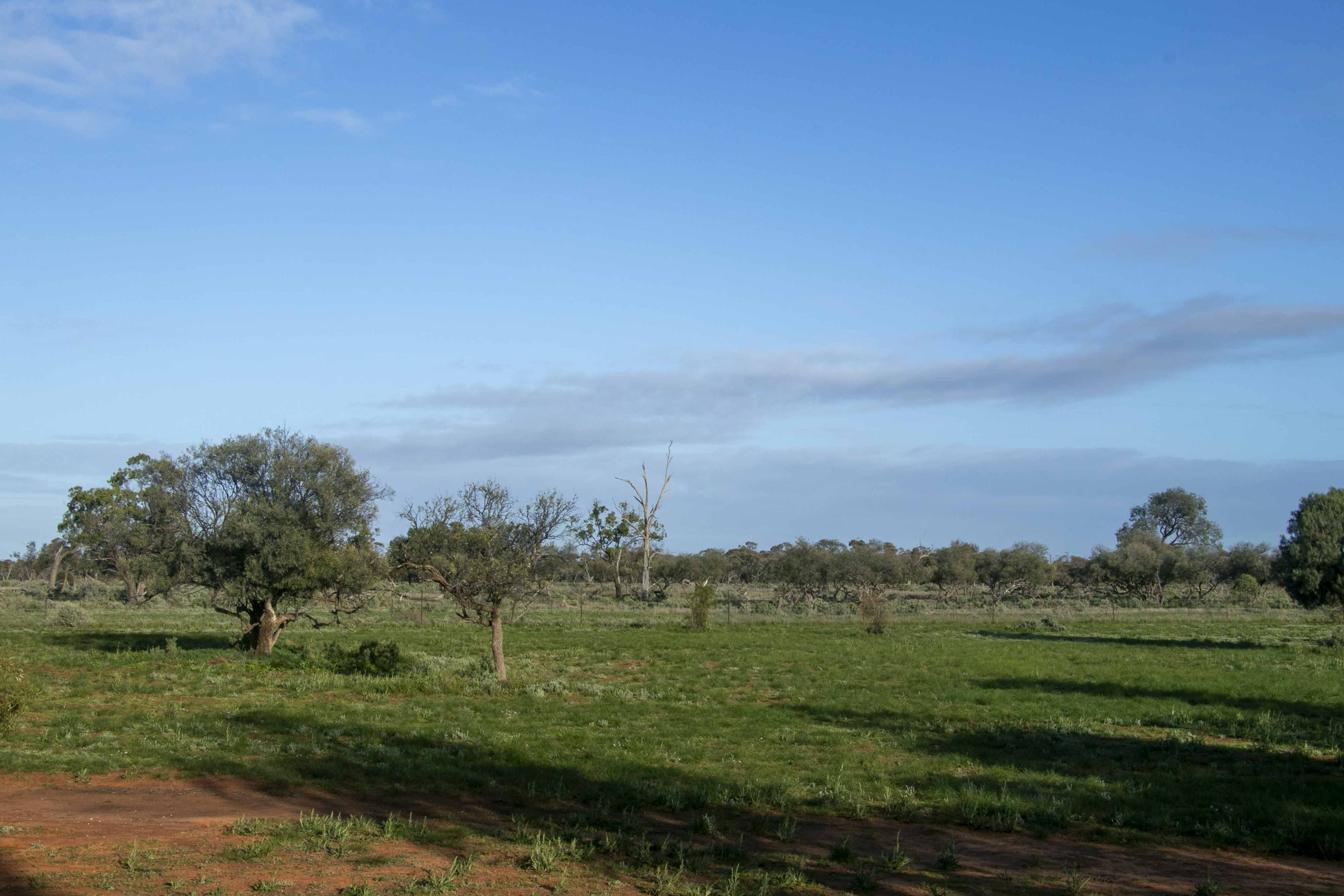
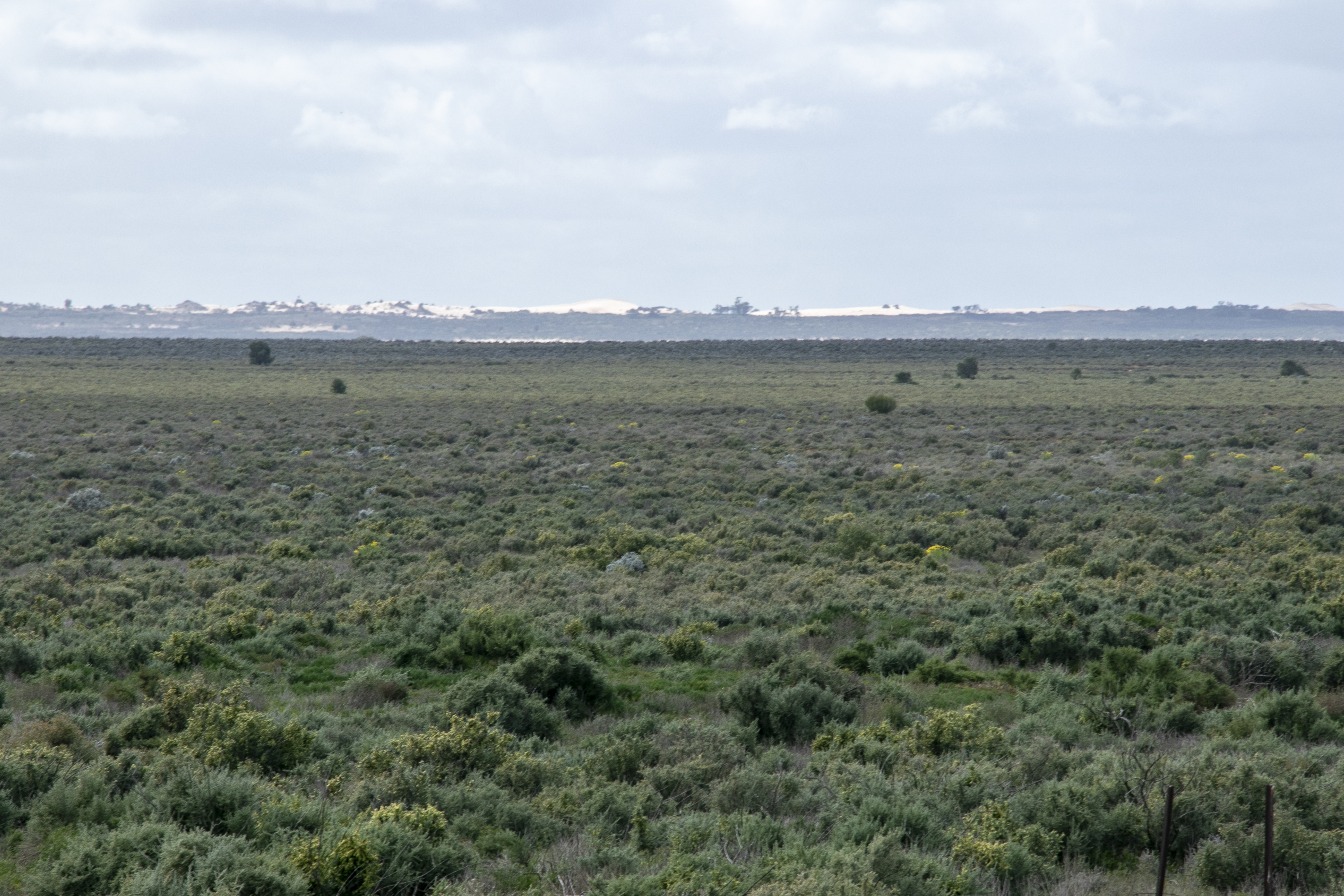
Let’s do a bit of a study of the landscape of Mungo, as it’s one that’s new to me. I mean, I have been in our parts of central Australia and even in other parts of western NSW, however, the Mungo landscape is still a bit different from these. For one, the land is almost completely flat. In the distance is some special sand-hills, which we will explore in a separate post.

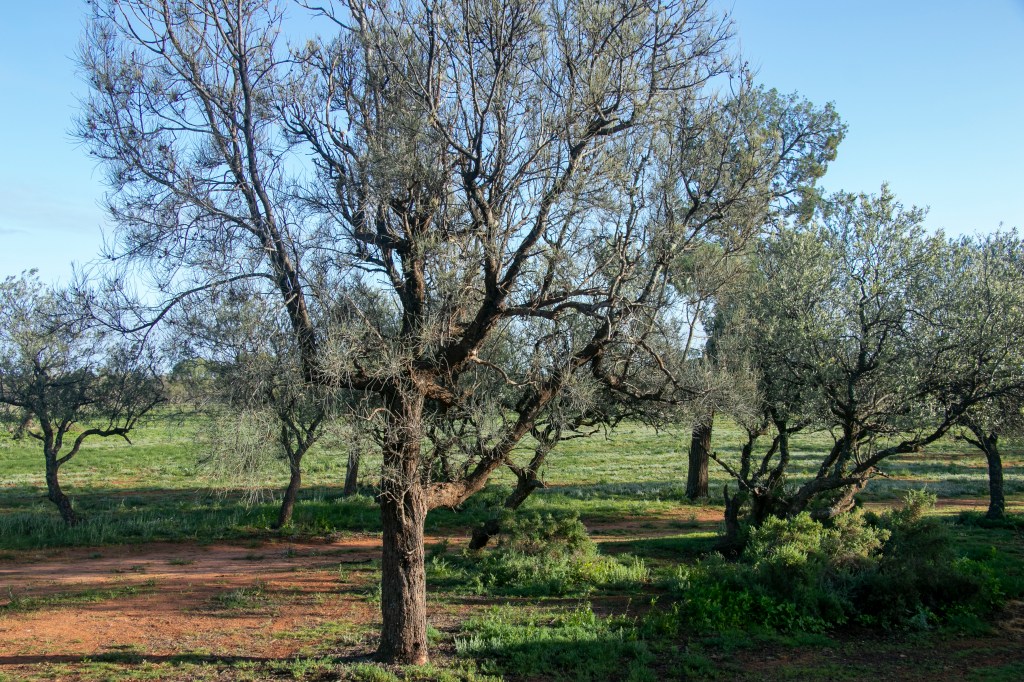
The soil is red, although I suppose a few degrees less bright than the soil near Alice Springs. The vegetation is relatively typical of a place that’s semi-arid – low scrub with spinifex and saltbush, and smallish eucalyptus trees. It’s the kind of landscape that needs time to soak in, I think, as it’s not one to blow its own trumpet, much of the time.

From a distance, everything might look the same, but if you do a ‘David Attenborough’ and stay still for awhile, you’ll start seeing little birds running around (a type of thornbill perhaps, according to the ‘Compact Australian Bird Guide’, my go-to reference book).

The best time to see these guys is early or late in the day, of course, and the landscape takes on a different cast.

Mungo National Park – Part 1

The goal of our August 2023 trip was to visit Lake Mungo National Park. This national park is 120km from Mildura or 160km from Balranald via mostly unsealed roads of varying conditions. It definitely pays to drive very slowly and pick your way through. There wasn’t much if any traffic so we could take our time. Heading in from Mildura wasn’t too bad.

We stayed at Lake Mungo Lodge and had this view from our cabin. We were really in arid territory except it was quite green because the area must have been blessed with rain in recent times. The green makes a great contrast to the red ochre sands.

Having had time to contemplate the landscape, I realised what a big sky I was under. When a storm rolls in, you really do notice.

Riverina – Kings Billabong – Flora

Kings Billabong is a wet-land area near Mildura that feeds the mighty Murray River. It is also flowing through what is an arid region. So on one hand, I saw bodies of water like this.

But when I look at my feet, I saw what seemed to me to be plants that belonged in much drier regions. They’re species that are certainly a bit different to those I find around Sydney, anyway. And of course they’d be different, since I was 1,000km west!

Riverina – Mildura

We drove further west, over the border into Victoria and the regional city of Mildura. Because it’s over the border it’s technically no longer in the Riverina region (as that refers to NSW localities) but since it’s beside a very substantial river (a.k.a. the Murray River) I think I’ll make an exception.

Mildura is a very big town, with a population nearing 60,000 if you count the population of nearby areas that have become ‘suburbs’ of the town. It’s a food growing town, producing lots of grapes and citrus fruits for the Victorian market. The city is dead flat, and because the town grew gradually from agriculture, the architecture wasn’t exactly picturesque.

Central Mildura

We stayed on the far eastern edge of town, near an area called Kings Billabong. The billabong is a part of the Murray River system. In the early 20th Century, pump houses were built to irrigate the surrounding farm-lands. We found an example close by where we stayed.

Kings Billabong Pump House

Kings Billabong, aside from being fed by the Murray, is an extensive wet-land, and recreational park with boat ramps, camping areas and walking tracks. It’s the kind of landscape that I don’t often find around Sydney since a lot of its wetlands have been developed.