Tag Archives: fauna

Safari Time – Part 3

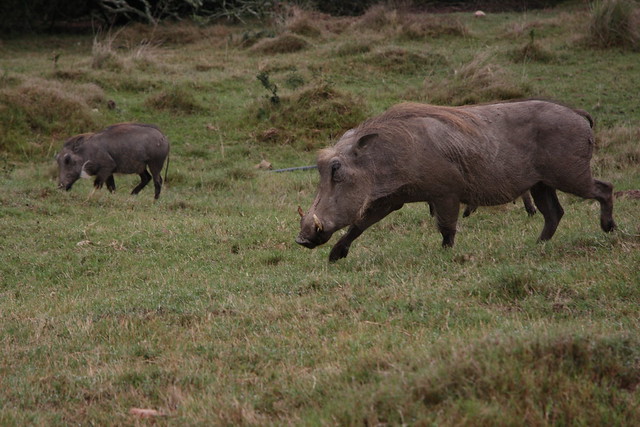
We continued on our safari and found a few more typically African mammals. We start with a very ugly one, the warthog!
Safari time

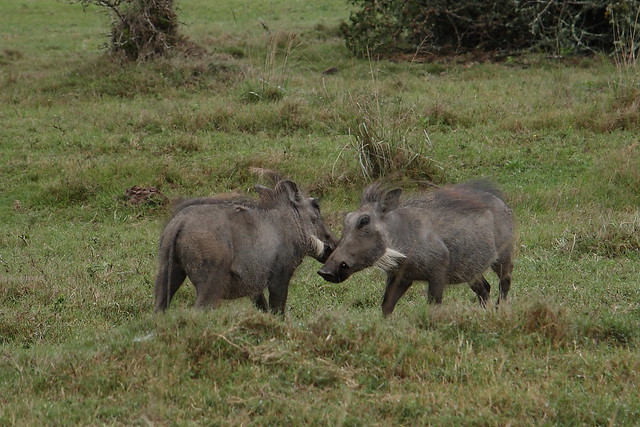
With their tusks, mullet and facial hair, could they actually be trend-setters for the 21st Century? These little ones were playing/fighting, and I found them almost cute.
Safari time

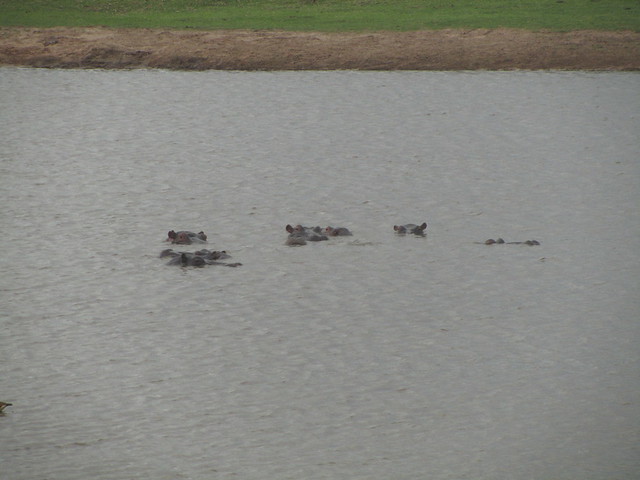
At the waterhole, we were closely watched by a herd of hippos. It’s rather startling to think that behind each pair of eyes was a 1,500kg animal.
Safari time

And moving on to bovines, we encountered a pair of Cape Buffalos grazing. We kept well away from those horns!

Safari time

Safari Time – Part 2

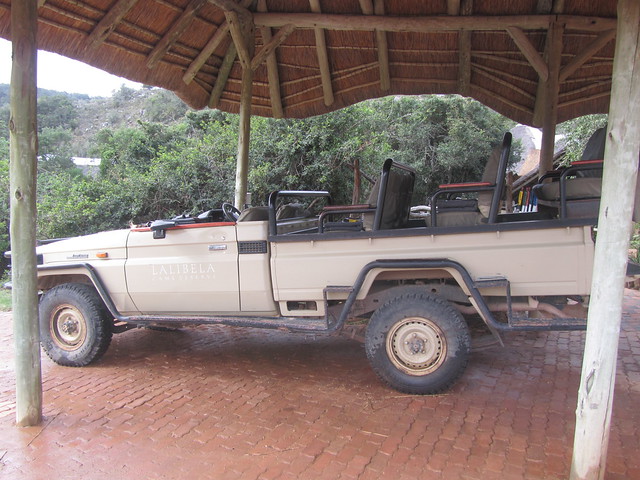
It’s safari time! Let’s jump into the convertible Land Cruiser and see what we can find.

Lalibela Game Reserve

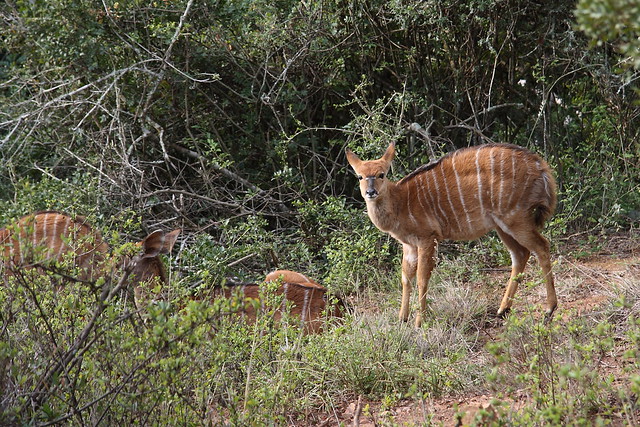
Close to the camp, we found more female Nyalas.

Lalibela Game Reserve

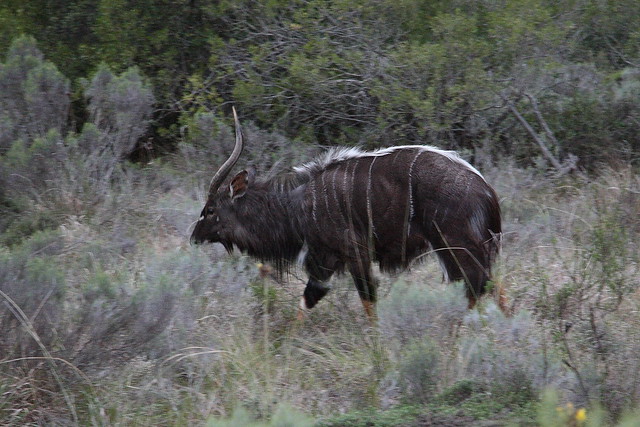
And not too far away was a male Nyala. He looks very different from the females.

Lalibela Game Reserve

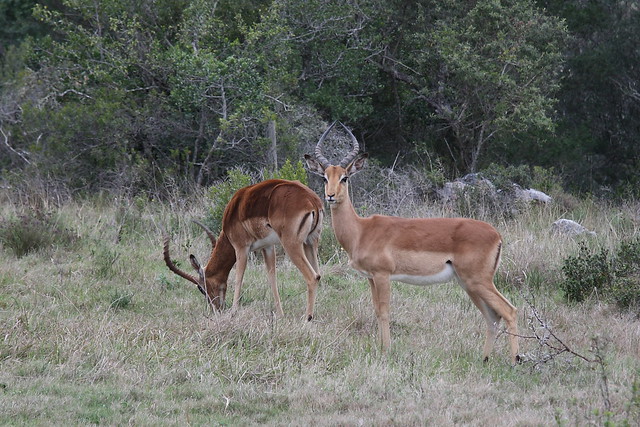
Africa of course is full of different antelope species. A species we saw a lot of in the reserve was the impala. You can recognise them by the M-shaped marking on their bottom! We saw some males.

Lalibela Game Reserve

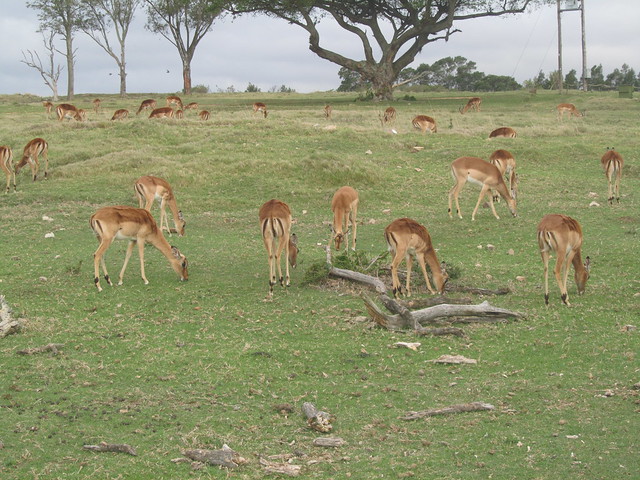
And lots and lots of females.

Lalibela Game Reserve

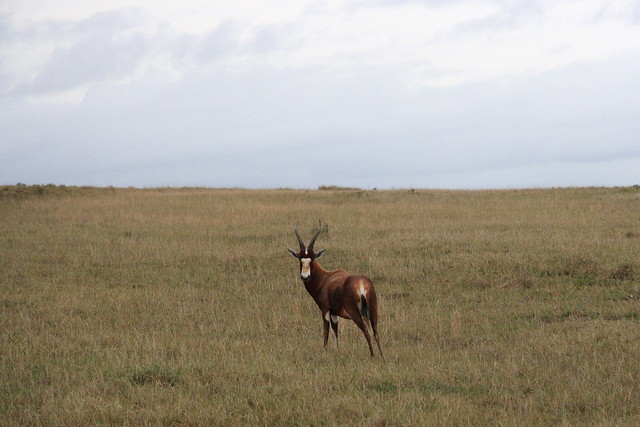
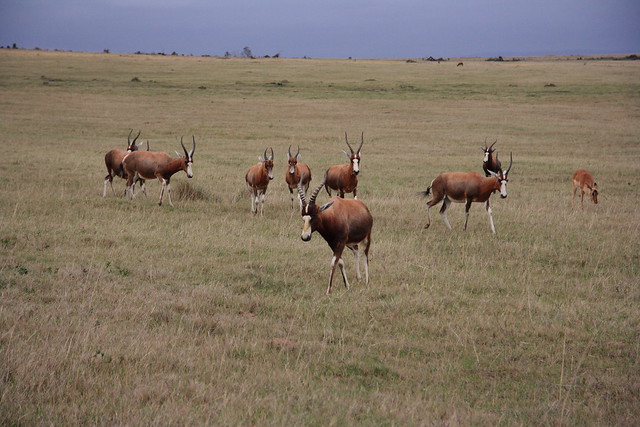
Another common species was the blesbok – they have distinctive white faces and white bottoms. Our ranger reckons that means ‘eat me’ to predators.

Lalibela Game Reserve

These guys get very territorial, and this herd’s territory is the reserve airstrip!

Lalibela Game Reserve

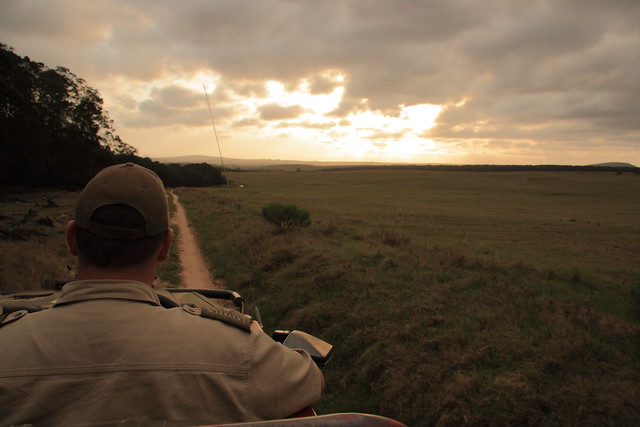
At a game reserve, your waking hours are structured around your dawn and dusk game drives, each being 3 hours in length. That’s 6 hours a day to find animals! Our first dusk drive was a good one, and we got a lovely view of the sunset.

Lalibela Game Reserve

Safari Time – Part 1

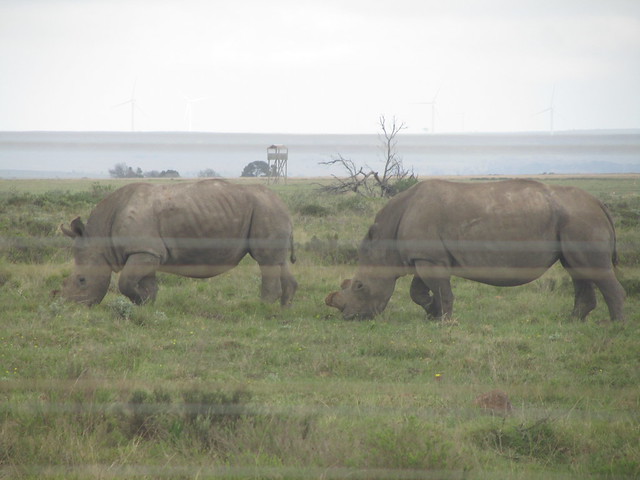
The rhinos in the last post was a bit of taster for our safari experience at Lalibela Game Reserve, about 90km to the east of Port Elizabeth. The reserve was located on 7500 hectares of Eastern Cape bushveld that was former farmland, and now stocked with African wildlife.

Lalibela Game Reserve

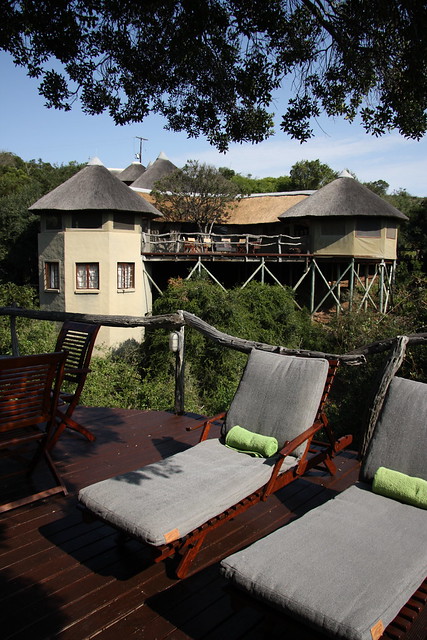
But first, we head to our lodge, Tree Tops.

Lalibela Game Reserve

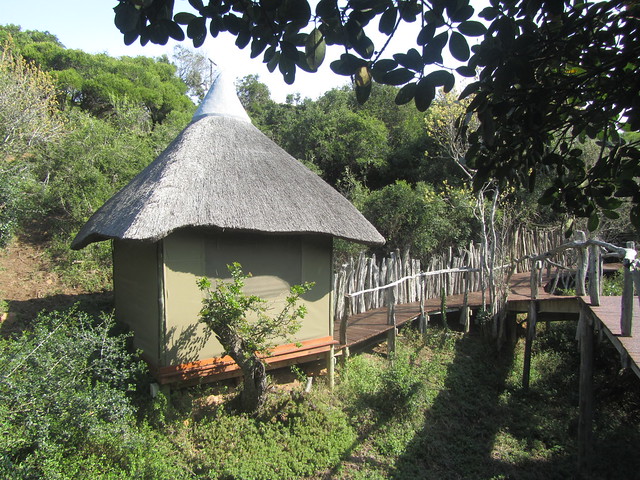
Accommodation was in some great glamping tents – ensuite, reverse cycle air-con and electric blankets to keep out the early Spring chill.

Lalibela Game Reserve

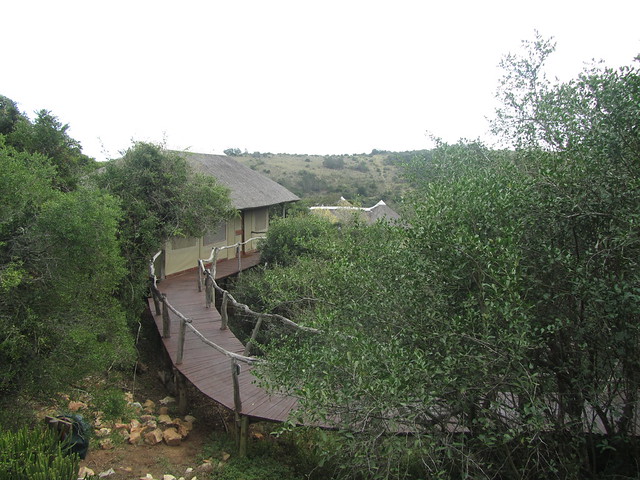
The boardwalk ensures that erosion of the hillside was kept to a minimum.

Lalibela Game Reserve

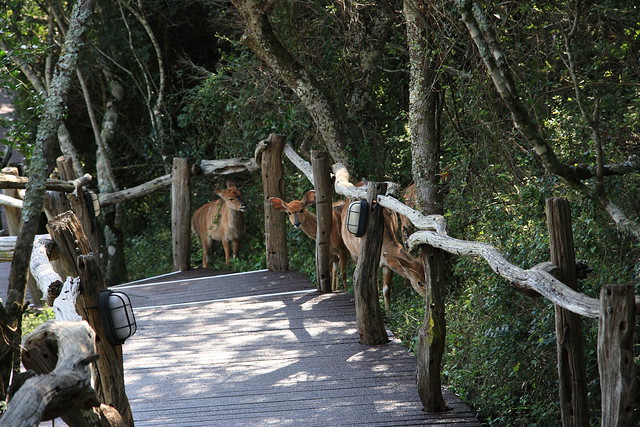
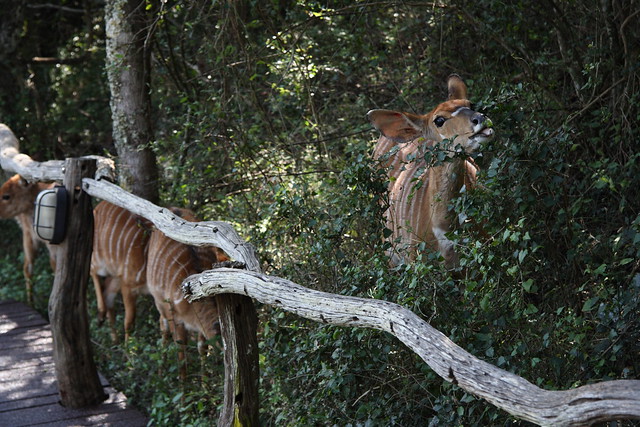
There weren’t any fences so elephants have been known to walk through the camp. There weren’t any elephant neighbours during our stay, but we saw these lovely ladies as we walked down to lunch. They’re a type of local antelope called nyala.

Lalibela Game Reserve

Lalibela Game Reserve

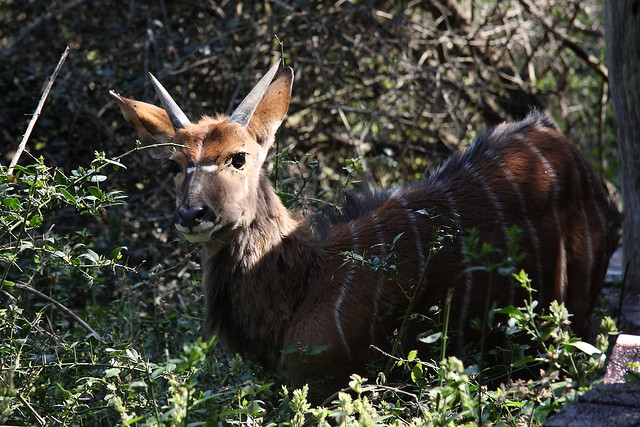
Later, we saw a young buck, who was completely comfortable with our presence.

Lalibela Game Reserve

Eastern Cape Drive – Part 2

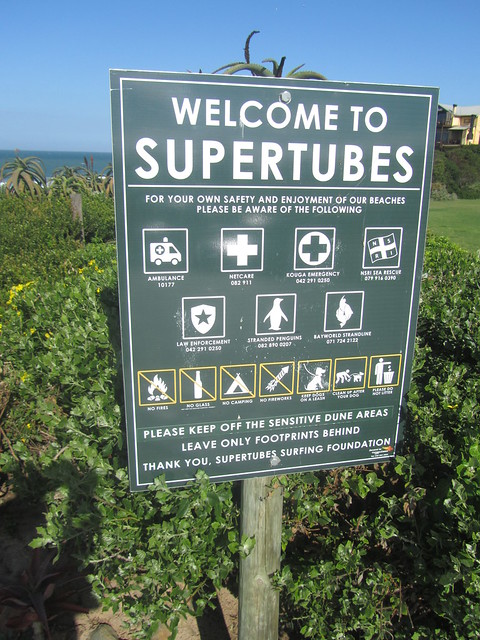
This part of the Eastern Cape coast is famous for its surf, and Jeffreys Bay is the most famous (or infamous perhaps) of the lot.

Around Jeffreys Bay

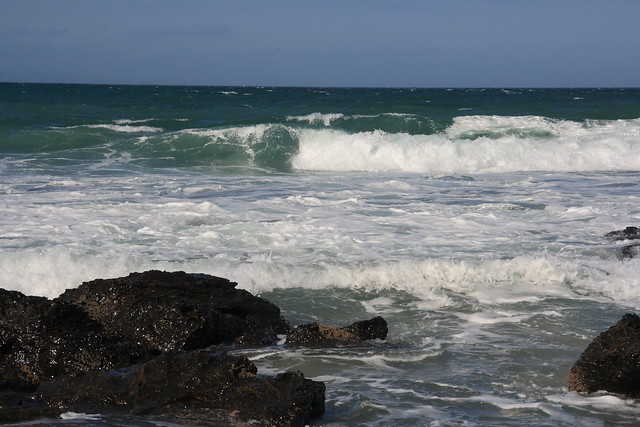
The surf at Supertubes in winter is so fantastic that they host a round of the world surfing championships here. Yes, this was where Mick Fanning got attacked by a shark! It’s all about the swell and the wind direction, the locals say. We came in Spring and the wind was coming from the wrong direction, so the surf didn’t look too fantastic.

Around Jeffreys Bay

As for sharks, the locals say that shark attacks are rare along this stretch of coast, so Mick Fanning was a bit unlucky. It was good to hear that he returned to Jeffreys Bay a year after the shark attack and won the surfing tournament (without incident).

On the Way to Cape Point – Part 3

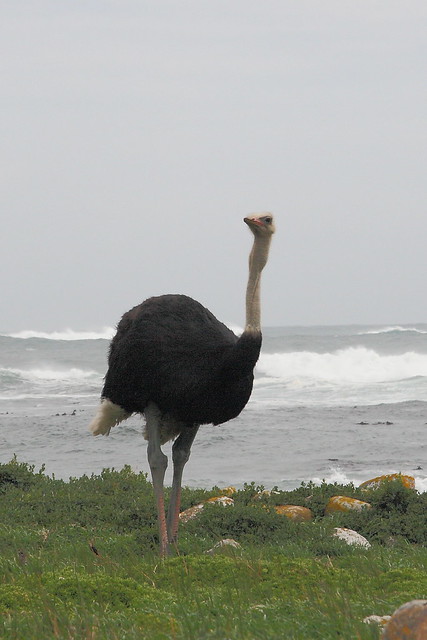
There were a few more animal diversions on the way to Cape Point. Ostriches were common-place in the park. We saw this guy by the roadside.

Ostrich

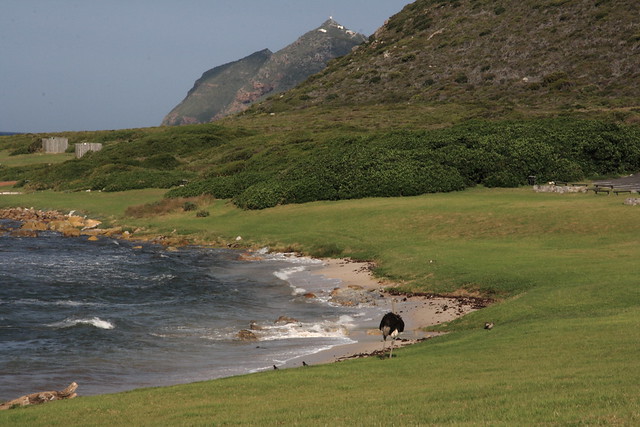
And this guy was in a very beautiful picnic spot. In the distance, you can also see the lighthouse on Cape Point, our destination.

Ostrich

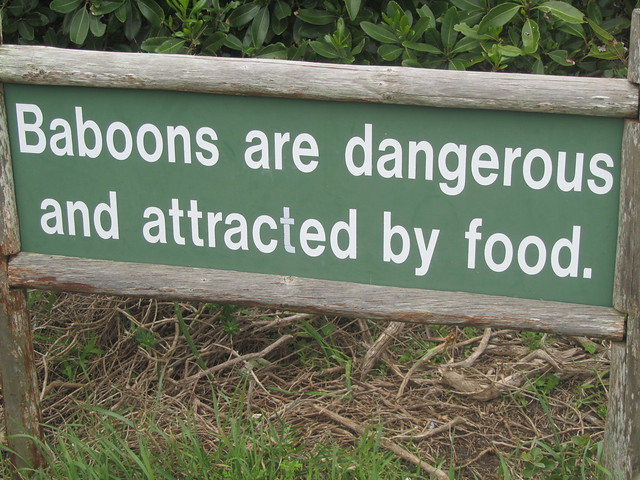
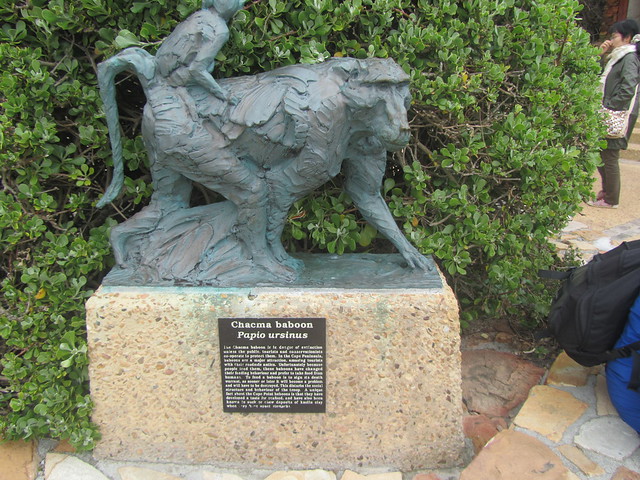
At Cape Point itself, there were many reminders of baboons, although none were actually in sight that day.

Baboon//embedr.flickr.com/assets/client-code.js

Baboon

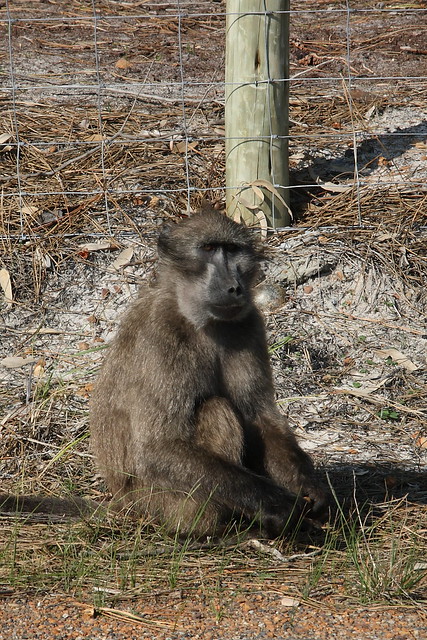
However, we saw this guy (lady?) by the roadside and stayed well-clear.

Baboon

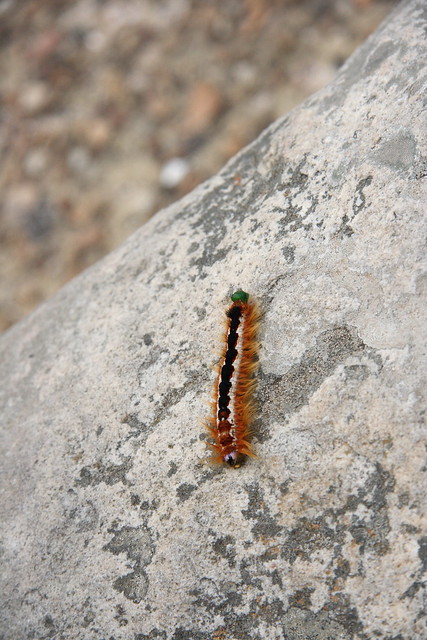
And from big things to small – this hungry caterpillar was looking for its next meal, but none in sight on this rock.

Hungry caterpillar

On the Way to Cape Point – Part 2

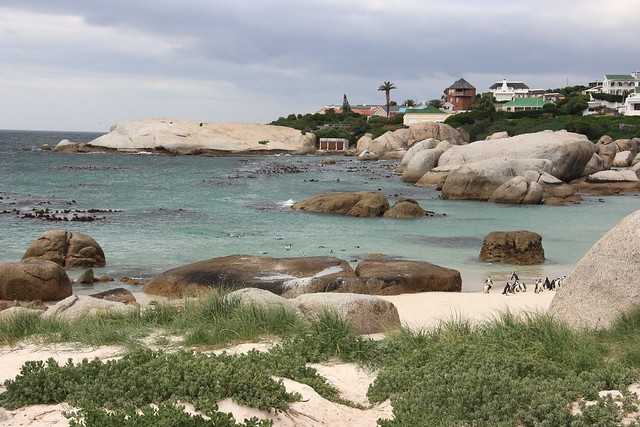
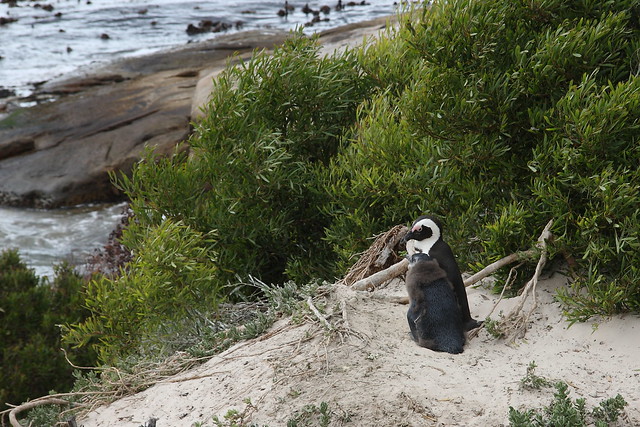
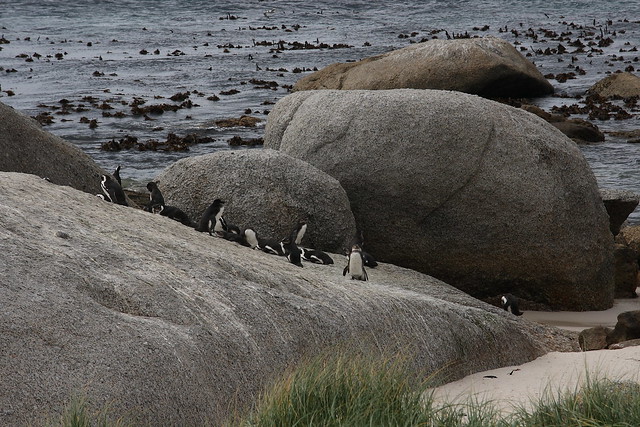
At Simon’s Town, on the Indian Ocean side of the Cape Peninsula and 27km south-east of Hout Bay, we visited some more animal attractions – penguins!

African penguins

African penguins

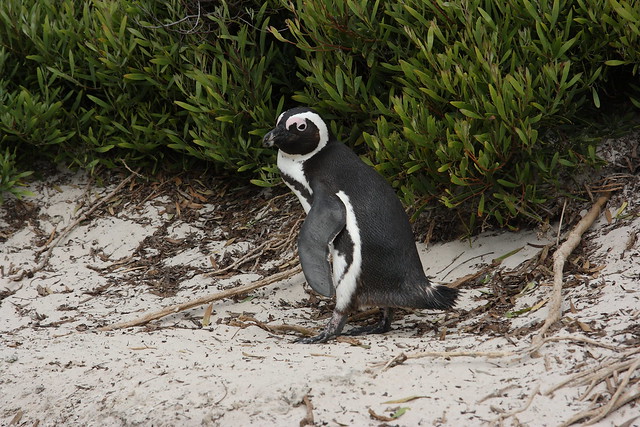
These African penguins live on Boulders Beach in the midst of a residential area as you can see. They’re a bit larger than fairy penguins, which are common to South East Australia. And unlike fairy penguins who generally come onshore only at dusk, these penguins were conveniently onshore all day.

African penguins

African penguins

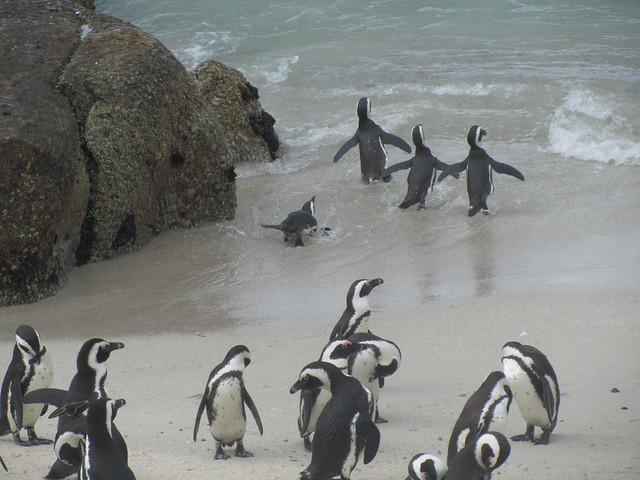
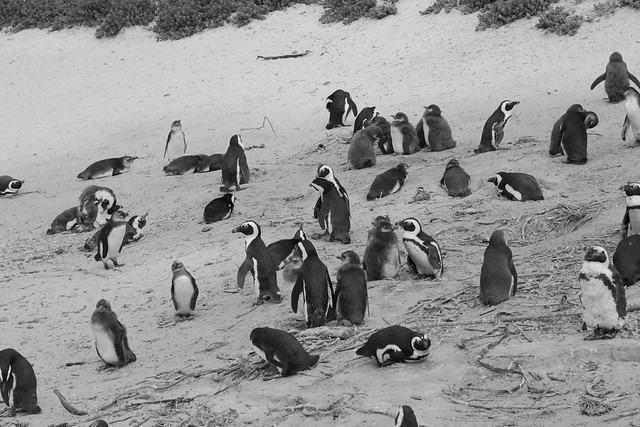
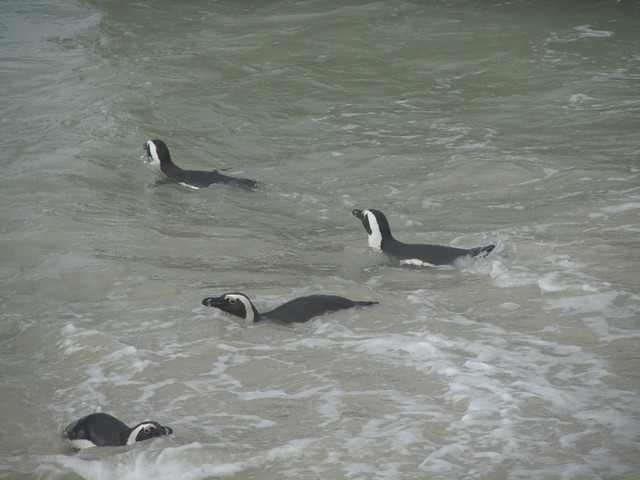
They’re pretty happy to be amongst humans, and having access to a great food source that is the Indian Ocean, they’re so happy that the colony has grown from 4 penguins in 1982 to 3,000! Consequently, a reserve was created for them and now it’s a very established tourist attraction.
African penguins

African penguins

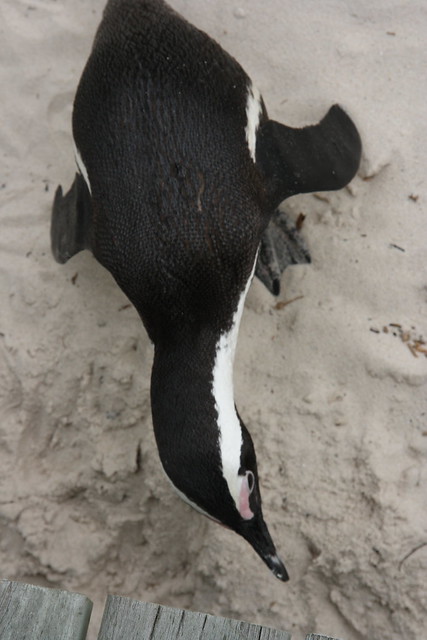
They’re very funny to observe, waddling, swimming, playing, fighting, grooming.

African penguins

African penguins

African penguins

I could watch them all day, but we had other things to do and to see, so I had to say goodbye.

African penguins

Seal viewing at Hout Bay – Part 3

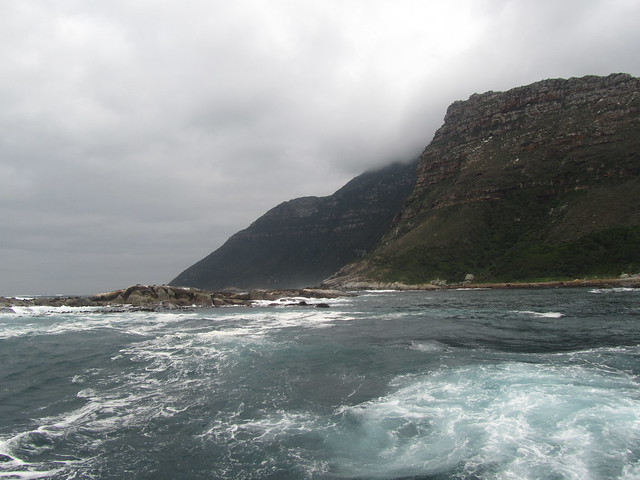
After braving a few waves, the rocky outcrop that was Duiker Island came into sight.

Seal cruise

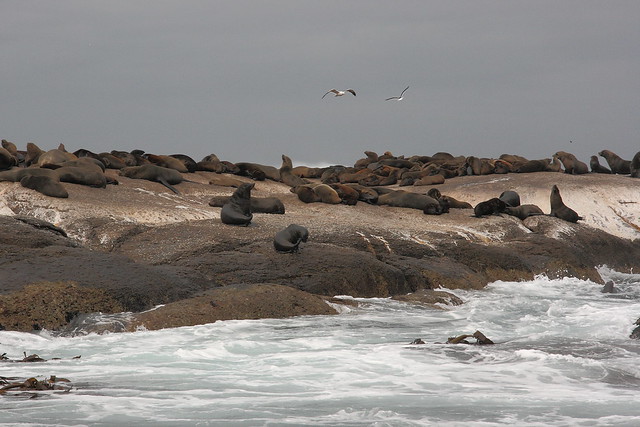
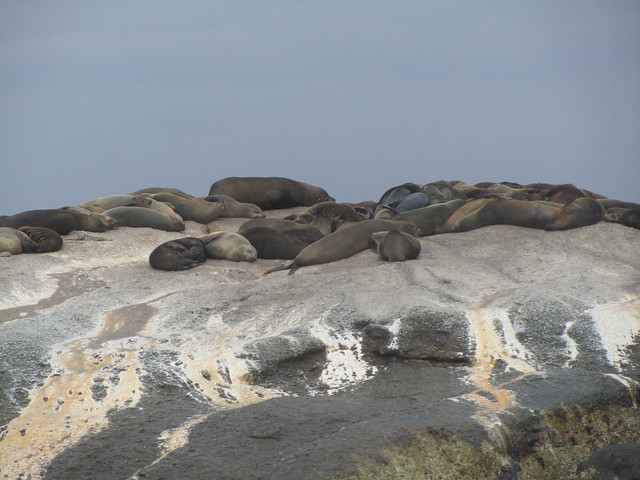
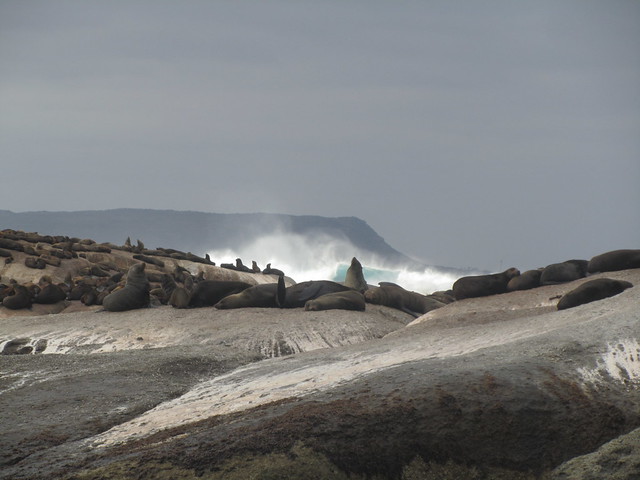
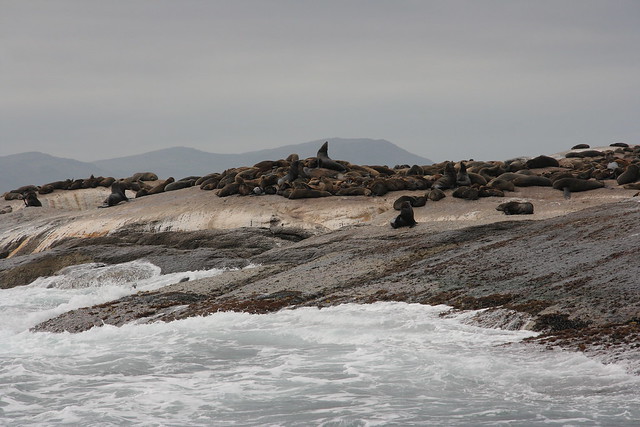
And on it were hundreds of mostly male Cape fur seals. They are closely related to the Australian fur seals found in Victoria and Tasmania.

Seal cruise

Seal cruise

What a slothful bunch they were. We saw some frolicking in the water, but most were having their extended nap, away from the sights of the great white shark, whose waters they inhabit.

Seal cruise

They certainly weren’t too perturbed by the gale force winds, swell and rain, that was for sure. What a life.

Seal cruise

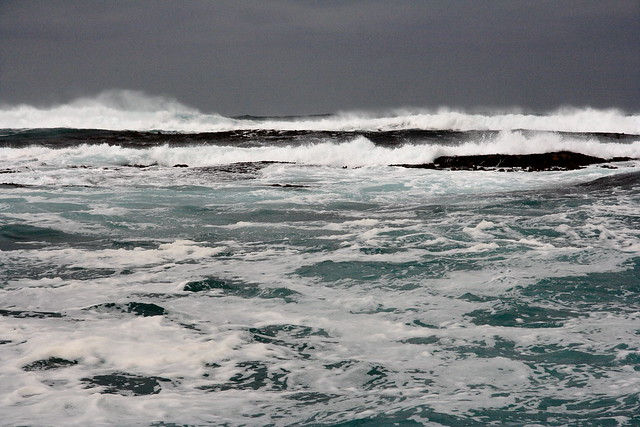
After taking a few shots, it was time to brave the Atlantic once more.

Seal cruise

Look at those ominous waves. They’ll never make a sailor out of me!

An Aussie Spring Garden

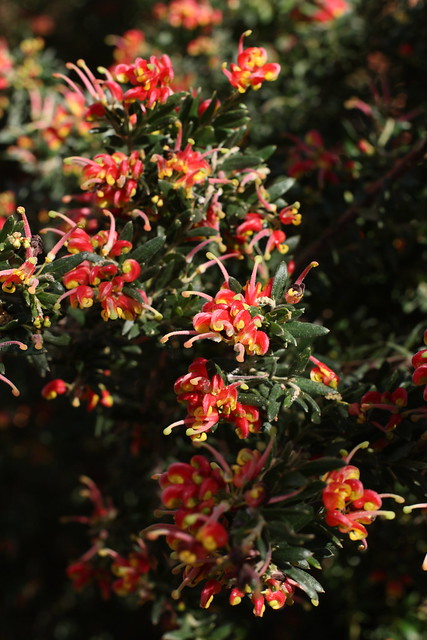
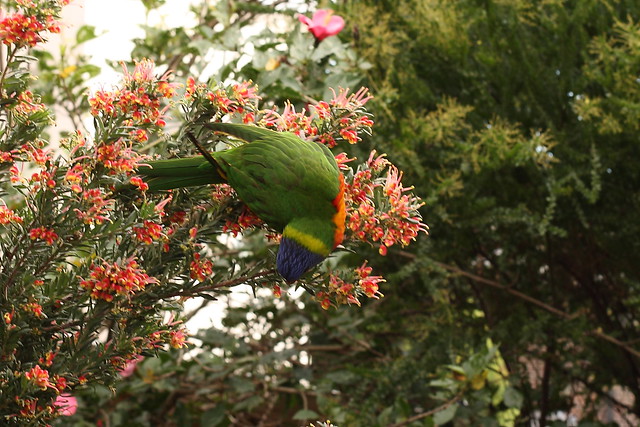
It’s been a funny old Spring with the weather see-sawing between summer and winter. Some of the plants in our garden are a bit confused, but the ones that seem to thrive regardless are our grevilleas – this one in particular which flowered all through winter.

Grevillea

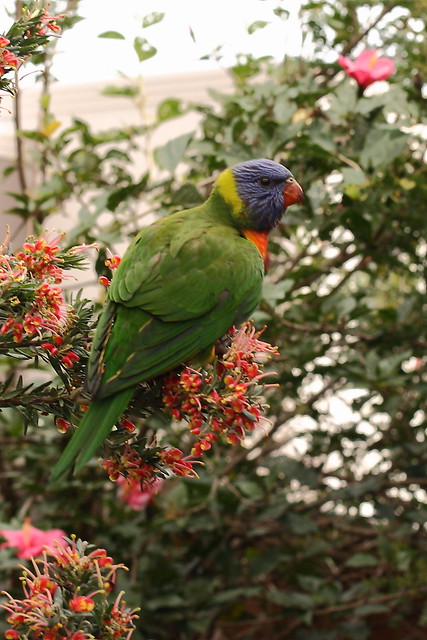
The local rainbow lorikeets particularly enjoyed this shrub. They hung around it for weeks on end. It made a particularly cheerful (and noisy) scene in the mornings and evenings.

Rainbow lorikeets

Rainbow lorikeets

Being deep in suburbia, it was really nice to have some native birds around the garden, even if it was only one kind. We even saw a bit of a mating ritual happening in our crepe myrtle.

Rainbow lorikeets