Tag Archives: fauna

From the Vineyards to the Mountains

The next morning we took one last look at our vineyard retreat in Renwick.
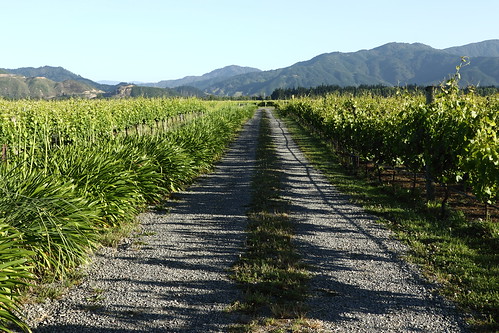
Morning at the Vineyard

Morning at the Vineyard

Morning at the Vineyard

We then drove up the Wairau Valley, over 90km – and incredibly, most of that way was past vineyards. No wonder the Marlborough region produces so much wine. At the end of the drive were the Nelson Lakes at the foot of the mountains.

Lake Rotoiti

We visited Lake Rotoiti, although there are two of them. These mountains form the start of the Southern Alps, which run 500km down the spine of the South Island.

Lake Rotoiti

Strange to see sea-birds here, but the lake is only 70km or so from the sea.
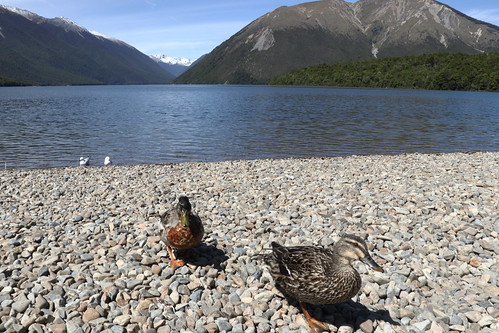
Lake Rotoiti

Marlborough Region – Part 2

Let’s take a walk through the vines.

Marlborough Winery stay

It’s only early summer so the grapes are just starting to fruit. They won’t be ready until Easter time.

Marlborough Winery stay

There aren’t many predators around so the rabbits still run free.

Marlborough Winery stay

And Mother Duck can still rear her ducklings.

Marlborough Winery stay

The hydrangeas are blooming nicely.

Marlborough Winery stay

There might be a storm overnight, but in New Zealand the weather doesn’t usually hang around too long.

Marlborough Winery stay

Time to head inside for the night.

Kaikoura – Part 3

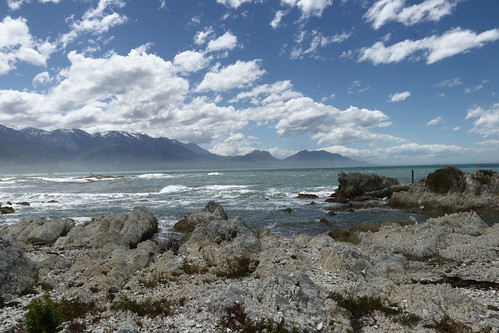
After lunch, we drove around to Point Kean, to the south side of town. The weather was perfect for early December (i.e. Early summer).

Seal viewing at Point Kean

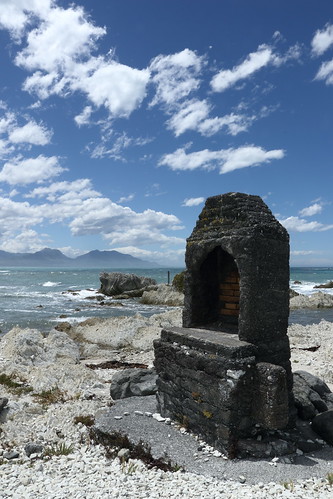
Around the point, we passed a remnant of an old homestead. I’m guessing the sea level has risen quite a bit since it was first built.

Seal viewing at Point Kean

And it we didn’t have to go far to see our first seal. These are all New Zealand fur seals, and can be found on rocky shores throughout mainland New Zealand, the Chatham Islands, and the sub-Antarctic islands, as well as parts of Australia.
Seal viewing at Point Kean

These seals were pretty used to humans, and other animals too, it seems.
Seal viewing at Point Kean

Victorian Trip Round-Up and In Memoriam

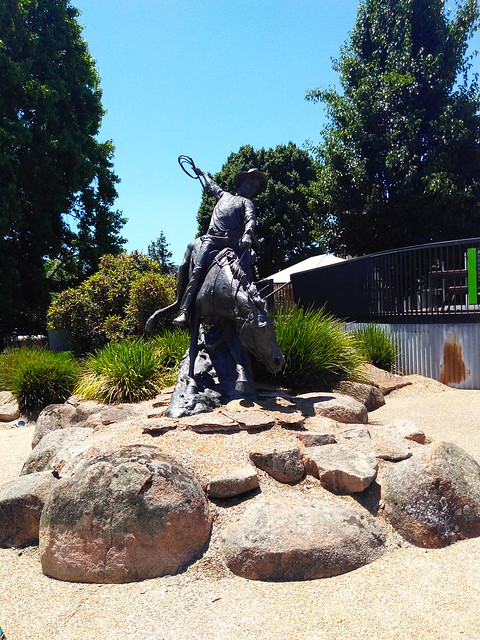
From Mansfield, we headed on home, taking the scenic route through the Alps via the little town of Corryong, home to the real ‘Man from Snowy River’, Jack Riley.

Man from Snowy River

It was 35C that day – not very alpine weather! We spent the night in Tumut and got home the next day.

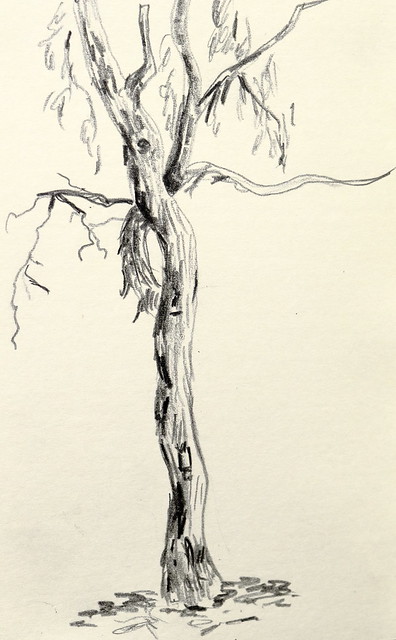
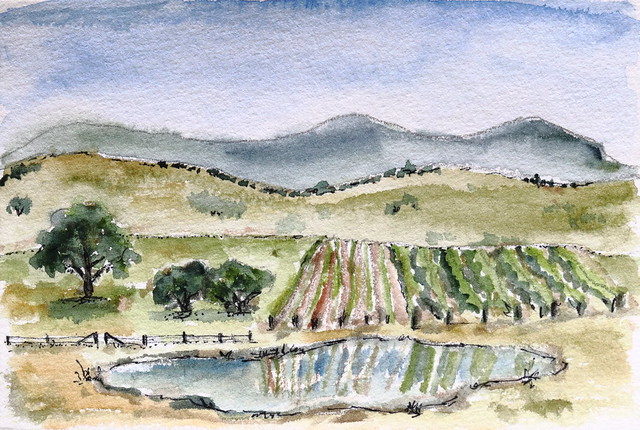
I had sketched regularly during the trip, and here are some of them.

Alice Barker House pond

Stringybark

Delatite Winery

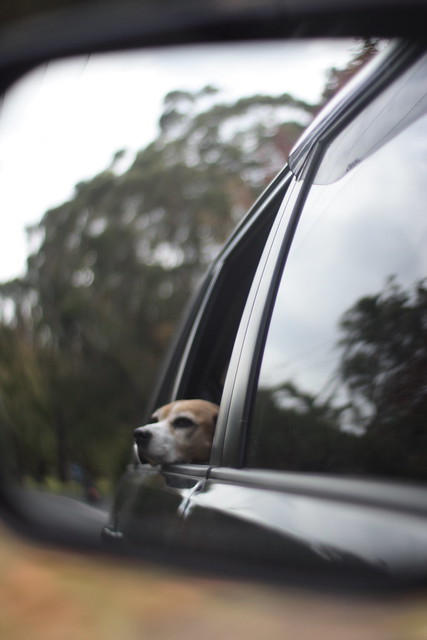
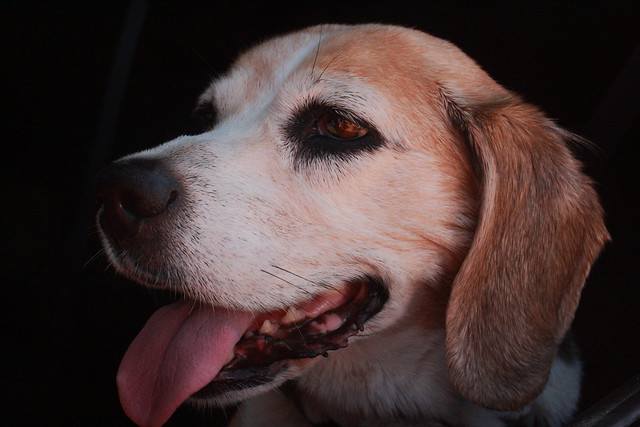
This was to be the last car holiday we’d make with our dear beagle, Bridie. She passed away in mid-August after a short illness. We were glad that she got to travel all the way to Victoria – she loved a drive and a sniff!

Going Home

Rest in peace, old girl.

Enjoying the view

Another Winter Visit – Part 1

Last year’s visit to Jamberoo Abbey took place in mid-winter. I was up bright and early the first morning to watch the sun rise.

Winter Visit

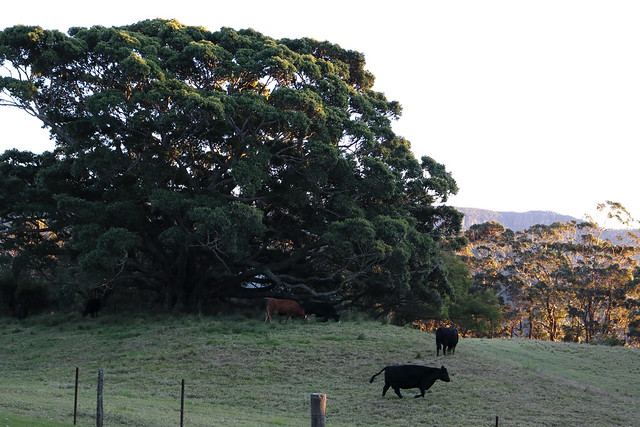
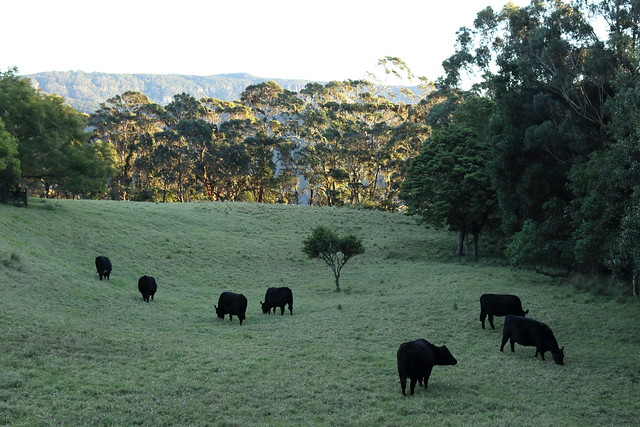
The cattle were in the paddock closest to the cottages, which was a bonus to the photographer.

Winter Visit

They looked to be mainly black Anguses, and were busy breakfasting…

Winter Visit

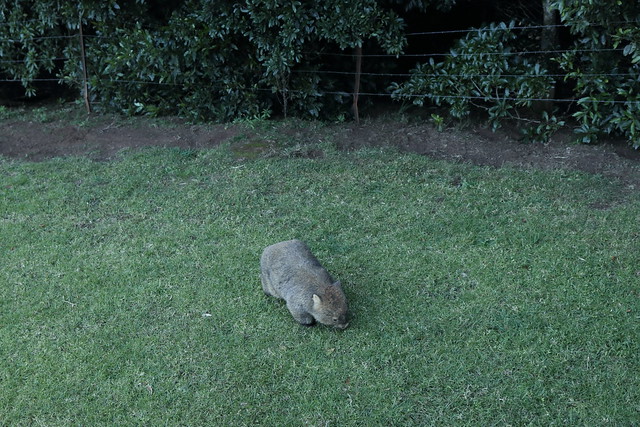
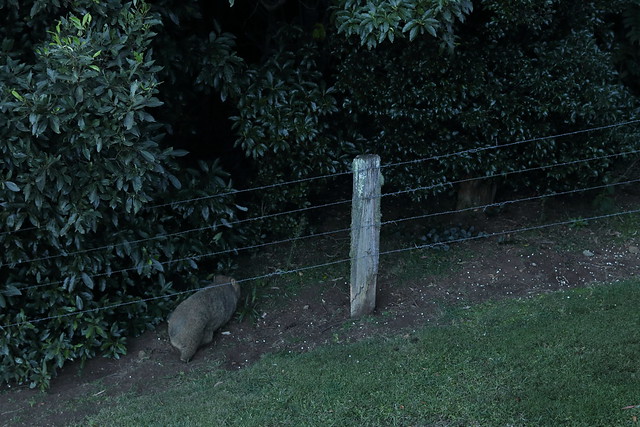
When an interloper appeared out of the bush.

Winter Visit

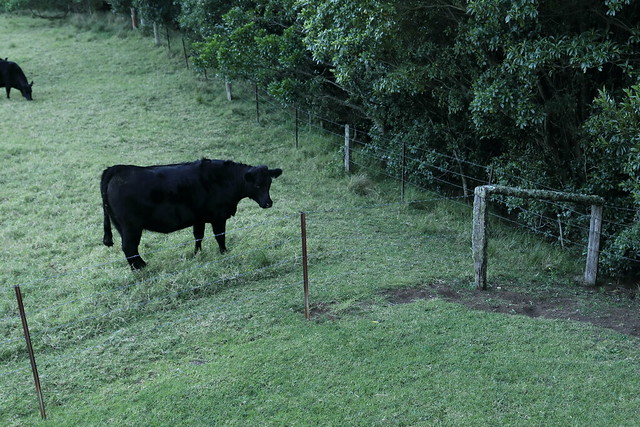
The bovines weren’t quite sure of the wombat.

Winter Visit

And neither was the wombat completely comfortable to be so exposed. After a few nibbles of grass it wandered back to safety.

Winter Visit

The Red Centre – Part 2

Jumping on to the bus, we were off around Alice Springs for our tour.

Old Telegraph Station

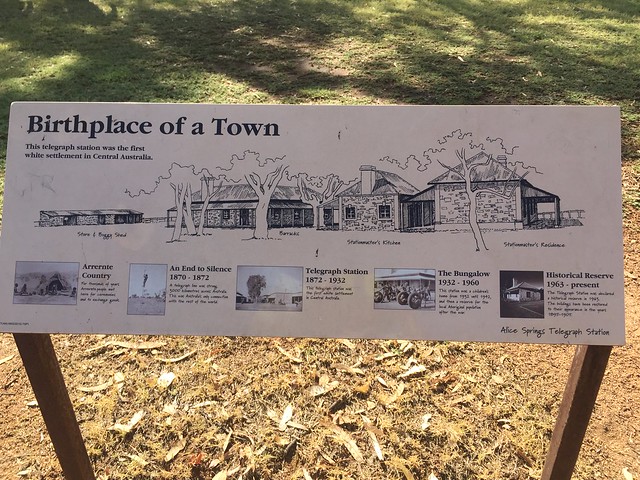
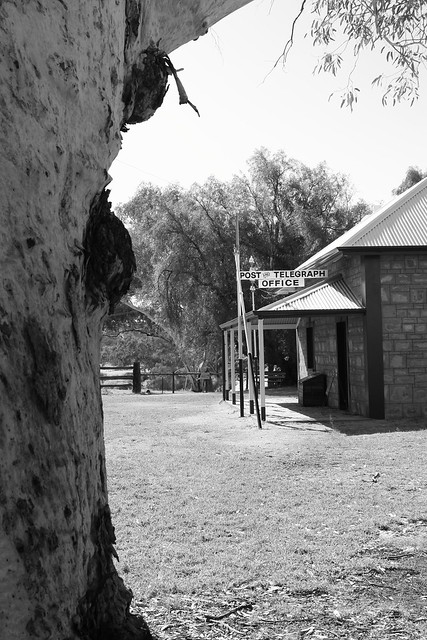
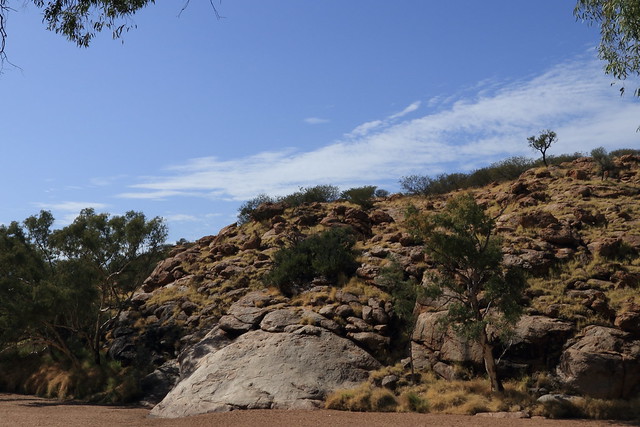
Our first stop was at the Old Telegraph Station – the reason that Alice Springs was founded in the first place.

Old Telegraph Station//embedr.flickr.com/assets/client-code.js

Old Telegraph Station

The early explorers thought that this place had a permanent water source. Unfortunately, they didn’t realise that the area had just had a downpour, and that the springs were only temporary.

Old Telegraph Station

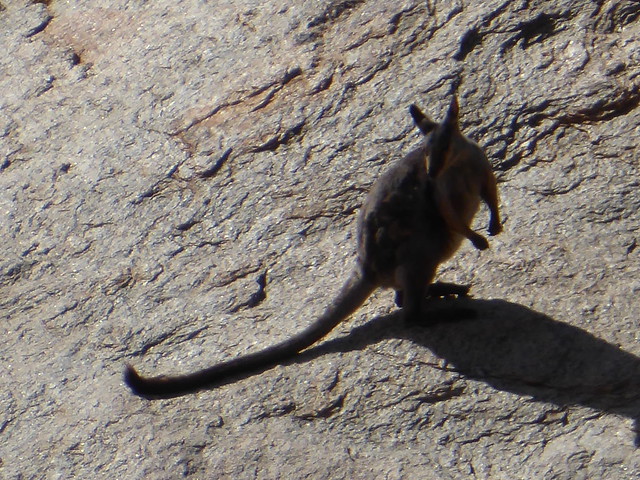
We saw some wildlife though – a rock wallaby in particular – so there must be some water somewhere out there, though not enough to sustain a settlement.

Old Telegraph Station

Indigenous art and life – Part 3

Land animals were always very important to the Amarak. During the last Ice Age, the ocean would have been more than 100km away, hence they would have relied on these animals more for food.

Wallabies were common in these parts as they lived among the rocks, and made a good feed.

Discovering indigenous art and life

And goannas were often found up the trees and also made a good feed.

Discovering indigenous art and life

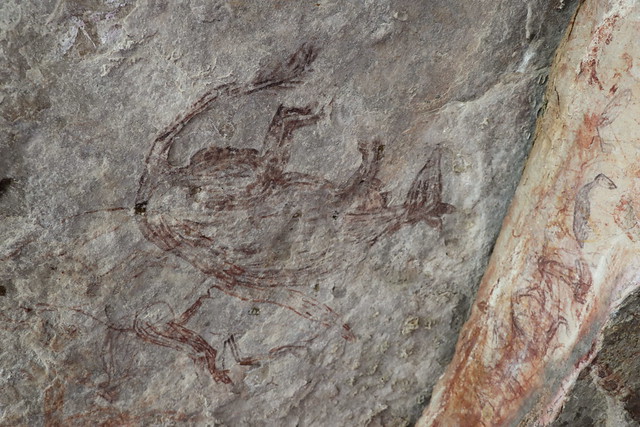
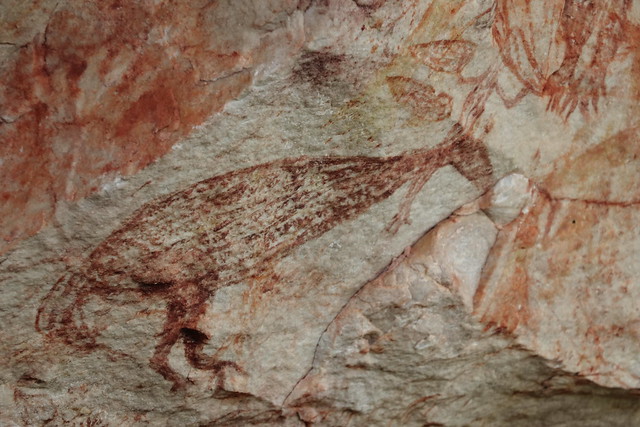
However, the walls also showed animals from long past. The thylacine (a.k.a. Tasmanian tiger) for example had lived in the area at one stage. You can quite clearly see its stripes.

Discovering indigenous art and life

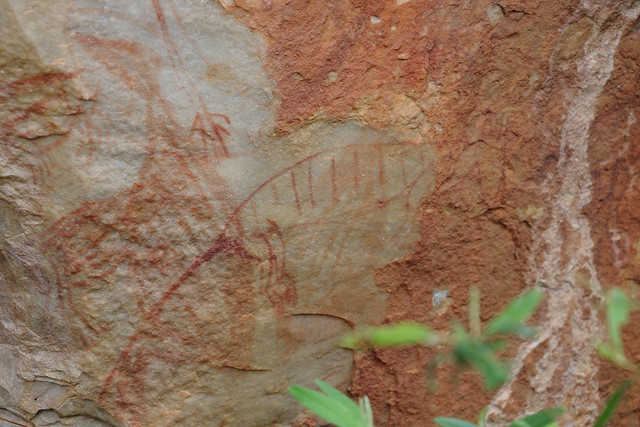
And what about this bird? Is it an emu, or some other extinct giant bird species?

Discovering indigenous art and life

Indigenous art and life – Part 2

Unlike in Central Australia, where life and art revolved around water, the people of Arnhemland were more interested in capturing their fauna, which was integral to daily life. We viewed many paintings of animals, some recent and some potentially very old.

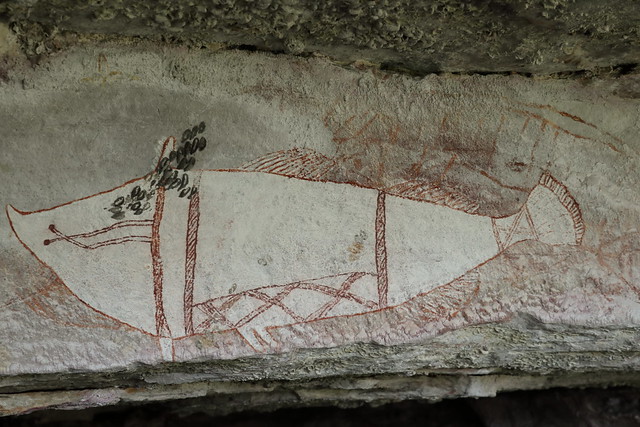
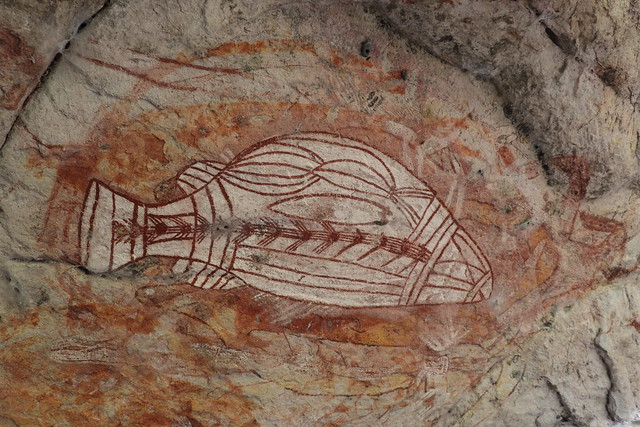
Fish was of course very important, since it was abundant when the water levels were high. The white ochre paint used and the intricate cross-hatching meant that the painting was probably done in the last four thousand years.

Discovering indigenous art and life

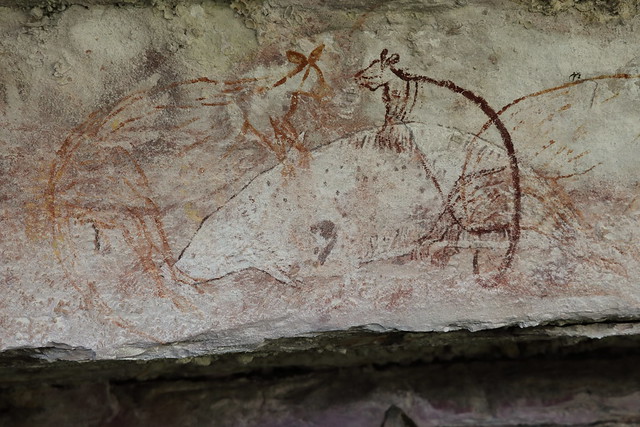
This dugong (a sea cow) has been overpainted with a pair of wallabies.

Discovering indigenous art and life

And this fish was so bright that it could have been painted yesterday.

Discovering indigenous art and life