Tag Archives: top end

Monsoon Rainforest – Part 2

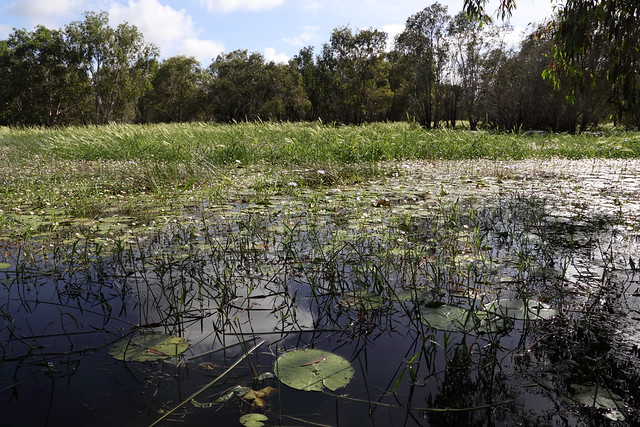
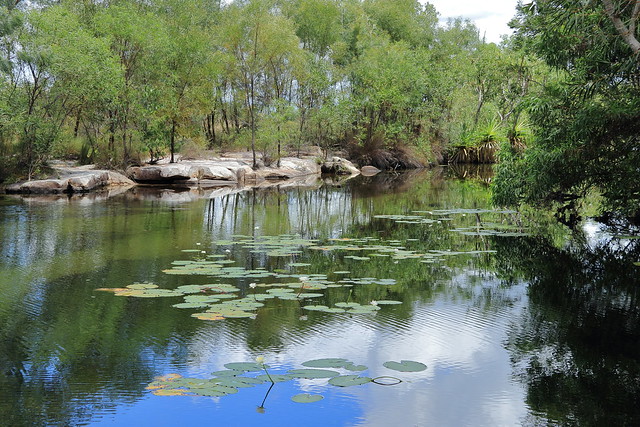
In between the patches of forest, we floated through acres of lily-pads.

Monsoon rainforest habitats

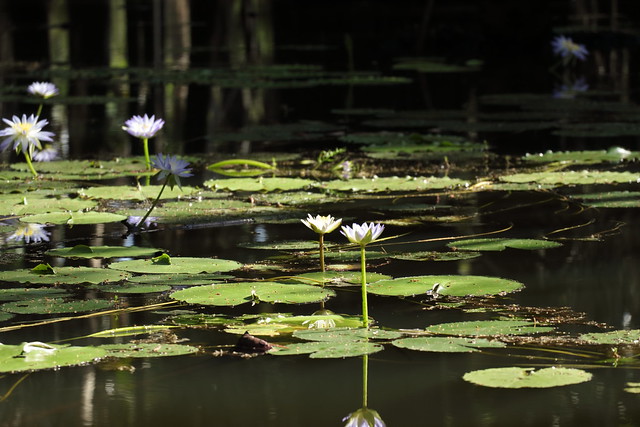
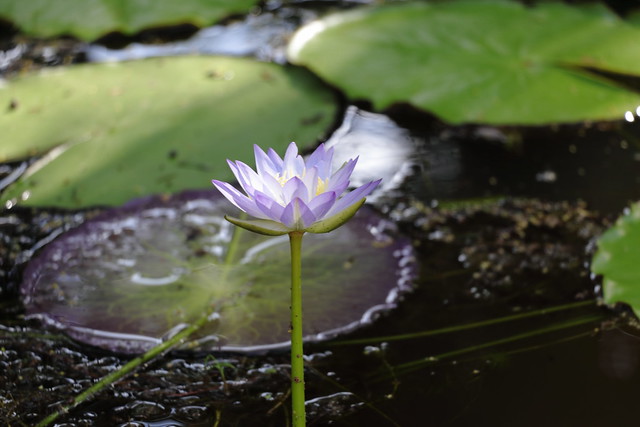
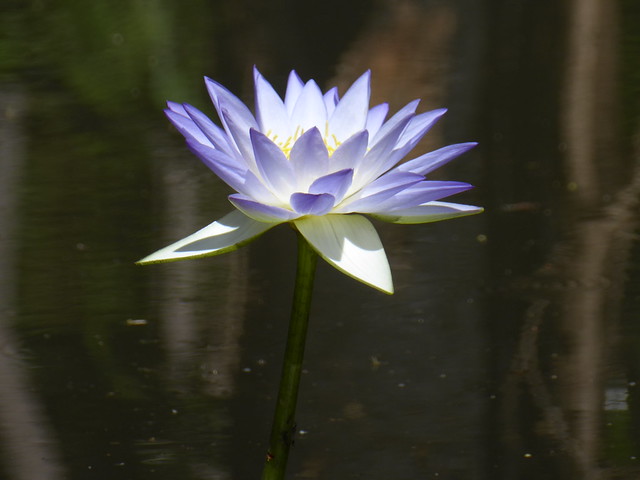
And we were lucky to see many waterlilies in bloom.

Wet season waterlilies

Being on the water, we could see the flowers up-close, and they were stunning.

Wet season waterlilies

Wet season waterlilies

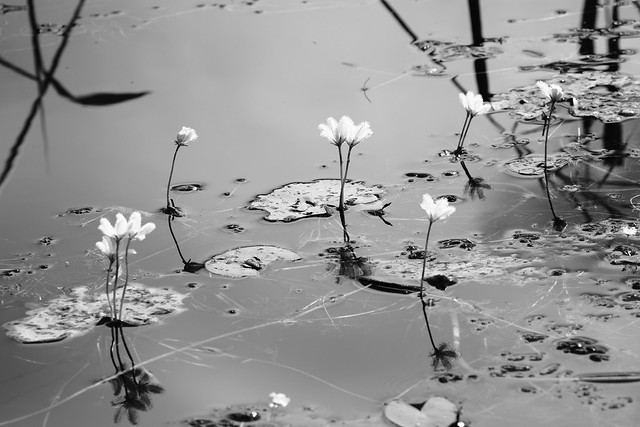
But these waterlilies weren’t the only aquatic flowers we saw. Among them also grew the snowflake lily that only blooms in the Wet.

Wet season waterlilies

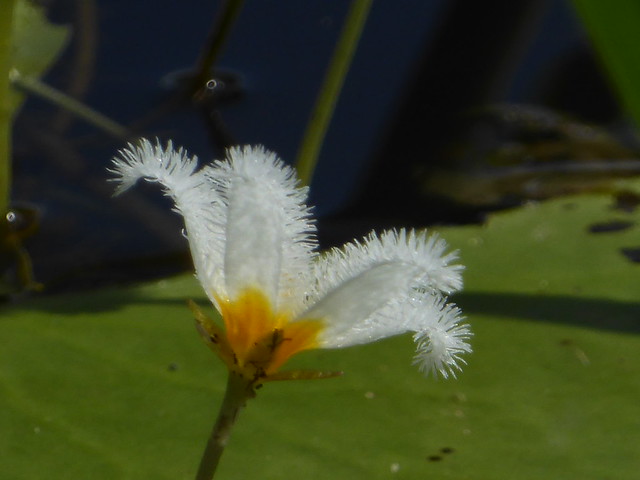
Up-close, they look a lot like snowflakes.

Wet season waterlilies

Wet season waterlilies

Monsoon Rainforest – Part 1

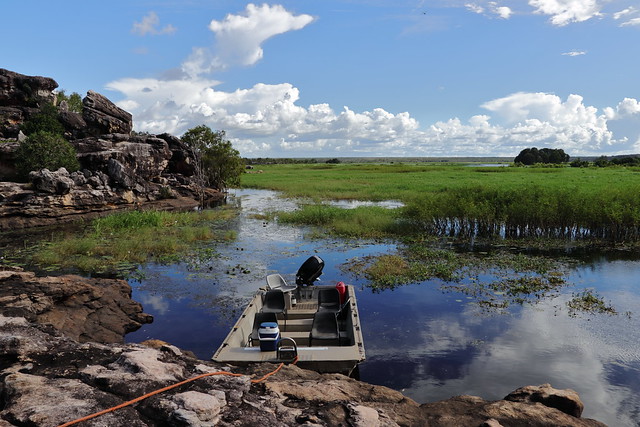
Our other adventures at Mt Borradaile involved cruising the various waterways in this flat-bottomed boat.

Cruising at Mt Borradaile

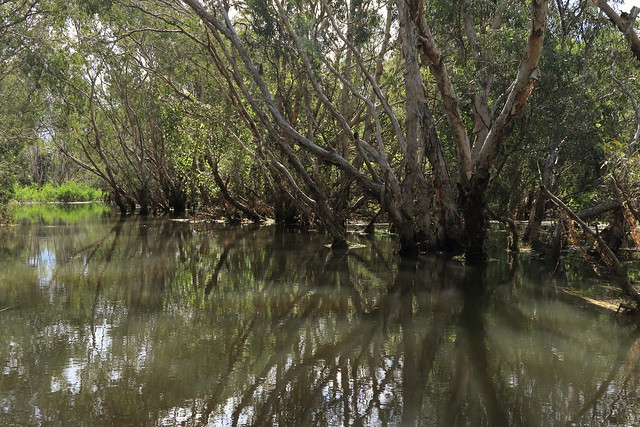
We discovered very quickly that there were many habitats in the wetlands, the first we passed through being the monsoon rainforest. These are tropical areas that are waterlogged during the Wet but are completely dry otherwise. For example, this ‘canal’ under the paperbark trees in the Dry season is a road!

Monsoon rainforest habitats

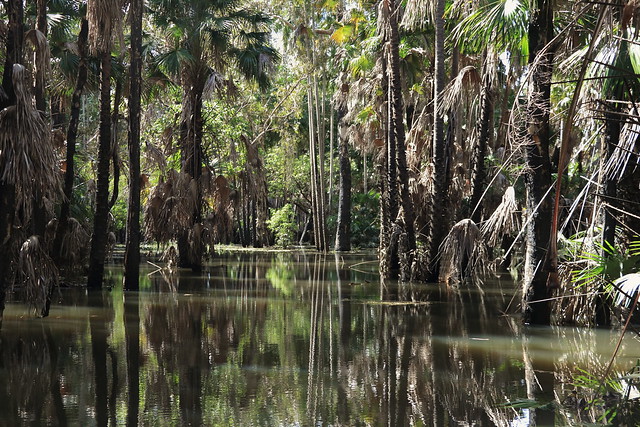
Paperbarks weren’t the only type of forest we cruised through – there were patches of Livingstonia palms, straight out of the dinosaur era.

Monsoon rainforest habitats

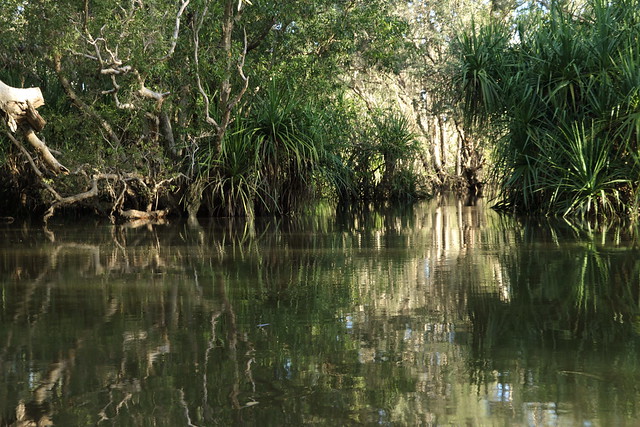
And water-loving Pandanus Aquaticus, which I’ve seen in many parts of Northern Australia that I’ve visited.

Monsoon rainforest habitats

I loved how serene it all was, particularly when our guide cut the motor – beautiful reflections, and no sound bar the trickle of water and the twittering of birds.

Sandstone Country – Part 6

There are also bigger creatures in Sandstone Country – but being marsupials and nocturnal, they were rather elusive. We did catch sight of these two though, with the help of our knowledgeable guide.

This rock wallaby made a brief appearance under a rock overhang.

Creatures of Sandstone Country

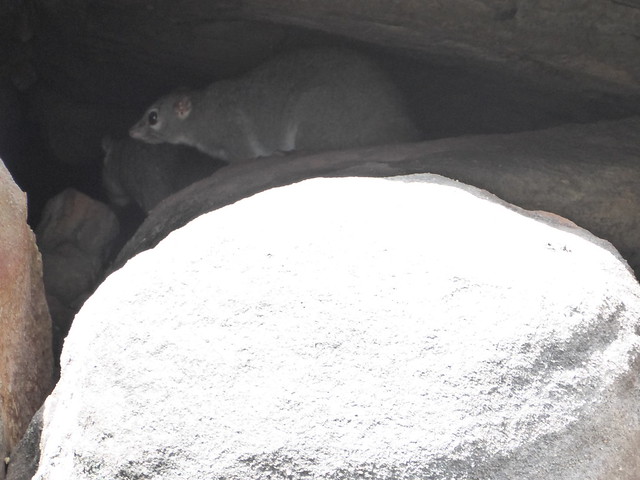
And we caught a glimpse of a pair of possums in a rock crevice, out of the midday heat.

Creatures of Sandstone Country

Apart from these two larger creatures, that’s all the larger animal action in Sandstone Country, and the end of our visit there – although there’s plenty more to see at Mt Borradaile. Next, we venture somewhere much more watery.

Sandstone Country – Part 5

We had quite a few encounters with the wildlife in Sandstone Country. Being a place with many nooks and crannies, there were many places for creatures to hide.

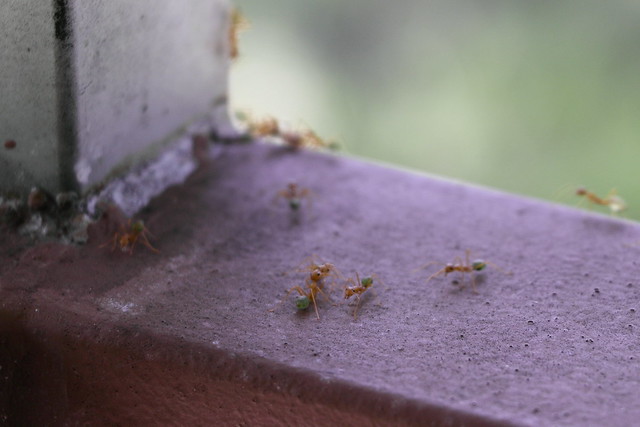
The smallest first – these green tree ants were definitely the most ubiquitous. Their green bums have a lemon taste, and most tour guides in Northern Australia will coerce encourage you to taste it.

Creatures of Sandstone Country

This little beetle (or is it a bug?) had an almost jewel-like shell.

Creatures of Sandstone Country

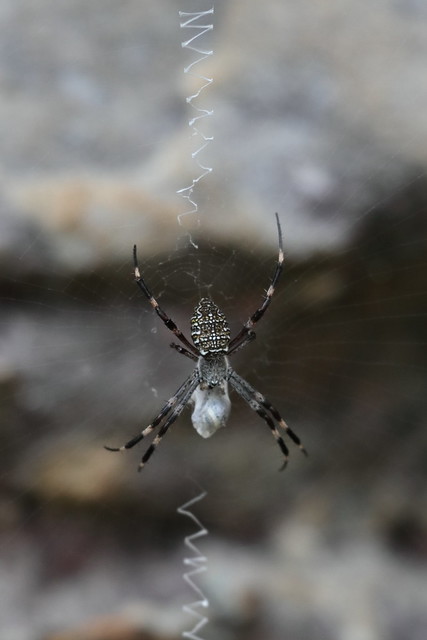
These St Andrew’s Cross spiders were almost as ubiquitous as the green tree ants. Thankfully, they’re not poisonous.

Creatures of Sandstone Country

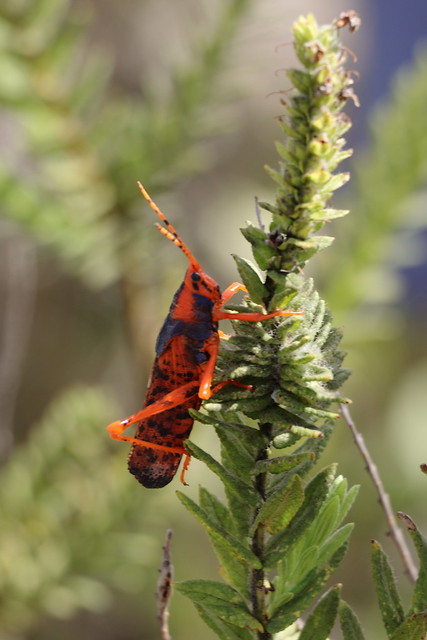
But the most striking small creature was the Leichhardt Grasshopper, first recorded by explore Ludwig Leichhardt back in in his first expedition through the Top End. He lived to mount a second expedition, where he mysteriously disappeared!

Creatures of Sandstone Country

Sandstone Country – Part 4

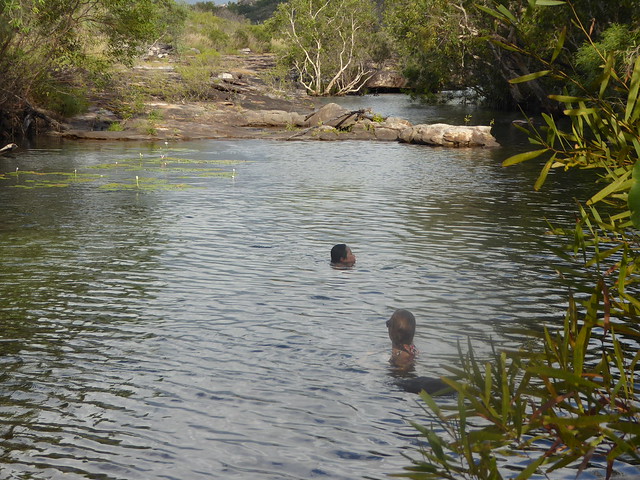
Further down-stream, the creek pooled into a wonderful fresh-water pond, complete with waterlilies and a sandy bottom.

Fresh water

It was our swimming spot for the week – I was lucky to be able to swim there three times. By mid-afternoon the water temperature was close to 30C, though it was a tad cooler in the deeper parts. I was told that the pool’s depth decreases as the Dry goes on, so that by July it would only be waist deep.

Fresh water

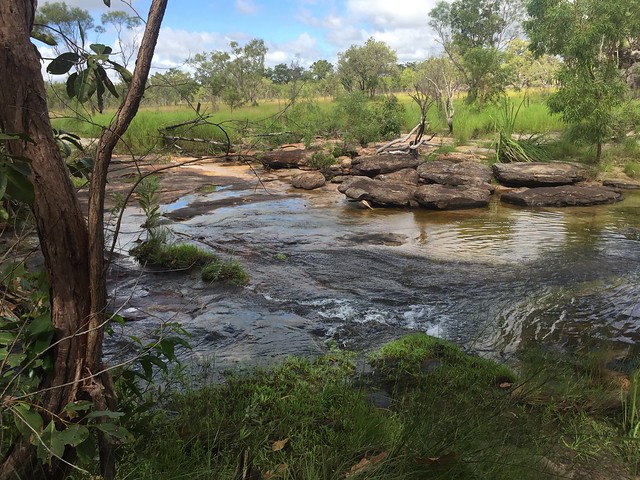
The creeks of the area drain into the many channels of Cooper Creek, which we’ll explore later. This waterfall/rapids gives you an idea of how much water was draining away.

Fresh water

Sandstone Country – Part 1

Mount Borradaile is unique in that it is a small tourist venture on land that is leased from the Amarak people whose land lies just east of the East Alligator River. They no longer live in the area, but are involved with the camp – the traditional owners visit periodically and have input into the sites that are shown and the stories that are told. We’ll look at the indigenous side of things later on, but first I’d like to show you how things like in Sandstone Country after the Wet.

During the Dry, things are dusty, sandy, and frequently burnt.
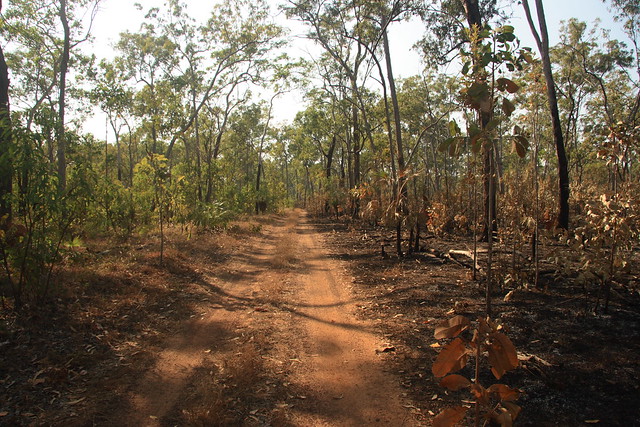
IMG_3547

However, after the Wet, things are rather green.

Sandstone country after the Wet

So green, in fact that there is a green tinge everywhere from herbs and various other ground covers.
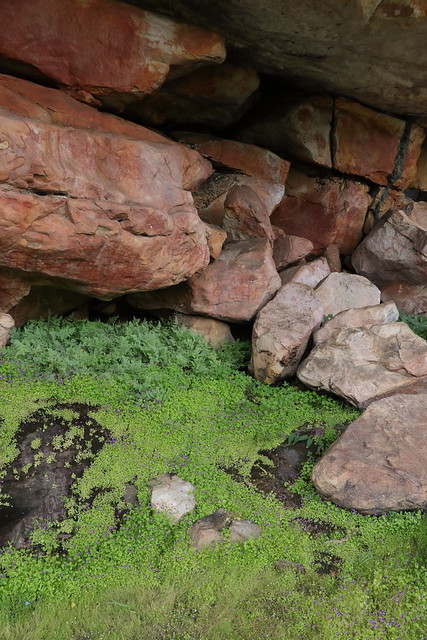
Sandstone country after the Wet

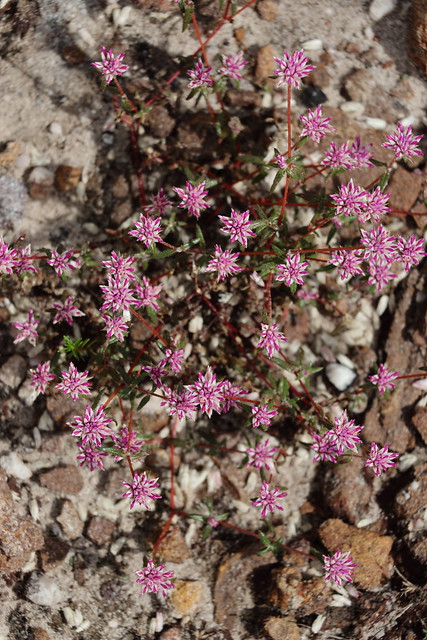
And all the ground cover plants are blooming – the flowers are lovely and delicate.
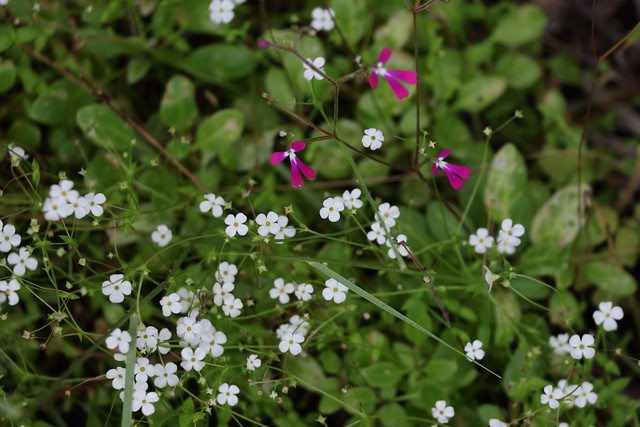
Sandstone country after the Wet

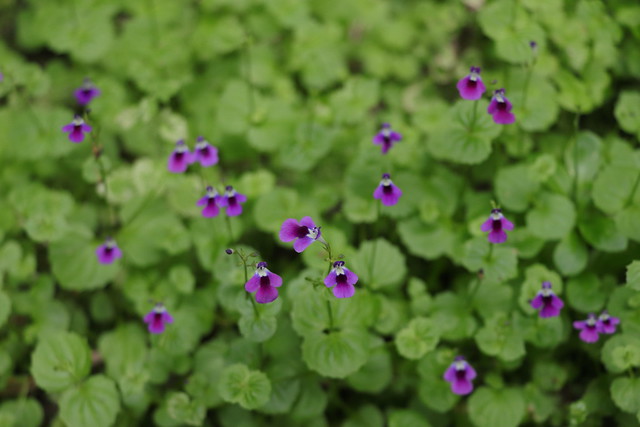
Here are some native violets.

Sandstone country after the Wet

A kind of poppy.

Sandstone country after the Wet

And a type of heath flower.

Sandstone country after the Wet

All very beautiful to see. All unique to the Top End after the Wet season.

Back to Mount Borradaile – Part 2

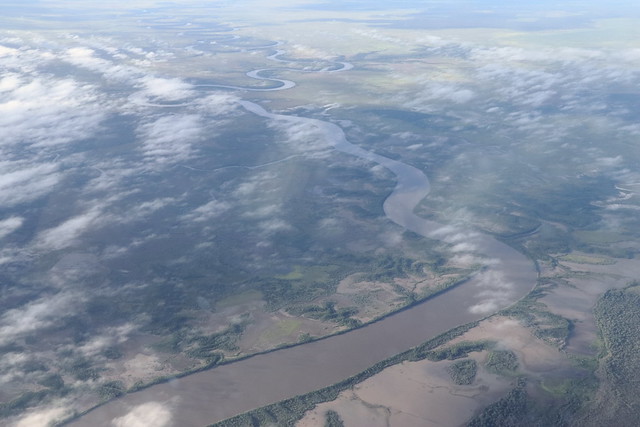
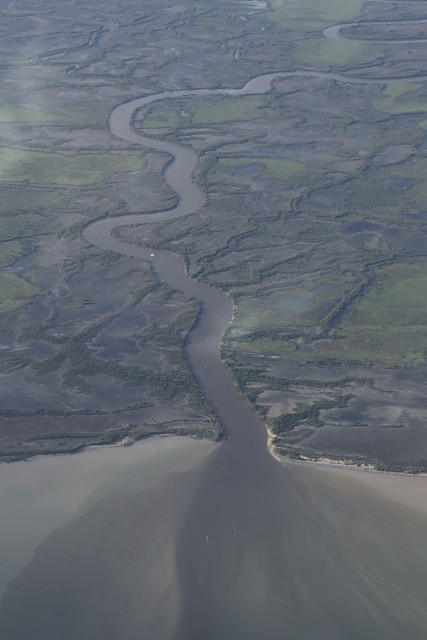
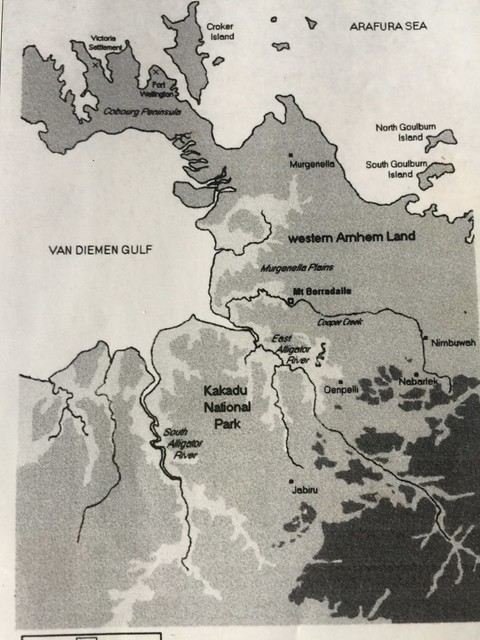
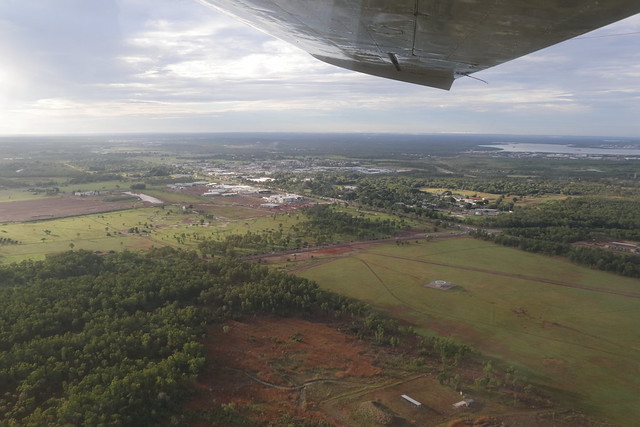
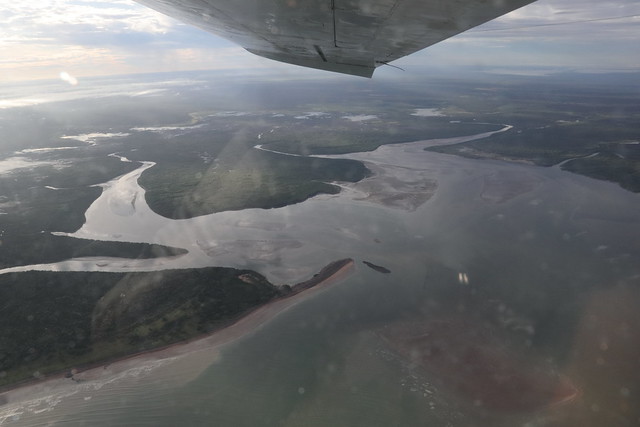
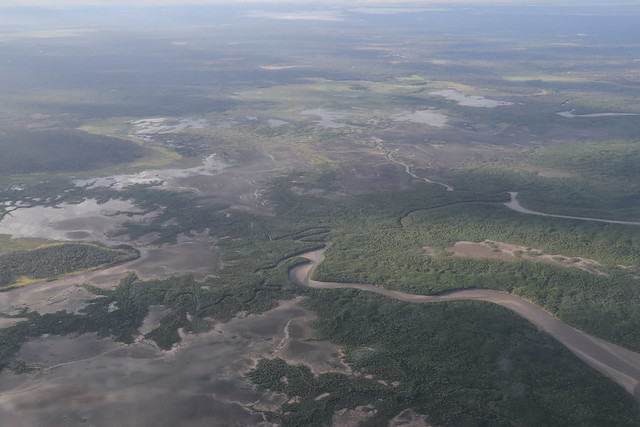
Soon we were away from all civilisation and flying over the wetlands of the Top End, crossing little rivers…

Darwin to Mt Borradaile

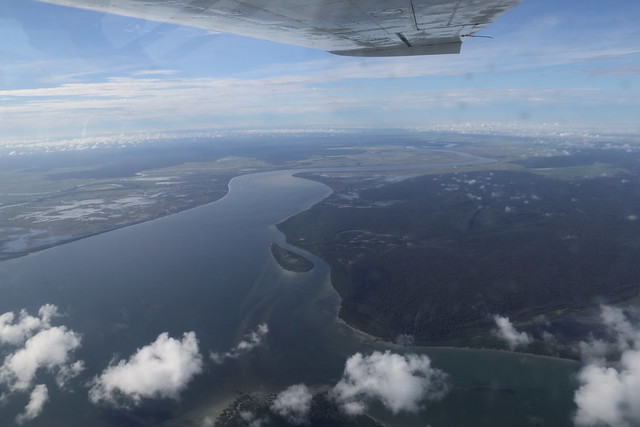
And much bigger ones further east that form part of Kakadu National Park.

Darwin to Mt Borradaile

It’s the end of a very good Wet season (the best in five years) so the rivers and creeks were still discharging water. This meant great conditions for barramundi fishing, and we saw quite a few boats from above.

Darwin to Mt Borradaile

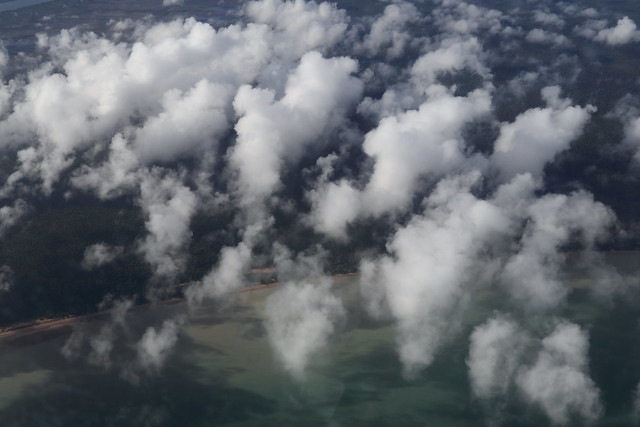
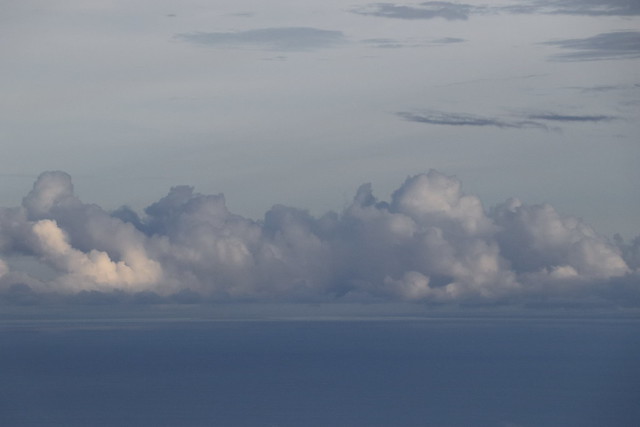
I was also fascinated by the clouds and the patterns they formed down below.

Darwin to Mt Borradaile

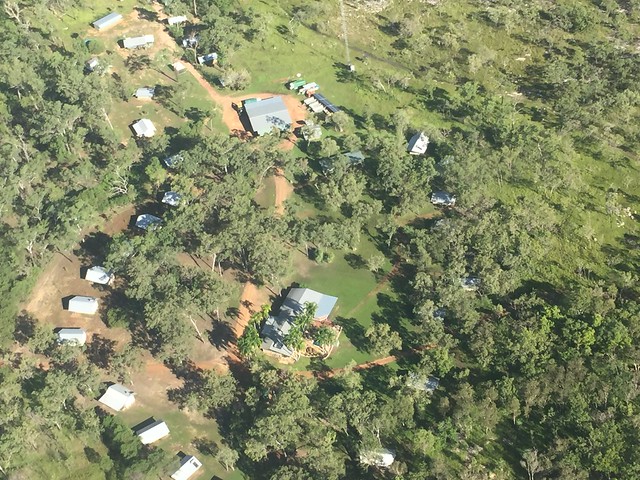
After a bit over an hour, we descended into Arnhemland, and down to Mount Borradaile – a little bit of civilisation in the wilds.

Darwin to Mt Borradaile

Back to Mount Borradaile – Part 1

Eight years ago I visited a place in the Northern Territory called Mount Borradaile. It’s a tourist camp (not a resort) within West Arnhemland that was full of all sorts of Top End wonders, both natural and indigenous. Even though I only stayed two nights, it made a deep impression, and I’ve been wanting to go back ever since.

Darwin to Mt Borradaile

I finally got the chance this year, this time with my mum, who is an avid amateur naturalist as well. It might be a strange time to go, in the Wet of late March, but having been up north in the Dry, we both wanted to see what the Wet brought.

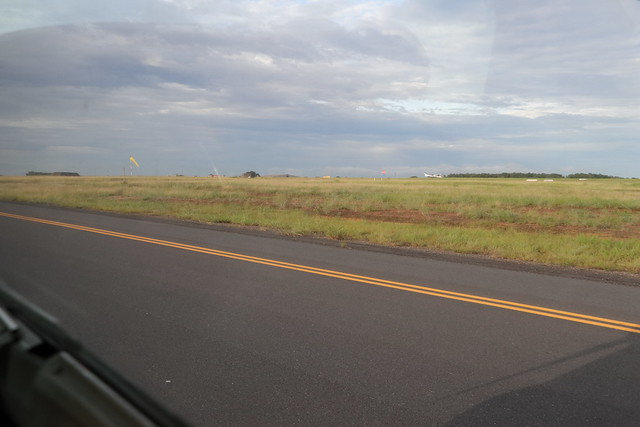
The adventure started with an early morning flight in a six-seater plane from Darwin.

Darwin to Mt Borradaile

Darwin to Mt Borradaile

Darwin to Mt Borradaile

Luckily, the weather was calm in the morning, and we were soon flying amongst the clouds and looking down on the estuaries and wetlands that surround Darwin.

Darwin to Mt Borradaile

Darwin to Mt Borradaile

Darwin to Mt Borradaile

It’s definitely greener than in the Dry, isn’t it? Just compare it with a scene from my flight eight years ago, when I was flying through a smoky haze.

Arnhemland from the air

Farewell Top End

We’ll farewell the Top End with another stupendous sunset cruise on the Coopers River billabong.

Dinner time Cruising down the billabong

It was a profound, emotional experience, and I’m not the only one who feels this way. The wildlife, scenery and rock art are amazing, but above all, the cultural things that I learned that typically only happens when I visit a completely foreign country. I admit that this all comes at a price, but if you have an opportunity to visit Mount Borradaile, jump at it. Magnificent sunsets like this one awaits you.

The smoke makes for a brilliant sunset

Billabong Sunset Going
Going Gone

This isn’t the end of my Northern Territory journey, though. Next up, the Red Centre!