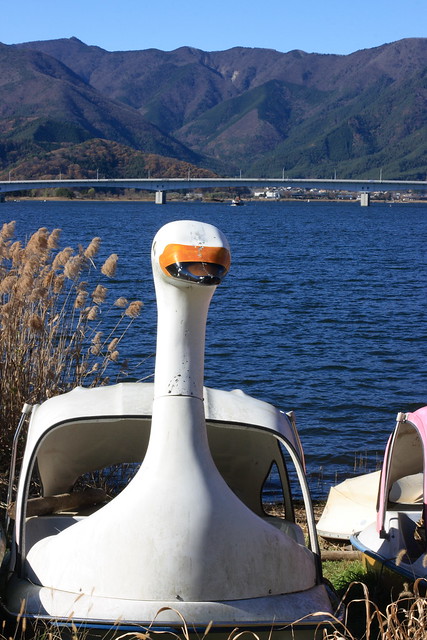
Fujisan wasn’t the only thing to see at Kawaguchiko. The lake itself was a pretty sight in itself. We saw it from above.
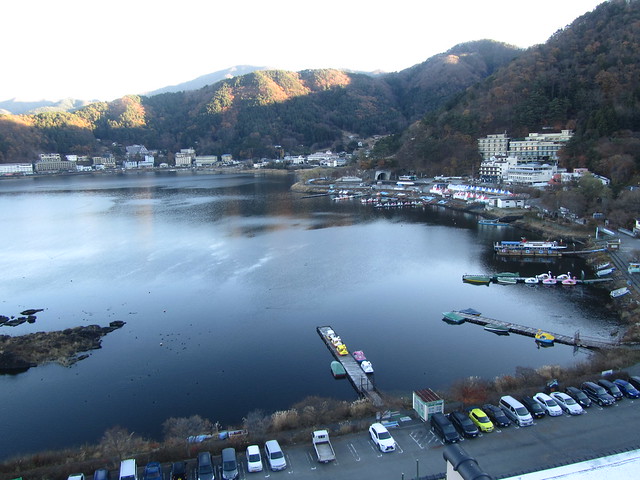
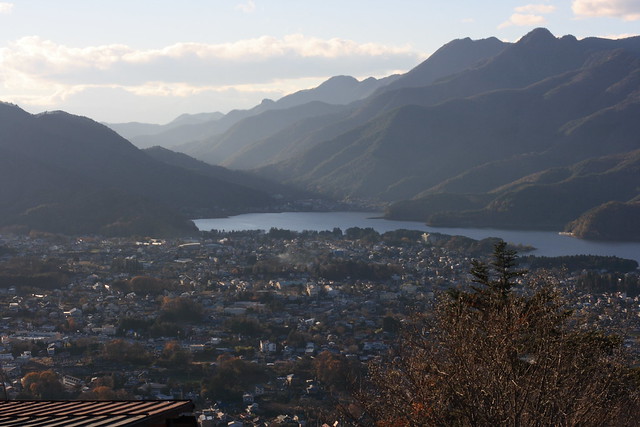
And from ground level.
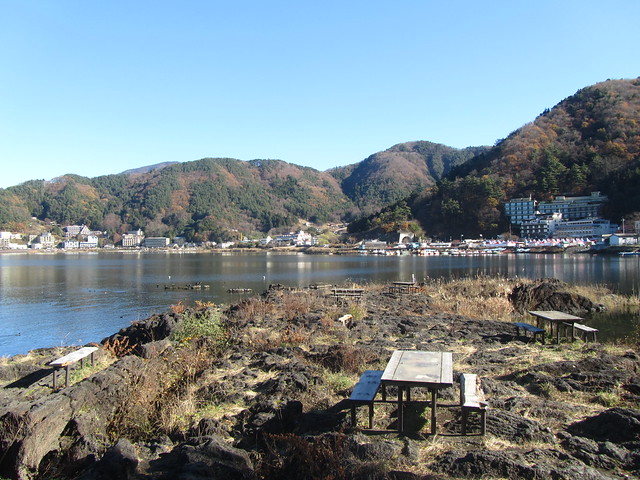
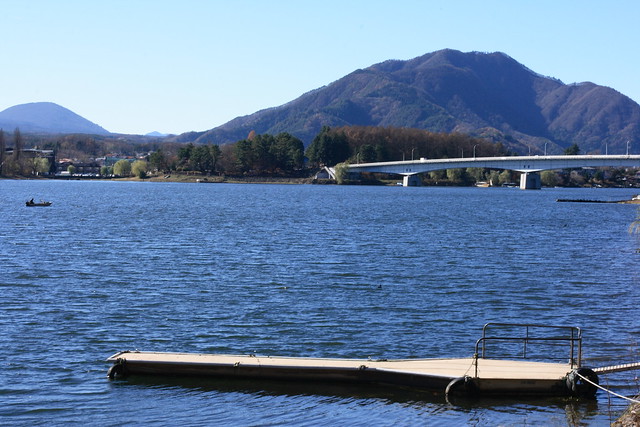
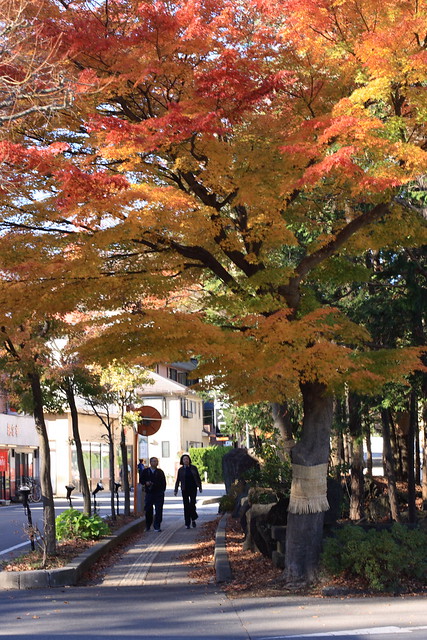
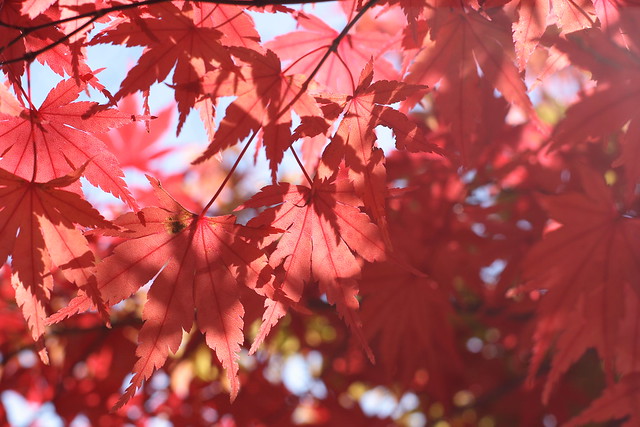
As we walked around the lake, we caught plenty of autumn foliage that was bright as can be.

Fujisan wasn’t the only thing to see at Kawaguchiko. The lake itself was a pretty sight in itself. We saw it from above.
And from ground level.
As we walked around the lake, we caught plenty of autumn foliage that was bright as can be.
Our destination was the tourist town of Kawaguchiko, famous for its view of Mount Fuji (or Fujisan, as the Japanese call the sacred mountain). At 3776 metres, it’s Japan’s highest mountain and renowned for being a bit camera-shy – it’s obscured by cloud for most of the year. We felt very lucky to get many fantastic views of the mountain. In fact, you really couldn’t miss it.
From our hotel rooftop early in the morning.
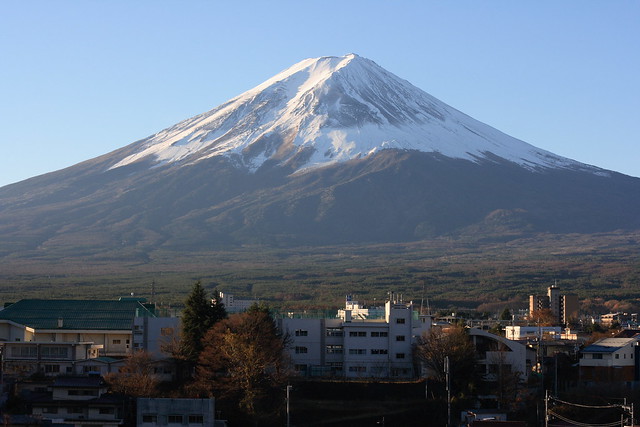
Zooming in up-close.
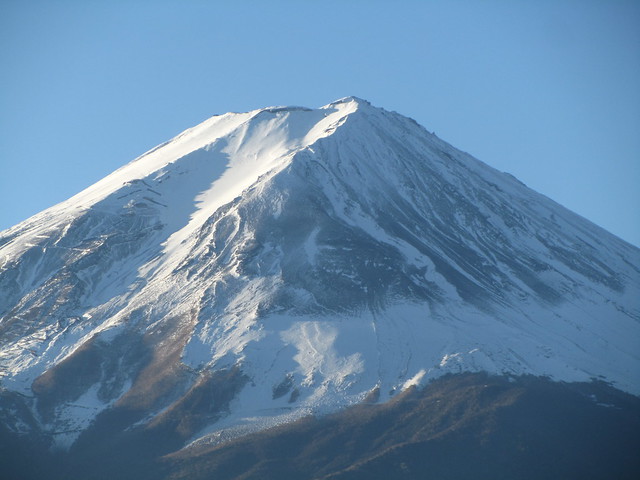
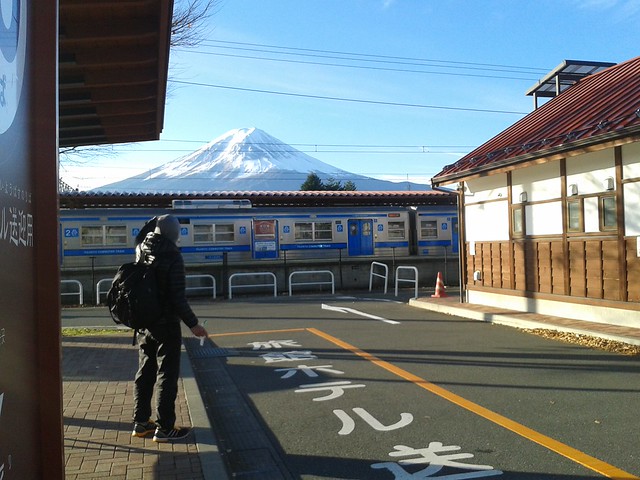
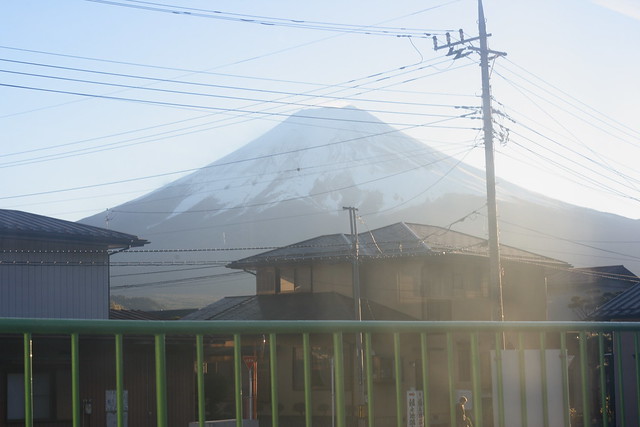
From the train station.
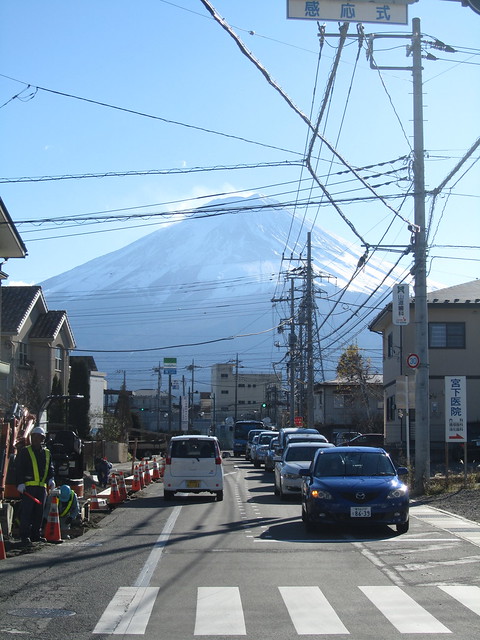
And the main road.
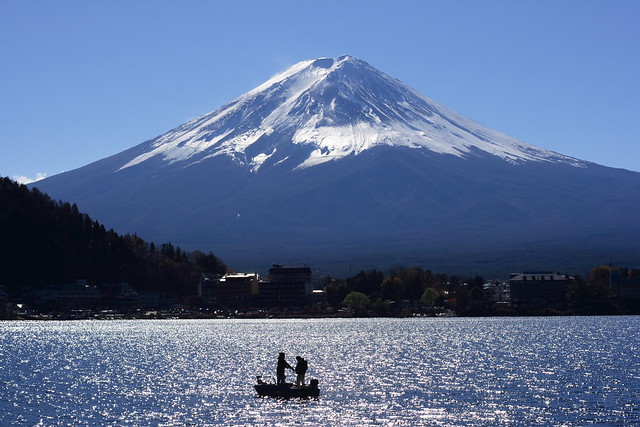
My favourite views were from the lakeside mid-morning.
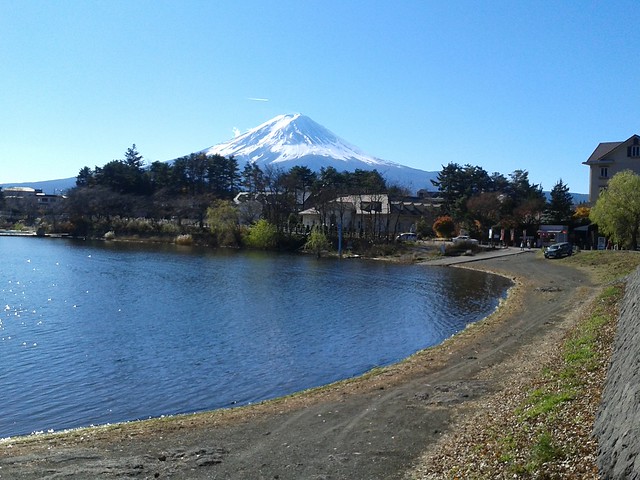
It was a view to admire (or distract) while fishing.
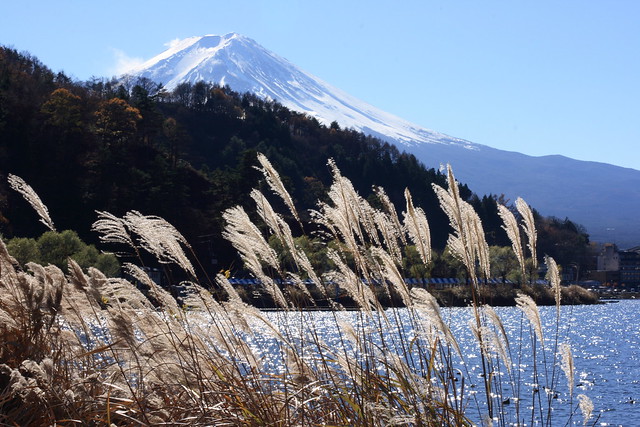
And a spectacular accompaniment to autumn foliage.

And peeping from behind the hills.
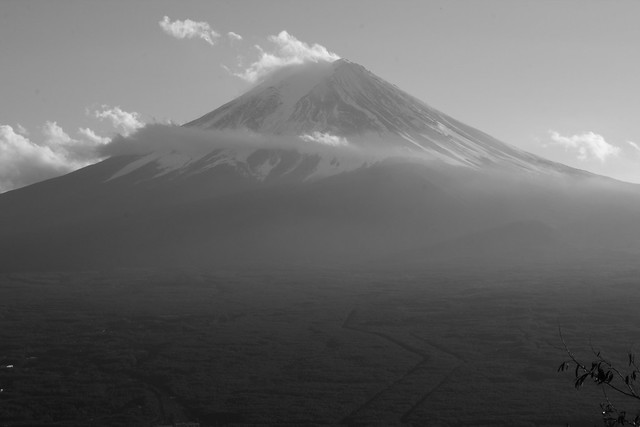
By late afternoon the clouds had started to roll in, though it didn’t make the view any less spectacular. It almost made us forget that we were looking at a volcano (albeit a dormant one).
Our visit to Izu-Kogen concluded all too quickly, and we were once again at the station, taking multiple trains, one of which was of course the shinkansen.
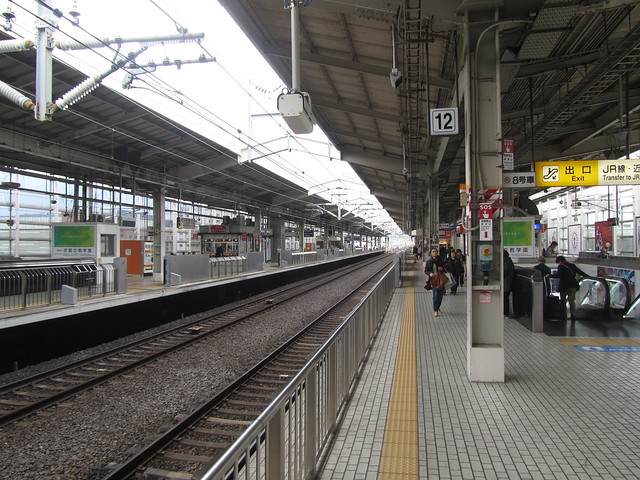
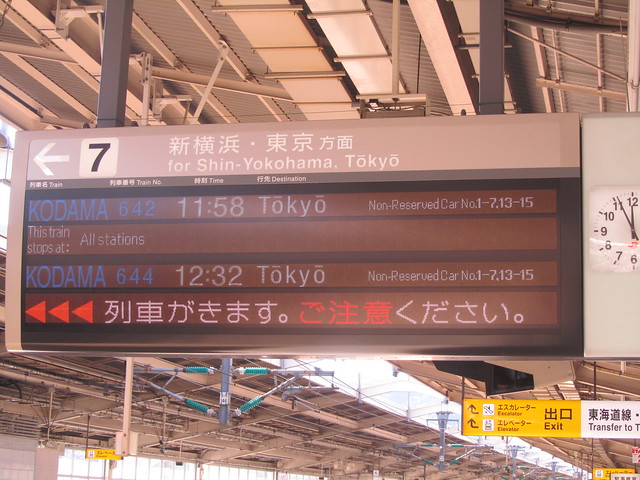
For those who have never taken a high-speed train, I took a little video at one of our transit points, Atami Station. It’s a taste of how fast those trains go, and shows a little of what goes on at a Japanese train station.
Notice:
1. Speed of train, and how nonchalant everyone is about it.
2. Barriers between the platform and the track – rather a good idea.
3. People still go around in Japanese dress – even while travelling.
4. The station master’s pointing routine in the background. It’s a Japanese thing to ensure that everything is done according to plan.
It was a rather long day on 5 separate services. The last was an all-stations service full of noisy high school kids. We were rather glad near the end to see this, our destination.
The coast line that greeted us was a dramatic one, even on an overcast day. Here, the forest and the ancient lava flow met the Pacific Ocean.
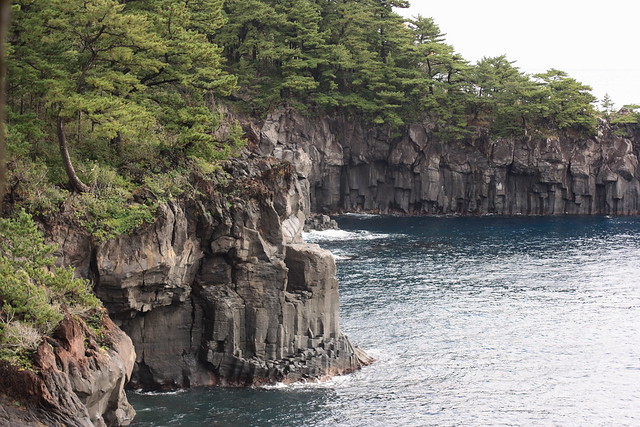

The basalt column cliffs were formed from lava flows from Omuroyama, about 4000 years ago. In geological terms, that’s all very recent. The flows went on for miles, and it’s a great place to walk along.
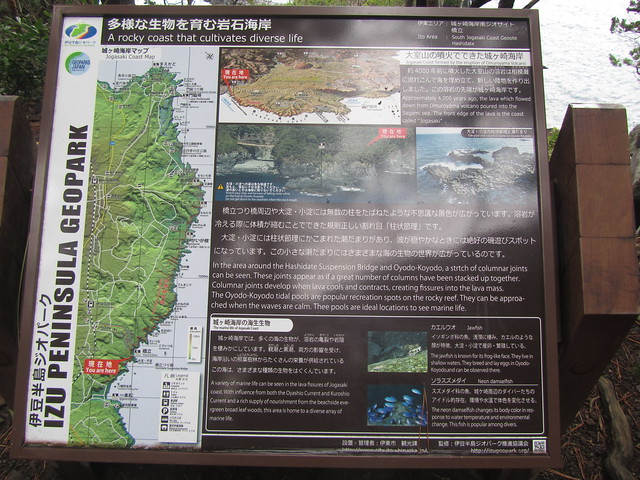
The Jogasaki Coast walk was 9km long, but we didn’t need to walk such a long way to get some great views.
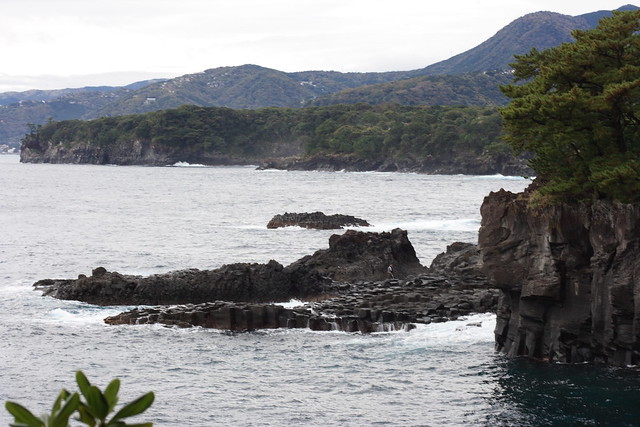
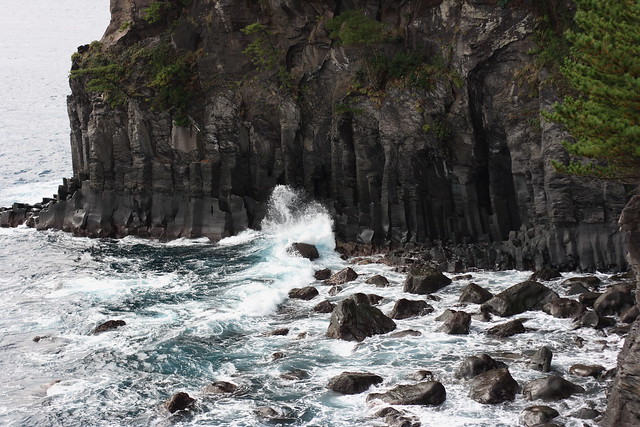
There was even a 60 metre suspension bridge (suspended 18 metres above the sea) from which to appreciate the scene.
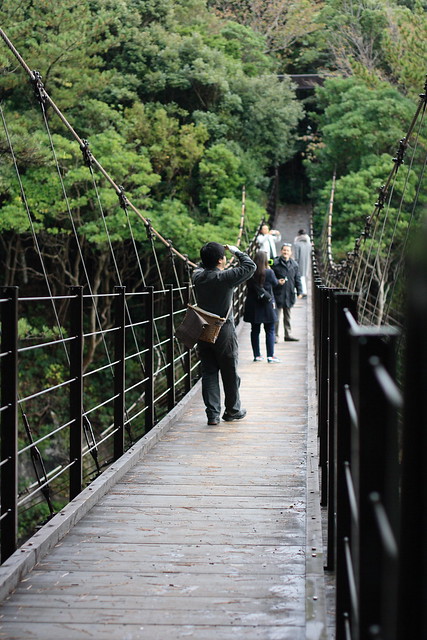
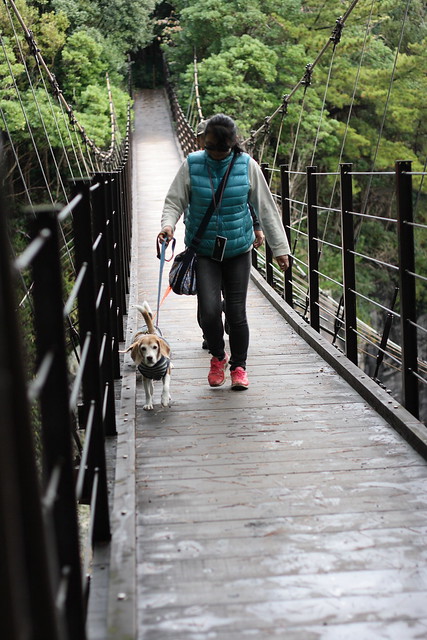
We weren’t the only ones enjoying the morning walk. This couple were walking a pair of beagles along the bridge. I must say that our beagle, Bridie, wouldn’t be so daring as these little guys.
After all that food at the onsen, we really needed a walk. Luckily, the onsen had that covered too – the next morning we joined their free guided walk down to the Jogasaki Coast.
The first part of the walk was by a fast-flowing river that ran through some spectacular forest.
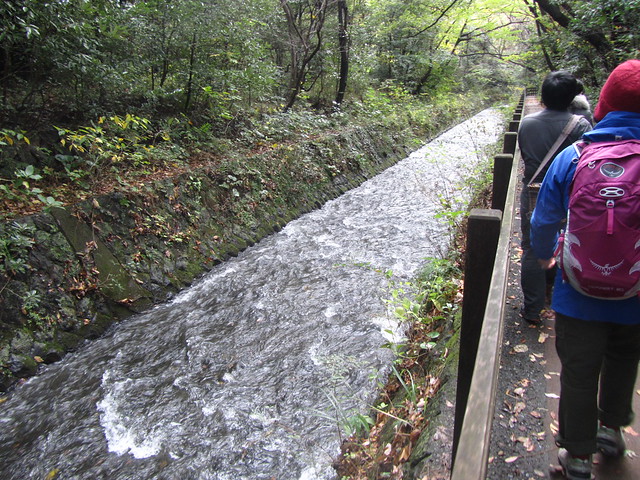
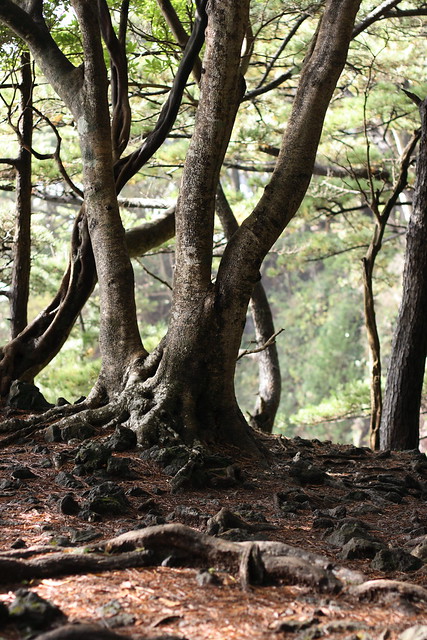
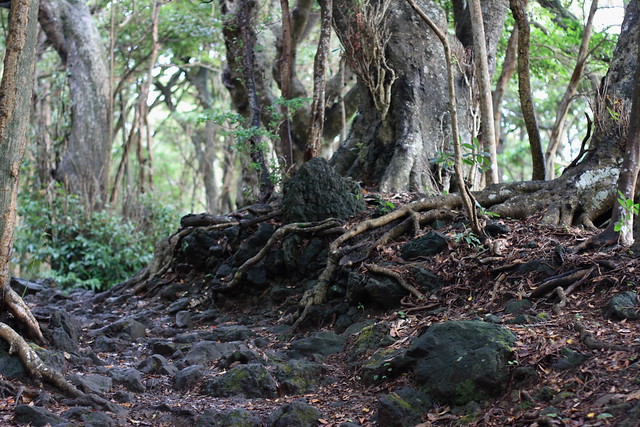
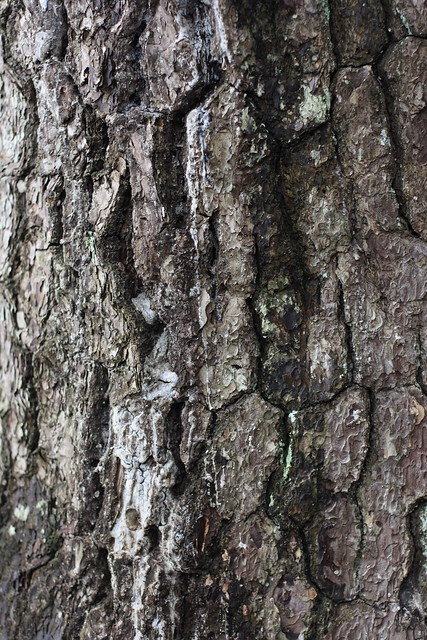
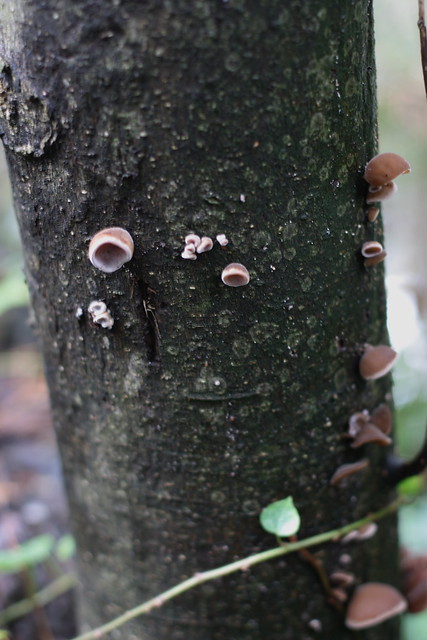
It was a temperate rainforest, and there were plenty of details to take in.
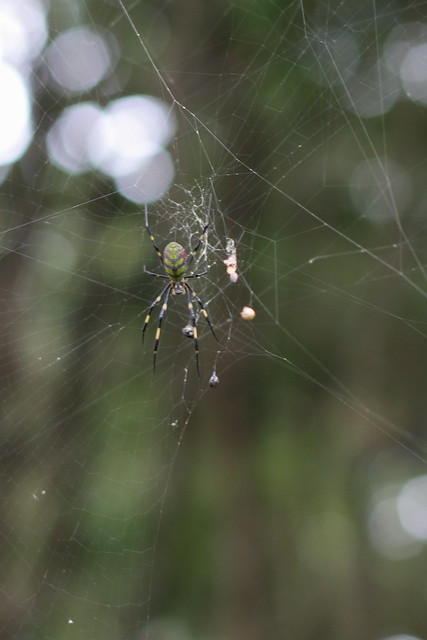
We even saw a lovely-looking spider. These guys aren’t deadly, but they do make you pretty sick. Luckily they are pretty tame, unlike some of its Aussie relatives.
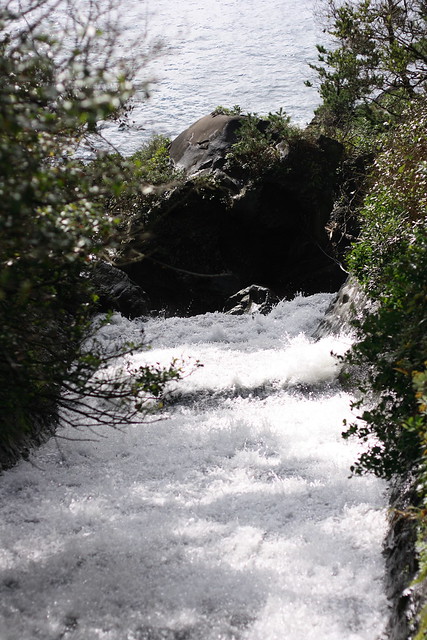
We followed the river until it tumbled into the sea.
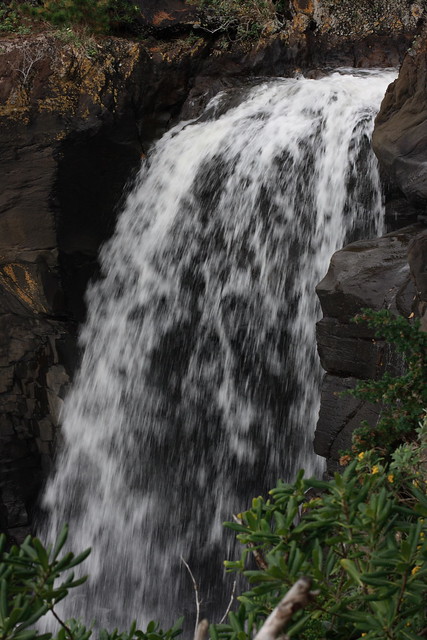
And then, what did we find?
Breakfast at the onsen ryokan was appropriately lavish. This is Japanese rice porridge with many, many accompaniments.
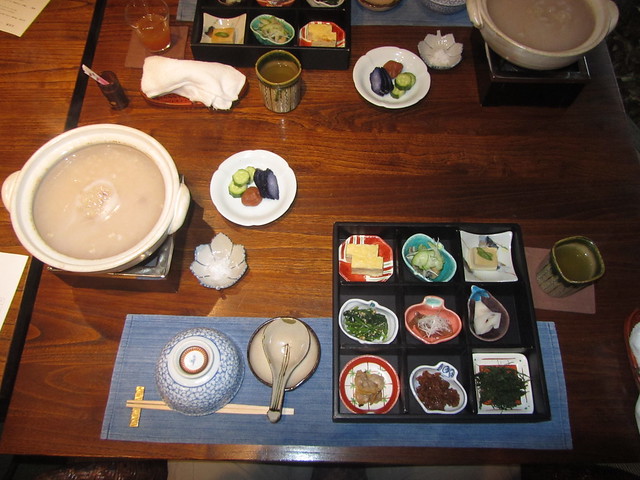
And dinner was once again kaiseki style.
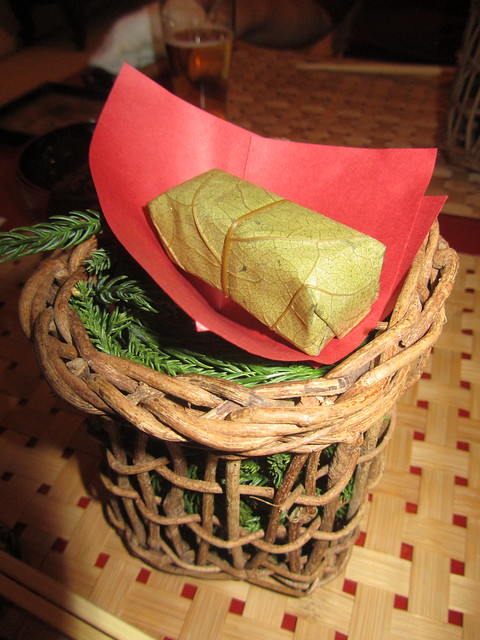
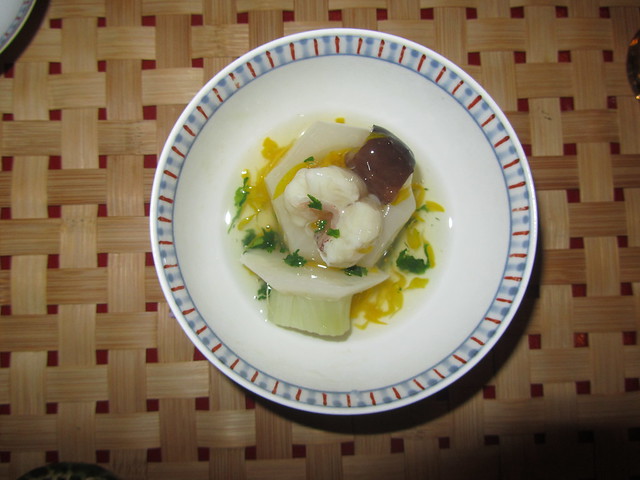
The dinners here were definitely the best we had in Japan. They utilised plenty of local seasonal produce, and being by the sea, it included plenty of seafood.
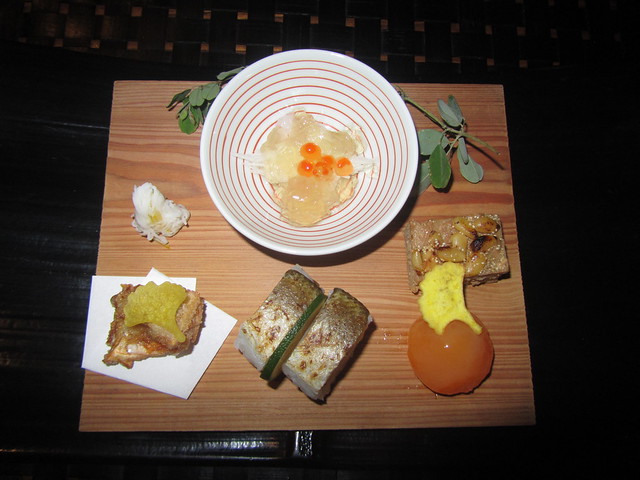
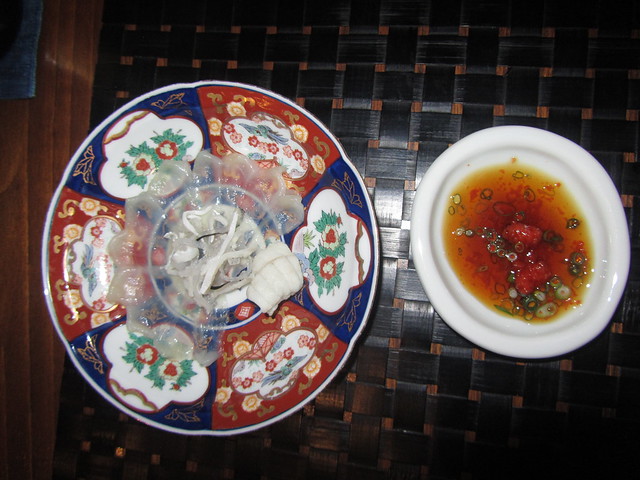
So very refined. There was also plenty of ingredients from the land too.

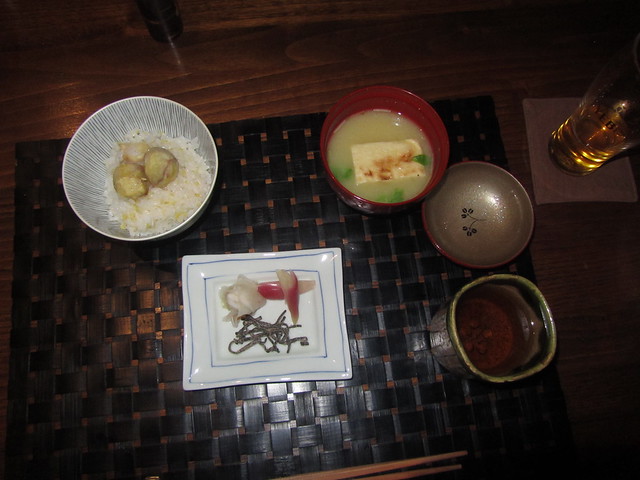
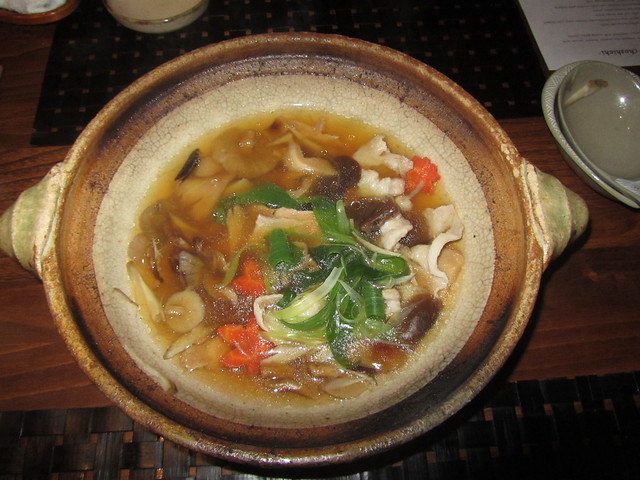
And of course, there were some intricate desserts too.
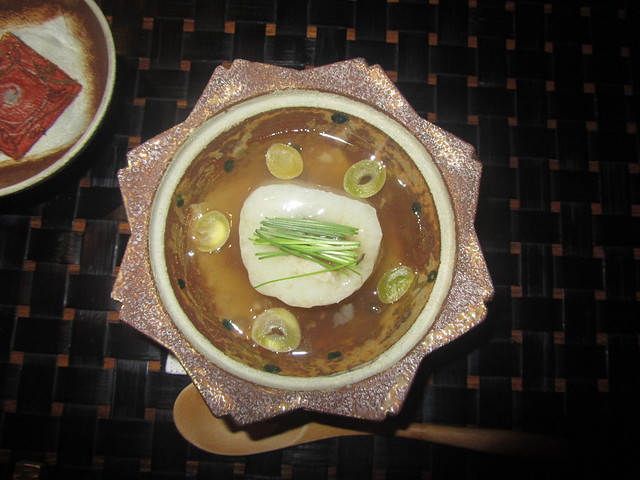
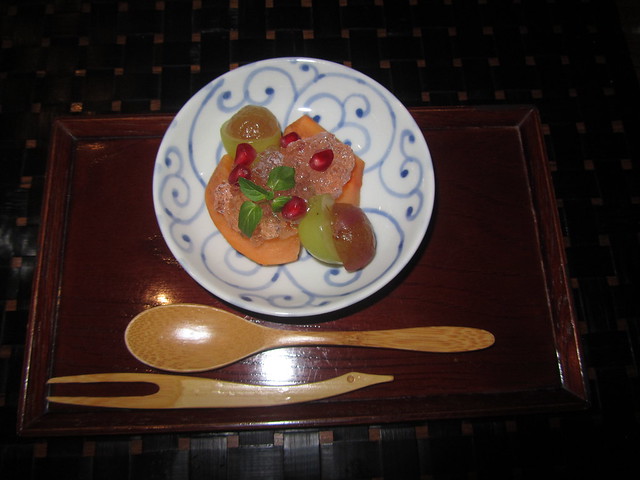
We were really happy after all that food! And a few kilos heavier too. Perhaps it was time for some exercise?
‘Onsen’ is the Japanese word for ‘hot spring’, and being at the junction of three tectonic plates, there’s a lot of hot water spurting from the ground. Many of the famous hot springs are up in the mountains, but because of Hubby’s geological interest we visited one that was near the ocean.
The Izu peninsula is closer to Tokyo than Kyoto, so we backtracked quite a few kilometers on the Shinkansen. We stayed in the small seaside town of Izu-Kogen, at Ryokan Hanafubuki, an onsen resort.
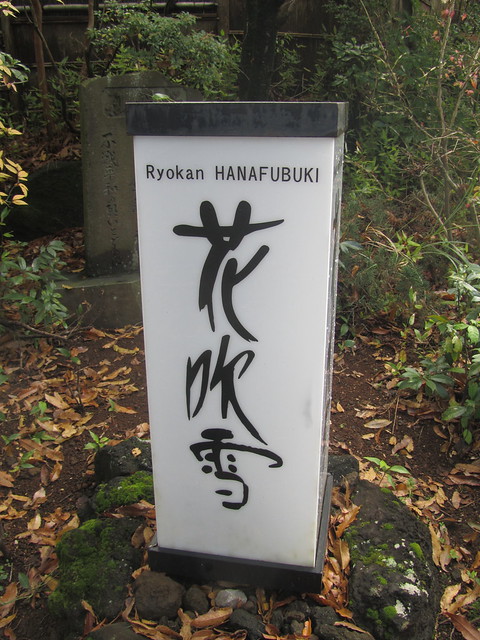
The ryokan is actually many buildings, some accommodation, others for hot springs, all located on a lush forest/garden.
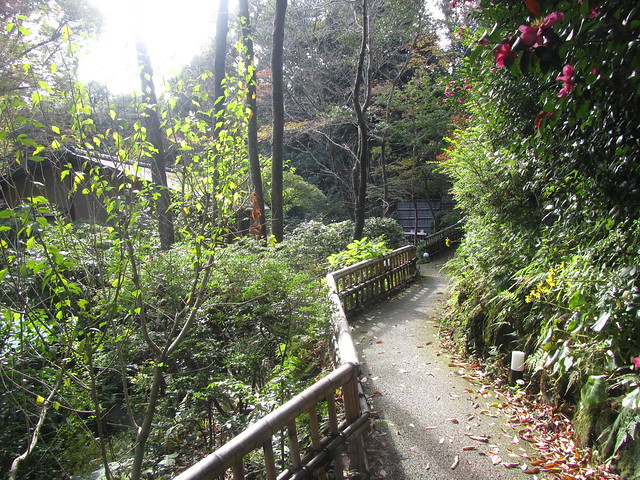
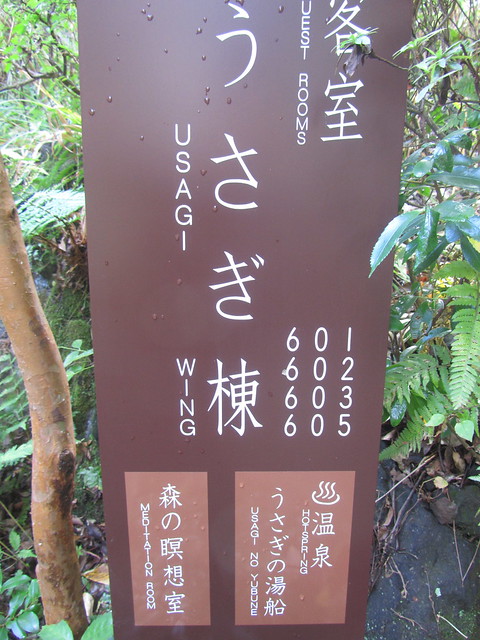
Each hot spring (there are seven of them) had water piped from underground, an adjacent enclosed private garden and lockable doors, so you can have the place to yourself. This was really a place to relax and enjoy the onsen.
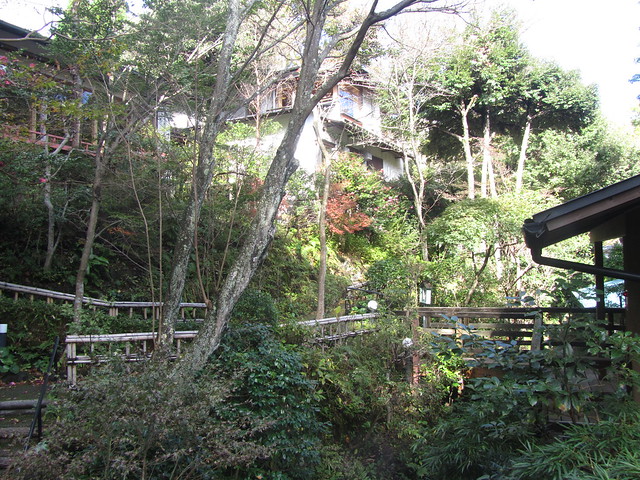
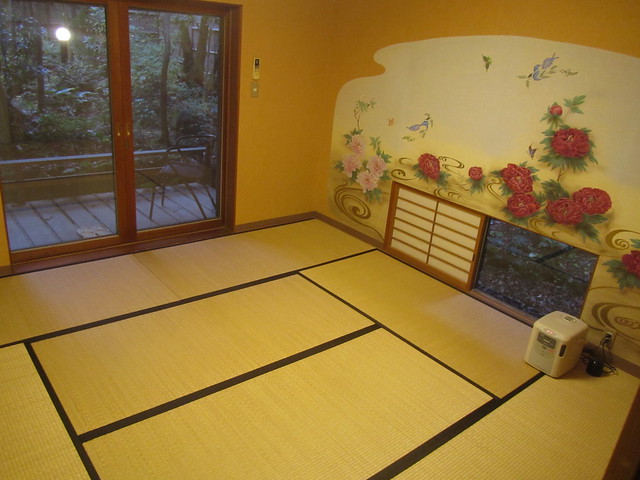
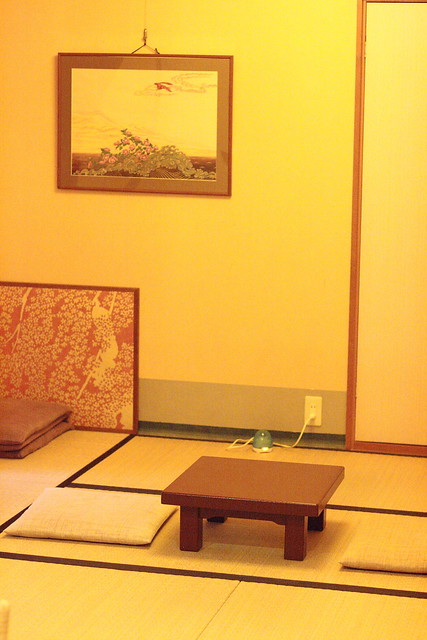
Our rooms were enormous this time, with private gardens and even a sitting room.
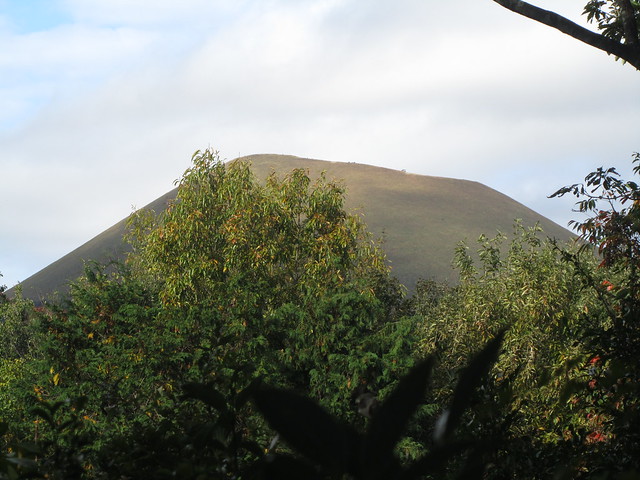
In a garden close by, we could see the local (currently dormant) volcano, Omuroyama. There was even a lounge chair from which we could contemplate its form. So Japanese.
When we went to Europe a few years ago, we got a good dose of historical buildings. The Japanese have their fair share of them too, and it was good to be able to get inside a grand, old one.
There are a few to choose from in Kyoto, being the old imperial capital. We chose to go to Nijo-jo – Nijo Castle – the headquarters of the Tokugawa Shogun. This clan held complete power, even over the Emperor, for over 250 years.
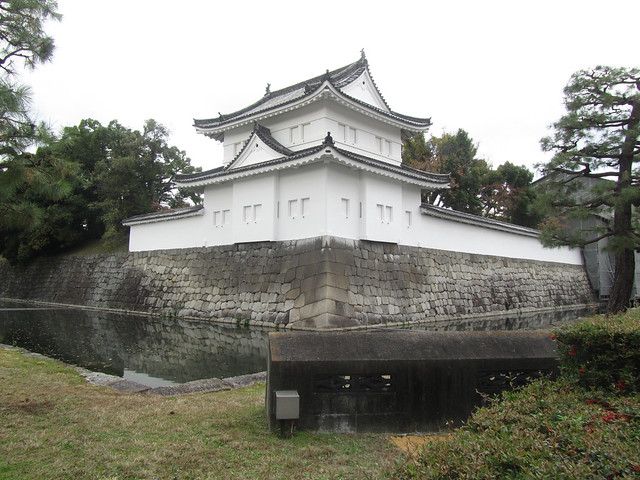
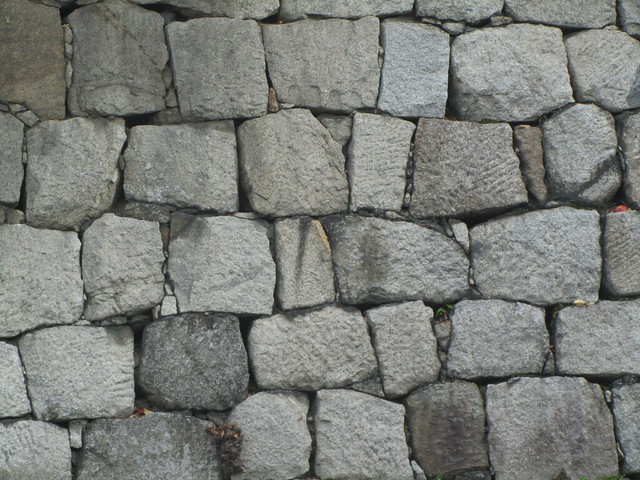
As you can see just by the outer moat and guard-house, they liked things big!
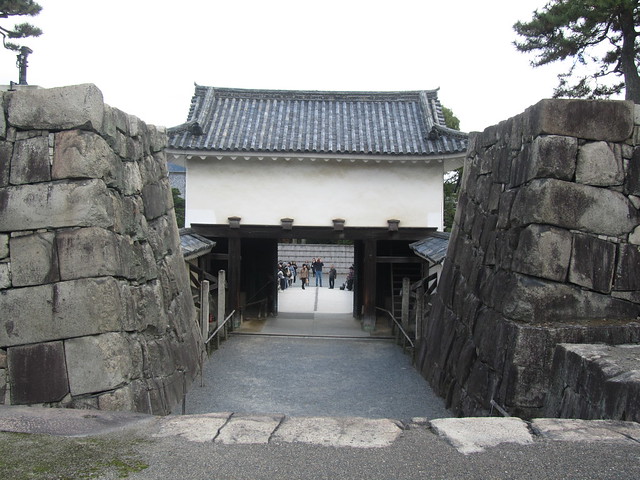
We visited Ninomaru Palace, one of the palaces in the complex. The entry gate was appropriately grand.
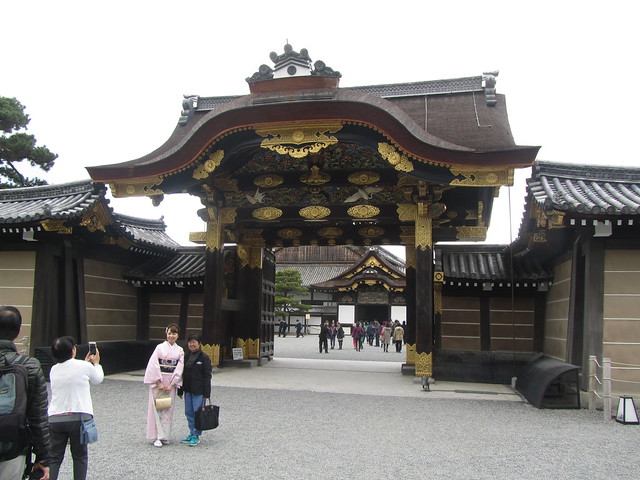
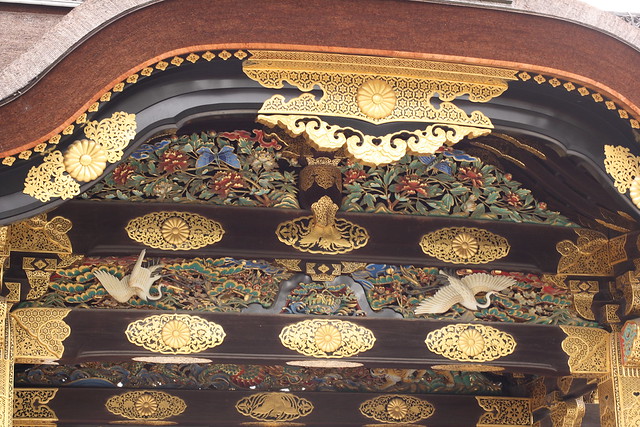
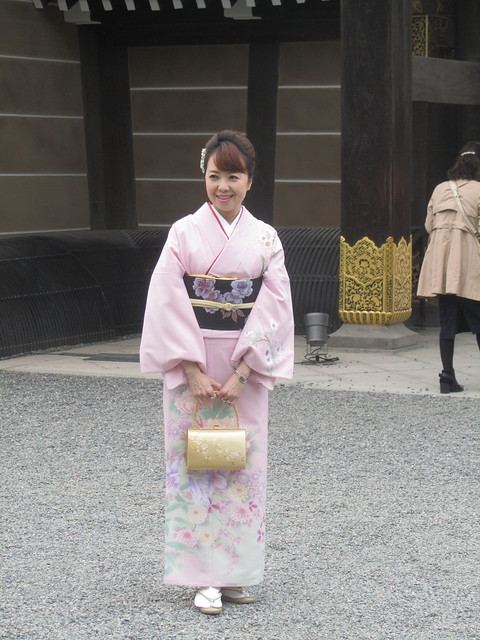
It’s certainly a place to dress up for.
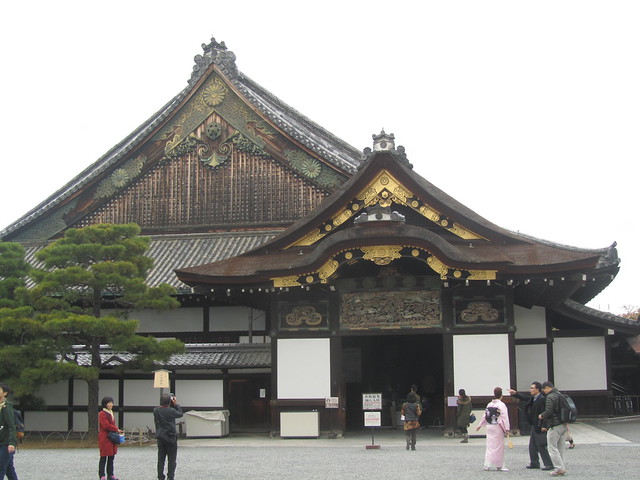
We got into the palace grounds proper, and the castle was definitely of a large size. We weren’t allowed to take any photos, but we can report that there were large, airy reception rooms with beautifully painted walls and ceilings. In the Japanese style, it was tastefully minimalist compared to Western, or even other Asian palaces. We particularly liked the squeeky floor boards – a security measure against ninjas!
The gardens around the palace were also lovely to walk around.
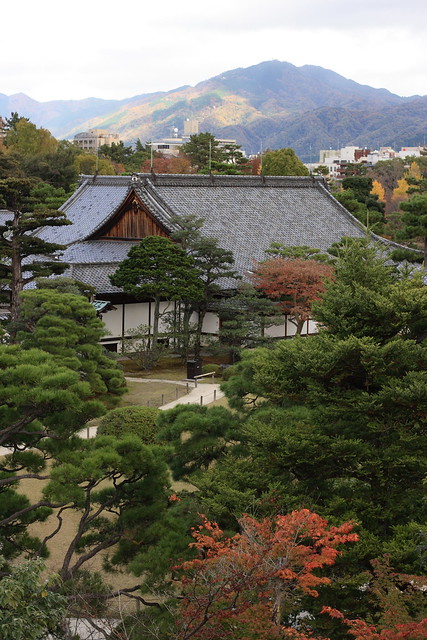
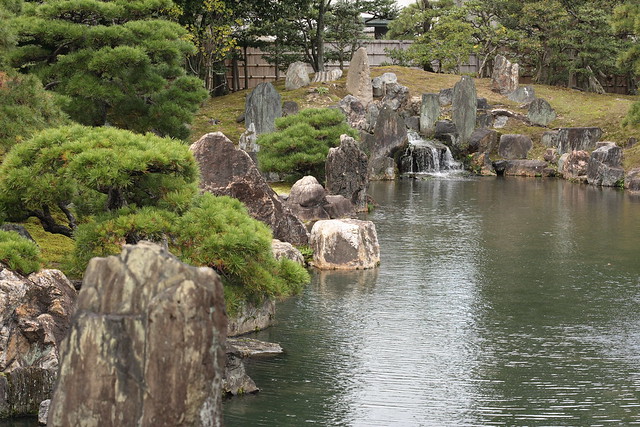
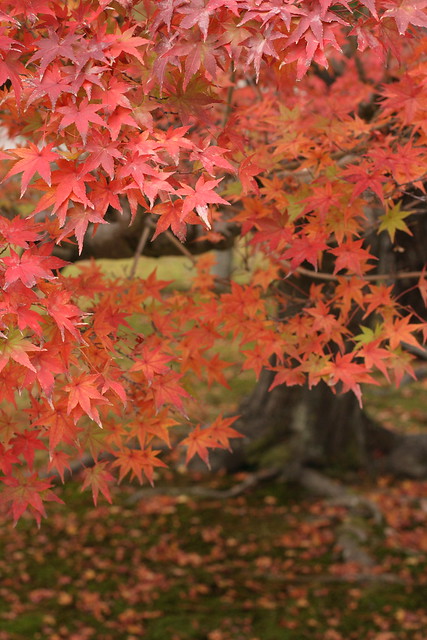
Particularly since the trees were turning.

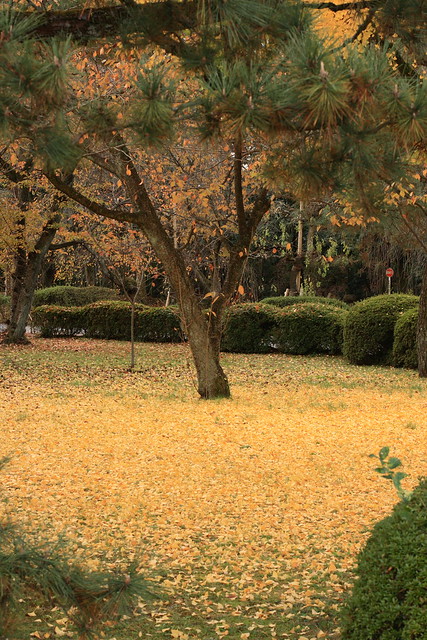

That’s all from Kyoto. Wishing everyone a merry and safe Christmas. After Christmas we’ll travel to somewhere new in Japan!
Eating in Kyoto, of course, was more than just kaiseki meals. We ate much simpler meals too.
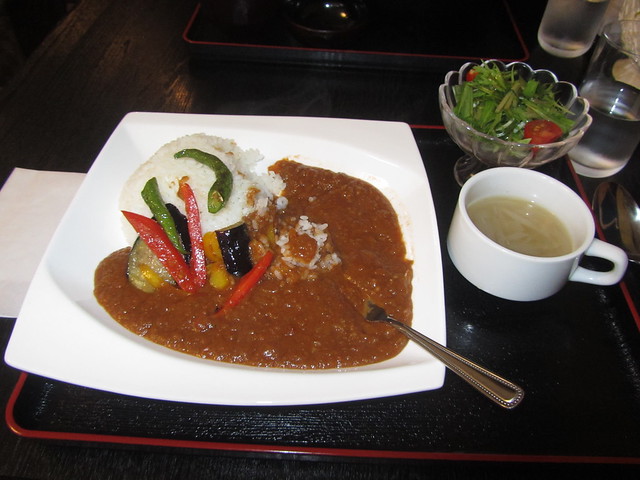
At a cafe around the corner we ate this meal of ‘yasai kare setto’ – Japanese vege curry set meal with the curry, rice, salad and miso soup.
Down the road at a little izayaka (the Japanese version of a pub), the BBQ was going full-tilt, churning out all sorts of grilled things on sticks to have with our beer.
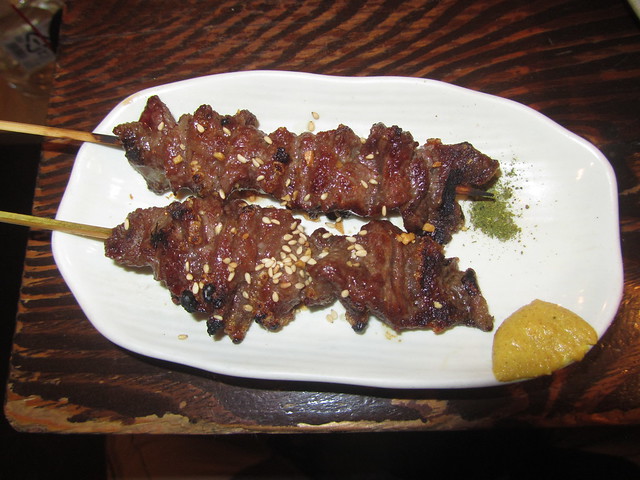
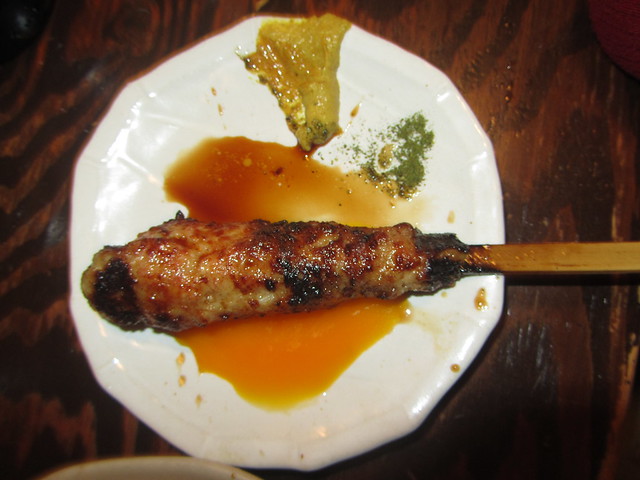
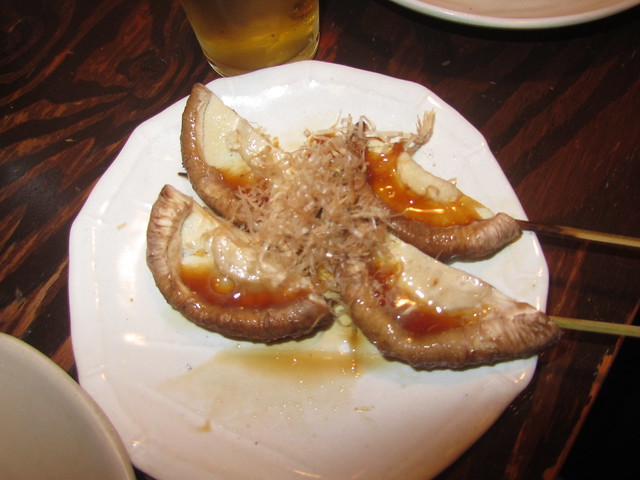
The restaurants often specialise in one type of food or ingredient. One night, we ate at a restaurant that was all about chicken.

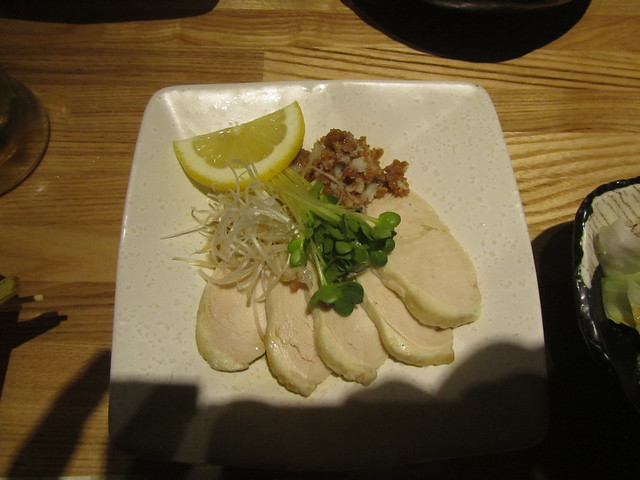

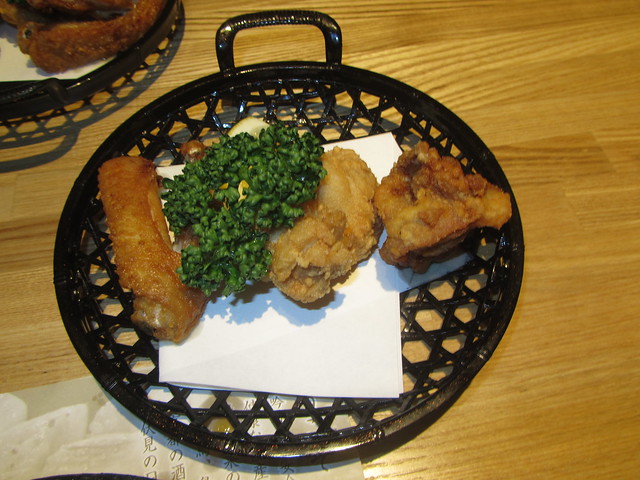
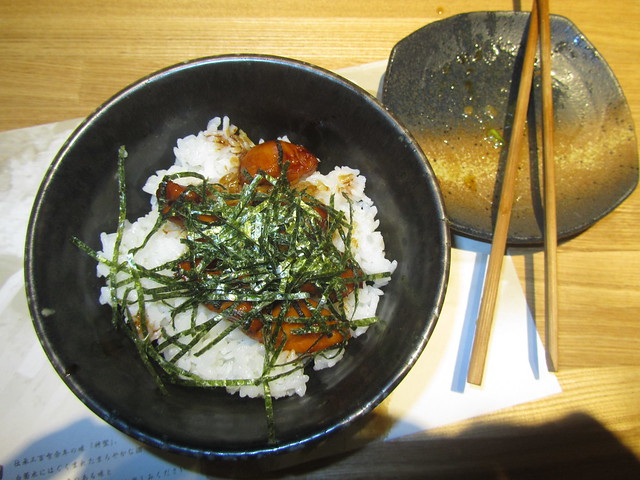
One thing is certain, you’re never short of interesting eating options in Kyoto.
After all that sightseeing in Kyoto, it’s time for a rest, don’t you think? Time to check in.
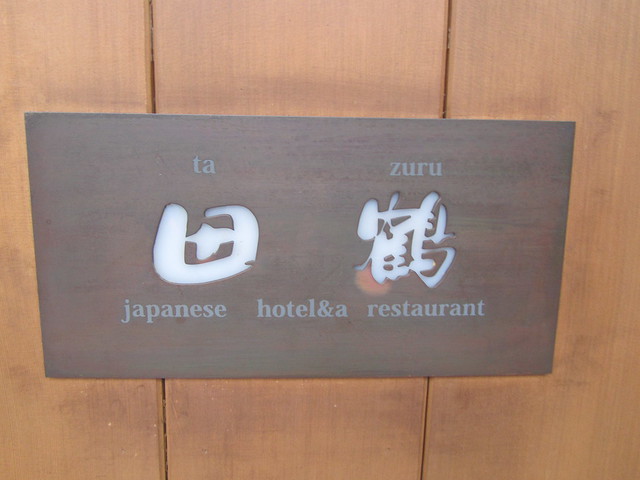
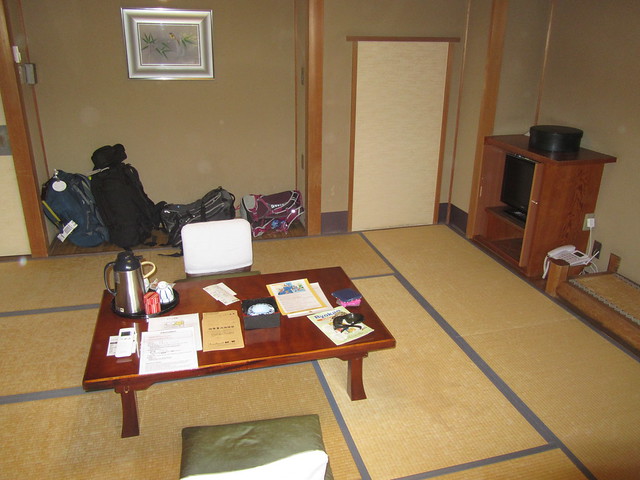
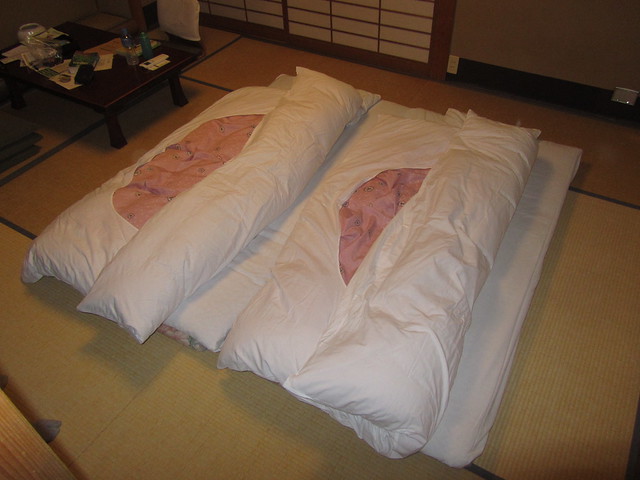
Tazuru is a modern ryokan – a hotel with Japanese-style rooms, o furo (bathroom), with breakfast, and even a kaiseki dinner. During the day, the room is the living area.
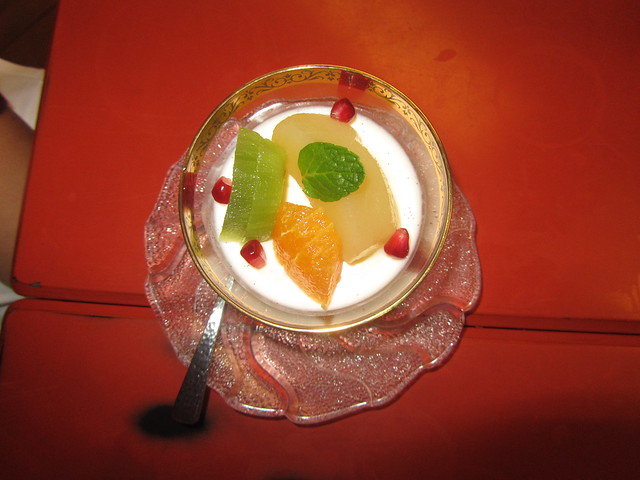
We ordered dinner on the first night, and it was a dinner that was kaiseki style – multi-course, refined meal with dishes that are highly seasonal.
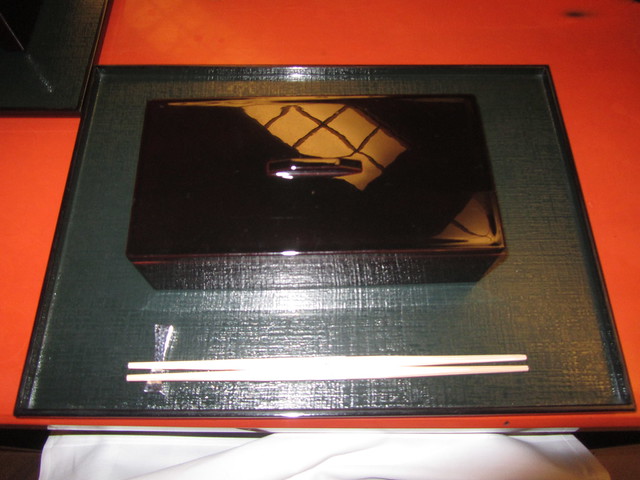
I must say that this was a huge step above the food we’d eaten previously that we’d considered to be Japanese, in terms of taste and technique.
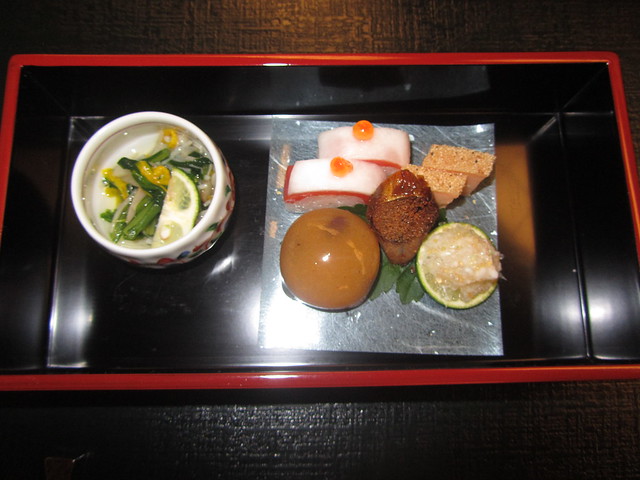
There were familiar dishes.
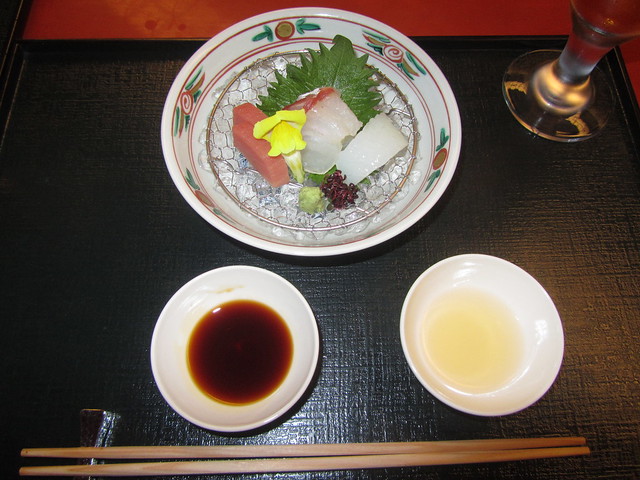
And then rather more unfamiliar ones.
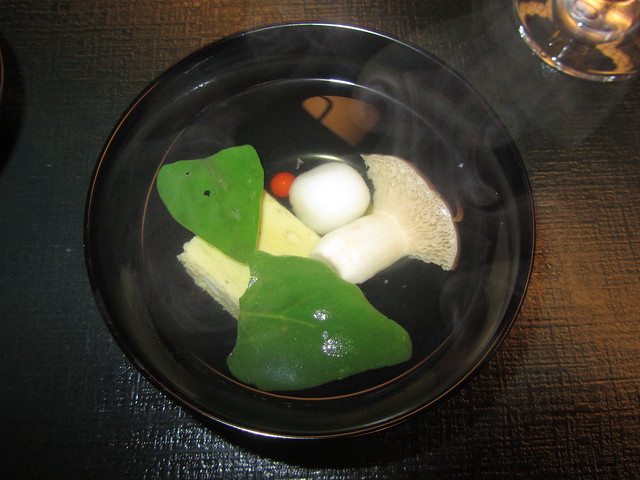
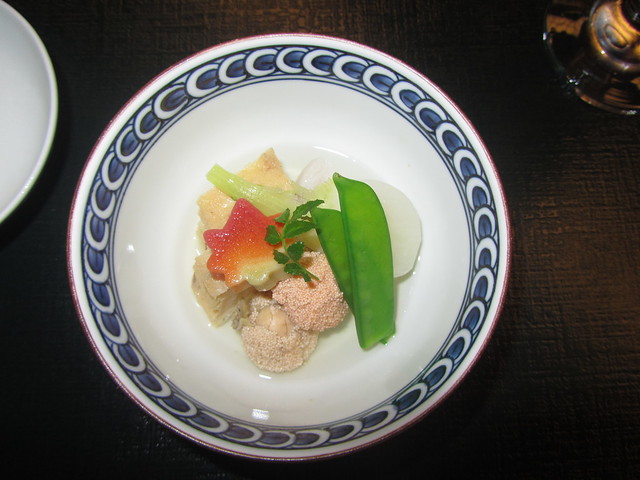
The rice was served as its own course with accompaniments.

Eight courses later, we reached dessert!
After dinner, our room had been reconfigured to sleeping mode. It was comfortable, although Hubby was complaining that his knees couldn’t take getting off the floor all the time. Hmm, perhaps time for yoga?
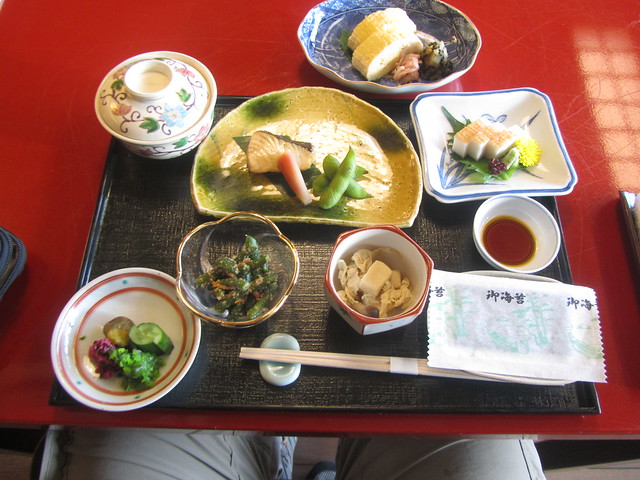
And in the morning, we were greeted with a very hearty breakfast of rice, fish, miso soup, omelette, among other things. That should get us through until the following dinner!
 Static and Silence