All posts by Sandra Graham

I am an artist and blogger living in Sydney, Australia. I am interested in Australian landscapes and lost suburbia, capturing them in photographs, paintings, prints and mixed media. @s_graham_art

An Aussie Spring Garden

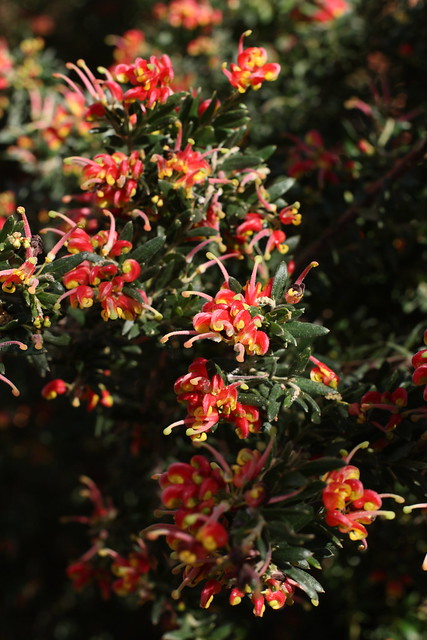
It’s been a funny old Spring with the weather see-sawing between summer and winter. Some of the plants in our garden are a bit confused, but the ones that seem to thrive regardless are our grevilleas – this one in particular which flowered all through winter.

Grevillea

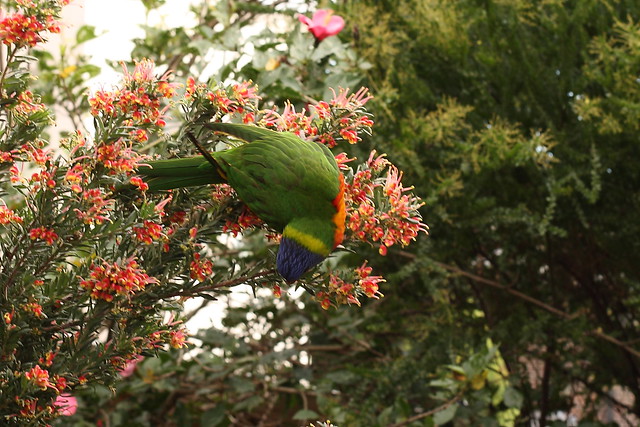
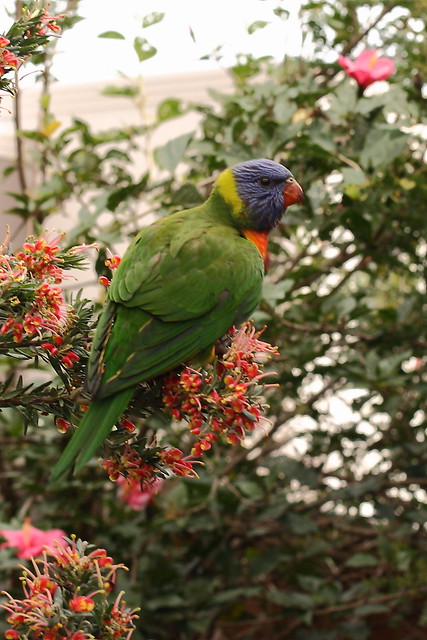
The local rainbow lorikeets particularly enjoyed this shrub. They hung around it for weeks on end. It made a particularly cheerful (and noisy) scene in the mornings and evenings.

Rainbow lorikeets

Rainbow lorikeets

Being deep in suburbia, it was really nice to have some native birds around the garden, even if it was only one kind. We even saw a bit of a mating ritual happening in our crepe myrtle.

Rainbow lorikeets

Knitting Winter 2016

Finished knitting projects for this winter were both for me! One has to be a bit selfish sometimes.

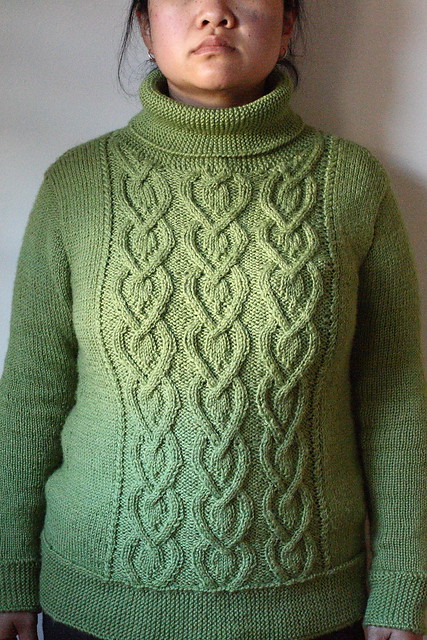
The major project this winter was this cabled jumper from a Pom Pom Quarterly pattern called Jean. I named it my Fisherwoman’s Jumper. The pattern wasn’t as difficult as I thought it would be and the jumper is very comfy to wear.

Fisherwoman's jumper

My travelling project were another pair of Fika socks using some variegated yarn that I bought in Tokyo last year. These were some well-travelled socks, having travelled with me to the Kimberley and South Africa!

Blueberry socks

Day out in the Illawarra – Part 1

It’s been a seriously long time since I visited the Illawarra coast line north of Wollongong. In fact, the last time I posted about the area was back in 2009!

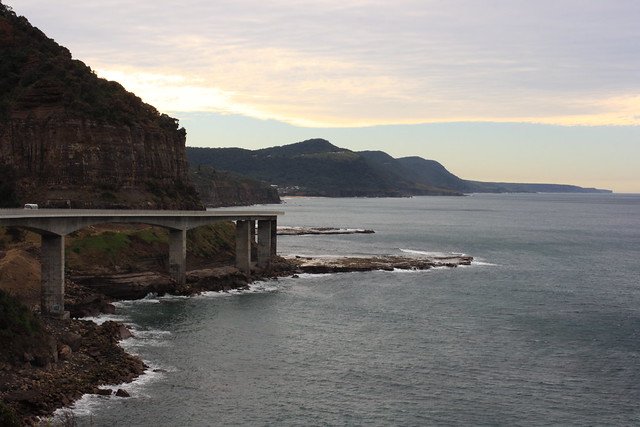
Since then, the Sea Bridge at Coalcliff has become a bit of a tourist attraction, and on a day out with M, we decided to see what the fuss was about. We started the walk on the north end of the bridge, and walked down to the south end to get this view.

Sea Bridge

Just note that it was very windy there out on the bridge. The view of the coast was better when you’re walking south to north, but only in the morning/late afternoon/cloudy days. And do not attempt to do a ‘Titanic’, as we saw some Chinese tourists do in the middle of the bridge. I mean, really?

The Gibb River Road (End)

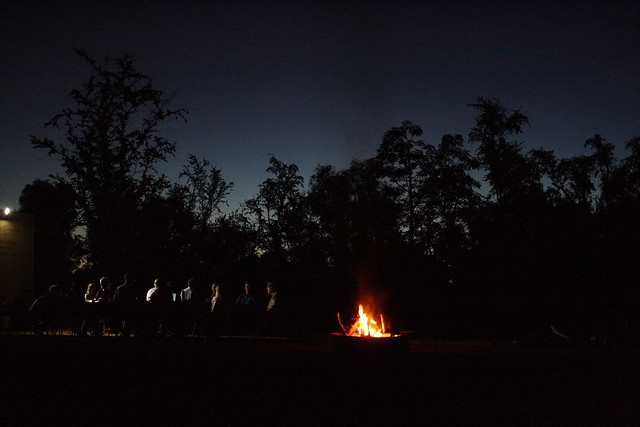
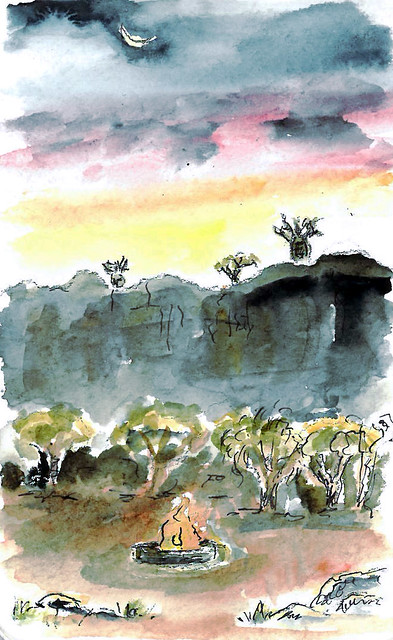
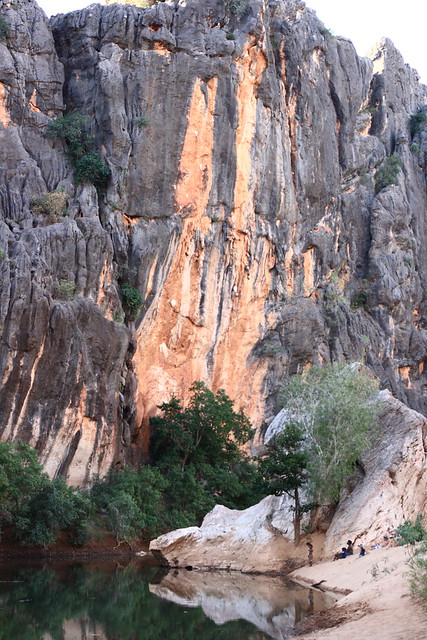
The end of the day came at our campsite at Windjana Gorge by the campfire.

Windjana Gorge

It was made even more spectacular against the backdrop of the gorge. It became my final picture of the day.

Windjana Gorge

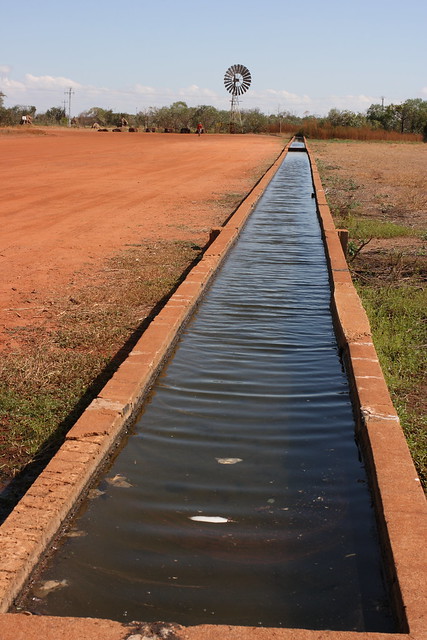
The final day, we made our way back to Highway One, although there were still a few sights to see along the way, like this very long cattle trough at Myalls Bore.

Myalls bore and cattle trough

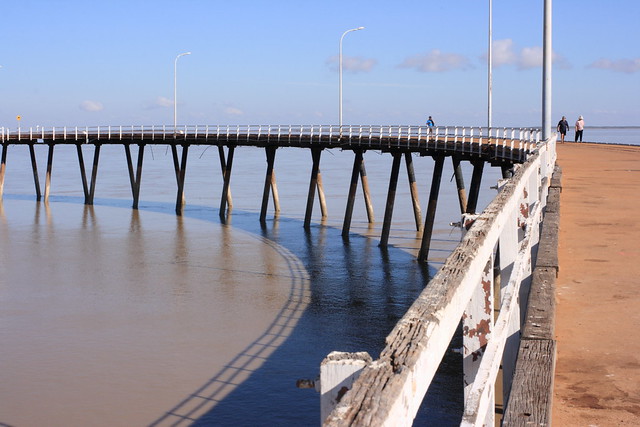
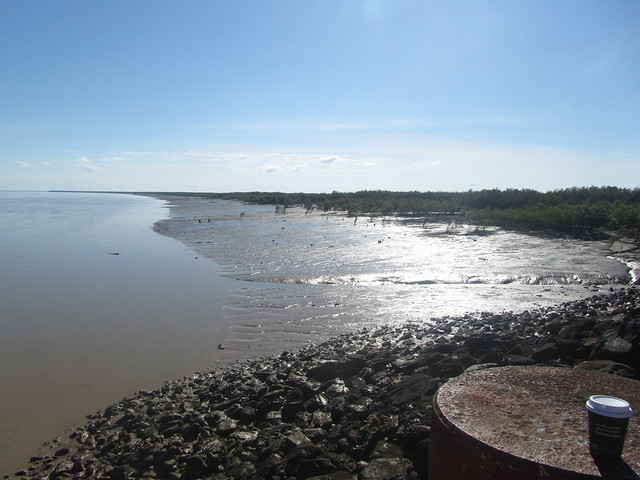
By morning tea we were back on the Indian Ocean at Derby – a sleepy town compared to Broome with a long jetty, mud flats and 10 metre tides.

Old jetty/wharf

Derby coast

And by afternoon tea, we were back in Broome and ‘civilisation’ and the end of our fortnight in the Kimberley. I hope you enjoyed the journey. It was certainly more than a series of grand landscapes – it was a place of rich and deep history, too.

Jandamarra’s Path – Part 4

We’re on the final stage of Jandamarra’s story. After being severely wounded in the siege at Windjana Gorge, Jandamarra retreated into the hills and caves that he knew around the Napier Ranges. One of his hideouts was our next destination – Tunnel Creek. It was from here that he conducted more of his raids on the surrounding properties. The local police for years after had trouble locating him. We’ll soon see why.

We walked along a sandy track, and then around large boulders, down to the cave entrance.
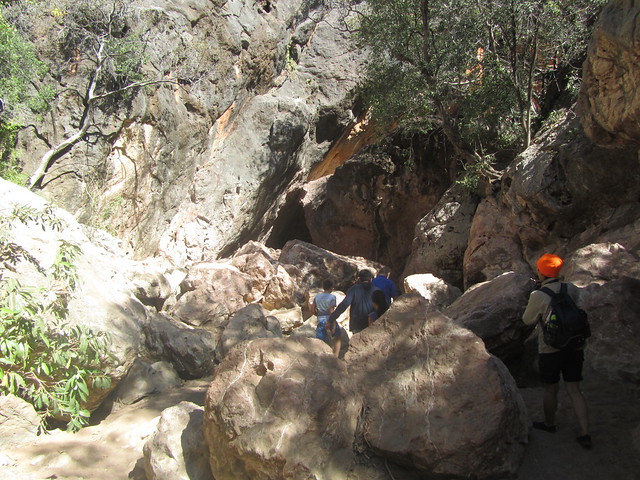
Tunnel Creek

It was cool, wet and sandy inside the cave. In fact, a creek flowed through it (hence the name). It’s a sanctuary also for freshwater crocodiles in places, though we didn’t see any.
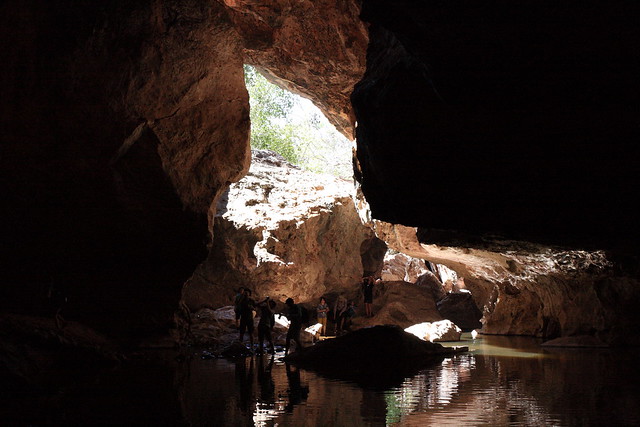
Tunnel Creek

The deeper we walked into the cave, the more interesting the cave formations were. There were even some micro bats living in the rafters of some places.
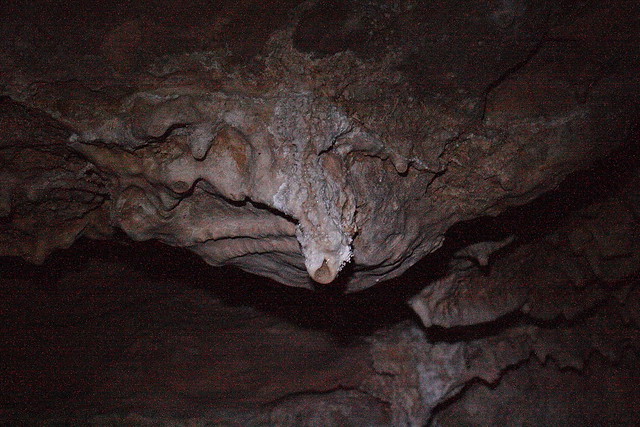
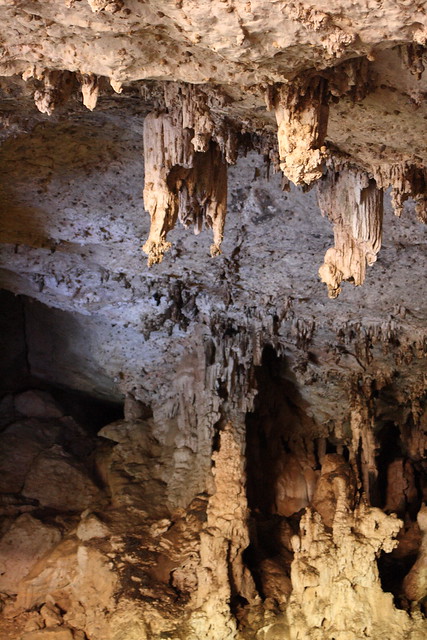
Tunnel Creek

Tunnel Creek

Half-way through, there was a part of the cave that had fallen in, giving us a glimpse of daylight.

Tunnel Creek

And then more daylight – we reached the opposite end and had walked right through the Napier Range! Obviously, Jandamarra used this place to great effect after his raids. So effective was he many people thought that he held supernatural powers.
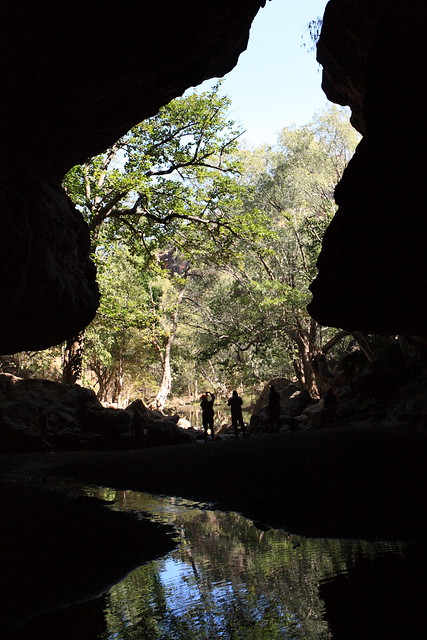
Tunnel Creek

But he eventually ran out of time. The police eventually found his hideaway, and he was shot dead at the entrance of Tunnel Creek. He might have died almost 120 years ago, but his story has not been forgotten by the Bunuba people. Now others have the opportunity to learn of this piece of Australian history.
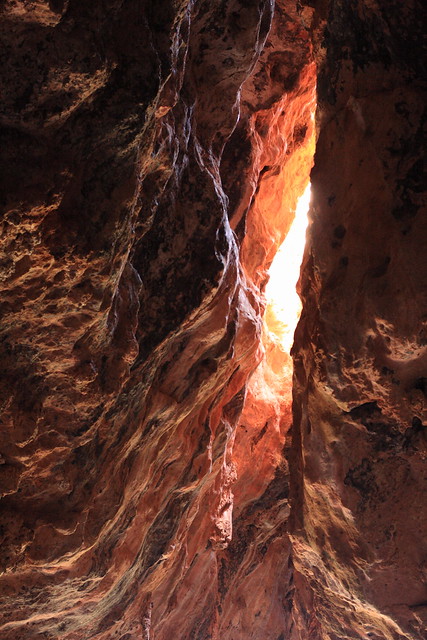

Tunnel Creek

Jandamarra’s Path – Part 3

Entering Windjana Gorge, I immediately realised that this was a sacred place.

Windjana Gorge

Windjana Gorge

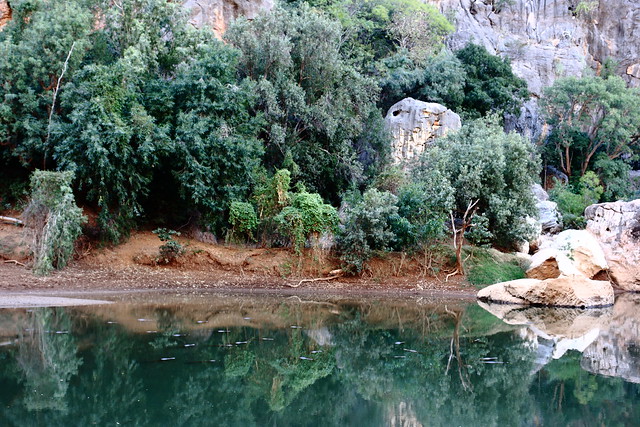
The high walls of the gorge kept out the heat of the day, and there was plenty of water, even in the dry. It’s a sanctuary for all sorts of wildlife, including freshwater crocodiles.

Windjana Gorge

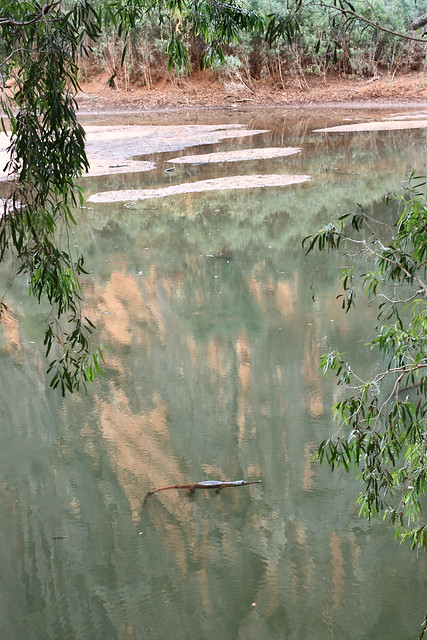
There were so many of them, floating like little logs.

Windjana Gorge

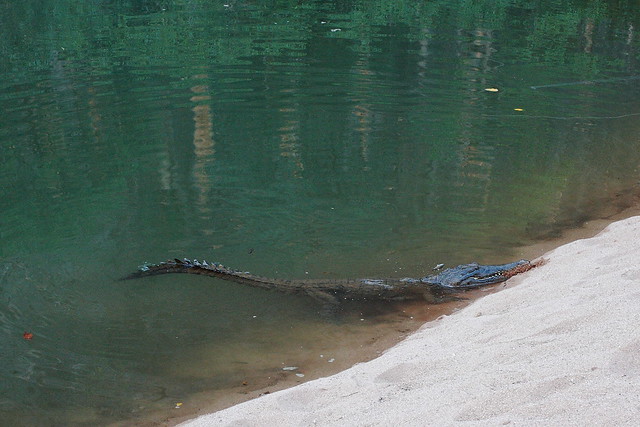
Some got closer than others.

Windjana Gorge

Windjana Gorge

But despite the serenity of the place, this was where Jandamarra and his people (numbering fifty or so warriors it was said), fought the pastoralists and police in a bloody battle. Jandamarra was severely wounded, but escaped into the caves not too far away from here.

Windjana Gorge

Jandamarra’s Path – Part 2

We continue Jandamarra’s story at the Lillimooloora Police Station, where Jandamarra worked. Being continually exposed to the trials of his people took its toll. He killed his police constable while he slept and released the prisoners. Together, they planned to defend Bunuba land against all outsiders. Many being former stockmen, the rode and shot very well, and their knowledge of the country meant they were hard to even pinpoint as they waged guerilla warfare on the pastoralists. In retaliation, the police hunted down and killed many Aboriginals.

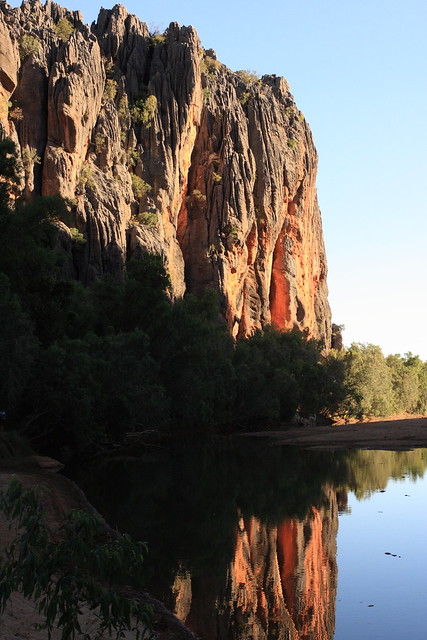
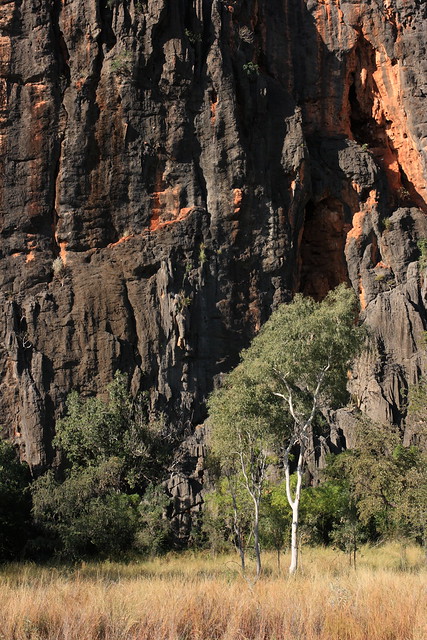
Things came to a head at Windjana Gorge, which we visited one hot afternoon. The cliff face loomed 100 meters above us.

Windjana Gorge

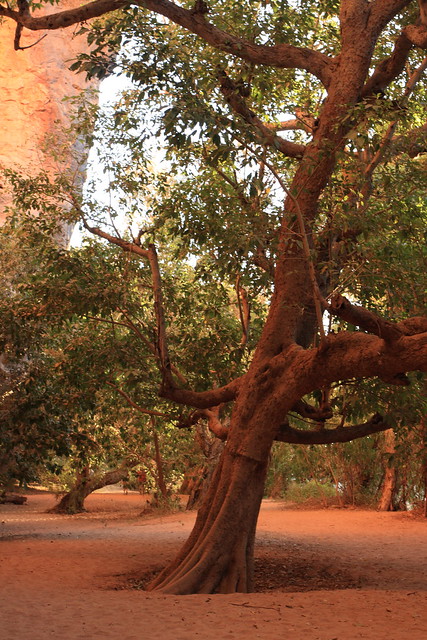
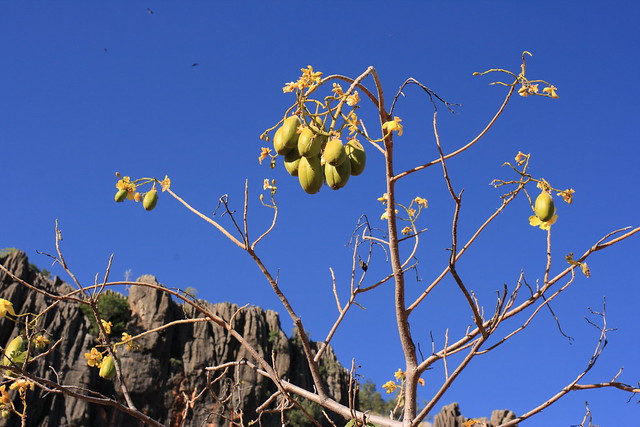
The kapok trees were in fruit and whistling kites were circling.

Windjana Gorge

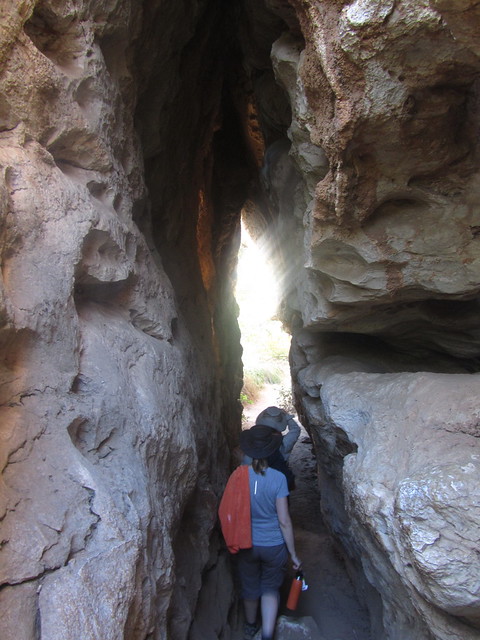
The entrance to the gorge was via a narrow crevice. This may have well been used in Jandamarra’s time 120 years ago.

Windjana Gorge

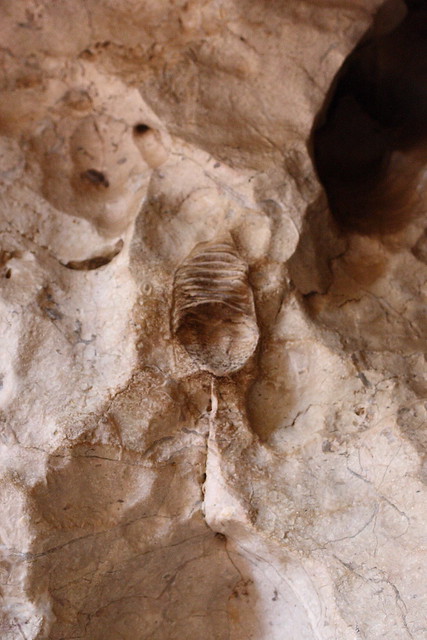
And the walls showed creatures that had lived in what was the Devonian equivalent of the Great Barrier Reef.

Windjana Gorge

Jandamarra’s Path – Part 1

Our last stop the Oscar and Napier ranges, and our trip came full circle. The Napier Range downstream runs through Geikie Gorge on our first day on the road. This time around, we learned how each place related to the custodians of the land, the Bunuba people, and particularly learned about the history of their leader, Jandamarra.

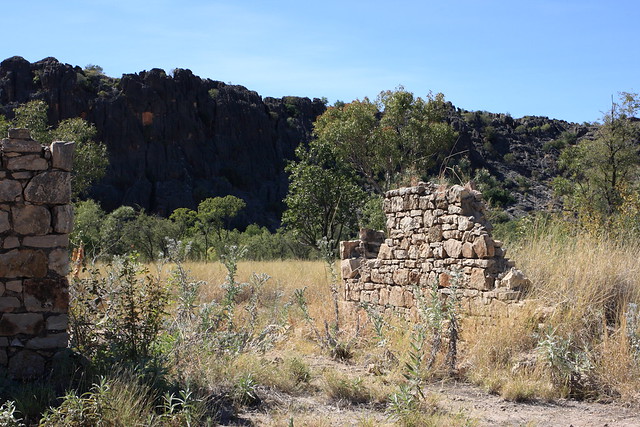
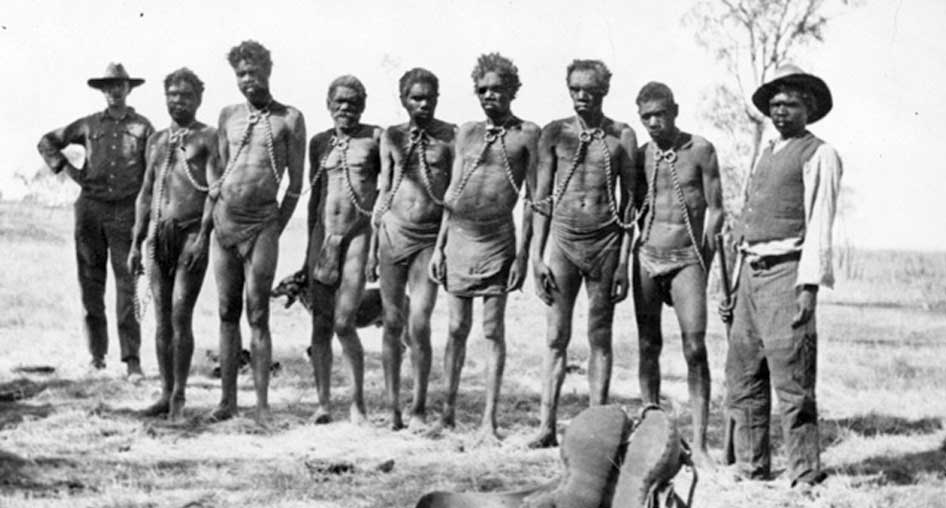
Jandamarra was born in the 1870s just as the first pastoralists were setting up cattle stations in Bunuba country. He grew up being at ease in both camps, black and white, but many of his people weren’t so lucky and fell foul of white law which they didn’t understand. Blackfella law states that you are to share everything that you have, while white law is built around knowing whose property is whose. So the first people incarcerated for ‘cattle rustling’ were probably breaking the law unknowingly. They were chained and jailed in places like Lillimooloora homestead (now in ruins), where there was a makeshift police station.

Lillimooloora Police Station

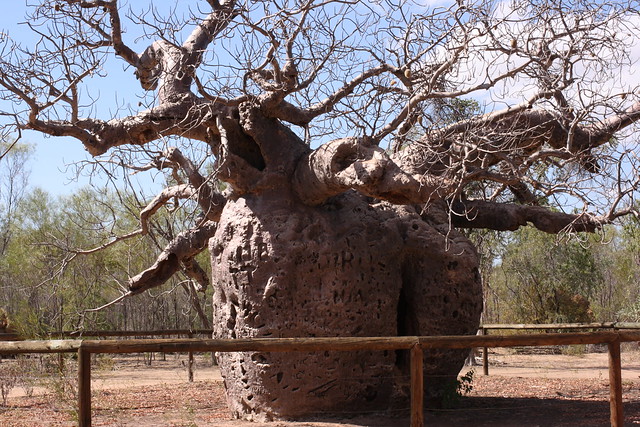
Then they were marched 113km to Derby, where they were housed in the prison boab outside of town…

Boab prison tree

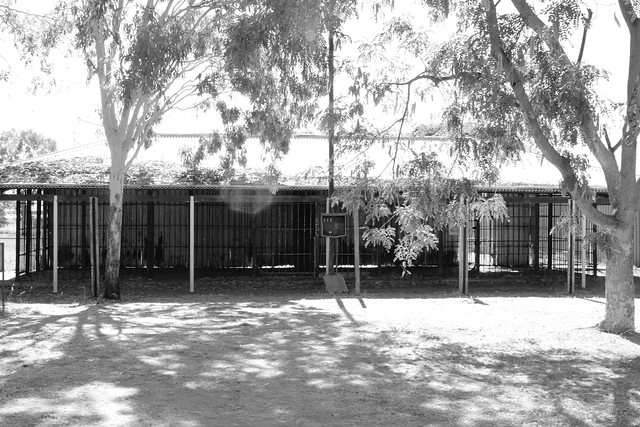
Or in the open air prison in Derby itself.

Old Derby prison

Jandamarra, who worked at Lillimooloora as a police tracker, must have seen some deplorable things done to his people.