All posts by Sandra Graham

I am an artist and blogger living in Sydney, Australia. I am interested in Australian landscapes and lost suburbia, capturing them in photographs, paintings, prints and mixed media. @s_graham_art

Kununurra and Ord River – Part 2

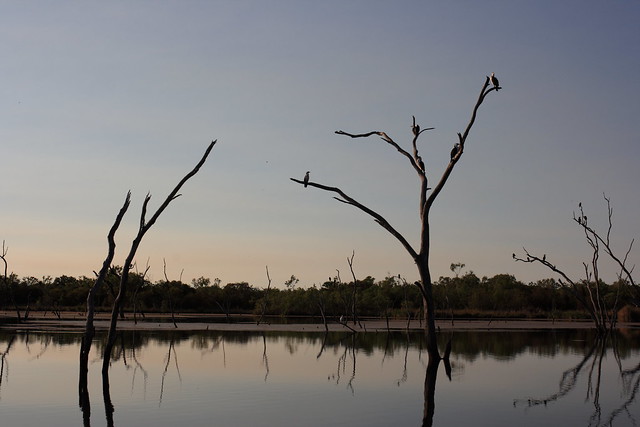
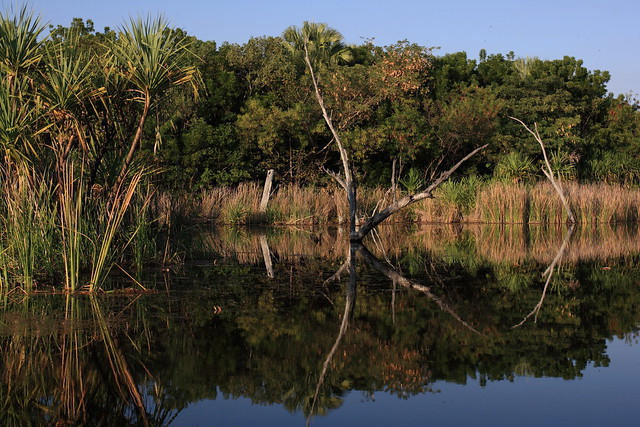
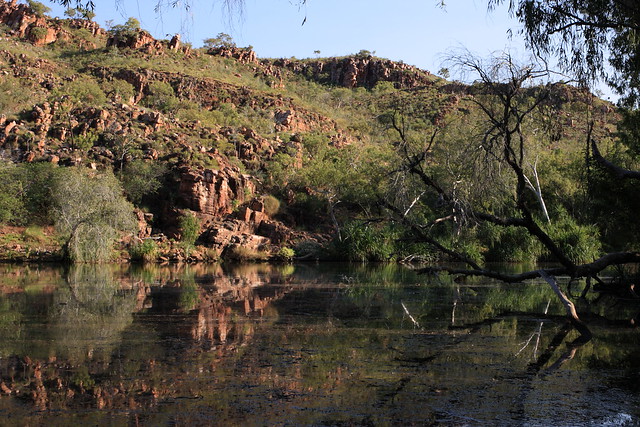
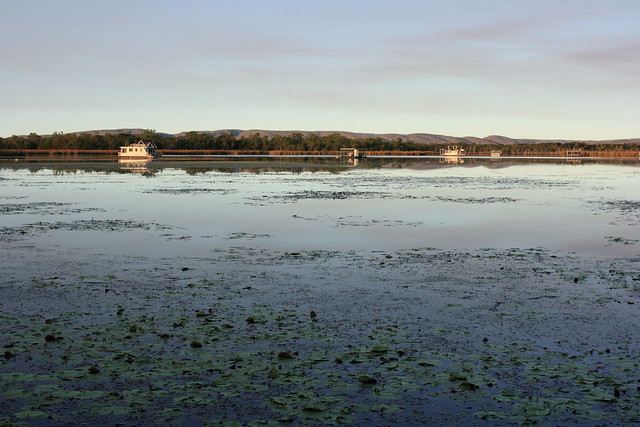
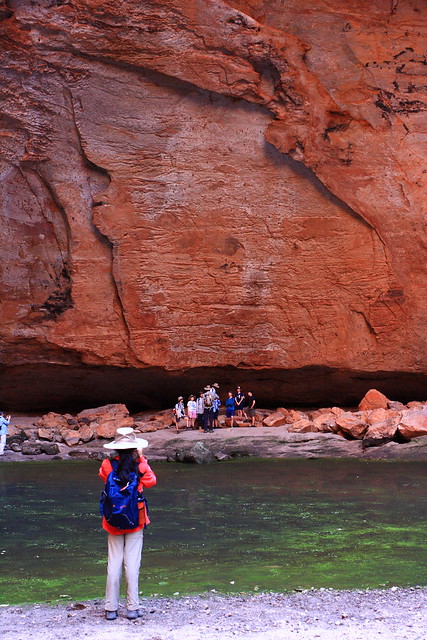
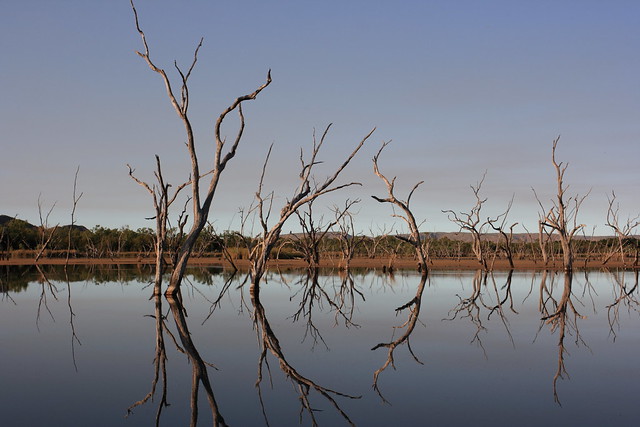
We explored the Ord River that morning on a cruise. It was a luxury to be the only cruise boat along its length, so that we could all appreciate the river and the early morning reflections.

Ord River Cruise

Ord River Cruise

Ord River Cruise

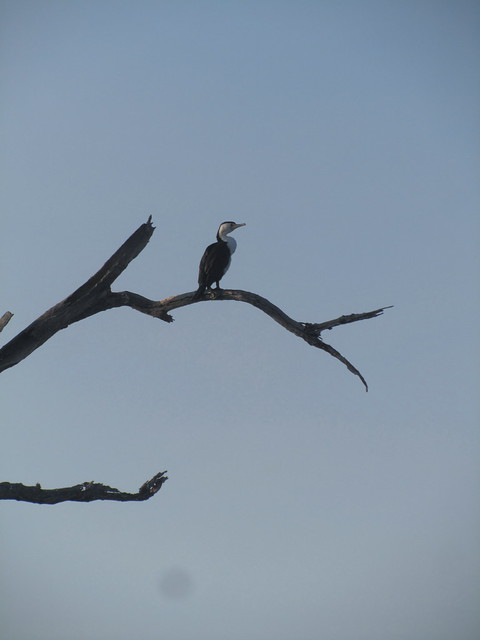
These scenes reminded me of those I saw in the Top End of the Northern Territory. Except at Kakadu we were sharing the lagoon with many cruise boats, while on the Ord we were practically the only ones on the river. On the way, the cruise guide pointed out the wildlife and told us about the history of the region. So pretty!

Ord River Cruise

Ord River Cruise

Kununurra and Ord River – Part 1

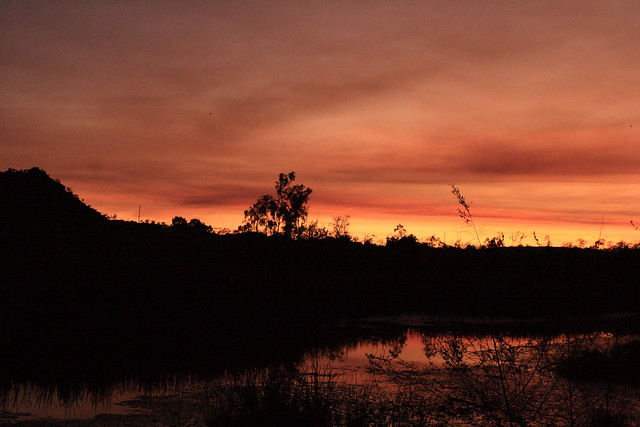
I’ve never been one to wake up with the birds, but a consequence of camping is that this was exactly what I, and the whole group, did for every day of those two weeks. We arose between 5 and 5.30am, whether we were scheduled to or not. It wasn’t a bad thing entirely, because I was able to watch a lot of lovely sunrises, like the one at our campsite at Kununurra, 250km north-east of the Bungle Bungles.

Ord River Cruise

Ord River Cruise

Kununurra is located by a lagoon that feeds into the Ord River, which we encountered near the Bungle Bungles. It’s a different place altogether, being more tropical in climate. There were a few houseboats, ready for a lazy cruise upstream.

Ord River Cruise

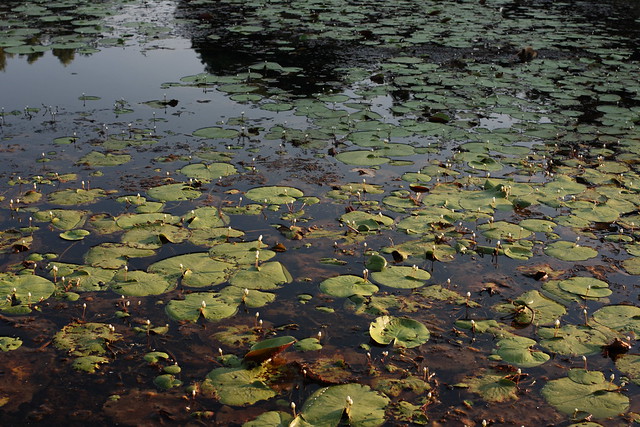
The waterlilies were about the blossom.

Ord River Cruise

Kununurra is the centre for the Ord River scheme, which dammed the Ord in several places nearby in the mid-20th century, forming Lake Argyle, a reservoir that is more than 20 times bigger than Sydney Harbour. We’ll find out more about the lake and dam later on.

Bungle Bungle Walks – Part 2

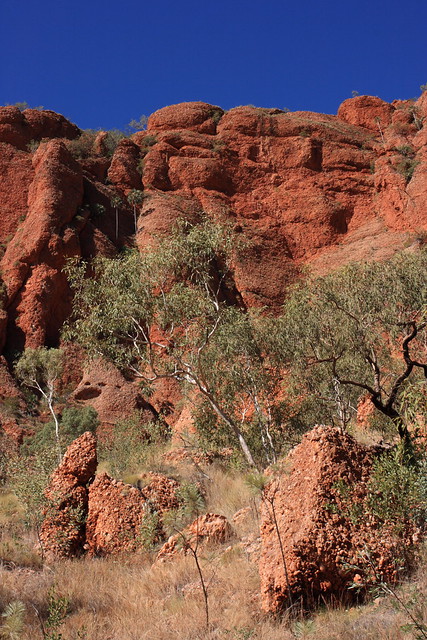
Our second walk that day was at Echidna Chasm, in the north end of Purnululu National Park. From the car park, the vegetation was all gum trees and scrub. The domes here were less pronounced, however they were taller.

Echidna Chasm walk

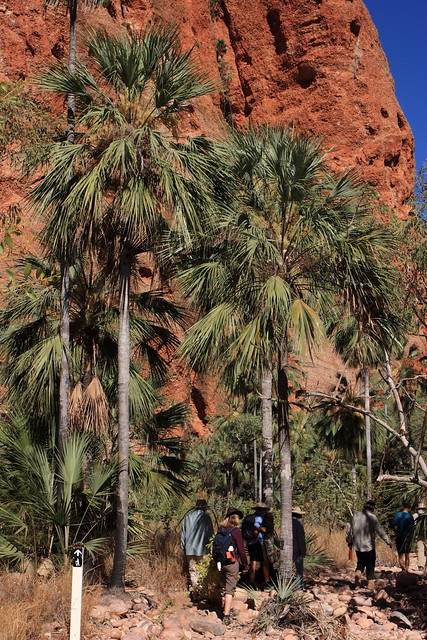
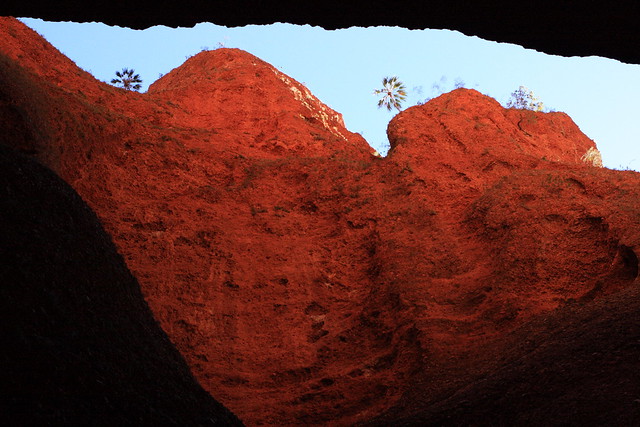
As soon as I hit the trail, I noticed that the gum trees disappeared, replaced by a grove of palms.

Echidna Chasm walk

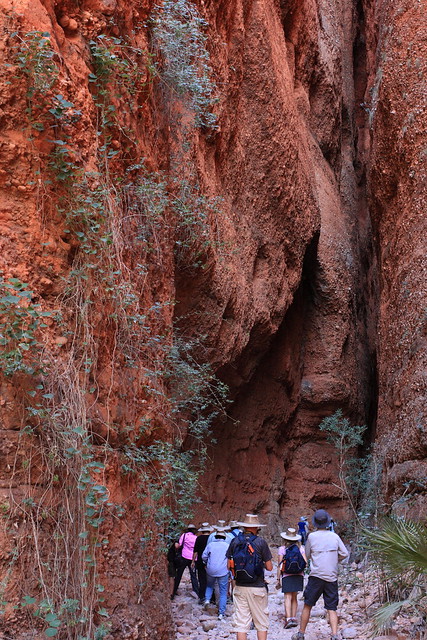
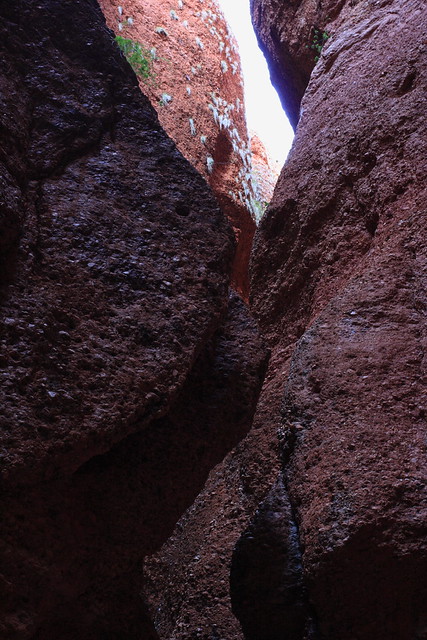
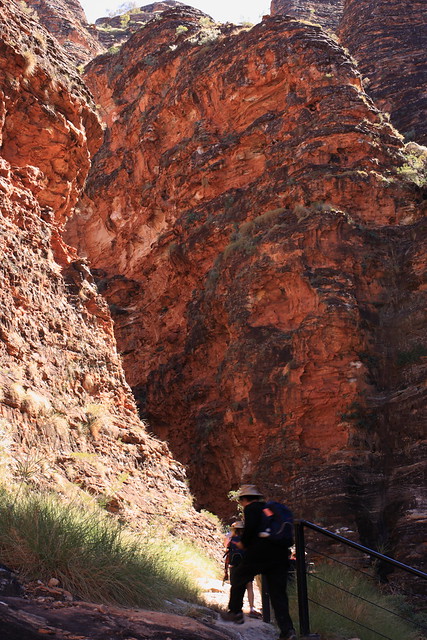
The trail led into Echidna Chasm, and pretty soon its walls were towering over me. The temperature also seemed to drop by 10C.

Echidna Chasm walk

Echidna Chasm walk

Echidna Chasm walk

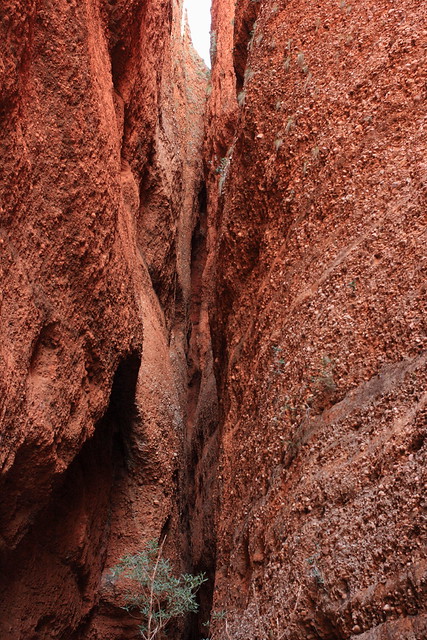
The path got narrower and narrower. Occasionally we got a glimpse of sky.

Echidna Chasm walk

Echidna Chasm walk

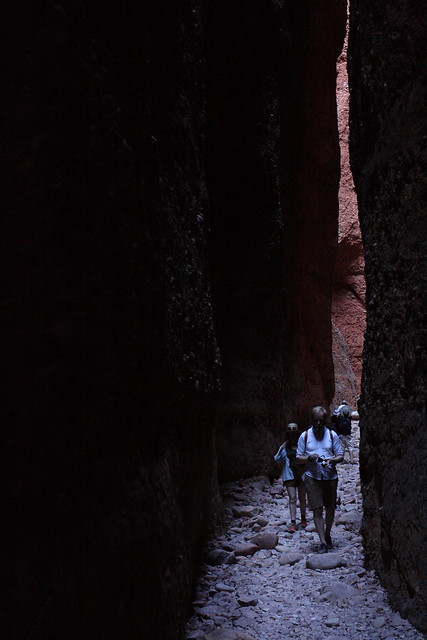
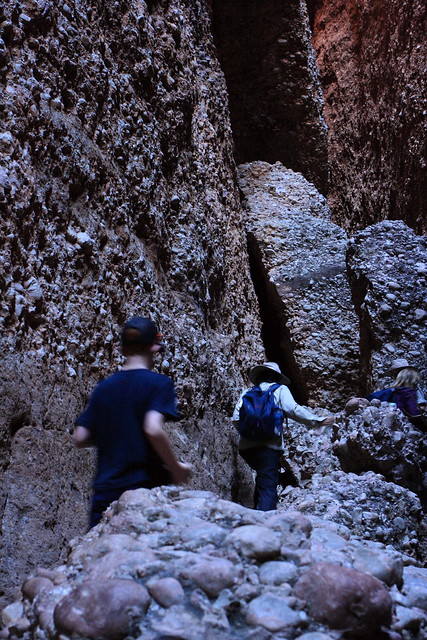
Pretty soon we were in murky darkness, clambering over boulders.

Echidna Chasm walk

At the end, the chasm narrowed into a one metre wide space, and it was so dark that I wasn’t able to get a clear shot. I imagine that in the wet season the entire chasm would be under water. This isn’t a walk for the claustrophobic or with mobility problems! I was pleased to walk back to the entrance and catch a glimpse of sky.

Echidna Chasm walk

Bungle Bungle Walks – Part 1

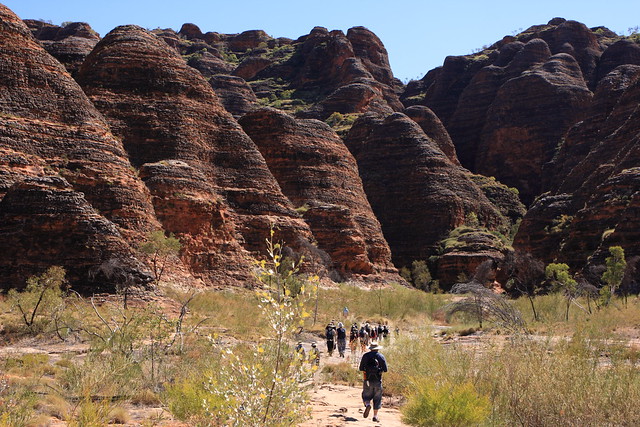
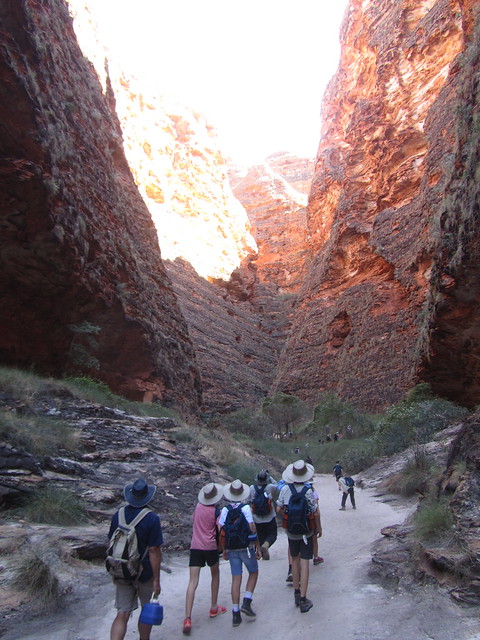
The following day we drove the 53km into Purnululu National Park to see the Bungle Bungles up close. We did two walks that day – the first was to an area called Cathedral Gorge.

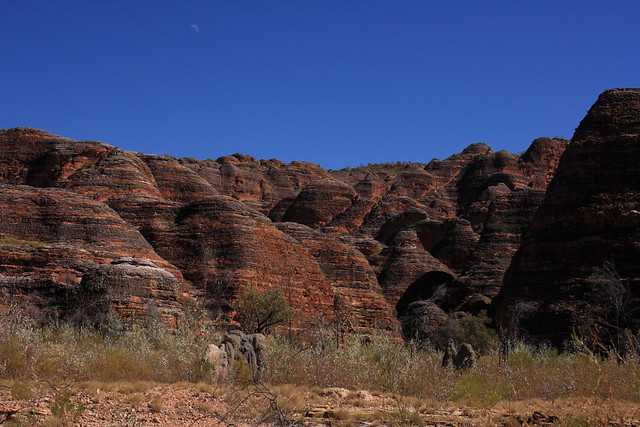
The walk started with a grand vista of the domes among the usual savannah landscape of low scrub and termite mounds.

Cathedral Gorge walk

Cathedral Gorge walk

The domes towered above us the further we walked into the gorge.

Cathedral Gorge walk

Cathedral Gorge walk

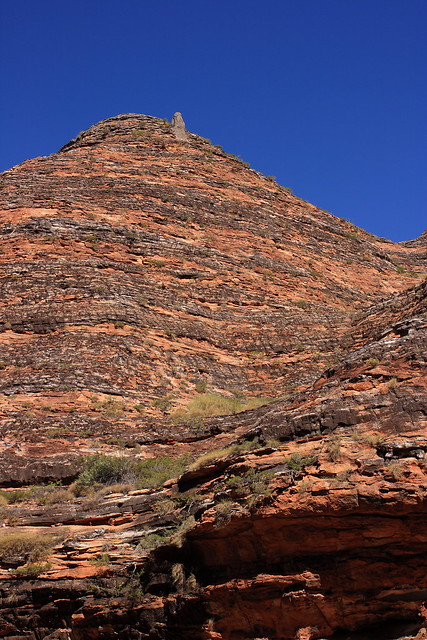
There were lots of interesting details to see: a close-up of the stripes, and the amazing places that termites are able to build their mounds.

Cathedral Gorge walk

Holes in the ground grinded down by rocks being caught in a whirlpool.

Cathedral Gorge walk

Giant slabs of sandstone that have fallen away due to the intense weathering in the Wet.

Cathedral Gorge walk

And at the end was Cathedral Gorge – a pool dwarfed by sheer sandstone cliffs and overhangs. The acoustics were magnificent, as the boys found out when they sang a tune.

Cathedral Gorge walk

The scenery on the walk was so inspiring that it became my picture of the day.

Cathedral Gorge walk

Outback Twilight Interlude

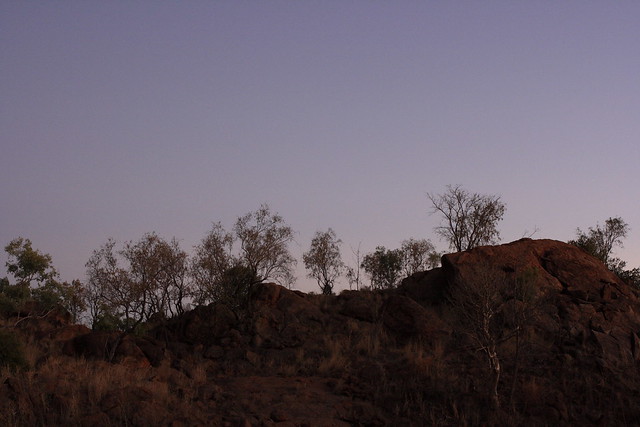
At twilight, we took a little walk beyond the tents and Grey Nomad caravans. The land was still, and the sky vast.

Semi Arid Sunset

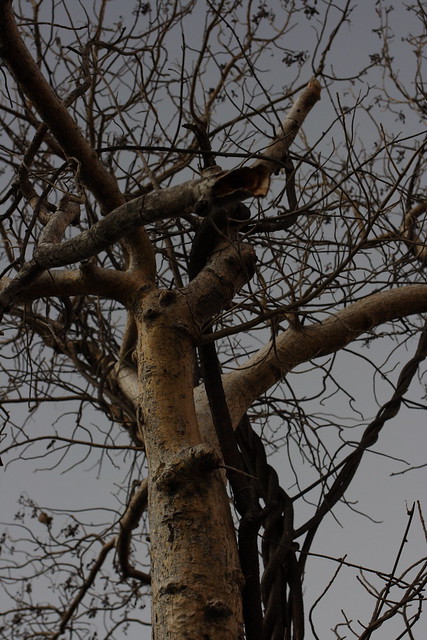
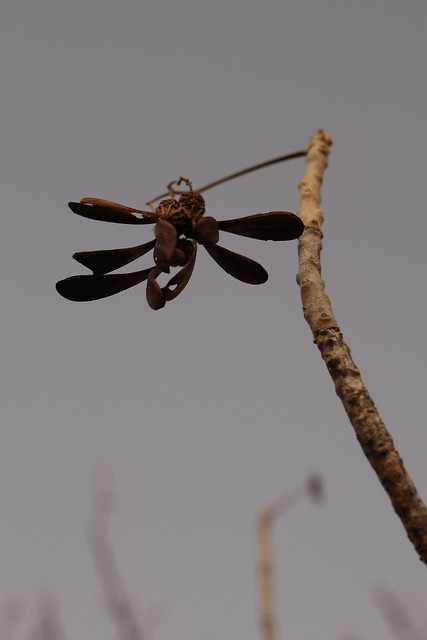
The trees and shrubs came to life. This leafless acacia tree seemed to reach out at me, like a creature from the deep.

Semi Arid Sunset

Semi Arid Sunset

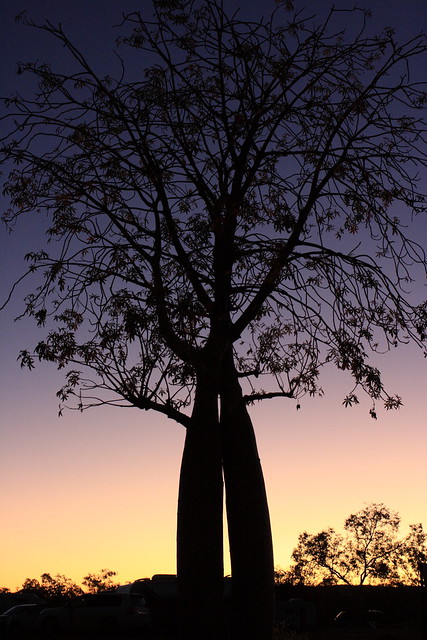
Then the colours kick in. This pair of boabs made a perfect silhouette to the sunset.

Semi Arid Sunset

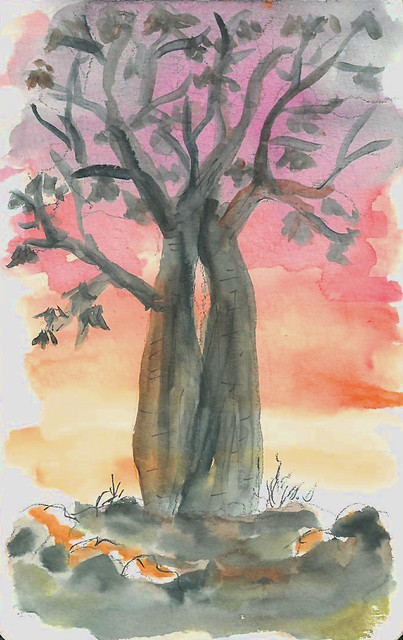
It was so pretty that I had to capture it on paper, too.

Semi Arid Sunset

Bungle Bungles from the air – Part 3

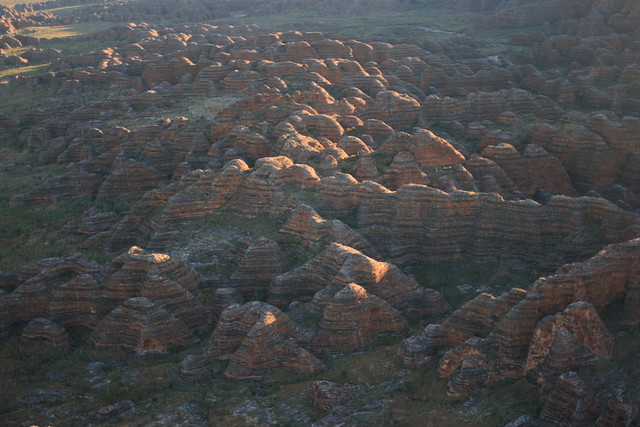
We flew south over the hills, and the further south we went, the smaller and more pronounced the do mes became. These are where the ‘money shots’ of the Bungle Bungles are taken.

Bungle Bungles Helicopter Ride

And there are more domes to be seen up toward the horizon. The Bungle Bungles are more extensive than the iconic rocks of Central Australia, and so much more rewarding to see from the air.

Bungle Bungles Helicopter Ride

The sun soon dipped, and all too quickly we were back to where we started.

Bungle Bungles Helicopter Ride

Bungle Bungles Helicopter Ride

But that’s not the end of the Bungle Bungles – we will soon see it on foot.

Bungle Bungles from the air – Part 2

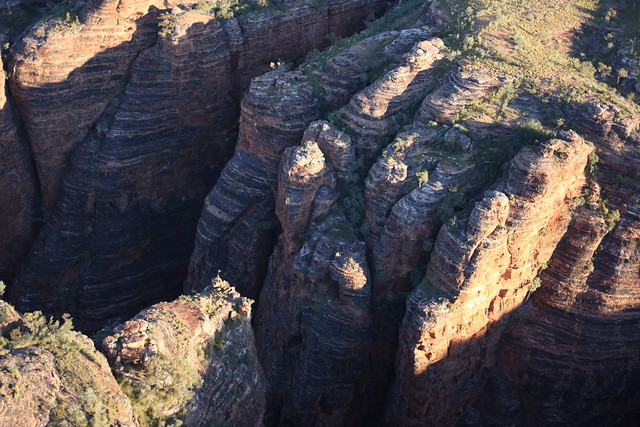
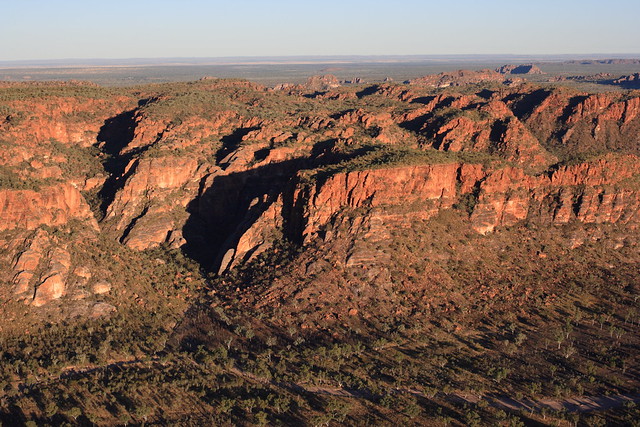
After around ten minutes, the striped hills of the Bungle Bungles appeared. The domes and stripes are all due to the movement of water through the sandstone, eroding it into domes, and leaching some layers of sediment more than others.

Bungle Bungles Helicopter Ride

Bungle Bungles Helicopter Ride

We had a great view of the domes, and peered down into deep canyons to see palms and water holes.

Bungle Bungles Helicopter Ride

Bungle Bungles Helicopter Ride

The pilot even showed us recent signs of lightning strikes – the build-up and wet seasons are particularly violent in the Kimberley.

Bungle Bungles Helicopter Ride

Bungle Bungles from the air – Part 1

The Bungle Bungles is in Purnululu National Park, on the eastern side of the Kimberley, and the most striking tourist attraction in the region. These orange and black striped domes, like its Central Australian counterparts, are also sedimentary; and at 350 million years old, also ancient. But unlike Uluru and Kata-Tjuta, it’s less visited as it’s a bit more remote. In fact, it was only discovered in the mid-1980’s by a mining exploration team. These days, access is either by 60km of pretty bumpy unsealed road or by air.

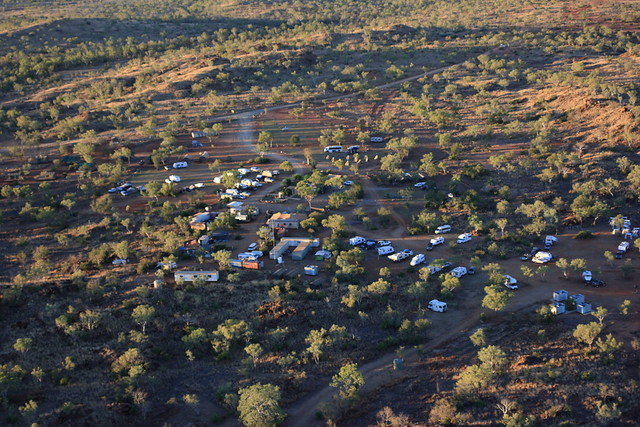
One of the early highlights of our fortnight in the Kimberley was a sunset helicopter ride from our campsite at Mabel Downs to the Bungle Bungles.
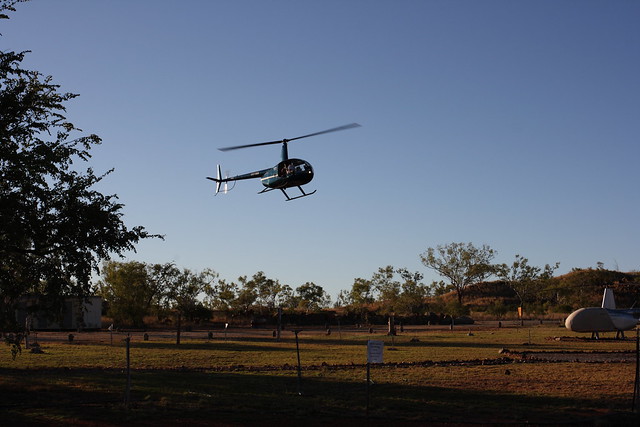
Bungle Bungles Helicopter Ride

It was an at times hair-raising ride in an open cockpit. The helicopter reached speeds of 180km/h, hence it got pretty breezy up there.
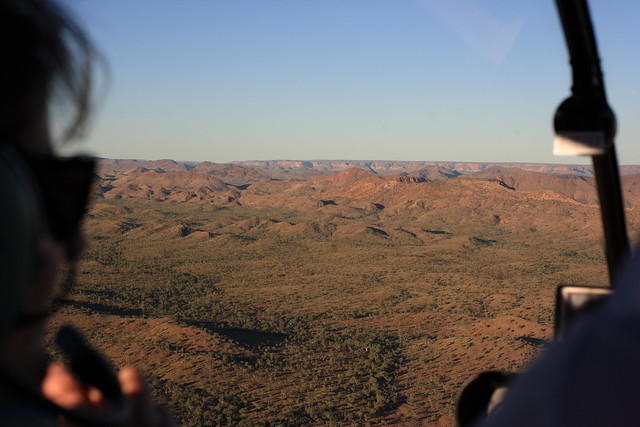
Bungle Bungles Helicopter Ride

But the views were rewarding.

Bungle Bungles Helicopter Ride

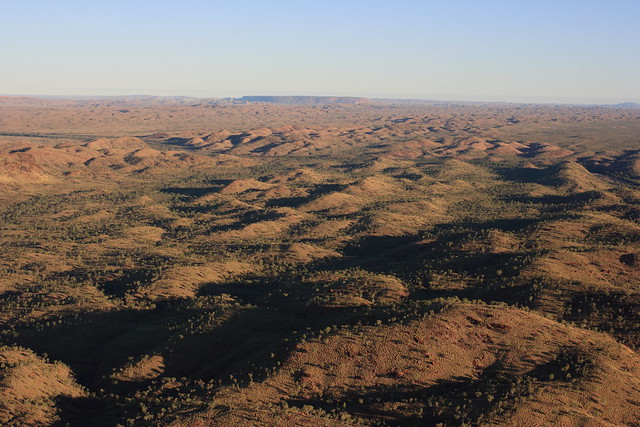
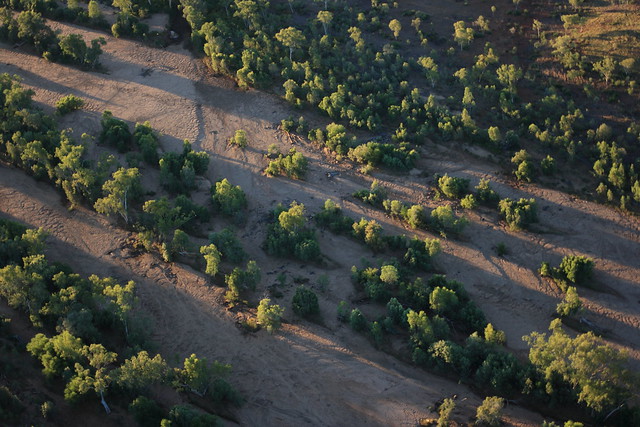
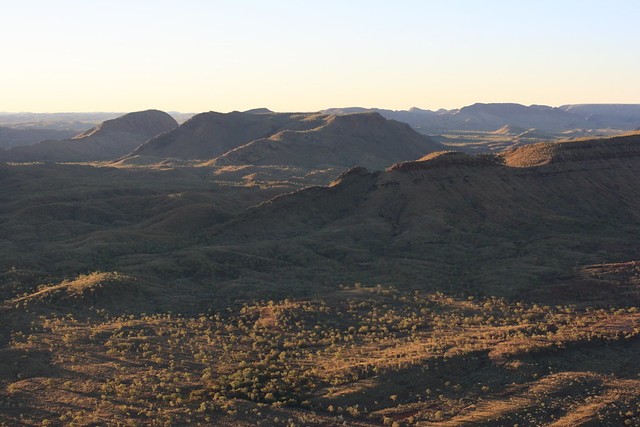
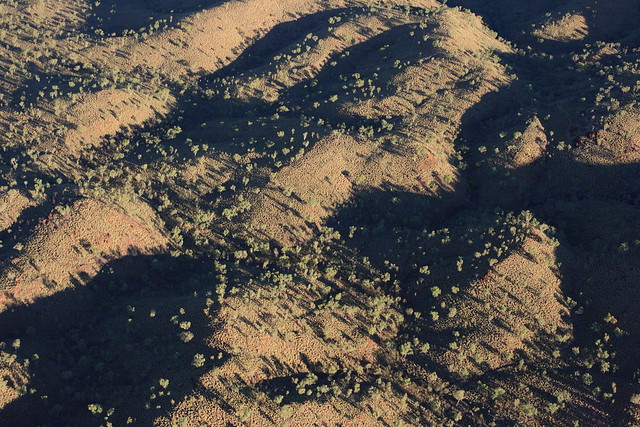
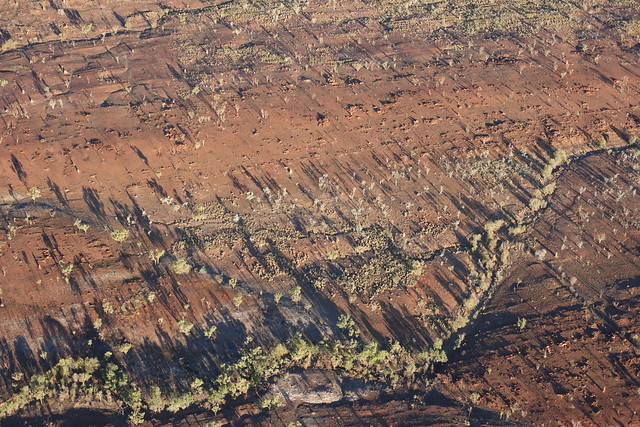
We first flew over the hills, plains and dry river beds of the Ord River. The late afternoon light made the entire landscape glow. You can see from above why the artwork of the local clans are in dots and lines.
Bungle Bungles Helicopter Ride

Bungle Bungles Helicopter Ride

Bungle Bungles Helicopter Ride

This river winds its way north all the way to Wyndham, some 400km away. We’ll see the river mouth later on, but first, the Bungle Bungles themselves.

Pioneers of the Kimberley

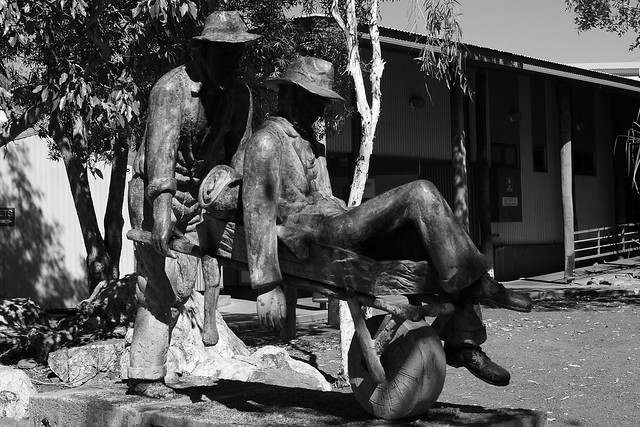
During our tour, we were introduced to the stories of a few pioneers of the Kimberley. First were the miners of Halls Creek’s very brief gold rush in the 1880’s. They had to walk at least 400km to the nearest port down rough and dusty tracks. A character called ‘Russian Jack’ walked this distance with a very sick mate in his wheelbarrow!

Pioneers of the Kimberley

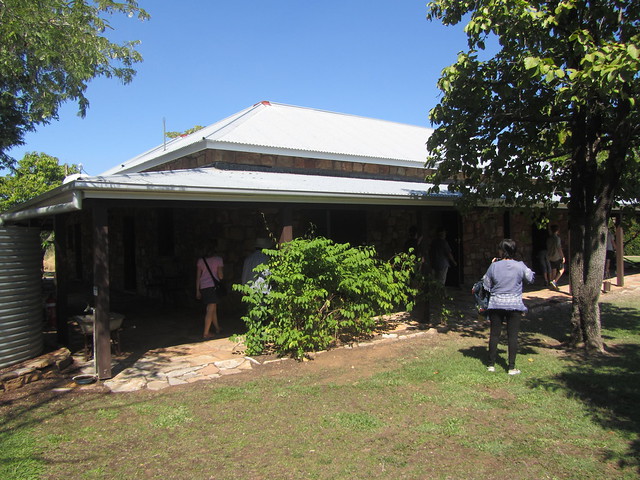
One of the most well-known families of the region are the Duracks, whom I read about in Kings in Grass Castles. They were were cattle owners who drove their mob overland from Goulburn in New South Wales, to the Channel Country in Queensland, and finally to the East Kimberley. Their homestead has been preserved beside Lake Argyle, and it was touching to visit the (surprisingly modest) home where so many legends had lived.
Pioneers of the Kimberley

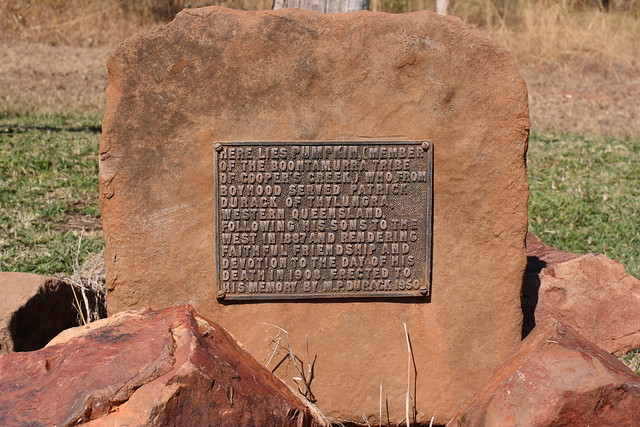
It was touching also to see the grave of the Durack’s indigenous companion, Pumpkin, beside those of the family. Pumpkin was from the Boontamurra tribe of the Cooper Creek district, helped them establish their station, build their homestead, and train the local indigenous lads as stockmen.

Pioneers of the Kimberley

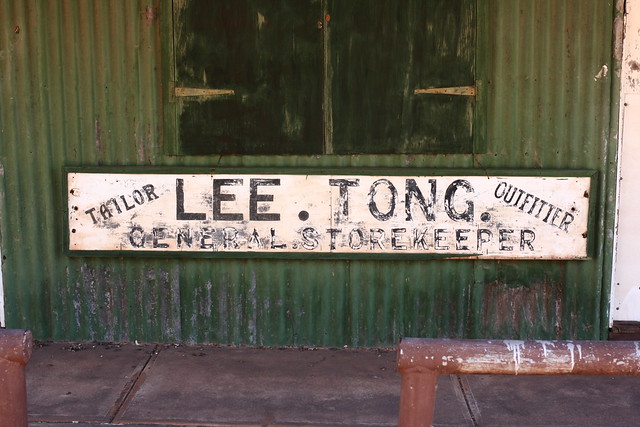
And lastly, there were the Chinese. The first came to the district during the gold rush, but soon found jobs as cooks for droving teams, gardeners at cattle stations, and of course, merchants. This is a well-known shop in the port of Wyndham, first traded at the turn of the 20th century (perhaps earlier), and did a good trade when the town was a vital hub in the region.
Pioneers of the Kimberley//embedr.flickr.com/assets/client-code.js

The mighty boab

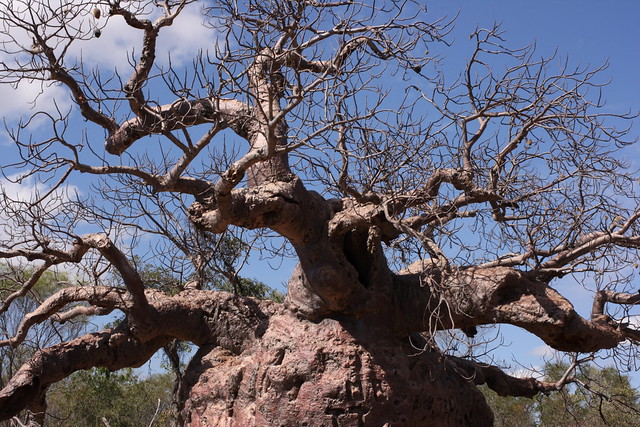
One of the most iconic sights in the Kimberley has to be the boab tree. They’re in many (although not all) areas of the north-west – and only the north-west it seems – and look like nothing else. Aboriginal dreaming stories tell of a too-proud tree that was taught a lesson by being forced to grow with its roots up, and with many trees bare, you’d be forgiven for thinking that they’re dead. This is one of the biggest specimens we saw – more than ten metres in circumference.

Prison boab

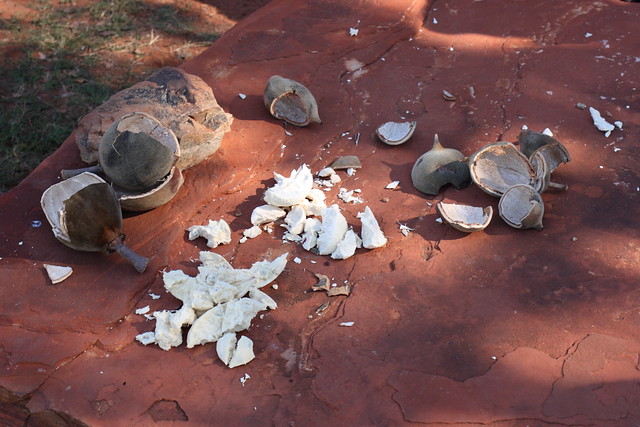
But despite their looks, boabs are full of life. Their roots hold water and can be eaten, their barks are medicinal, and their nuts, although seemingly bland, are full of vitamin C. I don’t think the indigenous people of the north-west would ever suffer from scurvy!

Eating a boab fruit

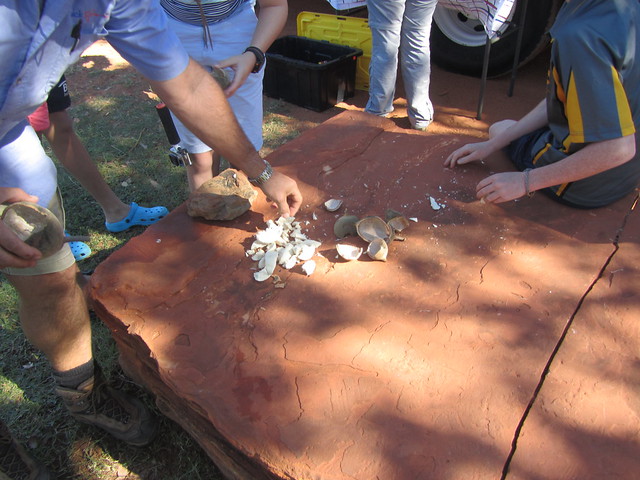
Early on in the tour, we were introduced to the boab nut and had a go of eating it. They’re as dry as toast at first, but the longer you leave it in your mouth, the more flavoursome it becomes. The taste I think is a little bit like tamarind! It can even be incorporated into jams and chutneys. Perhaps this is another bush food that might take off?

Eating a boab fruit