Tag Archives: history

The Red Centre – Part 3

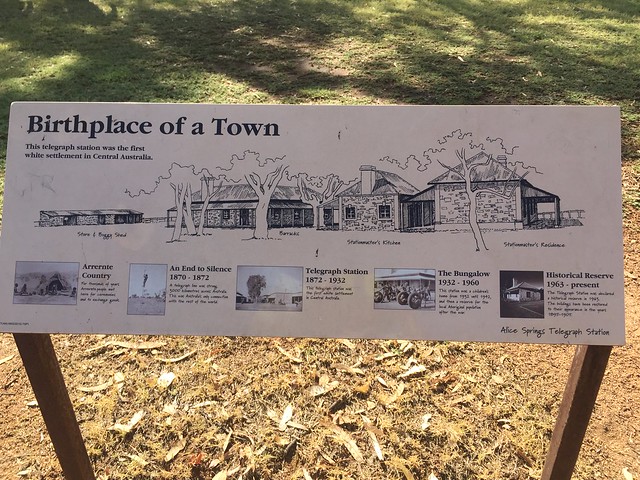
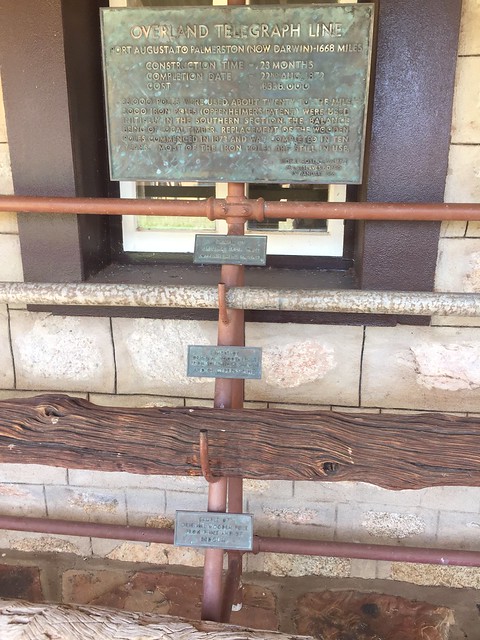
The construction of the telegraph line was a mammoth undertaking, but crucial to Australia as a nation. It meant that communications to the wider world (particularly to the Mother Country), need not take months, but hours. The line was build through the middle of the country, from Adelaide to Darwin, where it met with an undersea cable to Indonesia (or the Dutch East Indies, as it was then called).

Camels were used to haul gear – and they needed handlers – hence Afghani, Pakistani and Indian cameleers came with the camels. It took a couple of goes to get the materials right – the earlier wooden poles were chewed to the ground by termites!
Old Telegraph Station

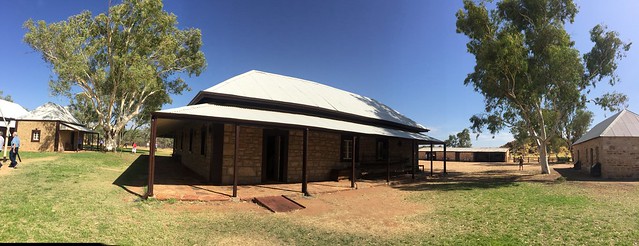
There were no satellites back then, so the signal needed to be relayed after a distance. A series of relay stations were established, and Alice Springs was one of them.
Old Telegraph Station

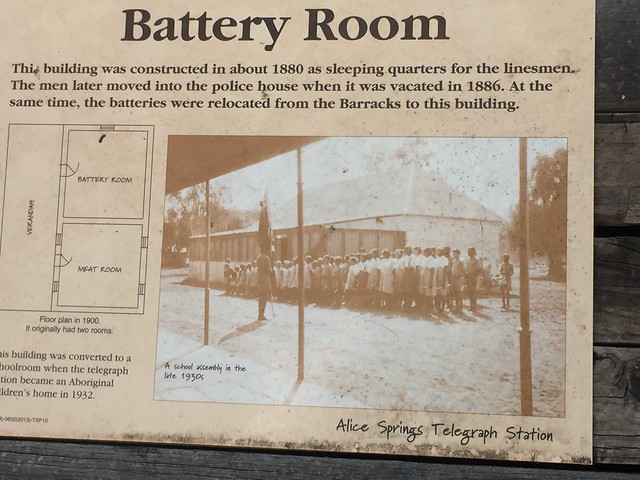
Afterwards, the line had to be maintained. So a whole army of men, called linesmen, were dispatched along the line to inspect and maintain it in shifts. What a job they had, especially in the desert summer heat.
Old Telegraph Station

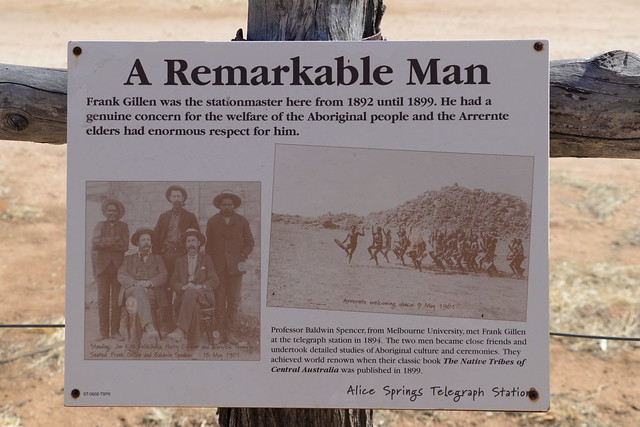
Black and white relations in the Red Centre has a chequered history, like in much of Australia, but it wasn’t all bad. This stationmaster had a particular respect for indigenous people and culture and went on to write a book about it.
Old Telegraph Station

The Red Centre – Part 2

Jumping on to the bus, we were off around Alice Springs for our tour.

Old Telegraph Station

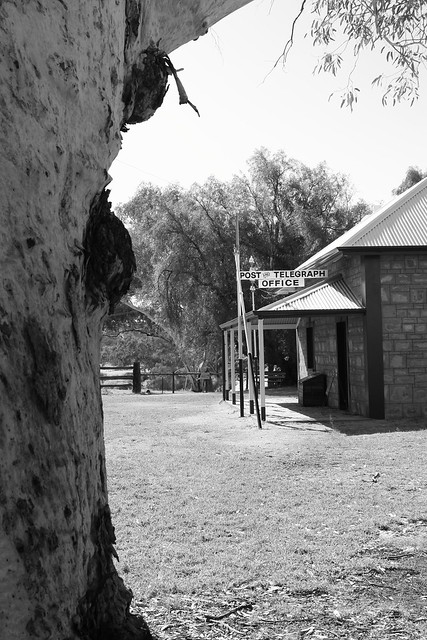
Our first stop was at the Old Telegraph Station – the reason that Alice Springs was founded in the first place.

Old Telegraph Station//embedr.flickr.com/assets/client-code.js

Old Telegraph Station

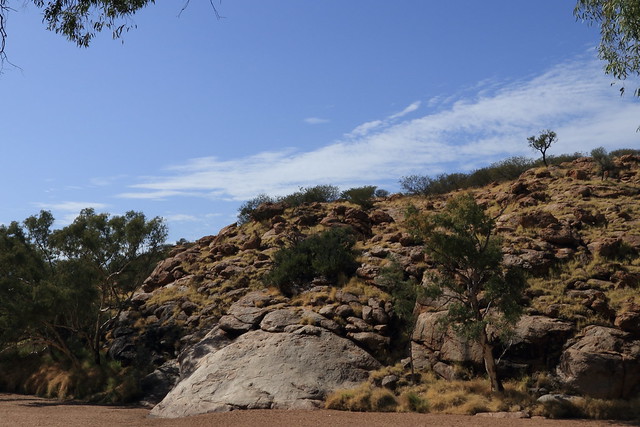
The early explorers thought that this place had a permanent water source. Unfortunately, they didn’t realise that the area had just had a downpour, and that the springs were only temporary.

Old Telegraph Station

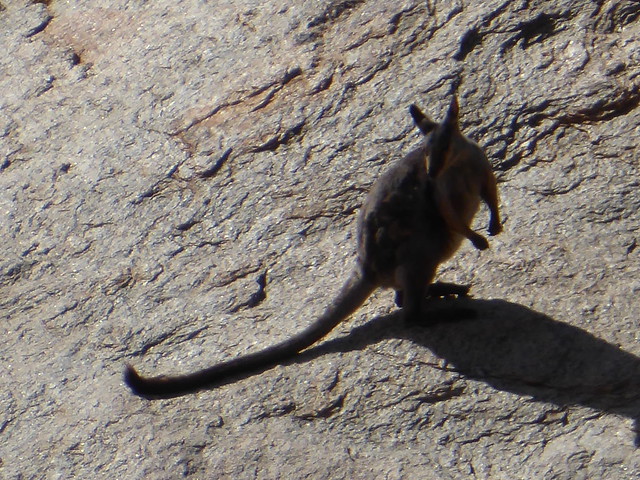
We saw some wildlife though – a rock wallaby in particular – so there must be some water somewhere out there, though not enough to sustain a settlement.

Old Telegraph Station

Darwin – Part 2

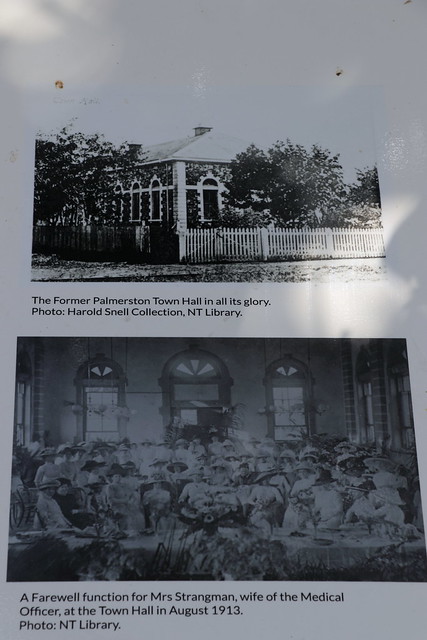
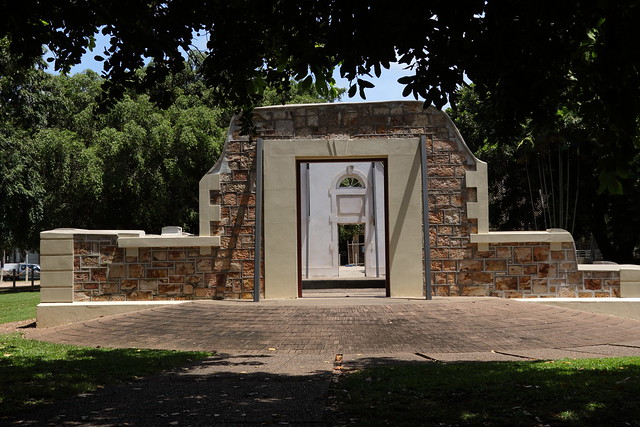
Aside from the bombings, Darwin also experienced destruction in 1974, when it was razed to the ground by Cyclone Stacey. The old town hall was one building heavily hit. It was a very historic building before.
Around central Darwin

But after it was only a shell, though a well-preserved one.

Around central Darwin

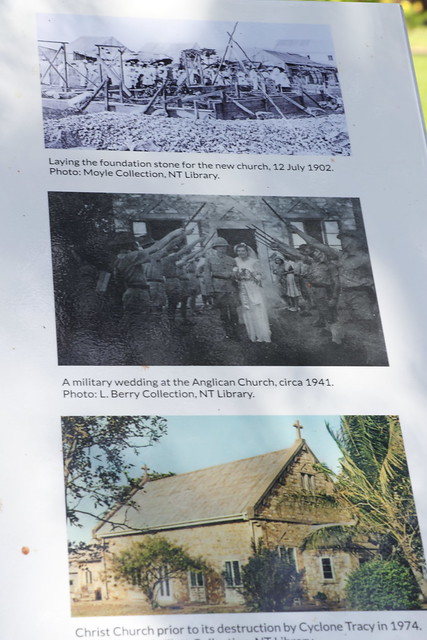
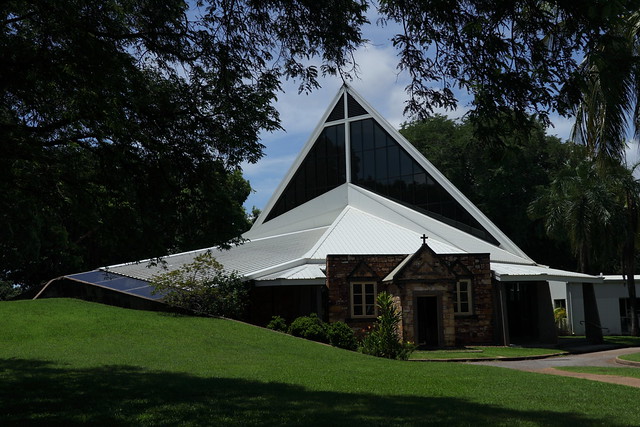
The Anglican church also had a long history with the town and was razed to the ground by the cyclone.

Around central Darwin

But in this case, the city found an innovative way to integrate the old with the new.

Around central Darwin

Port Elizabeth – Part 1

Hope everyone had a lovely Christmas! Mine was spent with family, and now Hubby and I are at our Central Coast place, awaiting the New Year.

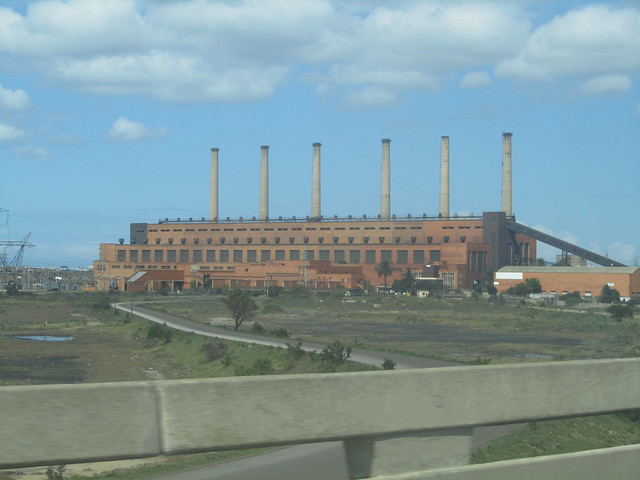
But we’re not quite done with South Africa just yet. This time, we’re heading east of Cape Town to the Eastern Cape city of Port Elizabeth. With a population of 1.1 million, it is the manufacturing centre of South Africa since the beginning of the 20th Century. This accounts for the size of the old power plant.
Around Port Elizabeth

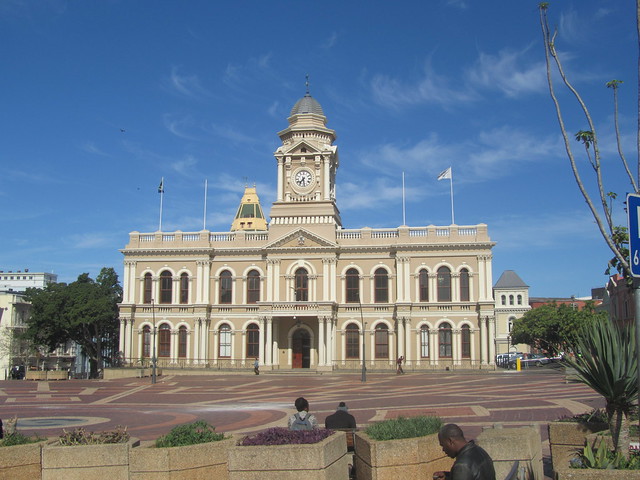
Historically, this area was first developed by the English in the 1820’s. This accounted for the many English-style buildings in the city centre.

Around Port Elizabeth

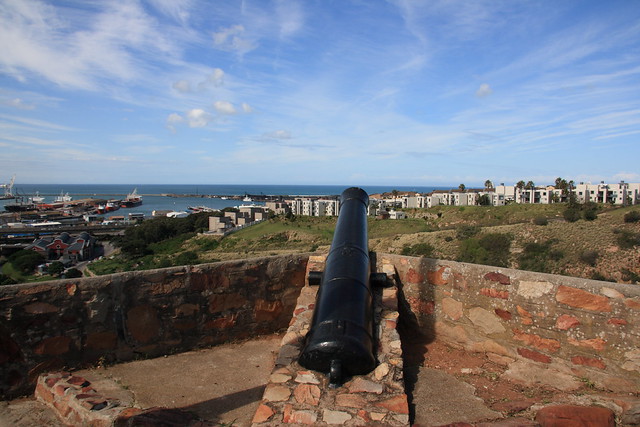
Around Port Elizabeth

Around Port Elizabeth

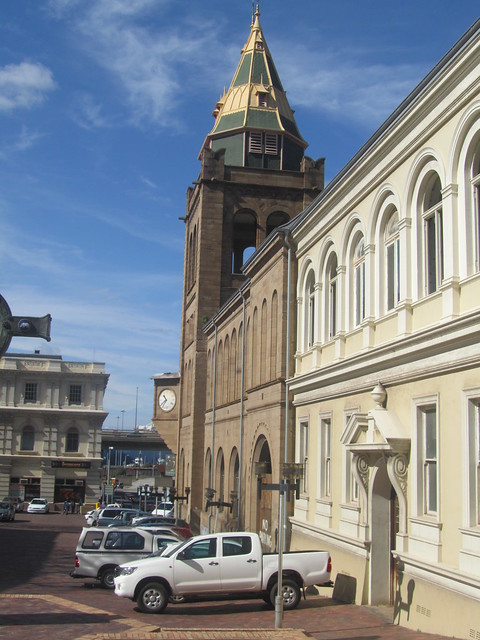
Looks a lot like the buildings in the cities of Australia, doesn’t it? Probably because they all date back to the same period.

Seal viewing at Hout Bay – Part 1

The most popular day trip from Cape Town is probably the drive down to Cape Point, about 60km south of the city. It goes along spectacular drives to coastal suburbs and villages, and then finally through the Cape Point National Park to wild capes.

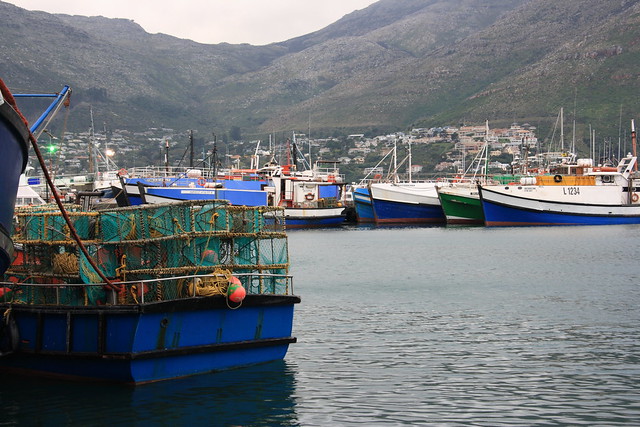
Our first stop of the day was in the fishing town of Hout Bay. Originally it was the source of Cape Town’s timber – not much of the forest is still in existence, as you can see.

Seal Cruise

Its natural harbour made it a perfect place for a fishing port. It still maintains a fishing fleet today, although much of the catch seemed to be for export.

Seal Cruise

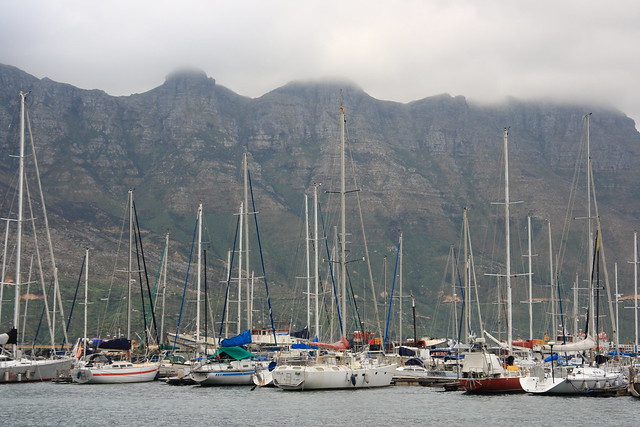
Nowadays, the holiday-makers, sea-changers and recreational sailors have also moved in.

Seal Cruise

Next, we’ll go on the water.

Cape Town – Part 5

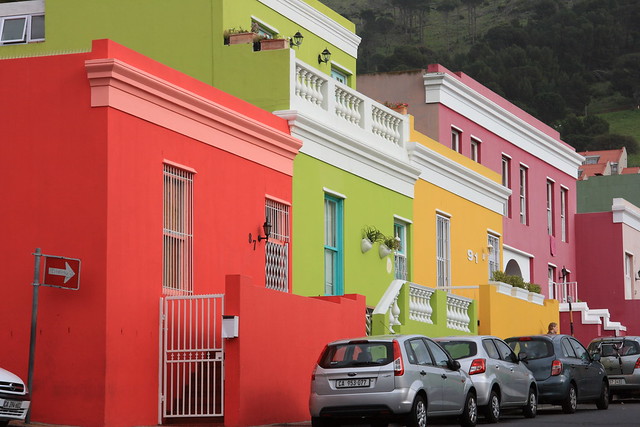
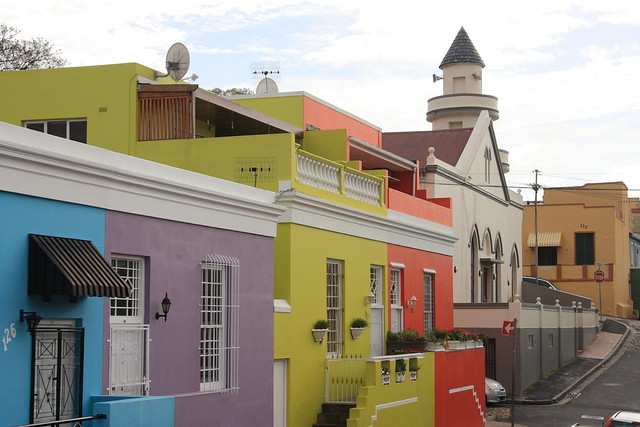
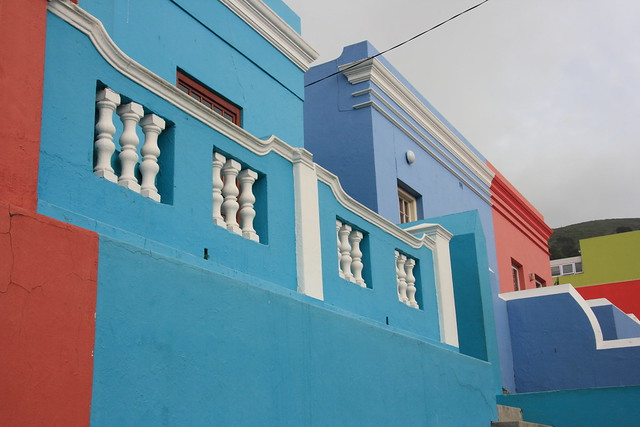
One of the most colourful neighbourhoods in Cape Town is Bo-Kaap. It has traditionally been the home of the Cape Malays – descendants of slaves and traders originating from the East Indies (now Indonesia). The oldest house in the area was built in 1760s but the community has its origins all the way back in the mid 17th Century.

Bo-Kaap

Most were (and still are) Muslim, hence the high concentration of mosques on the block. Despite this, there did not seem to be much tension based on religion. Talking to locals and going by the nightly news, South Africans are much more concerned about the state of their government than differences in religion.

Bo-Kaap

The Cape Malays brought with them their culture and food – so much so in Cape Town that today many South African national dishes are quite heavily spiced, and popular with all South Africans, regardless of race. I sampled some of the food while in town, and generally liked what I ate, I must say that they are very different to any Indonesian/Malaysian/Indian or Malaysian dishes that I know. And yes, the samosas (or samoosas as the South Africans call them) are good.

Bo-Kaap

Nowadays, South Africa is a country of immigrants, especially from other parts of Africa. One community represented are the Ethiopians.

Addis in Cape

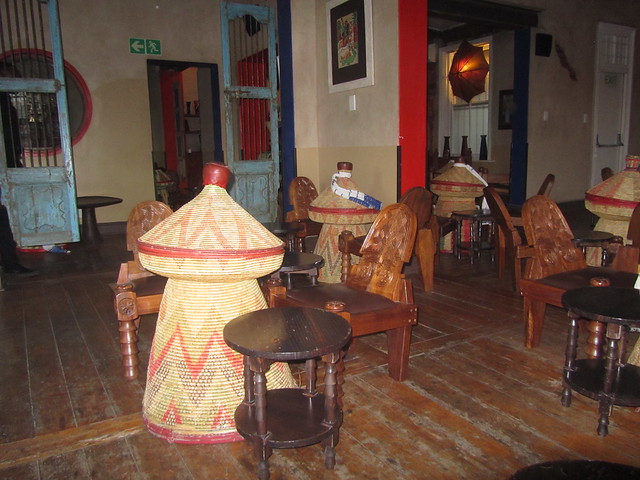
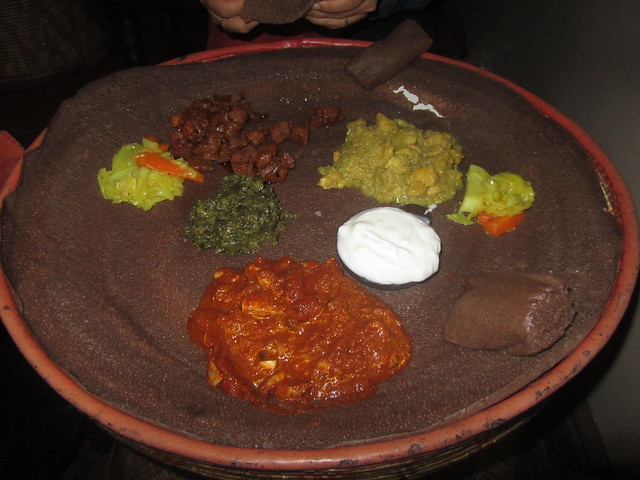
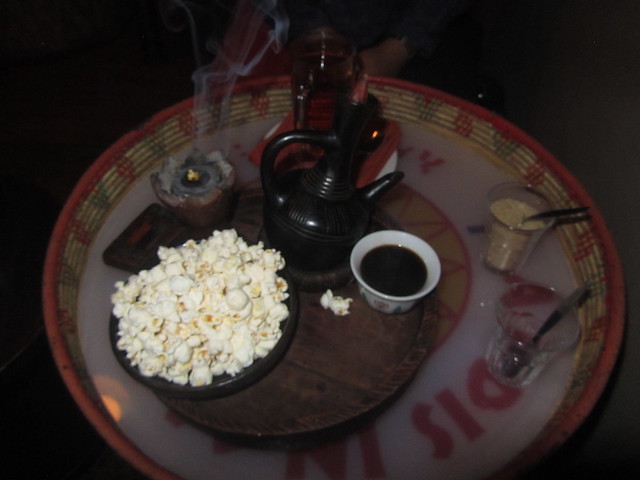
We had a taste of Ethiopian food one night. It’s certainly a different way of eating!

Addis in Cape

Addis in Cape

The spicing is rather unique, I thought – they seem to use quite a bit of cardamon in their savoury food. Their way of taking coffee was also unique. I’ve never heard of popcorn as an accompaniment!

Addis in Cape

Cape Town – Part 4

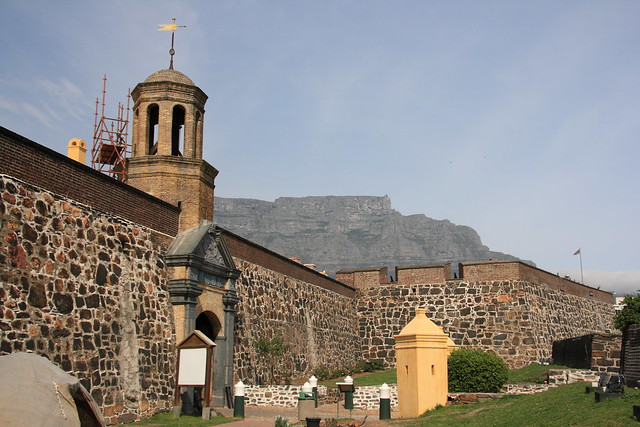
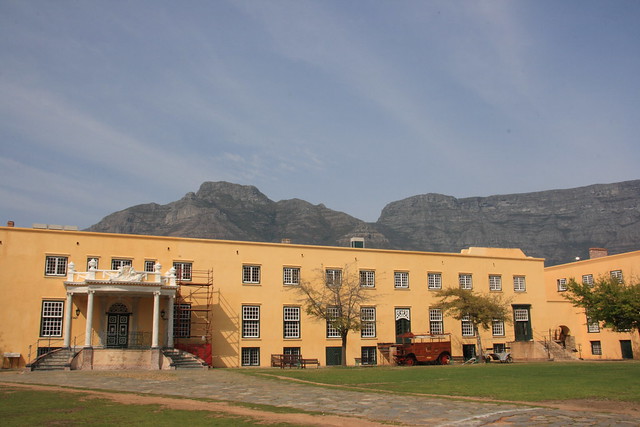
Another remnant of the Dutch colony of Kap Staad is the old fort, the Castle of Good Hope, built in the 17th Century. It was where the first commanders and their entourage lived, and though it had been fitted with cannons, they were never fired in anger.

Castle of Good Hope

Castle of Good Hope

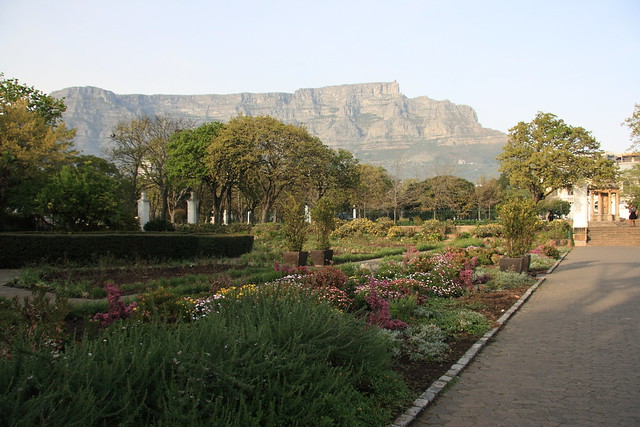
The fort used to sit right on the beach, but since land was reclaimed and the coast line moved 1km further out to sea, it now sits by the highway and railway. Table Mountain views abound from here.

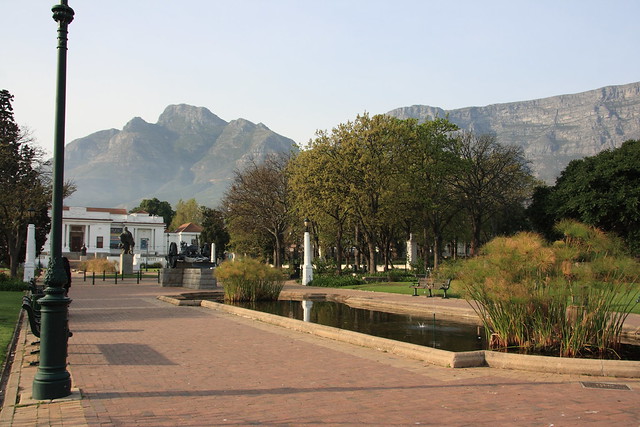
Not far away was the Company’s Garden that the Dutch established, initially to grow food for passing ships, but later expanded to include a pleasure garden.

Company Gardens

Company Gardens

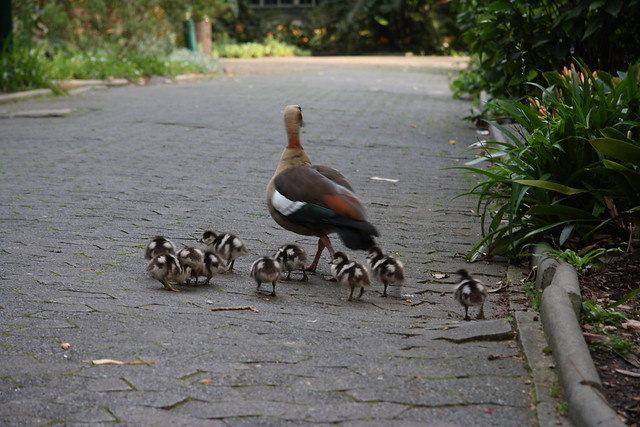
I saw a local goose walk by, spring chicks in tow.

Company Gardens

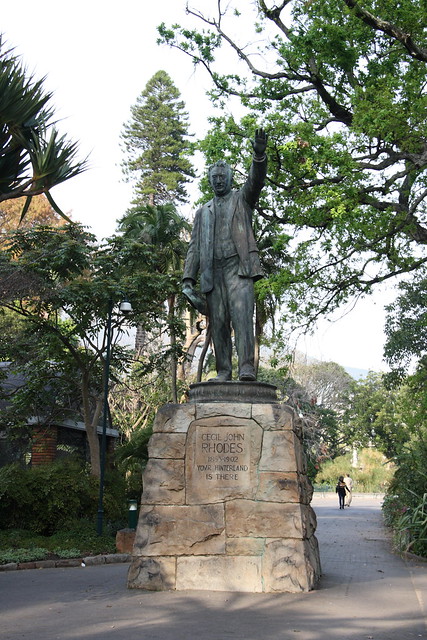
And there was a statue of Cecil Rhodes, a somewhat divisive figure of Colonial Africa now, though he did much for South Africa.

Company Gardens

Cape Town – Part 3

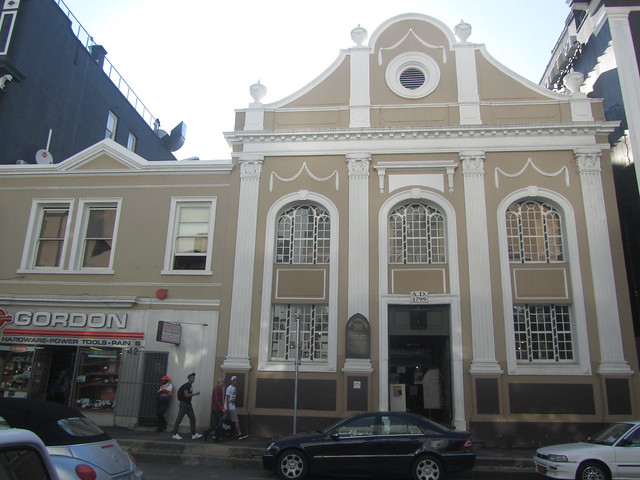
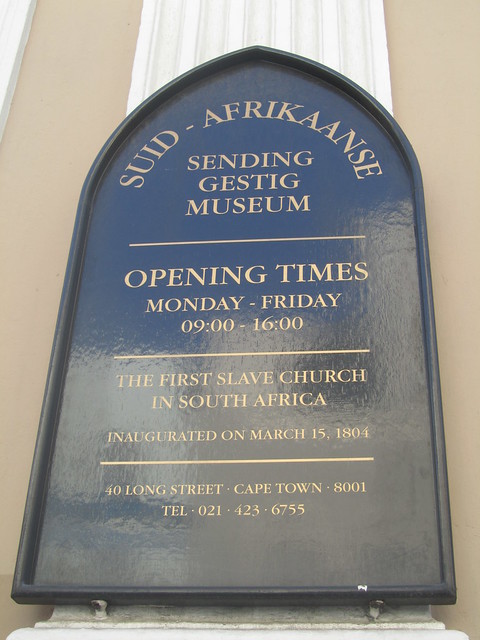
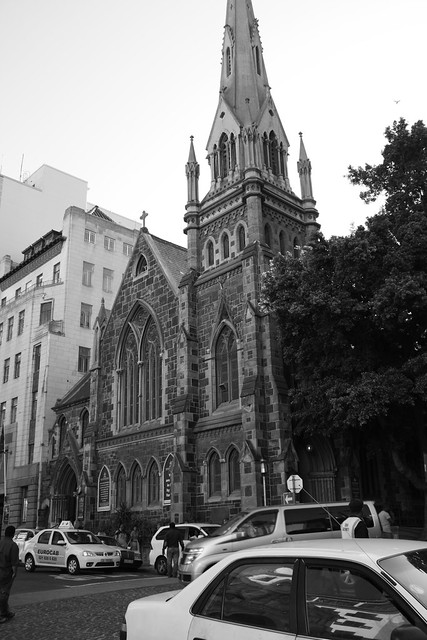
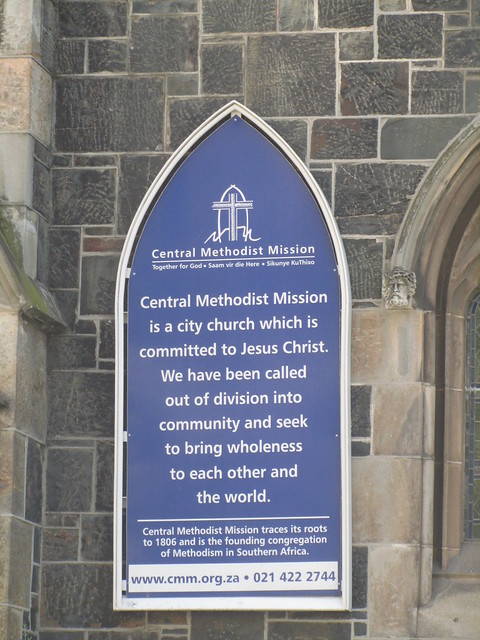
Cape Town has had an interesting history as a colony. It was in the hands of the Dutch who docked to replenish food supplies on their sometimes year-long voyages from Europe to Asia in the 16th and 17th Century. There’s evidence of that it some of the buildings around the city, like this old church.

Historical Cape Town

Historical Cape Town

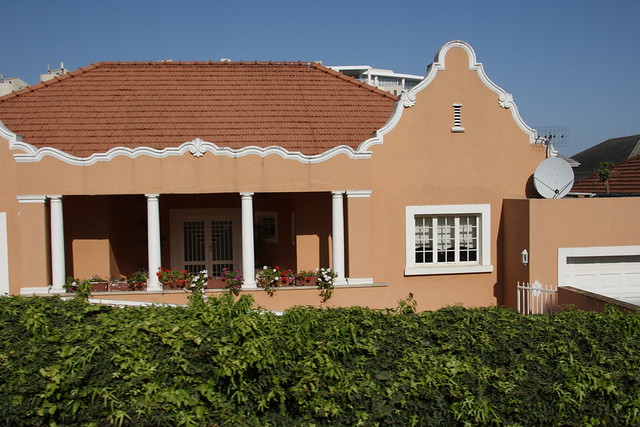
And this house Dutch-style house.

Historical Cape Town

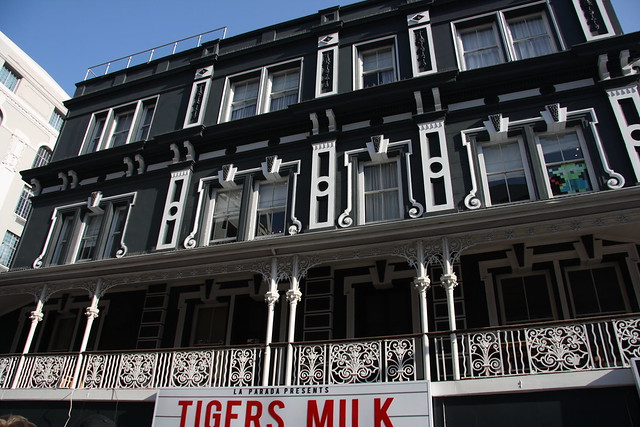
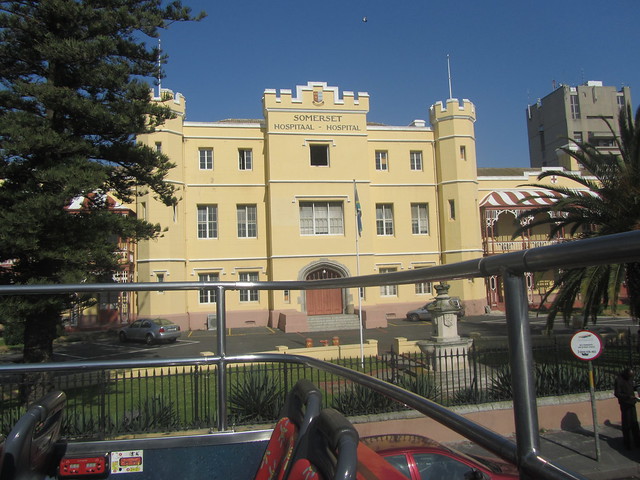
Then the British took over in the 19th Century and brought their brand of Victoriana with them. It’s in the public buildings.

Historical Cape Town

Historical Cape Town

Historical Cape Town

And in the churches.

Historical Cape Town

Historical Cape Town

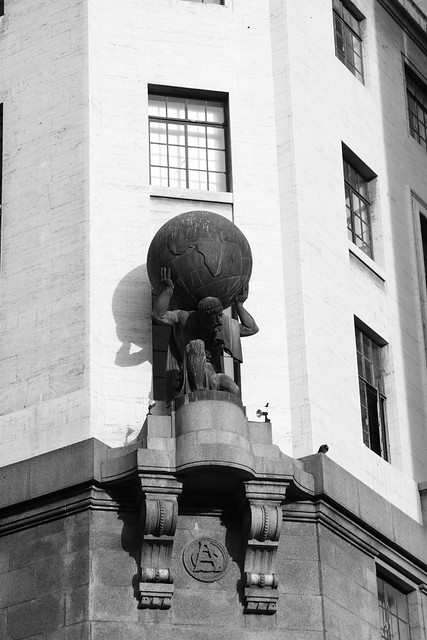
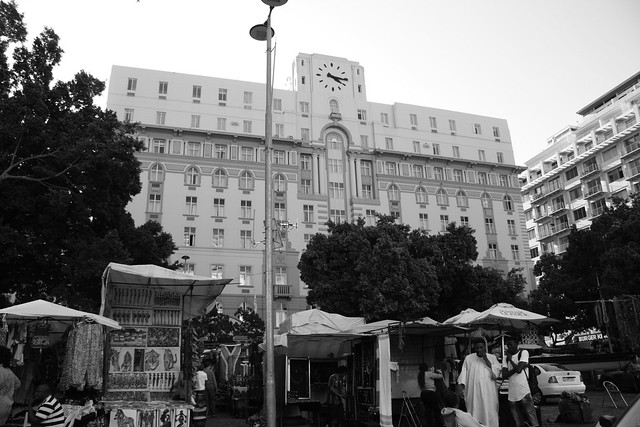
When the 20th Century came around, there was once again a burst of building in the Art Deco style.

Historical Cape Town

Historical Cape Town

It’s quite a cosmopolitan place.

The Gibb River Road (End)

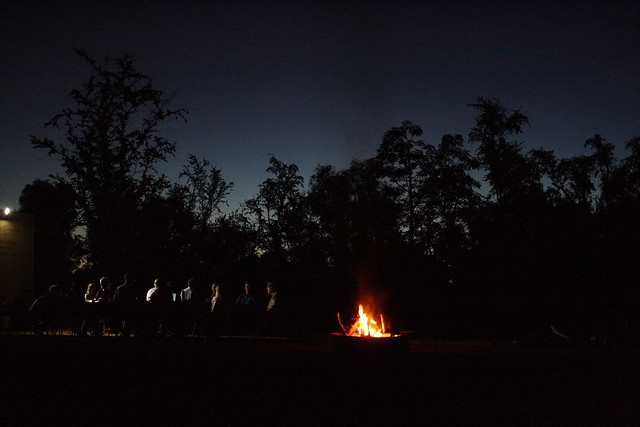
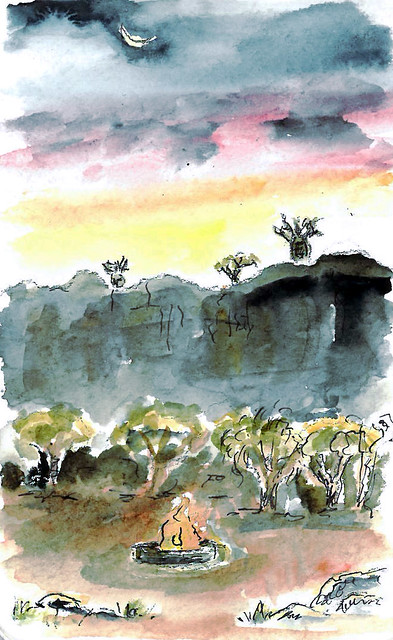
The end of the day came at our campsite at Windjana Gorge by the campfire.

Windjana Gorge

It was made even more spectacular against the backdrop of the gorge. It became my final picture of the day.

Windjana Gorge

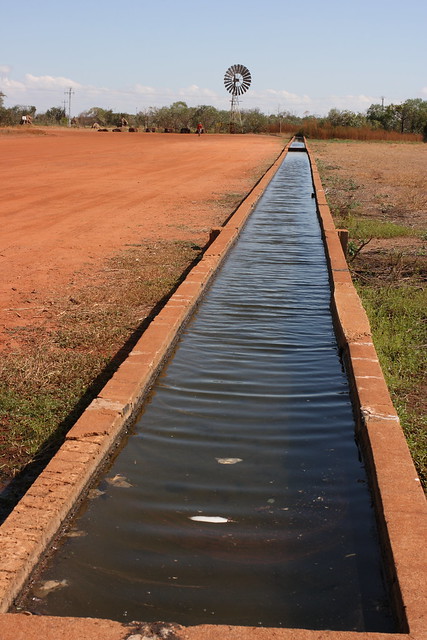
The final day, we made our way back to Highway One, although there were still a few sights to see along the way, like this very long cattle trough at Myalls Bore.

Myalls bore and cattle trough

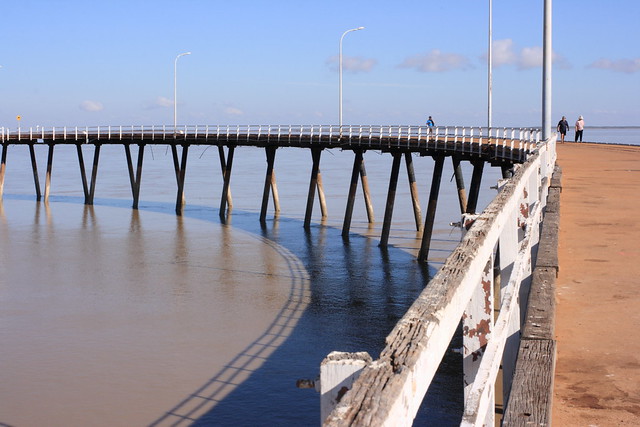
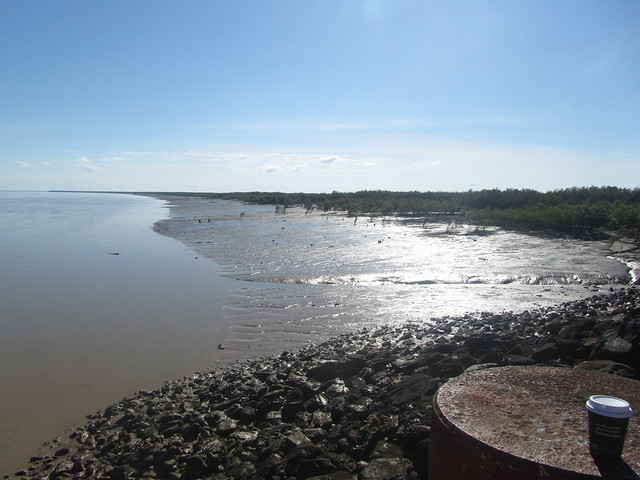
By morning tea we were back on the Indian Ocean at Derby – a sleepy town compared to Broome with a long jetty, mud flats and 10 metre tides.

Old jetty/wharf

Derby coast

And by afternoon tea, we were back in Broome and ‘civilisation’ and the end of our fortnight in the Kimberley. I hope you enjoyed the journey. It was certainly more than a series of grand landscapes – it was a place of rich and deep history, too.

Jandamarra’s Path – Part 4

We’re on the final stage of Jandamarra’s story. After being severely wounded in the siege at Windjana Gorge, Jandamarra retreated into the hills and caves that he knew around the Napier Ranges. One of his hideouts was our next destination – Tunnel Creek. It was from here that he conducted more of his raids on the surrounding properties. The local police for years after had trouble locating him. We’ll soon see why.

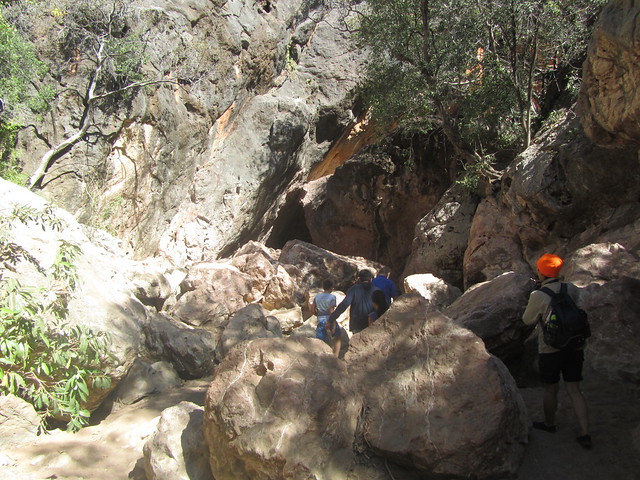
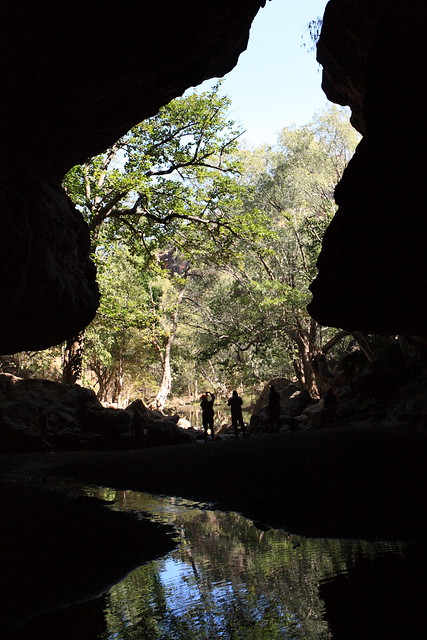
We walked along a sandy track, and then around large boulders, down to the cave entrance.

Tunnel Creek

It was cool, wet and sandy inside the cave. In fact, a creek flowed through it (hence the name). It’s a sanctuary also for freshwater crocodiles in places, though we didn’t see any.

Tunnel Creek

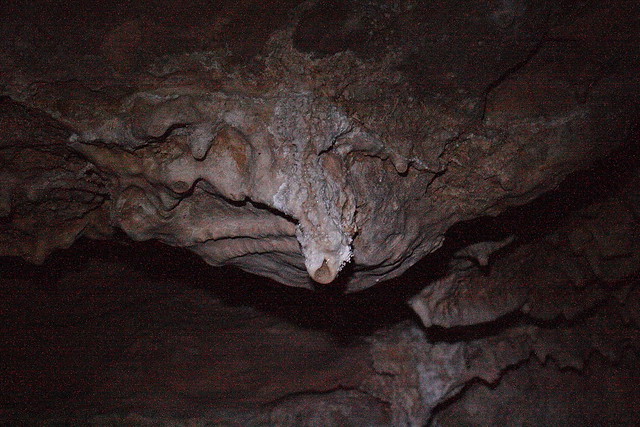
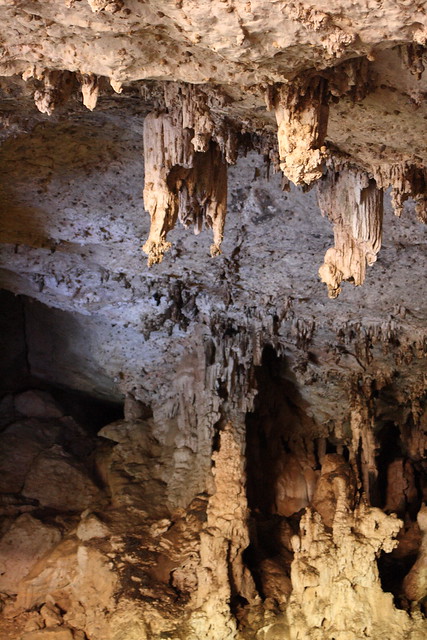
The deeper we walked into the cave, the more interesting the cave formations were. There were even some micro bats living in the rafters of some places.

Tunnel Creek

Tunnel Creek

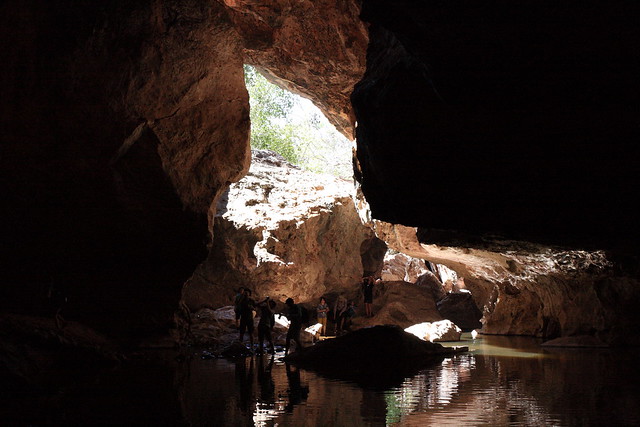
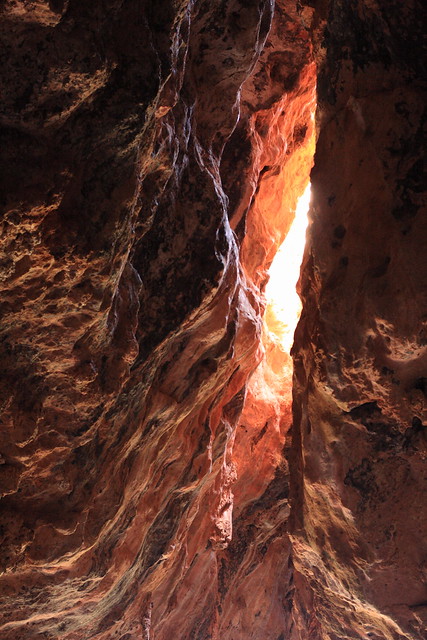
Half-way through, there was a part of the cave that had fallen in, giving us a glimpse of daylight.

Tunnel Creek

And then more daylight – we reached the opposite end and had walked right through the Napier Range! Obviously, Jandamarra used this place to great effect after his raids. So effective was he many people thought that he held supernatural powers.

Tunnel Creek

But he eventually ran out of time. The police eventually found his hideaway, and he was shot dead at the entrance of Tunnel Creek. He might have died almost 120 years ago, but his story has not been forgotten by the Bunuba people. Now others have the opportunity to learn of this piece of Australian history.

Tunnel Creek